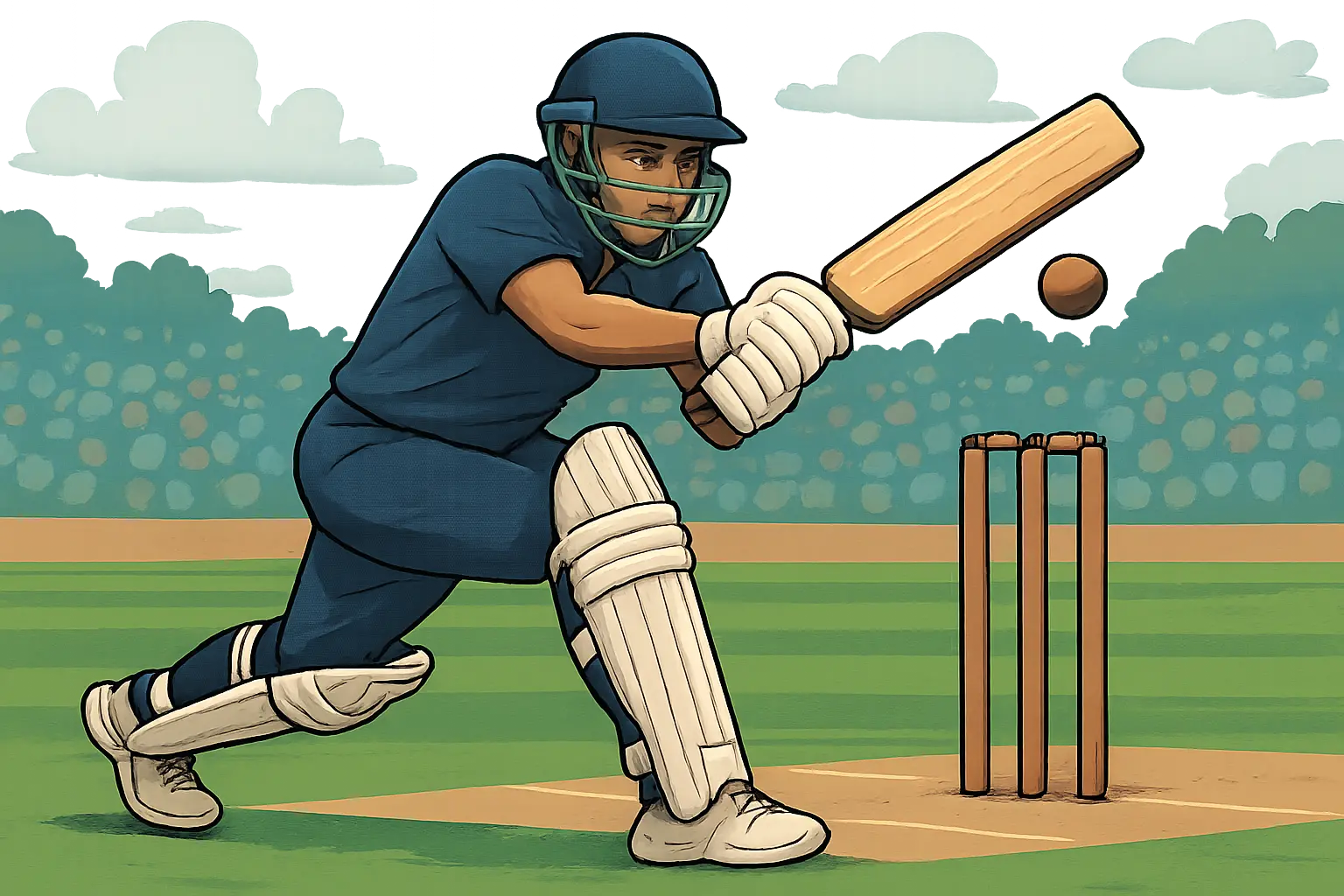

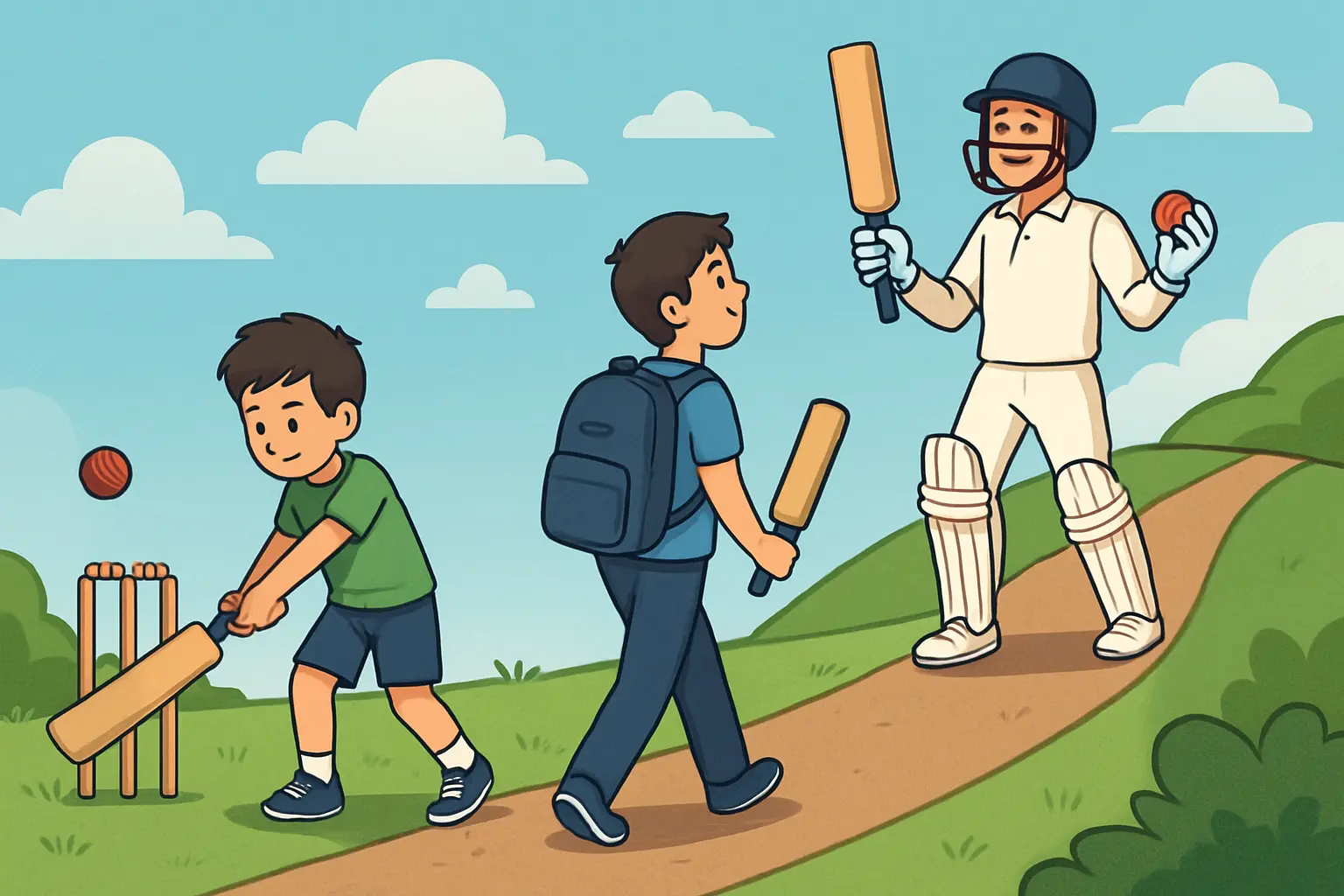
The first time you lace up and feel a new ball in your palm, you learn something essential about this game: it doesn’t hand out dreams; it trades them for habits. I’ve seen boys and girls with an old bat and a scuffed ball walk into district trials and leave as state players months later. I’ve watched late bloomers carve careers from club benches. The pathway is real, but it asks for structure, patience, and relentless repetition. If you’re asking how to become a cricketer or how to start a cricket career, this is the blueprint—covering steps, trials, role-specific training, fitness tests like the yo-yo, women’s pathways, academies, fees, and a clear map from school cricket to state, county, and franchise leagues.
Quick Steps: How to Become a Cricketer
- Choose your primary role early (batsman, fast bowler, spin bowler, wicketkeeper, or all-rounder), but keep secondary skills alive.
- Join structured cricket: school team and a reputable club or academy with regular league matches.
- Master basics with volume: batting drills (front-foot, back-foot, strike rotation), bowling stock delivery and accuracy, keeping footwork and glove work. Film and review weekly.
- Enter the formal pathway for your region: district and state age-group selections (U14, U16, U19, U23, Senior) or county/grade cricket in your country.
- Play the right competitions: inter-school, inter-district, premier/grade leagues, and state-run tournaments that feed selection.
- Build fitness you can test: meet or exceed yo-yo/beep benchmarks, maintain strength/mobility standards for your role, and manage bowling workloads.
- Train to a plan: 8–12 week blocks with specific drills, skill targets, and match scenarios. Keep a performance log.
- Seek quality coaching and competitive nets: a coach-to-player ratio that allows individual feedback, bowlers facing batters weekly, batters facing new-ball, spin, and death overs.
- Showcase in trials the way selectors think: batters show run-making methods, bowlers show control of a stock ball and a change-up, keepers show clean takes up to the stumps.
- Clarify the trial route: district/state association portals, county academy trials, premier/grade club trials. Ignore “open IPL trials” myths; perform in recognized competitions.
- Control the off-field: nutrition, recovery, sleep, and injury management. Use a simple, consistent diet plan and mobility routine.
- Network ethically: update coaches and selectors with recent scores and clips after tournaments, ask for feedback, and act on it.
Eligibility, Age Windows, and Pathways
Cricket’s selection ecosystem runs through age groups and into senior competition. Understanding those windows helps you target the right trials and tournaments at the right time.
Typical age-group windows and progression
- U12/U14: Fundamental skill building, school and district focus. Early identification for technical soundness.
- U16: First meaningful filtering. Good performances here often draw academy or state attention.
- U19: The big gate. Strong showings at U19 often launch players straight into senior squads, state/provincial or county academies.
- U23: Bridge tier for late developers and players refining bodies and roles.
- Senior: State/provincial first-class, List A, T20 leagues; county contracts; premier/grade firsts.
Table: Common age groups and selection focus
| Age group | Main competitions | What selectors assess | Outcome if you excel |
|---|---|---|---|
| U14 | School, district, academy games | Basic technique, coordination, attitude | Entry into better academies; U16 call-ups |
| U16 | Inter-district/state age-group | Role clarity, consistency, game awareness | State U16, academy scholarships |
| U19 | State/provincial, national age-group | Match-winning ability, temperament | Senior state, county academy, franchise attention |
| U23 | Premier/grade firsts, second XI | Physical readiness, repeatability | State contract, county rookie, A-team tours |
| Senior | First-class/List A/T20 | Performance, role fit, durability | Domestic contracts, franchise deals, national pool |
Best age to become a cricketer
- Start early if you can. U12–U14 is ideal for depth of technique.
- U16–U19 is decisive for selection.
- U23 is a second door for late starters who build a body of club/premier/grade performances.
- Over 25 isn’t “too late” if you dominate your league tier and maintain elite fitness—especially for bowlers, keepers, and role-based T20 specialists.
Trials and Selection: From Club to State, Ranji/County, and Franchise
The keyword “how to become a professional cricketer” really means navigating a country’s selection spine. Here’s how the major systems tend to work, with practical notes from real selection tables and meetings.
India: District to State to Ranji, then higher
- Grassroots: School cricket, inter-school tournaments, club leagues, and academies under district and state associations.
- Age-groups: U14, U16, U19, U23 lead into the senior state team pathway (Ranji Trophy, One-Day, T20).
- Selection: District selectors nominate to state selectors based on runs/wickets in recognized tournaments. Invite-only trials dominate at higher levels; open trials are more common at U14/U16.
- National Cricket Academy: Shortlisted performers may be invited to skill or rehab camps—this is a high-performance filter, not a beginner’s camp.
- What impresses: Consistency in competitive club/premier leagues, performance in state age-group tournaments, and a clear role identity. A left-arm seamer landing the wobble seam repeatedly or a wicketkeeper standing up to medium pace without fumbles stands out more than a one-off cameo.
- Ranji selection: Strong age-group performances, then big returns in state-level tournaments. Once you land in the Ranji setup, your white-ball windows open (state T20, List A), and franchise scouts take real interest.
UK: Club to County Age Groups to Academy to Second XI to Contract
- Grassroots: Club league cricket is the foundation; schools with strong cricket programs feed counties.
- County pathway: County age-group squads (U14–U19), then county academy. Second XI cricket is the major proving ground for contracts.
- Selection flow: Consistent club league performance + county age-group trials → academy → second XI → first XI contract.
- Practical tip: Document league averages and video clips; county coaches want evidence of method (not just a highlight six).
Australia: Club (Community) to Premier/Grade to State Pathway
- Premier/grade cricket: This is the selection theater. Make runs and take wickets in first-grade; you’ll be noticed by state selectors.
- State pathways: Junior reps into state squads, then rookie/pro contracts. Second XI state games are key auditions.
- Key skill markers: White-ball power with method, red-ball patience, bowling discipline on Australian lengths.
Pakistan, Bangladesh, Sri Lanka: Regional to High-Performance Centers to National
- Club/region: Strong club cricket and regional tournaments drive selection.
- High-performance: National boards run performance centers where standout players get structured coaching and fitness programs.
- U19 remains the most crucial stage. Exceptional U19s often step into domestic senior cricket quickly.
South Africa: School/Club to Provincial to Franchise
- School cricket is strong, but club/provincial form matters. Provincial squads feed franchise teams and the national pool.
- Expect fitness and fielding standards to be strictly enforced in trials.
USA, Canada, UAE: Clubs, Academies, and National Pathway
- USA: Club leagues and academies feed national U19 and Minor League Cricket. Domestic combines occur for scouting. Performance in MiLC can open Major League Cricket doors.
- Canada/UAE: Strong academies, club leagues, national open trials occasionally. Consistent club performance plus fitness wins selections.
Franchise leagues (IPL/BBL/PSL and others): Myth vs reality
- There are no public “walk-in” IPL trials for professional contracts. Scouts track state, first-class, second XI, U19, and premier/grade performers.
- Talent hunts exist for development squads or brand engagement. Treat them as opportunities to gain coaching exposure, not a guaranteed contract route.
- If you want to get scouted for IPL or any major league: dominate in recognized domestic competitions, maintain verifiable stats, and circulate clips of match situations (death overs, powerplay wickets, spin choke phases) through coaches with credibility.
Role-Specific Roadmaps
Selectors pick roles, not résumés. Align your training, stats, and game identity with a role a team actually needs.
Batsman (including opener/finisher)
- Method: Build a repeatable trigger and contact point. For openers, play late under the eyes vs seam; for middle order, own strike rotation; for finishers, range hitting with options vs pace and spin.
- Batting drills:
- Front-foot and back-foot drives: 100 balls each, discipline on leaving wide balls.
- Strike rotation circuit: 30 balls focused on drop-and-run, soft hands.
- Power map: 48 balls, six zones (long-on to third man), 8 balls per zone; assess miss patterns.
- Spin audit: 60 balls against spin; one over each of sweep, slog sweep, use of feet, late cut, reverse options only if consistent.
- Match scenarios you must train:
- Powerplay: 24 balls with two out; aim 35–45 runs with minimal risk balls.
- Middle overs: 36 balls, target 50 with one boundary per over and singles every ball.
- Death overs: 18 balls; pre-commit zones and master scoops only if you can execute 7/10.
- Twelve-week batting block:
- Weeks 1–4: Technique consolidation; 4 skill sessions + 1 SSG (small-sided games) each week. Target leaving better, reducing edge percentage.
- Weeks 5–8: Scoring patterns; 2 sessions vs new ball, 2 vs spin, 1 match-sim per week.
- Weeks 9–12: High-intensity scenarios; death-over reps, chasing scripts, pressure nets with scoreboards.
- KPIs:
- Red ball: Balls per dismissal > 55 in club/grade firsts; boundary % calm.
- White ball: Dot-ball% under 35 in middle overs; powerplay SR > 120 with <10% false shots.
Fast bowler (including left-arm pacer)
- Method: One stock ball you can land 7/10. Develop cutters, wobble seam, or swing variation after stock is automatic.
- Mechanics cues:
- Run-up rhythm consistent; head stable at back foot contact.
- Front-leg brace and hips-shoulders separation for speed.
- Wrist position controls seam; practice in slow-mo walls.
- Workload: Bowl 25–35 overs per week in pre-season, split across days; never jump from 10 to 40 in a week.
- Speed development:
- Acceleration sprints (10–30 m), med-ball throws, hip-dominant lifts (trap bar deadlifts), and plyometrics.
- Twelve-week pace block:
- Weeks 1–4: Stock ball line/length; 36-ball spells aiming 70% good balls. Light change-ups only.
- Weeks 5–8: Add one variation (wobble/seam-up/outswing/cutter). Introduce yorker and hard-length mapping with cones.
- Weeks 9–12: Powerplay + death blocks; 18 balls with new ball, 18 balls at death; work field placements.
- KPIs:
- White ball: Hard-length consistency 60%+, yorker success 50%+ in practice; economy under 6.5 in club one-dayers.
- Red ball: Hitting a fourth-stump channel 60%+ per spell; maidens per 10 overs > 2.
- Injury guardrails:
- Twice-weekly posterior chain strength; daily calf/hip mobility.
- Monitor shin pain, lumbar soreness; reduce volume early if spikes occur.
Spin bowler (finger or wrist)
- Method: Master a stock delivery that turns/drifts; build pace control and release repeatability before variations.
- Cues:
- Taller release (don’t fold), fingers rip through for overspin/topspin base.
- Pace bands for surfaces; slower on gripping tracks, faster on flat decks.
- Drills:
- One-spot challenge: 60 balls to a dinner-plate target; count hits.
- Drift corridor: Aim two ball-widths outside off, drift to hit off stump.
- Batsman bias: Bowl 30 balls only at pads for lbw/bowled threat, then 30 wide of off to draw edges.
- Variations: Only after 1,000 consistent stock balls. For wrist spin, develop the slider or googly with disguised run-up and arm speed.
- KPIs:
- Dot-ball string building: Aim 9–12 dots per 18 balls in white-ball nets.
- Control: No more than 2 short balls an over.
Wicketkeeper
- Method: Footwork first, then hands. Clean takes in three zones: to pacers back, to spinners up, to medium pace up.
- Drills:
- Tennis-ball snap catches: 5 sets of 20 at varying heights.
- Up to stumps to spin: 60 balls with late deviations; focus on head stillness.
- Reaction board/wall drills for deflections.
- Standing up to medium pace: 30 balls, focus on leg-side takes without losing balance.
- Batting: Keepers who play spin well are gold. Build a sweep-and-nudge game.
- KPIs:
- Drop rate under 5% in club matches; stumpings that come from anticipation not guesswork.
- Squat endurance: Handle 90+ overs with consistent posture.
All-rounder
- Split your week intelligently:
- If pace-bowling all-rounder: 2 batting + 2 bowling + 2 strength sessions; maintain one pure recovery day.
- If spin-bowling all-rounder: 2 batting + 2 bowling + 1 strength + 1 mobility/conditioning session.
- Guardrails: Never let one skill fall below selection standard; periodize peaks so both skills are sharp during trials.
Fitness, Tests, and Nutrition for Cricketers
Performance survives on a body that can express skill under fatigue. At selection tables, I’ve seen two players with similar stats get separated by one metric: repeatability under load.
Yo-yo and beep test benchmarks
These vary by board and role, but realistic targets help you prepare.
Table: Recommended aerobic benchmarks by age and role
| Group | Yo-yo Intermittent Recovery Level | Beep test equivalent | Notes |
|---|---|---|---|
| U16 batters/keepers | 16.5–17.5 | 11–12 | Emphasize repeat sprints and agility |
| U16 bowlers | 17–18 | 12–13 | Bowlers need higher aerobic base for spells |
| U19 batters/keepers | 17–18.5 | 12–13 | Add tempo runs; limit junk miles |
| U19 bowlers | 18–19+ | 13–14 | Combine aerobic with run-up-specific sprints |
| Senior batters/keepers | 18–19 | 12.5–13.5 | Maintain via small-sided games and intervals |
| Senior fast bowlers | 19–20+ | 13.5–14.5 | Balance with strength and workload limits |
| Senior spinners | 17.5–18.5 | 12–13 | Focus on repeatability and core endurance |
Strength and mobility pillars
- Lower body: Split squats, trap bar deadlifts, Nordic curls for hamstrings.
- Upper body: Pull-ups, dumbbell rows, push-ups/landmine press; bowlers avoid excessive shoulder stressors.
- Core/anti-rotation: Pallof press, dead bug, farmer’s carries.
- Mobility: Hips, thoracic spine, ankles. Ten minutes daily is non-negotiable.
Bowling workload management
- Track deliveries per week, not just overs. Increase by no more than 20% week to week.
- Demand recovery days after long spells. Ice, compression, sleep, and light mobility are more valuable than an extra net you can’t repeat.
Nutrition for cricketers
- Principles:
- Protein at each meal (eggs, yogurt, lean meats, tofu, pulses).
- Carbs for fuel around training (rice, oats, fruit, potatoes).
- Hydration all day; salt tabs for long hot days if sweating heavy.
- Simple snacks for innings breaks: bananas, dates, peanut-butter sandwiches.
- Sample day on match:
- Breakfast: Oats with fruit, yogurt, and nuts.
- Mid-morning: Banana + water.
- Lunch: Rice, chicken/paneer, vegetables; avoid heavy fried food.
- Tea: Sandwich + electrolyte drink.
- Post-match: Recovery shake or milk, then a balanced dinner.
- Supplements: Only if dietary gaps exist; avoid anything not batch-tested if you are in monitored competitions.
Women’s Pathway: How to Become a Woman Cricketer
Women’s cricket has surged in quality and opportunity. Selection structures mirror the men’s pathway, and girls’ cricket trials are increasingly formalized at state and national levels.
- Start points: School teams, mixed or girls-only academies, and club competitions that offer girls’ divisions.
- Age windows: U16 and U19 are crucial. Many boards now run girls’ inter-district/state leagues and performance camps.
- Selection: Performance in recognized tournaments, yo-yo standards, fielding proficiency, and—importantly—courage vs pace and spin.
- Training environment: Insist on safe, supportive nets. Good academies provide women coaches or designated staff for girls’ squads.
- Role edge: Leg-spin and left-arm pace are high-scarcity roles; quality wicketkeepers who bat in the top six are fast-tracked.
- Scholarships: State associations, private academies, and schools with sports quotas often have fee waivers or hostel-based programs. Ask explicitly about women’s cricket scholarships and trial calendars.
Academies, Fees, and Scholarships
A good academy can compress learning. A bad fit can waste seasons. Evaluate carefully.
What to look for in a cricket academy
- Coaching quality: Certifications (board-recognized levels), recent player placements, and coach-to-player ratios under 1:10 in skill sessions.
- Match exposure: Regular fixtures in club/premier or school circuits.
- Facilities: Turf wickets, varied surfaces (center and side strips), bowling machines, video analysis.
- Culture: Punctuality, fitness standards, and clear communication on trials.
- Women’s pathway: Dedicated girls’ sessions and safety protocols.
Table: Typical academy fee ranges by tier (location-dependent)
| Tier | Monthly fee range | Features | Who it suits |
|---|---|---|---|
| Community/municipal | Low | Basic coaching, limited match exposure | Beginners, budget-focused, first contact with structure |
| Mid-tier private | Medium | Qualified coaches, regular matches, video review | Players aiming for district/state with clear plans |
| Elite/high-performance | Higher | Specialist coaches, S&C, sports science, strong placement records | Serious aspirants targeting state/provincial or higher |
Scholarships and fee waivers
- State associations: Performance-based fee support for age-group standouts.
- Schools/colleges: Sports quotas for cricket with tuition/hostel subsidies.
- Private academies: Trial-based scholarships; ask for annual scholarship trials.
- How to ask: Share your last season’s stats, a 2-minute highlight clip from matches, coach references, and a short note on goals. Keep it factual.
How to Become a Cricketer Without an Academy or From a Small Town
Resources should not be your ceiling. Many pros started with improvised setups.
- Build a DIY practice circuit:
- Wall throws for fielding and reflexes.
- Rope-and-target line/length drills for bowlers.
- Shadow-batting with checkpoints in a mirror; 100 shadow reps daily sharpen patterns.
- Find competition:
- Join any organized league you can access weekly: community, school, factory, or church leagues in some regions.
- Travel for trials listed by your district/state board when possible; pool rides with teammates to cut costs.
- Record everything:
- Use a phone on a tripod. Capture full overs, full chases, not just highlights. Selectors prefer context.
- Seek a mentor:
- A senior club player or PE teacher with a good eye can keep your technique on track.
- Fitness with no gym:
- Push-ups, split squats, glute bridges, sprints, footwork ladders chalked on the ground.
Equipment and Setup: Smart Starter Kit
You don’t need the most expensive bat on day one. You need gear that protects you and lets you repeat practice.
Starter cricket kit list for beginners
- Bat: Pick by pickup and balance, not brand. For teens, a mid-sweet-spot bat eases off-square shots.
- Gloves and pads: Snug fit; test grip in gloves, check knee roll alignment in pads.
- Helmet: Certified, fits snug with the grill level to chin.
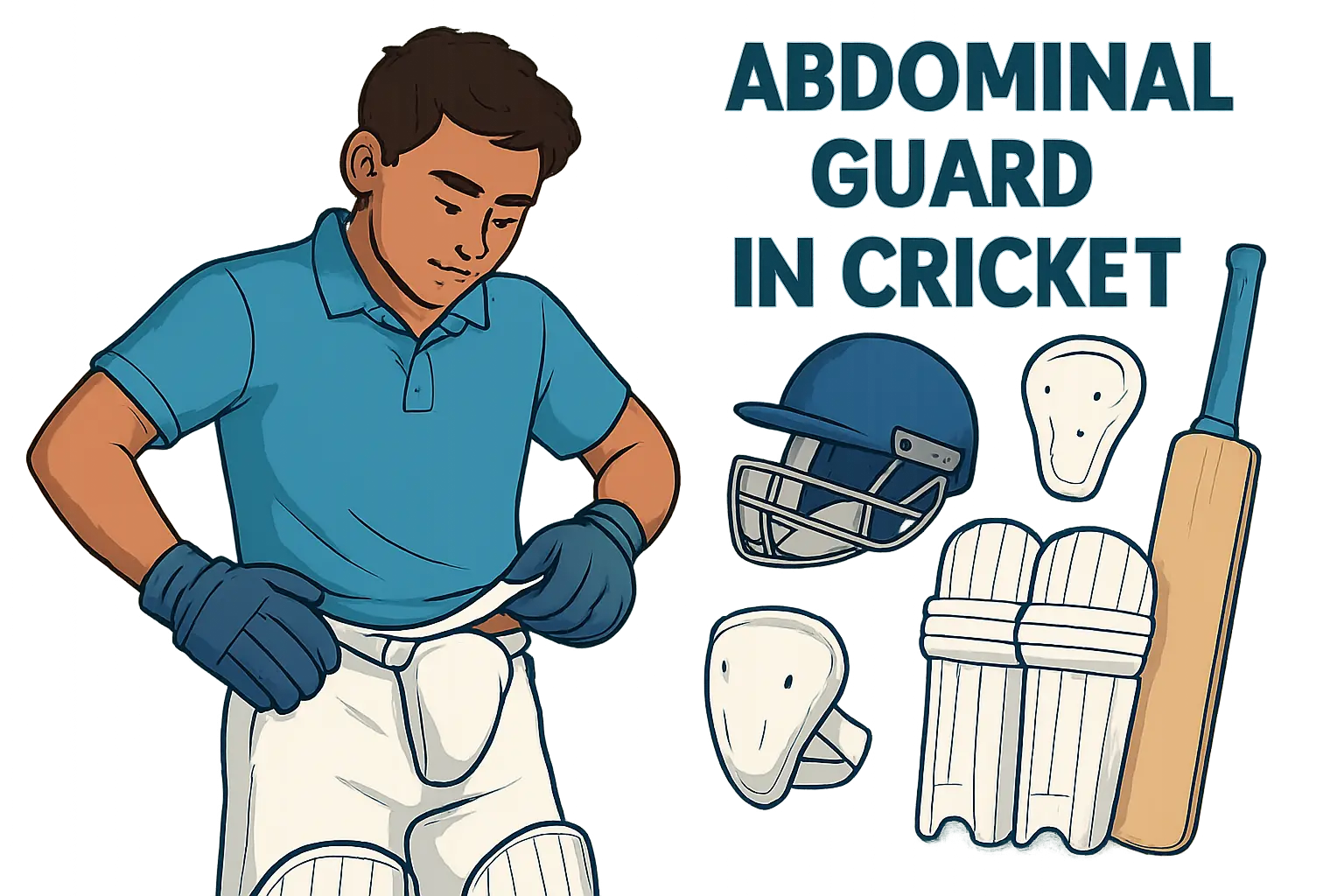
- Abdominal guard; thigh guards (combo or separate).
- Spikes/rubber shoes: Spikes for turf; rubber for matting.
- For keepers: Inner gloves with chamois, good-quality outer gloves, inner thigh guard.
- For fast bowlers: Ankle support socks, elbow sleeves only if medically necessary; don’t mask pain.
Backyard practice setup
- Hanging ball (tennis ball in a sock) for hand-eye and playing late.
- Chalk target on a wall for bowling; mark a good-length zone with tape.
- Simple net: Two poles and netting can transform repetition quality.
Education, Subjects, and Alternative Careers in Cricket
Balancing studies and cricket is possible and sensible. Selectors seldom punish good academics; they punish poor preparation.
Which subject to choose to become a cricketer?
- Choose subjects that keep your schedule manageable. Many athletes opt for combinations with fewer labs and long practicals.
- Consider sports science, psychology, or data analytics if you foresee alternate pathways in sport later.
University cricket and sports quota:
- Some universities run strong cricket programs and provide attendance relaxations. Sports quotas can secure admission and scholarships if you perform.
Alternative cricket careers:
- Coach: Board-recognized coaching levels (introductory to advanced). Start assistant-coaching at your academy; build a log of sessions.
- Analyst: Learn video software, coding basics, and match tagging. Master powerplay and death-over pattern recognition.
- Umpire: Take association umpiring exams; work your way up through club to premier.
- Physio/S&C: Accredited degrees, intern with teams. Injury prevention for fast bowlers is in demand.
- Scorer/match official: Certifications via associations; essential for structured leagues.
- Grounds staff/curator: Courses and apprenticeships; pitches win and lose matches.
Sample Weekly Training Plan for Aspiring Cricketers
This plan balances skill, fitness, and recovery for a club or academy player pushing toward district/state selection. Adjust volumes by role and season.
-
Monday:
- AM: Mobility + activation (20 min), speed drills (6 x 20 m, 4 x 30 m).
- PM: Skill session 1. Batters: new-ball nets (45 min). Bowlers: stock ball accuracy (36 balls), then 12 yorkers.
-
Tuesday:
- Strength: Lower body focus (split squats, trap bar deadlift light, Nordic curls), core finish.
- Fielding: High catches, ground fielding into throws, 30 mins.
-
Wednesday:
- Skill session 2. Batters: spin session (60 min). Spinners: 72 stock balls + pace variation by surface. Pacers: hard-length mapping (36 balls), cutters (12 balls).
- Conditioning: Yo-yo or intervals (6 x 2 min on, 1 min off).
-
Thursday:
- Recovery: Mobility, light pool/bike, 30–40 min.
- Classroom: Video review of last match or net session. Note two cues for next session.
-
Friday:
- Strength: Upper body + core, keep it crisp. No grinders before matches.
- Skill: Match scenarios. Batters: 24-ball powerplay, 36 middle-overs, 18 death. Bowlers: powerplay spell (18 balls), middle-overs squeeze (18), death (12).
-
Saturday:
- Match day or long center-wicket practice with full fielding. Log overs bowled, balls faced, dismissals, boundary zones.
-
Sunday:
- Off or light recovery walk, stretching, breathing.
Fitness Tests and Strength Standards: Quick Guide
- Sprint: Aim for sub-4.0 sec over 20 m for elite speed profiles; under 4.2 sec is solid at club/state fringe.
- Strength reference (not powerlifting totals):
- Trap bar deadlift: 1.5x bodyweight target for pacers; 1.2x for batters/keepers.
- Push-ups: 40 continuous strict reps as a durability marker.
- Pull-ups: 10–12 strict reps minimum for shoulder health and bat speed carryover.
- Flexibility:
- Ankle dorsiflexion: Knee past toes by 8–10 cm comfortably (wall test).
- Hip internal rotation: No painful pinching; smooth movement through range.
Trials: How to Present Yourself to Selectors
- Arrive early; bring your log of recent matches (runs/wickets, overs, SR/economy).
- Warm up properly; nothing says “amateur” like walking straight into a first ball.
- Batting trials:
- Show a plan to score. Communicate your role when you walk in: “I open and can take on pace in the powerplay,” or “I bat 4–6, busy against spin.”
- Avoid slogging first over; exhibit your scoring areas and rotation.
- Bowling trials:
- Start with stock balls on a channel. Ask for a field. Then add one change-up and the yorker.
- Don’t bowl 10 different deliveries; control beats novelty.
- Keeping trials:
- Ask for overs both back and up. Demand quality: medium pace up to stumps, then leg-spin with turns. Quiet hands, fast feet.
Country-Specific Guides: Snapshot Pathways
How to become a cricketer in India
- Join a club or academy affiliated to your district/state association.
- Target U16 and U19 inter-district and state trials; performances here are the highway to U23 and senior state.
- Keep tabs on state association portals for cricket trials in your city/state.
- Ranji selection flows from performance in state tournaments and consistent premier league success.
- NCA selection is performance-led; strong domestic form unlocks it.
How to become a cricketer in the UK
- Play club league cricket; push for county age-group selection.
- Attend county trials with recorded performances; aim for academy selection.
- Use Second XI performances to break into first-team cricket.
- Keep fitness and fielding at county standards: high repeat sprint ability, clean boundary work.
How to become a cricketer in Australia
- Enter premier/grade cricket; first-grade performance is king.
- State pathway squads scout grade firsts; earn second XI opportunities.
- Keep a red-ball base. White-ball power adds contract gravity.
How to become a cricketer in Pakistan/Bangladesh/Sri Lanka
- Perform in regional and club tournaments recognized by your board.
- Secure spots in high-performance programs and U19 squads.
- Fielding standards and fitness tests are non-negotiable now; treat them as skill components.
How to become a cricketer in South Africa
- Balance school and club cricket; push into provincial age groups.
- Target franchise exposure through consistent provincial returns.
How to become a cricketer in USA/Canada/UAE
- Clubs and academies are the entry gates.
- USA: Aim for Minor League Cricket; national combines and U19 tournaments are big levers.
- UAE/Canada: Club dominance + national selection events; many academies have direct relationships with boards.
Common Mistakes That Derail Selection
- Confusing nets with match readiness: You need center-wicket, scoreboard pressure, and rotating strike in scenarios.
- Over-varied bowling: Five half-baked balls don’t beat one lethal stock ball plus a disguised change-up.
- Neglecting fielding: Selection meetings love a player who saves 10 runs a game.
- Poor body language: Selectors notice sulking after a bad ball more than your last boundary.
- Ignoring fitness standards: If two players average the same, the fitter one gets picked.
FAQs: Age, Late Starts, Trials, and More
How to become a cricketer at 12
Master basics and play as much organized cricket as possible. Focus on throwing mechanics, front-foot and back-foot drills, and fun. Keep a soft, repeatable technique.
How to become a cricketer at 14
Target district selections. Choose a primary role but practice secondary skills weekly. Start logging performances and short video clips.
How to become a cricketer at 16
This is your first big gate. Train to a plan, chase U16 state selection, and build fitness to U16 benchmarks. Get into a premier academy if accessible.
How to become a cricketer at 18
U19 trials are close. Prioritize match exposure and scenario practice. If you miss U19, become a monster in club/premier firsts; U23 doors are open.
How to become a cricketer at 20
Not too late. Dominate club cricket, improve yo-yo and strength numbers, and communicate your role to selectors based on performances, not promises.
How to become a cricketer at 25
You need undeniable league numbers and elite fitness. Specialize: death-overs left-armer, powerplay spinner, finishing batter, or gun wicketkeeper.
How to become a cricketer at 30
Rare but possible via role specialization and franchise T20 ecosystems. Become elite at a defined skill set and maintain testable fitness.
Is 18/20/25 too late to become a cricketer?
No. But the later you start, the tighter your margin for error. You must specialize, own a role, and be measurable—fitness and performance both.
Under-16/Under-19 cricket selection process
District leagues and school tournaments → district trials → state age-group trials → inter-state age-group tournaments. Perform there; your name spreads.
How many hours should a cricketer practice daily?
Quality over quantity. Five to six focused sessions a week, 90–120 minutes each, beat seven unfocused days. Add two strength or conditioning sessions and one full rest day.
Which subject to choose to become a cricketer?
Any that lets you manage training and match schedules. Sports science, psychology, or analytics can help future-proof your path, but no subject is mandatory.
How to approach state selectors/coaches
Through results and your coach’s email, not DMs. Send a single-page season summary, 2–3 full-over or full-chase clips, and ask for feedback.
What are common mistakes in selection trials?
Swinging at every ball, bowling too many variations, sloppy fielding, visible frustration, and poor fitness.
How to get scouted for IPL/PSL/BBL
Excel in domestic competitions (state, first-class, List A, T20) or premier/grade leagues. Keep a verifiable record and a role-specific highlight package. Avoid unofficial “open trials.”
Cricketer fitness routine: what should it include?
Two skill sessions for your role, two strength sessions, one speed/conditioning session, one scenario session, and one recovery day each week.
Diet plan for cricketers
Three balanced meals with protein and carbs, two light snacks, steady hydration. Simple, repeatable meals over exotic plans.
Injury prevention for fast bowlers
Progress workloads, strengthen hamstrings and calves, hip mobility, and monitor back soreness. Respect pain signals early.
Cricket Academies Near Me: Choosing Locally
When you search for the best cricket academy in your city, visit in person. Watch a session quietly. If batters face only throwdowns and bowlers never bowl to batters, that’s a red flag. Ask these three questions:
- How many match days per month will I get?
- Who are your last three players placed into district/state, and how?
- What is my 12-week plan and review cycle?
If the answers are vague, keep walking.
Eight- to Twelve-Week Role Plans: Benchmarks to Chase
Fast bowler
- Weeks 1–4: 120 stock balls per week; 20 cutters; 2 sprint sessions; 2 strength sessions.
- Weeks 5–8: Add 20 wobble seam or swing reps; yorkers 24 balls weekly; simulate 3-over spells.
- Weeks 9–12: Death practice (18 balls) + powerplay (18 balls) twice weekly; fielding throws on the run.
- Benchmarks: Hard-length accuracy 65%+, yorker 50%+ in nets, yo-yo 19+ senior, 18+ U19.
Spin bowler
- Weeks 1–4: 240 stock balls weekly to target; pace control.
- Weeks 5–8: Introduce one change-up; bowl to left/right batters alternately.
- Weeks 9–12: Match-sim overs with attacking fields; work bat-pad catchers with keepers.
- Benchmarks: 75% ball landing in intended zone; dot-ball strings; economy under 5 in club one-dayers.
Batsman
- Weeks 1–4: Guard and trigger settled; 200 balls front/back-foot split; strike rotation circuits.
- Weeks 5–8: Add spin-specific sessions; one scenario session weekly.
- Weeks 9–12: Two scenario sessions weekly; death-over and chase rehearsals.
- Benchmarks: Dot% under 35 in middle overs, SR > 120 T20 club; red-ball balls-per-dismissal > 55 club firsts.
Wicketkeeper
- Weeks 1–4: 200 takes back, 200 up to spin weekly; reaction drills.
- Weeks 5–8: Medium pace up to stumps; leg-side takes; stumpings practice with live batters.
- Weeks 9–12: Full-innings simulations; squat endurance; lateral movement.
- Benchmarks: Drop rate under 5%, clean takes up to stumps vs varied spin.
From Zero to Club Cricket: Quick Starter Kit and Habits
- Keep a cricket journal: note cues, mistakes, and next practice goals.
- Film from behind the bowler; you’ll see seam position, footwork, and balance issues.
- Add two fielding drills to every session: one high, one ground.
- Make hydration and sleep boringly consistent.
Fees, Funding, and Value Decisions
If budget is tight:
- Prioritize match fees over boutique gear. A mid-range bat with the right pickup outperforms a top-range brand that doesn’t suit you.
- Choose group coaching plus one private session per month rather than only private lessons. Volume and match exposure matter most.
- Travel in groups to trials; share kit where safe and hygienic.
Table: Value checklist for academy spend
| Spend item | High value if… | Watch out for… |
|---|---|---|
| Monthly coaching | Includes match exposure and video review | Large groups with no feedback |
| Private sessions | Targeted to a current technical fault | Random throwdowns without plan |
| Strength & conditioning | Coach adapts to your role, tracks progress | Generic circuits that fatigue but don’t build |
| Tours/camps | Competitive fixtures with scorecards and selectors attending | Expensive tourist camps with no pathway impact |
Mindset: The Quiet Advantage
- Small wins: One better leave, a more patient over, a tidier pick-up—stack enough and your game tilts.
- Selectors care about repeatable habits under pressure, not loud nets. Build your cricketing personality: calm eyes, quick feet, and a plan you stick to even after a bad ball.
- Ego management: Seek hard bowls, not easy ones. Ask to bat when the ball is new. Bowl at set batters, not tailenders. You’re rehearsing for real cricket.
Putting It All Together: A Realistic Roadmap
- If you’re under 16:
- Play school and district, train four to five times a week, chase U16 selection. Learn to love boring drills—they become your comfort under pressure.
- If you’re 16–19:
- Hunt U19 selection relentlessly. If you miss it, flip the switch: own club/premier firsts, document performances, improve fitness to senior benchmarks.
- If you’re 20–23:
- Choose a role that teams buy: death spinner, left-arm powerplay pacer, finisher, keeper-batter. Become a nightmare in that role at your level; numbers and video will speak.
- If you’re 24+:
- Specialize, be fitter than everyone, build a portfolio of league domination, and plug into pathways like second XI, premier/grade, MiLC, or national trials where available.
Conclusion: The Hard Way Works
Cricket looks like poetry when viewed from a boundary rope; up close it’s carpentry—measured cuts, repeatable joints, and the patience to sand the edges for hours. If you want to know how to become a cricketer, the answer is not secret sauce. It’s a dozen honest habits, trained week after week, in the right competitions, under fitness standards you can prove. Tie your identity to a role teams want, stack performances where selectors actually look, and keep your body ready to express your skill when the chance finally arrives.
The game repays those who show up with a plan. Show up. Then keep showing up.