
Concise summary and a structured breakdown of the people, moments, and methods behind Kohli’s revival.
Answer in brief
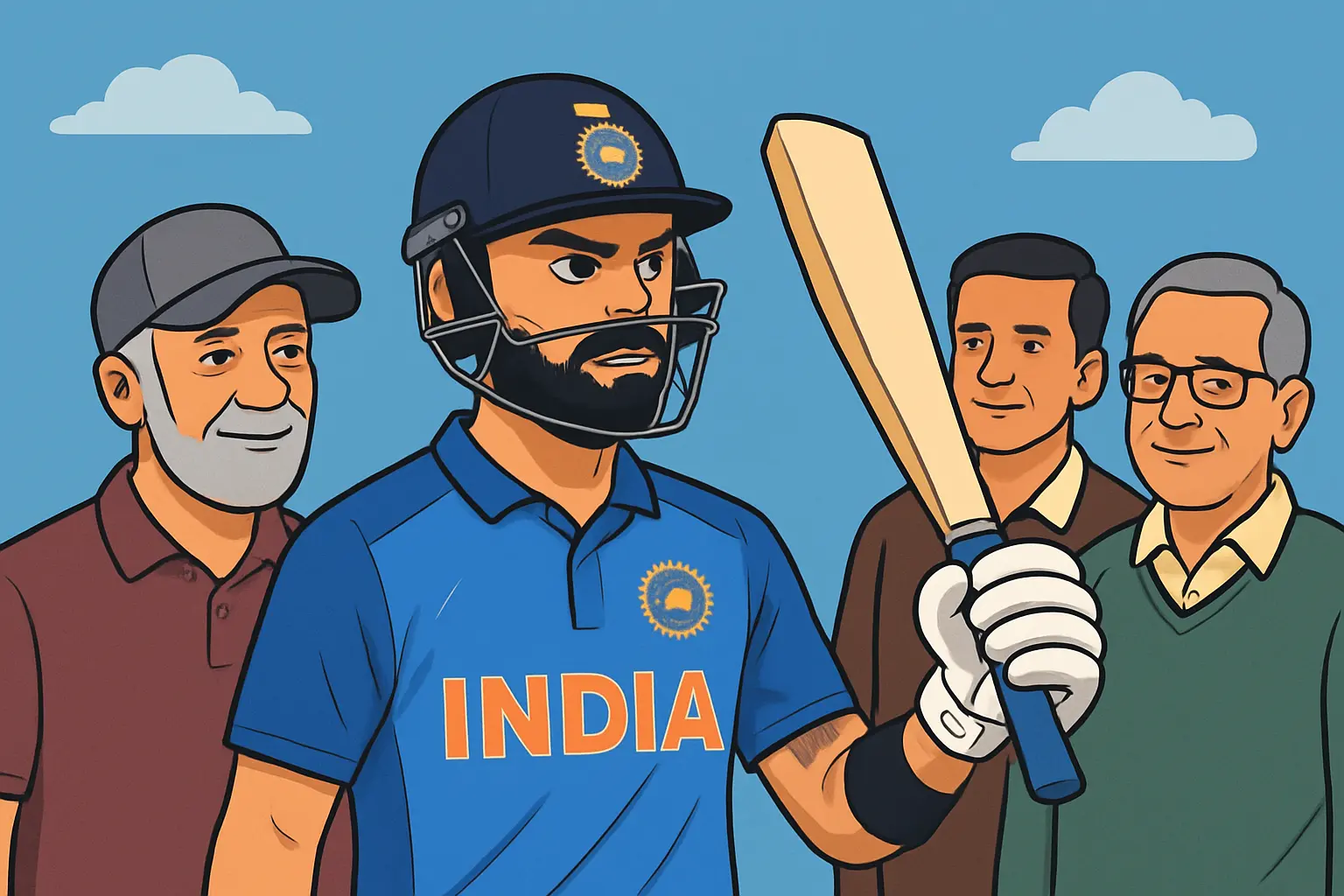
Virat Kohli’s career wasn’t “saved” by one person. It was steadied by a network: MS Dhoni’s selection faith and private messages; Rajkumar Sharma’s early discipline; Rahul Dravid’s process-first recalibration as coach; Anushka Sharma’s emotional support. Key turning points include post-England technical corrections, the mental-health break before the Asia Cup, the drought-ending hundred, the MCG night, and the sustained form through the home World Cup.
Key contributors at a glance
The premise: why this question matters
Great batters face corridors of doubt. For Kohli, a long lean patch and the burden of expectation created a narrative about “rescue.” The reality: comebacks are usually incremental—rest, small technical fixes, candid conversations, and a return to first principles rather than a single cinematic intervention.
Early mentors: the foundation that made a rescue possible
Rajkumar Sharma’s role in U-19 to international transition
Rajkumar shaped Kohli’s habits: leaving balls in the channel, hitting late, and structuring innings. Beyond technique, he taught discipline—arrive early, pack your kit, plan net work. Those early lessons provided a reliable template Kohli could return to during slumps.
The Dhoni factor: selection faith, quiet texts, and a broad back
Backing during early ODI/T20 years
Dhoni repeatedly selected Kohli when the scoreboard didn’t always please. That faith—selection and role clarity—settled Kohli’s shoulders and let his chase temperament develop without constant self-doubt.
The “only one who texted me” quote
Kohli later revealed Dhoni privately messaged him during his toughest stretch. The gesture was presence, not instruction: a leader protecting a player’s dignity at a fragile moment.
Guidance from legends and coaches: the refinements that stuck
Sachin Tendulkar
Tendulkar’s counsel emphasized marathon thinking: don’t play every ball you can, value leaving, protect a simple method from format noise. Small adjustments—tighter leave outside off, later trigger timing—came back into Kohli’s game during the revival.
Gary Kirsten and Anil Kumble (plus Bangar, Basu)
Kirsten taught purposeful sessions and role clarity; Kumble reinforced discipline and matchup thinking. Sanjay Bangar acted as a calm technical bridge; Shankar Basu raised fitness levels. Together they created an ecosystem that let Kohli return to reliable habits under fatigue and pressure.
Rahul Dravid’s approach as head coach: less clutter, more clarity
Personal support system: Anushka Sharma and the art of perspective
Anushka provided a separate life from cricket—context, honesty, and permission to pause. Her support made the sabbatical possible and helped Kohli return with joy rather than compulsion.
Pivotal series that changed the arc
- Post-England adjustments: improved leave percentage, straighter bat path, and less flash at early balls.
- Asia Cup hundred after sabbatical: measured opening innings—risk staged, timing returned, drought ended.
- MCG T20 World Cup chase vs Pakistan: staged, rehearsed finishing—timing and calm under pressure.
- Home ODI World Cup run: consistent middle-over control, singles-focused work, and late flourish—continuity replaced the redemption narrative.
MS Dhoni vs Rahul Dravid: who influenced the revival more?
Not a binary. Dhoni’s influence was foundational and protective (selection, belief, private empathy). Dravid’s role was restorative—workload management, tactical re-anchoring, and permission to reset. Both matter at different altitudes of the timeline.
What did Rahul Dravid change in Kohli’s game?
Dravid emphasized control: later contact and stoicism outside off in Tests; forensic rotation and higher-value hitting in ODIs; a measured T20 template. Crucially, he framed breaks as valid training—reset is work.
Anushka Sharma’s support: the constant few see, the many feel
Her impact was emotional safety—permission to be ordinary—and that translated into clearer cricketing decisions when it mattered most.
How Rajkumar Sharma’s early cues resurfaced during the comeback
Post-sabbatical, academy habits reappeared: head over the ball, front-foot stride control, straight bat path, and—above all—judgment. First-coach gospel returned as a stabilizer.
Sachin’s signature influence: think like a marathoner
Tendulkar’s biggest gift was spiritual: patience and shot curation. Kohli’s comeback included more leaves, delayed power, and singles-as-strategy—choices built for longevity, not highlights.
Kirsten, Kumble, Bangar, Basu: the lattice behind the leaves
- Gary Kirsten: shot-quality, purposeful sessions.
- Anil Kumble: discipline and matchup thinking.
- Sanjay Bangar: clear communication and small nudges.
- Shankar Basu: fitness foundation for late power and running between wickets.
Key innings that reframed the conversation
- Asia Cup hundred (vs Afghanistan): template knock—opening, risk managed early, full release later.
- MCG chase (vs Pakistan): calm phases + two operatic death-over sixes—belief reasserted.
- Home World Cup middle-overs clinic: dozens of small choices adding up to ruthlessness.
Tactical breakdown: what actually changed
- Against seam: more patience outside off, smaller initial hand push, and fewer early risky drives.
- In T20s: punch-and-rotate approach for early survival; one high-value power option per over later.
- Against spin in ODIs: wristy singles and staged slog-sweep decisions based on field spread.
- Running: return of intense two-run threat—fitness used as pressure tool.
- Emotion: celebrations shifted from defiance to gratitude—better long-term fuel.
Mentors, interventions, and evidence
| Mentor / Support | What changed or reinforced | Where you saw it |
|---|---|---|
| MS Dhoni | Selection faith early; calm, private support during slump | Early white-ball settling; Asia Cup return glow |
| Rajkumar Sharma | Drive and leave discipline; innings structure | Post-break restraint; straighter bat path |
| Rahul Dravid | Simplicity, workload sense, tactical refresh | ODI middle-over mastery; composed T20 template |
| Sachin Tendulkar | Patience and shot curation | Controlled big knocks; late-innings management |
| Kirsten / Kumble | Habit systems; data-informed discipline | Consistent prep; cleaner matchup plans |
| Anushka Sharma | Personal perspective; emotional reset | Willingness to break; lighter return |
| Bangar / Basu | Communication; fitness engine | Technique under fatigue; late-power finishes |
So, who “saved” Kohli’s career?
If forced to pick one name: Virat Kohli. He allowed himself to reset, accept coaching, and lean on family and leaders. If you want a short list: Dhoni for belief, Rajkumar for roots, Dravid for design, Anushka for home—plus Sachin and the broader coaching staff. The truth prefers a timeline over a headline.
किसने बचाया विराट कोहली का करियर: संक्षेप में
एक व्यक्ति ने नहीं—एक ताने-बाने ने। एमएस धोनी का भरोसा और निजी संदेश, राजकुमार शर्मा की बुनियाद, राहुल द्रविड़ की प्रक्रिया, अनुष्का का साथ। एशिया कप की वापसी, एमसीजी की रात, घरेलू विश्व कप की निरंतरता—यही कहानी है।
FAQs
- Who saved Virat Kohli’s career?
- No single person. Key influences: MS Dhoni, Rajkumar Sharma, Rahul Dravid, Anushka Sharma, and Kohli’s own willingness to reset.
- Did MS Dhoni save Virat Kohli’s career?
- Dhoni’s role was significant—early belief and private outreach. But revival needed coaching input, rest, and Kohli’s choices too.
- Who mentored Virat Kohli in his youth?
- Rajkumar Sharma at West Delhi Cricket Academy—discipline, balance, and innings construction.
- What role did Anushka Sharma play?
- Emotional safety and perspective. She supported the break and the return with joy over pressure.
- What did Rahul Dravid change?
- Simpler tactical anchors: better judgment outside off, focused strike-rotation in ODIs, a measured T20 plan, and permission to rest.
- Which series revived Kohli’s form?
- Asia Cup (hundred), the MCG T20 World Cup chase vs Pakistan, and the sustained home ODI World Cup patch.
- When did Kohli break his century drought?
- Asia Cup—hundred against Afghanistan after his sabbatical.
- Who texted Kohli during his slump?
- Kohli revealed that MS Dhoni privately messaged him during the toughest stretch.
- Did captaincy pressure affect his form?
- Yes. Captaincy magnifies scrutiny and drains energy. Stepping away and taking a break reduced cognitive load and aided rhythm recovery.
Extended analysis: the anatomy of a long-form revival
Visible tweaks matter less than the silent work: micro corrections (fixing specific balls rather than “form”), singles-as-strategy, respected batting sequences in T20s, and fitness-driven running. Beyond stats, Kohli’s smile returned—free players judge better and trust contact later. Data showed improved control outside off, fewer early false shots, and more late-contact events.
What fans and young players can take from Kohli’s journey
- Find a Rajkumar: a coach who disciplines talent with care.
- Value your Dhoni: leaders who back you when numbers falter.
- Listen to your Dravid: do less, better, and rest intentionally.
- Treasure your home: people who won’t grade your day by runs.
- Save yourself: admit fatigue, accept help, and return to first principles.
This summary is intended as a compact, structured distillation of the full chronology: mentors, messages, technique, and rest combined to return Virat Kohli to his best cricket.