Live
Mar 28
 Sunrisers Hyderabad
 Royal Challengers Bengaluru



IPL 2026 doesn’t feel settled yet—and that’s probably the most honest way to start. A few teams look sharp one day and then lose structure the next. Others are still adjusting combinations, almost testing things mid-season rather than arriving fully prepared.
That unpredictability is part of what makes this edition interesting. You’re not just watching results—you’re watching teams figure themselves out in real time. And that always creates opportunities, whether you’re following casually or looking a bit deeper.
Sports Welcome Bonus
100% up to $220
First Deposit Bonus
150% up to ₹30,000
Exclusive Offer
500% Bonus up to ₹45,000
The structure hasn’t changed much, but the way teams are approaching it seems slightly different. There’s more flexibility in how lineups are used, especially early on. Some teams are rotating more than expected, others sticking to a core group and trying to build rhythm quickly.
Sunrisers Hyderabad
Royal Challengers Bengaluru
 Kolkata Knight Riders
 Mumbai Indians
 Chennai Super Kings
 Rajasthan Royals
 Gujarat Titans
 Punjab Kings
 Delhi Capitals
 Lucknow Super Giants
Sunrisers Hyderabad
Kolkata Knight Riders
Lucknow Super Giants
Sunrisers Hyderabad
Kolkata Knight Riders
At first glance, the IPL format looks simple. Ten teams, a league stage, then playoffs. But once the season gets going, the structure starts to matter more than it seems on paper—especially when teams begin calculating what they actually need to qualify.
The tournament is split into two main parts: the league stage and the playoffs. Everything builds toward those final four spots, and the way teams navigate the early matches often decides how comfortable—or stressful—that path becomes.
All ten teams play a set number of matches across the season, facing different opponents under varying conditions. It’s not a straight round-robin where everyone plays everyone twice. Instead, the schedule is structured to balance matchups while keeping the tournament compact.
Each win gives 2 points. No surprises there. But what tends to get overlooked early on is how important Net Run Rate (NRR) becomes later.
| Element | Details |
|---|---|
| Teams | 10 |
| Matches per team | 14 |
| Points per win | 2 |
| Points per loss | 0 |
| Tie / No result | 1 point each |
| Ranking factor | Points → then NRR |
A team sitting mid-table halfway through the season can still push into the top four with a short winning streak. That’s why early losses don’t end campaigns—but they do make things tighter later.
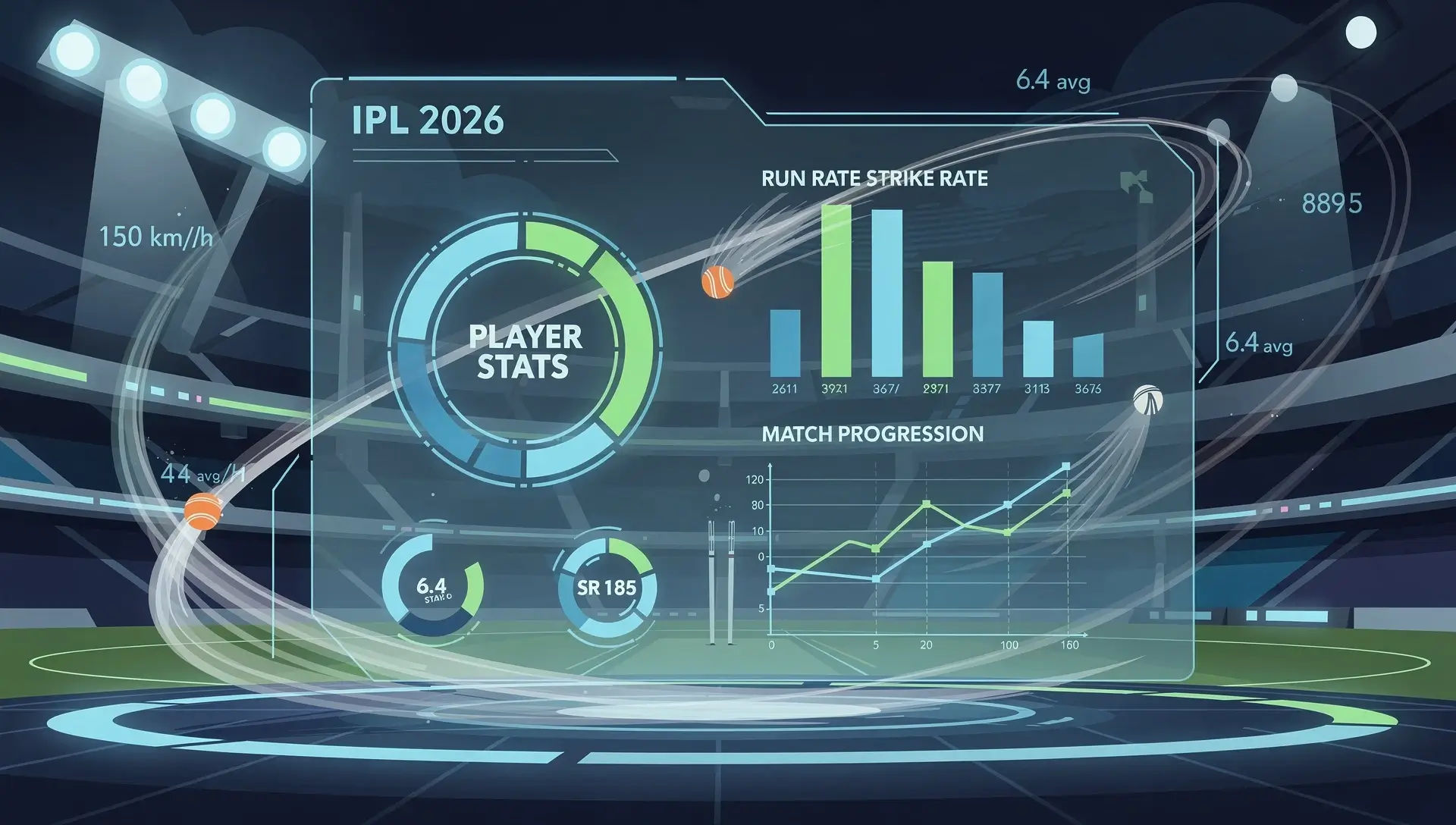
The table shifts constantly during the league stage. A couple of wins can move a team up quickly, but just as easily, one bad week can drop them out of contention.
What usually happens:
The difference between 3rd and 6th place is often just one win.
Once the league stage ends, the top four teams move into the playoffs. This is where the format gets slightly more interesting—and a bit more forgiving for the top two teams.
| Match | Teams Involved | What It Means |
|---|---|---|
| Qualifier 1 | 1st vs 2nd | Winner goes to Final |
| Eliminator | 3rd vs 4th | Loser is out |
| Qualifier 2 | Loser Q1 vs Winner Eliminator | Winner goes to Final |
| Final | Winner Q1 vs Winner Q2 | Championship match |
Finishing in the top 2 gives a clear advantage. Even if you lose Qualifier 1, you get another chance through Qualifier 2.
Teams finishing 3rd or 4th don’t get that safety net—one loss, and it’s over.
The structure rewards consistency without making the early phase too rigid.
That balance is what keeps the tournament competitive throughout.
On paper, every team wants to finish first. In reality, the key target is simpler:
Once a team secures enough points, the focus often shifts to improving NRR or managing player workload ahead of playoffs.
Chennai Super Kings
Mumbai Indians
Royal Challengers Bengaluru
Kolkata Knight Riders
Rajasthan Royals
Sunrisers Hyderabad
Delhi Capitals
Lucknow Super Giants
Gujarat Titans
Punjab Kings
Chennai Super Kings
Royal Challengers Bengaluru
Mumbai Indians
Delhi Capitals
Kolkata Knight Riders
Sunrisers Hyderabad
Rajasthan Royals
Gujarat Titans
Punjab Kings
Lucknow Super Giants
Royal Challengers Bengaluru
Mumbai Indians
The schedule is packed, as always. Matches come quickly, sometimes back-to-back, which doesn’t leave much time for teams to reset after a loss.
Today’s fixtures tend to carry the most uncertainty. Late team changes, pitch surprises, and toss decisions can all shift the balance. It’s the part of the tournament where adaptability matters more than long-term planning.
Looking ahead, you start to see where things could turn. Certain matchups stand out—not just because of team strength, but because of how those teams match against each other.
Some sides struggle against spin-heavy attacks. Others don’t handle high-pressure chases well. These patterns don’t always show in headlines, but they repeat.
Some fixtures on the calendar just carry a different weight. It’s not always about points—sometimes it’s timing, sometimes rivalry, sometimes the way two teams match up against each other. IPL 2026 has a few of those games already lined up, and they’re the ones that tend to shape momentum more than people expect.
This one never really needs an introduction. Even when both teams aren’t at their peak, the intensity doesn’t drop. It’s less about form and more about how these sides approach pressure.
Mumbai usually relies on depth—batting that doesn’t collapse easily, bowlers who can adjust late in the innings. Chennai, on the other hand, often plays a more controlled game, slowing things down and building toward the finish.
Matches between them rarely feel one-sided for long. Even when one team looks ahead, it tends to tighten late.
This matchup often turns into a pace-versus-power contest. Bengaluru’s strength usually sits in their top-order batting, while Kolkata tends to bring more variation with the ball.
What makes this interesting is how quickly momentum can flip. If RCB’s top order fires, the game opens up. If KKR controls the middle overs, things slow down and pressure builds.
It’s rarely predictable, even if one side looks stronger on paper.
These are the kind of matches that don’t get as much attention early—but often end up mattering more.
Both teams tend to play structured cricket. Not overly aggressive, not overly defensive. They build innings carefully, rely on bowling discipline, and usually stay competitive throughout.
The difference often comes down to small moments—fielding errors, missed opportunities, or how well the finishers handle the last few overs.
This one feels more tactical than emotional.
Delhi often plays with flexibility, adjusting based on conditions rather than sticking to a fixed plan. Lucknow, on the other hand, tends to focus on control—especially with the ball.
When these two meet, it’s usually not about explosive moments. It’s about who manages the middle phase better. The team that controls that period often ends up dictating the result.
These games can go either way, sometimes within a few overs.
Hyderabad tends to rely on bowling strength, especially in controlling runs during the middle overs. Punjab, meanwhile, often plays a more aggressive brand of cricket—quick scoring, risk-taking, and momentum-driven innings.
When those styles collide, the result depends on execution. If Punjab’s aggression works, they run away with it. If not, Hyderabad pulls the game back quietly.
The table early in the season can be misleading. A team might sit near the top after a few wins, but the underlying performance doesn’t always match the position.
Over time, though, things even out.
Teams with balanced squads and consistent execution usually rise. Others, especially those relying on individual brilliance, tend to fluctuate more.
Watching how the table changes after every few rounds gives a better sense of who’s actually building something.
Squads this year feel slightly uneven. Some teams look deep and flexible, while others seem to depend heavily on a few key players.
The usual franchises are all present, but their identities feel slightly different this time. Some have shifted approach entirely after the auction.
| Team Name | Short Code | Captain (Expected) | Home Ground |
|---|---|---|---|
| Chennai Super Kings | CSK | Ruturaj Gaikwad | M. A. Chidambaram Stadium (Chennai) |
| Mumbai Indians | MI | Hardik Pandya | Wankhede Stadium (Mumbai) |
| Royal Challengers Bengaluru | RCB | Faf du Plessis | M. Chinnaswamy Stadium (Bengaluru) |
| Kolkata Knight Riders | KKR | Shreyas Iyer | Eden Gardens (Kolkata) |
| Delhi Capitals | DC | Rishabh Pant | Arun Jaitley Stadium (Delhi) |
| Rajasthan Royals | RR | Sanju Samson | Sawai Mansingh Stadium (Jaipur) |
| Sunrisers Hyderabad | SRH | Pat Cummins | Rajiv Gandhi Stadium (Hyderabad) |
| Punjab Kings | PBKS | Shikhar Dhawan | PCA Stadium (Mohali) |
| Lucknow Super Giants | LSG | KL Rahul | Ekana Stadium (Lucknow) |
| Gujarat Titans | GT | Shubman Gill | Narendra Modi Stadium (Ahmedabad) |
Leadership plays a quiet but constant role. Some captains push aggressive strategies early, trying to control matches quickly. Others prefer a slower build, keeping things stable and adjusting as the game develops.
Key players still matter—but consistency matters more. One standout performance doesn’t carry a team through the season.
The auction reshaped several teams in noticeable ways.
How these changes settle will define the season more than initial reactions.
Predictions this season feel less straightforward. There’s no clear dominant side yet, and outcomes often depend on smaller details.
Today’s matches usually come down to conditions and form.
Flat pitch? Expect runs and batting depth to matter.
Slower surface? Bowling control—especially spin—becomes more important.
Tomorrow’s games allow more structured thinking. Matchups start to stand out more clearly, and you can spot where teams might struggle.
Looking ahead, it’s less about individual games and more about direction.
Which teams are improving?
Which ones are still inconsistent?
That’s where predictions start to feel more reliable.
Betting during IPL always comes with movement. Odds shift quickly, especially in live markets.
Some markets tend to hold more value:
Live betting feels reactive, but it rewards awareness more than speed.
One over can change the game—but not every shift is meaningful. Recognizing the difference is where the edge sits.
Outright markets remain open this season. No team has clearly separated itself yet, which keeps options flexible.
The auction this year wasn’t quiet. Some teams pushed hard for specific players, paying well above expectations.
Big price tags bring attention—and pressure. Early performances from these players tend to be watched more closely than others.
A few teams clearly changed direction after the auction. Some became more aggressive. Others focused on control.
Whether those strategies hold up is still unfolding.
The season has already seen a few developments that matter more than they seem at first.
Injuries always affect balance, especially when they involve key players.
Some players are joining late or missing early matches. It doesn’t define the whole season—but it changes early results.
Form is still developing. Some teams are finding rhythm. Others are still inconsistent.
That gap will likely widen as the tournament progresses.
Stats start to matter more as the season goes on.
Early leaders often change, but players who find rhythm early tend to stay in the race.
Bowling consistency—especially in key overs—usually defines this list.
Run rates, economy rates, and consistency under pressure tell more than just wins and losses.
A few things feel worth watching closely:
These details tend to define the season more than big moments.
There’s no perfect method.
But certain things help:
It’s less about certainty, more about reading situations better than average.

200% up to 20,000 INR
30x on casino / 5x on sports bets

700% up to ₹40,000
7x (sports) / 25x–40x (casino)

700% package up to ₹20,000 across deposits
7x–30x depending on bonus type

150% up to 20,000 INR
5x–16x (sports) / up to 30–35x (casino)

125% up to 22,000 INR + FS
35x (casino) / 5x (sports)

100% up to 130,000 INR + FS
5x (sports) / varies for casino
Is IPL 2026 predictable?
Not at this stage. The season still feels open, with no clear dominant team.
What matters most in predictions?
Form, conditions, and how teams handle pressure.
Do early results define the season?
Not entirely, but they influence momentum and confidence.
Is live betting better than pre-match?
It depends. Live betting offers flexibility, but requires quicker decisions.