
A calm middle-order heartbeat LSG needed — a timing-first finisher who reads the game, rotates intelligently, and accelerates with precision.
Introduction: the calm middle-order heartbeat LSG needed
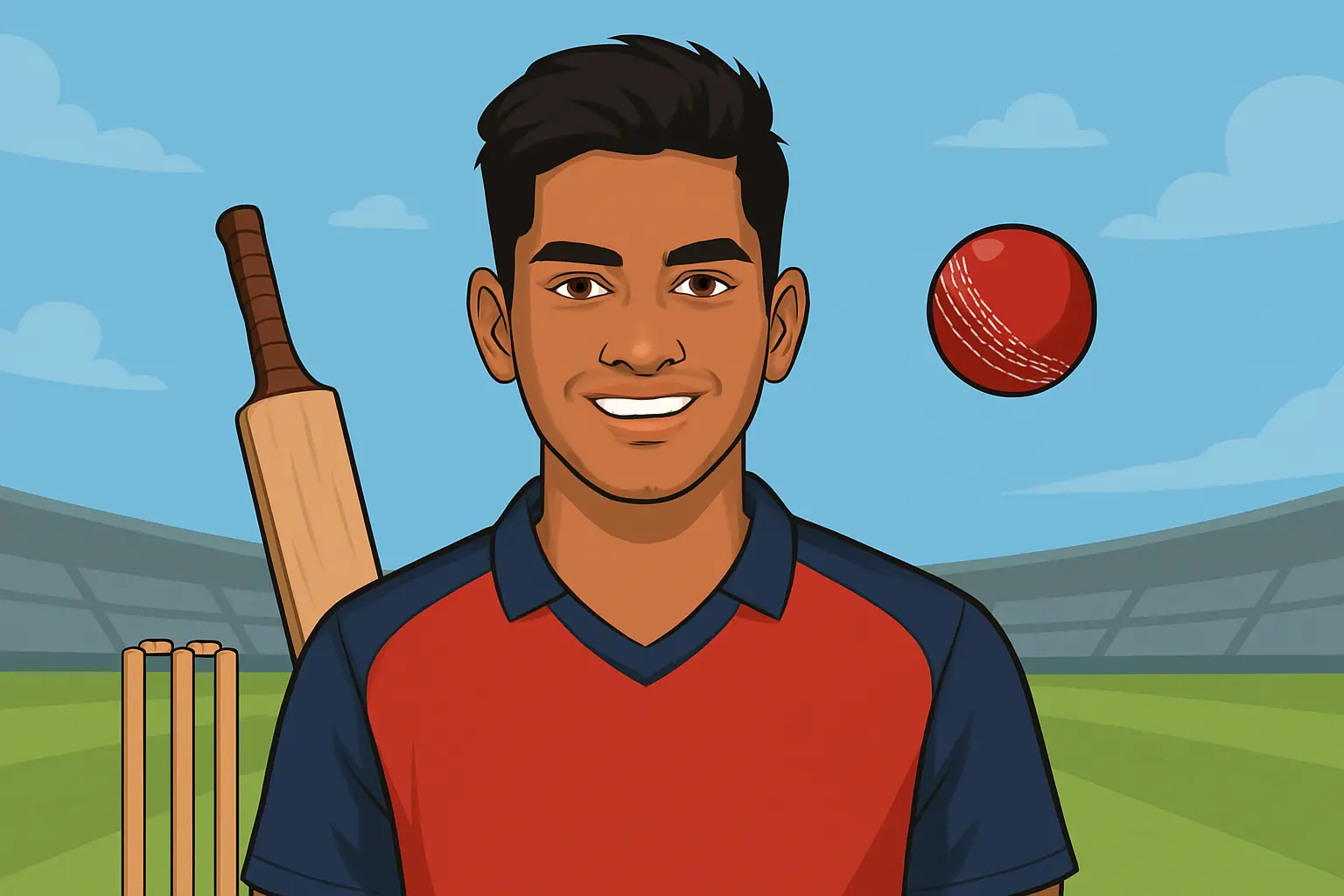
Every franchise needs a player who keeps nerve and tempo in that unforgiving space between overs seven and fifteen. A batter who can fix a wobble, then flip a switch and find the third tier when the game screams for acceleration. Ayush Badoni, the compact right-hander from Delhi, stepped into that space for Lucknow Super Giants and refused to blink. The first impression he left on the league was a cool, craftsman’s half-century under pressure. The lasting impression has been a mature finisher’s brain paired with a shot-maker’s instinct.
Badoni looks unhurried; even when the clock shouts, he whispers. He sets fields up, steals twos that feel like threes, and slips lofted drives between two men who thought they had him covered. The bat path is tight, the wrists load late, and the decisions feel like they’ve already been made as the ball leaves the bowler’s hand. That is why coaches warm to him. That is why captains trust him. And that is why, in an era of brute-force boundary hitters, a timing-first, low-ego middle-order cricketer has become indispensable.
Ayush Badoni biography: roots, craft, and the Delhi grind
- Full name: Ayush Badoni
- Profession: Cricketer (right-hand batter; occasional off-spin)
- Primary teams: Lucknow Super Giants (league), Delhi (domestic)
- Role: Middle-order batter and finisher
- Hometown: Delhi
- Batting style: Right-hand bat
- Bowling: Right-arm offbreak (part-time)
- Body type: Compact, strong forearms; quick between the wickets
- Education/school: Delhi-based schooling; groomed through elite city circuits
- Mentorship: Shaped by the culture of Delhi’s famed academies; Sonnet School influences
- Language comfort: English and Hindi; composed in media settings
- Public persona: Low-key, respectful, team-first
The last name tells a story: Badoni traces roots to the Garhwal region, a lineage that shows up in the steel of his cricket. Delhi gave him the stage and the edge—dusty nets, wry coaches, never-ending match simulation, and a daily fight for selection in a talent-crammed ecosystem. Out of that crucible came a batter with well-burnished basics, excellent range against spin, and the patience to play the long domestic game while keeping a restless eye on T20.
Cricketer profile: the compact T20 decision-maker
For Lucknow Super Giants, the template has been simple yet nuanced: stack the top with stability and firepower, then install an adaptable right-hander in the middle to handle spin-dense periods and be ready to close. Badoni’s presence solves two things at once. He offers control when early wickets fall, and he unlocks lateral scoring options when slow bowlers operate with the field spread.
He doesn’t have the exaggerated levers of a six-foot basher, so his power lives in timing, bat speed, and placement. He keeps the blade close to the body, lets the ball come, and uses late wrists to split midwicket and long-on, or glide behind point. When seamers go wide at the death, he opens the face and goes inside-out; when they go full, he leans or ramps. Against slow bowlers, he brings the sweep family plus a neat drop-kick over long-on.
A quick snapshot (evergreen details)
- Primary role: Middle-order batter; finisher in T20
- Alternate role: Off-spin in emergencies; often a decoy
- Batting identity: Timing-first, strong vs spin, boundary access through straight and leg-side pockets
- Fielding: Agile in the ring; reliable hands
- Temperament: Calm, calculation-heavy, thrives in chases
- Jersey number: Low double-digit in the league; may vary
Why Ayush Badoni clicked for LSG so quickly
Some players take time to discover their lane in franchise cricket. Badoni walked in with a map. Lucknow’s think-tank wanted a right-hander who could bat anywhere between four and seven, a player who could be promoted for spin or held back for velocity. He checked those boxes and added one more: an appetite for responsibility. His maiden league season delivered pressure-proof runs and a highlight-reel debut fifty that didn’t feel like a debut at all.
Since then, his role has sharpened. With a left-hander around him—often a power hitter who soaks up off-spin—Badoni provides right-hand insurance. He turns singles into rotation, rotates spin out of rhythm, and picks the right ball to kill. When the top order explodes, he’s the glue; when it buckles, he’s the brace. Coaches call it game awareness. Teammates call it trust.
Domestic cricket: Delhi’s school of precision
Delhi cricket hardens you. Pitches can be slow one day and skidding the next, with huge variance even across grounds in the capital. The standard of seam and spin is unforgiving; there’s always a bowler hunting your technique. Badoni’s domestic journey through multi-day and one-day competitions built patience and range.
- Ranji Trophy and red-ball grounding: Compact technique, soft hands, judgement outside off.
- Vijay Hazare exposure: One-day cricket gave him phase understanding and risk management.
- Syed Mushtaq Ali growth: T20 domestics taught gear-changes and boundary selection discipline.
Badoni came through India’s age-group pathways and camps that stress repeatable technique and composure. He was seen as a late-overs specialist even as a teenager—balanced at the crease with an unusually quiet head.
IPL overview: how he fits, how he wins
- Role: Anchor-finisher hybrid at 4/5/6
- Promotion logic: Up the order against left-arm orthodox or leg-spin; held for later against raw pace
- Boundary map: Strong straight and midwicket arcs; square options via late cuts and ramps
- Situational focus: Middle-overs stability; death-overs calculation with quick wrists
His maiden match delivered a statement: he could weather a wobble and still go big. That composure has become his identity. He reads fields, checks the square boundaries, and stores seams and cross-seams from the bowler’s run-up.
Batting analysis: technique that travels
Set-up and trigger
- Stance: Compact, slightly open, bat raised late to keep stillness.
- Trigger: Small back-and-across; aligns head and off-stump without over-committing.
- Contact zone: Late, under-the-eyes hitting for access to both sides.
Against pace
- Lets length come to him, keeps hands tight, looks for singles through midwicket or behind point.
- Prefer riding pull vs smash; escalates to flat-batted pull when set.
- Death overs: ramps, inside-out over cover, trusted straight swing on full length.
Against spin
- Strike rotation first, power second; commands singles to long-on/long-off and midwicket.
- Uses the sweep family and a neat inside-out loft against drift to middle-and-off.
Where the boundaries come from
Straight lofts, leg-side whips and slog-sweeps, off-side late cuts and inside-out glides—all executed with timing and placement rather than brute force.
Role by phase: how to use Ayush Badoni in T20
| Phase | Primary tasks | What he does well | What to avoid |
|---|---|---|---|
| Powerplay (1–6) | Rebuild or punish spin if promoted | Calm rotation, measured lofts | Chasing hard length on the up |
| Middle overs (7–15) | Boss spinners, feed set hitter | Sweeps, inside-out lofts, hunting deep midwicket | Getting stuck in over-protection mode |
| Death (16–20) | Finish lines: ramps, target missed yorkers | Ramp, inside-out vs wide yorker, straight swing | Sitting too deep against back-of-length into the pitch |
Lucknow often stacks a left-hand power presence around him, giving flexibility to neutralize bowlers. Badoni either extends the anchor or bolts on to the finisher; his elasticity is tactical advantage.
Trendlines: vs pace and spin
Early against pace he is risk-managed; middle against spin is his laboratory; end overs against variations show improving pre-emptive reads on slower balls and wide yorkers. His best route is to keep shape and punish misses rather than attempt blind violence.
Comparisons: Badoni vs Tilak Varma, Rinku Singh, Dewald Brevis
- Tilak Varma: Left-hander with line-breaking angles; Badoni complements spin-heavy middle phases.
- Rinku Singh: Explosive late-overs heavyweight; Badoni is surgical, precision-first.
- Dewald Brevis: Raw bat speed and range; Badoni provides higher floor in tricky chases.
Best innings breakdown: lessons from key knocks
- First-impression fifty: Play late, choose the bowler, loft straight when full.
- Calculated close-out cameo: Uses ramps and open-faced shots to turn overs; finishing is geometry.
- Spin clinic in the middle: Early singles to manipulate fields, then hitting the gap.
Strengths that travel & areas to develop
- Strengths: Neutralizing slow bowlers, reading fields, partner management, calm in chases.
- Areas for development: Power vs hard length late; first-ball impact in death overs; more bowling usage as a tactical card.
Career formats and hallmarks
| Format | Role focus | Hallmarks |
|---|---|---|
| T20 (league + domestic) | Middle-order, finisher | Strike rotation vs spin, end-overs improvisation |
| List A | Stabilizer in middle overs | High contact, gap-finding, late acceleration |
| First-class | Technique sharpening | Compact defense, patience on slow decks |
Highlights to know: maiden league fifty under pressure, multiple finishing cameos, consistent spin control across domestic tournaments.
IPL stats & usage notes (contextual)
- Team: Lucknow Super Giants
- Debut: First campaign of the franchise
- Batting position: Four to seven; sweet spot five or six
- Strike-rate trend: Rises from middle overs into death when set
- Highest league score: Debut half-century that set the tone
Seasonal rhythm, micro-matchups & venue notes
Badoni typically has an early-setting period, then a mid-season inflection where the finishing identity surfaces. Versus spin-heavy teams he’s often promoted; versus pace-heavy sides he serves as the glue alongside a brute-force partner.
- Vs KKR/CSK (spin): Promote to unpick spinners.
- Vs MI/GT (pace): Hold as glue; hunt mis-executed yorkers and slower balls.
- Vs mystery spin/leg-spin: Inside-out loft and hard sweep become field-bending tools.
Delhi domestic focus: quiet accumulator with T20 teeth
Domestic scorecards don’t always scream for a player like Badoni. But drill down into the overs and you’ll find why coaches love him: limited dot-ball pressure against spin, opening the straight channel to force mid-off/mid-on back, and calm when hitting late runs is the only way forward.
Hindi mini-bio (Ayush Badoni ke bare mein)
Ayush Badoni ek khamosh par zimmedar middle-order batsman hain. Delhi se aane wale is right-hand batter ne Lucknow Super Giants ke liye T20 league me apni pehchaan banayi—spin par control, behtar shot selection, aur chase me dimaag se khelna. Finisher ki role me woh ramp, inside-out loft, aur straight swing se nikalta hai. Domestic cricket me Delhi ke liye disciplined batting aur rotation se innings ko sambhalta hai. Public glare se door, par match ke beech me bilkul present—yeh hi unki asli strength hai.
Education, family, influences & coaching
He comes from a family that let cricket take center stage while insisting on education and humility. The Sonnet ethos of disciplined nets, purposeful simulation, and repeatable drills built his base. Senior pros in Delhi and franchise performance staff contributed scenario practice and boundary mapping.
- Coaches & mentors: Sonnet legacy, Delhi senior pros, franchise performance staff.
The finisher’s psychology
Finishing is choosing: bowler, ball, area, and risk ceiling. Badoni’s routine is process-driven—early balls protected, eighth–ninth deliveries scanned, last two overs reserved for high-percentage 70–30 shots rather than 50–50 slugging. He lets teammates swing knowing he’ll carry batting intelligence through chaos.
Fantasy & Dream11 lens
- Spin-heavy middle on slow surfaces increases his probability of facing more balls — boosts consistency and ceiling.
- If top order is missing a senior batter, his promotion chances rise — more fantasy opportunities.
- On batting-friendly grounds with short square boundaries, end-overs scoring remains relevant; ceiling depends on early entry.
Social presence, commercial profile & fitness
Quiet social presence (training clips, match photos), a trusted commercial profile, and a fitness routine prioritizing forearm strength, core, sprint work, and recovery blocks. Compact mechanics help durability and limit compensatory injuries.
Records, milestones & the spin clinic
- Maiden league fifty on debut — imprint moment.
- Multiple finishing cameos that shifted win probability for LSG.
- Domestic T20 stretches with minimal dot-ball percentage against spin.
How he plays spin: still head at release, modest stride, soft hands early, firm to punish late; scoring blueprint: nudge first two balls for ones, loft one to adjust the ring, then milk gaps.
Hitting zones & notional wagon wheel
- Straight (0–30°): Strong; clean lofts and ground drives.
- Cover to point (30–75°): Selective; inside-out loft becomes premium once set.
- Point to third man (75–120°): Late cuts and ramps; situational.
- Leg side (120–180°): Bread-and-butter; flicks and slog-sweeps when set.
Clutch chases & temperament
Chase batting is a relationship with time. Badoni treats each over like a ledger—two safe singles, one boundary if offered, protect the end ball, reassess. By the thirteenth over he often has enough banked to keep par within reach; that is modern chase expertise.
Match-specific adjustments & fielding
Versus Chennai: expect spin phases. Versus Mumbai: prepare for pace and change-ups at the death. Versus Kolkata: promotion window for spin control. Fielding is tidy—orthodox catches, angle tidy at point, reliable long-on judgment.
LSG batting strategy & Badoni’s slot
LSG’s batting orbits around a stable top, a power connector, and role players who optimize match-ups. Badoni is the engineer — he stabilizes when needed and accelerates when the plan calls for it. His floating number is an advantage in the problem-solving version of T20.
Interviews, hometown, age and private life
Interviews reveal a process-first mindset: scenario practice, trust the option you’ve trained, focus on task not noise. Delhi’s maidan culture shaped competitive edge and humility. He keeps personal life private; family presence is visible in stands and celebrations.
Career development roadmap
- Power development without losing bat path shape (two more metres on flat-bat pull).
- Bowling as a tactical card: one or two overs of off-spin frees a roster spot.
- Leadership: formalize communication with younger batters on reading fields.
Reading impact without staring at totals
Context > counts: a 24 off 12 in a late chase can exceed the value of a quiet thirty. Phase wins and partnership health reveal his invisible work—how often a set hitter accelerates when Badoni partners him is revealing.
Day-in-the-life (match day) & sustainable habits
- Morning mobility and activation; short bat swings to groove path.
- Visual run-through of expected overs and one nightmare over rehearsed to escape.
- Field scan on warm-up—boundaries, wind, outfield pace.
- Shot diet: small set of high-return options and consistent polishing.
What young batters can copy
- Build a repeatable contact point before chasing ramps.
- Learn to move mid-off/mid-on; owning the single opens scoring channels.
- Batting in the middle overs: always have a one, then graduate to a four.
- Don’t overpursue the pull if the deck doesn’t love it; find the straight channel.
Balanced limitations & closing reflection
Badoni is not a 100-meter hitter who clears every fence from ball one. If a chase demands instant hyper-attack against red-hot pace, he may prefer a ball or two to find an option. The flip side: once in, he squeezes every percent from field and bowler and rarely gifts brain fades.
Closing reflection: Ayush Badoni plays with the volume turned down. In a format that rewards noise, that’s his superpower. He watches, calculates, and chooses. For Lucknow, he’s identity; for Delhi, continuation of a proud school of batters. For the neutral fan, he’s a reminder that T20 batting is a study in options, time, and trust.
Reference tables
| Surface type | Entry strategy | Boundary plan | Risk ceiling |
|---|---|---|---|
| Slow/low | Arrive 4/5; attack spin early | Sweeps, straight chips, midwicket pick-ups | Moderate — minimize errors |
| True/bouncy | Float to 5/6; back end-overs | Straight hits on pace, ramp vs width | Higher — timing supports big shots |
| Gripping with big square | Promote for spin control | Inside-out and hard sweep to move fields | Moderate — avoid cross-bat early |
| Dew-heavy | Hold for death; ball skids | Full-blooded straight swing, inside-out | High — skid aids boundaries |
| Attribute | Detail |
|---|---|
| Name | Ayush Badoni |
| Hometown | Delhi |
| Teams | Lucknow Super Giants, Delhi |
| Batting style | Right-hand bat |
| Bowling | Right-arm offbreak (occasional) |
| Role | Middle-order batter; finisher |
| Trademark shots | Inside-out loft, ramp, straight loft, slog-sweep |
| Personality | Composed, analytical, team-first |