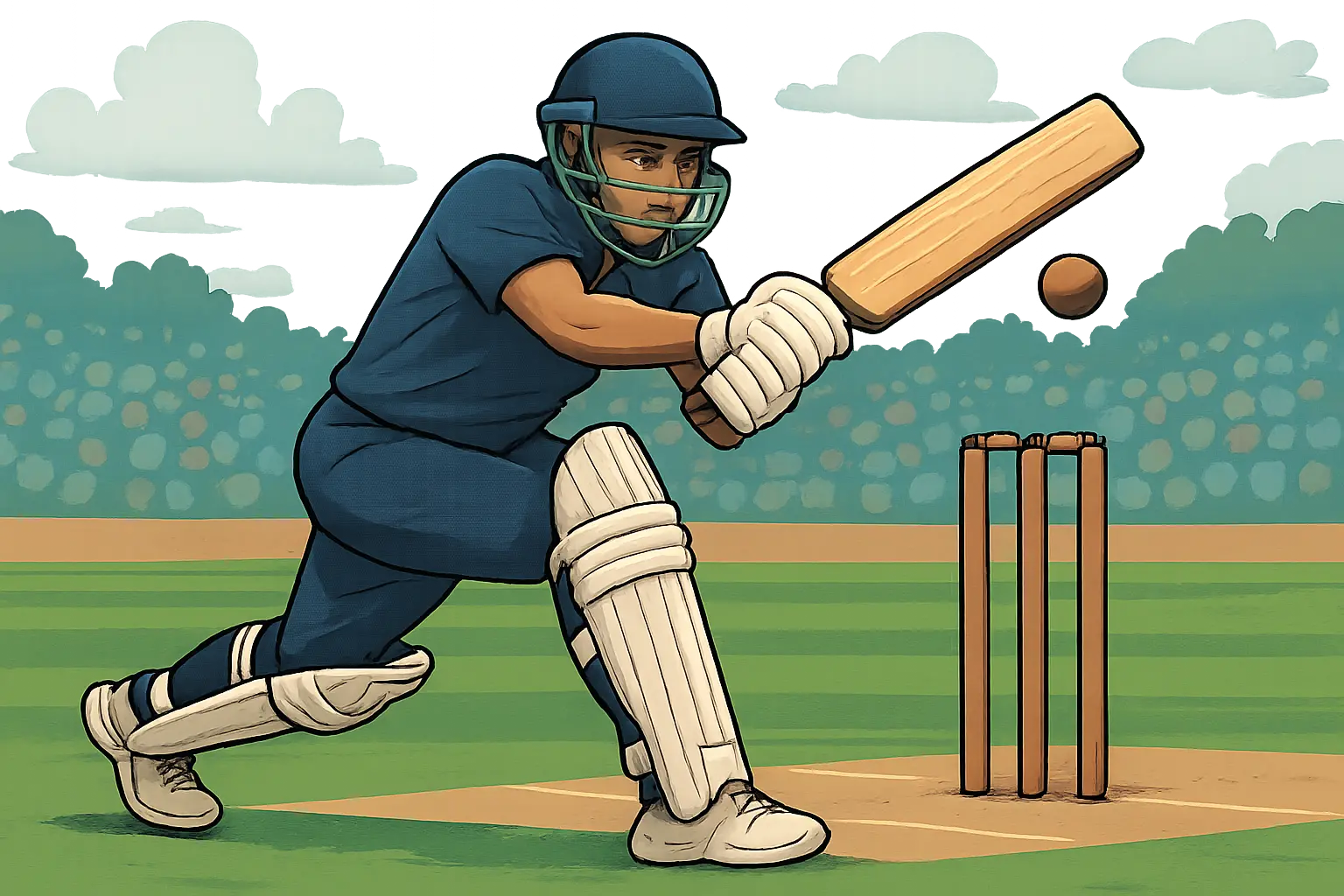

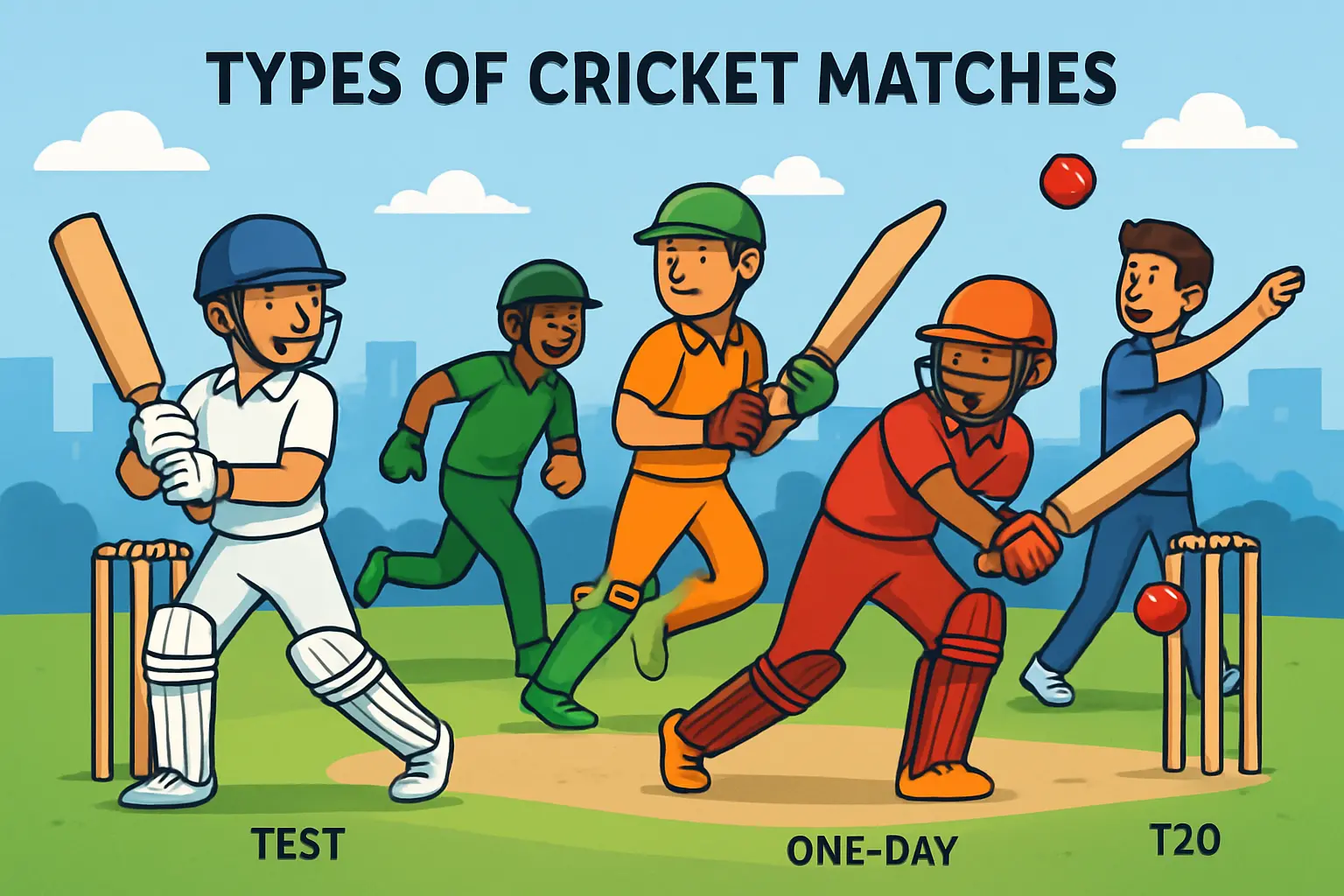
Cricket is a single game wearing many coats. One day it asks for patience and craft across endless spells under a hard sun; the next it’s a one-evening sprint where mis‑hit sixes still find the rope and a single over recasts destiny. Those contrasts aren’t quirks—they’re the point. Different types of cricket matches reveal different versions of the sport’s soul, built on shared fundamentals but tuned to different rhythms, venues, and audiences.
I’ve reported from crumbling pavilions and engulfing packed stadiums, sat in selection meetings, and watched captains shape sessions like chess masters moving pieces across a green board. The truth I’ve learned is this: understanding cricket formats is understanding why a back-foot punch on day three can be more beautiful than a ramp shot in a chase, and also why a bowler’s first over in the dusk of a day-night T20 feels like theatre.
What are the types of cricket matches?
Short definition box
- International formats recognized by the ICC: Test matches, One-Day Internationals (ODIs), Twenty20 Internationals (T20Is).
- Domestic classifications aligned to those: first-class (multi-day), List A (one-day), T20 (domestic).
- Newer/alternative short formats: T10, The Hundred, six‑a‑side.
- Modified environments: indoor cricket, beach cricket, tape-ball cricket, Kanga cricket (kids), school and age‑group (Under‑19, Under‑17).
- Contextual match types: franchise leagues vs international, warm‑up/tour matches, exhibition/charity/testimonial, bilateral series and tri‑series.
These aren’t just labels; they define overs per innings, innings count, balls used, possible results, pace of play, and tactical priorities.
The quick comparison: how cricket formats differ
Below is a concise comparison of the most common forms of cricket, combining international and domestic equivalents.
| Format | Innings per side | Overs/balls per innings | Typical duration | Ball color and kit | Fielding restrictions | Follow‑on possible? | Tie/draw outcomes | Typical tournaments |
|---|---|---|---|---|---|---|---|---|
| Test (international) / First‑class (domestic) | 2 | Unlimited overs; time‑based. Red or pink ball. | Up to five days (first‑class usually three or four) | Red ball by day; pink ball under lights; white clothing | None (close catchers common early) | Yes (second innings can be enforced) | Can be a draw, tie, win, or loss | World Test Championship, domestic championships |
| ODI (international) / List A (domestic) | 1 | 50 overs (300 legal balls) | 7–8 hours with breaks | White ball; colored clothing | Powerplays (phased inner ring limits) | No | Tie possible; often resolved by Super Over in knockouts | World Cups, domestic one‑day cups |
| T20I (international) / T20 (domestic) | 1 | 20 overs (120 legal balls) | ~3 hours in an evening | White ball; colored clothing | Powerplays (stricter early overs) | No | Tie resolved by Super Over in many comps | T20 World Cups, IPL/BBL/PSL/CPL and other leagues |
| T10 (domestic/franchise exhibitions) | 1 | 10 overs (60 legal balls) | ~90 minutes | White ball; colored clothing | Short powerplay windows | No | Tie resolved by Super Over | Emerging franchise events and festivals |
| The Hundred (domestic competition) | 1 (100 balls per innings) | 100 balls (bowled in sets; tactical timeouts) | ~2.5 hours | White ball; colored clothing; tactical helmets often miked | Powerplay equivalents set by competition rules | No | Tie‑breakers per competition; usually Super Over | Domestic competition in England and aligned circuits |
Foundations that shape every match type
Before diving deep into each form, a few building blocks matter everywhere:
- Overs and balls: An over is six legal deliveries bowled by a single bowler. The cap on overs (or total balls) defines the tempo of ODIs, T20s, T10, and The Hundred; in Tests, time rather than over caps dictates pace.
- Innings: Test/first‑class teams bat twice; limited‑overs formats bat once. Declaring—ending an innings voluntarily—exists in multi‑day cricket, never in limited‑overs.
- Bowling limits: Limited‑overs formats cap how many overs one bowler can deliver (ODIs allow up to 10 per bowler; T20 up to 4; T10 up to 2). Tests have no individual cap beyond stamina and captaincy.
- Powerplays and fielding restrictions: Modern white‑ball cricket regulates how many fielders may stand outside the inner circle in different phases, opening gaps and dictating both risk and scoring patterns.
- Result types: Test/first‑class cricket is the only domain where a draw—time runs out—sits beside win, loss, tie. Limited‑overs adds “no result” (insufficient overs due to weather) and often employs a Super Over to break ties in decisive matches.
- DLS method: Weather truncates innings in white‑ball cricket. The DLS method recalculates targets based on wickets lost and overs remaining. In international and elite domestic limited‑overs matches, DLS is the language of rain.
Test cricket explained: the long game that judges complete players
Test cricket is the sport’s examination room. Over multiple days, two teams play with a red (or pink) ball, in whites, across a narrative that stretches and tightens across sessions. Batters must lace patience to judgment. Bowlers craft sequences: set‑ups, decoys, reverse swing late in the day, cutters on tired surfaces. Captains manipulate fields like origami.
Key structures and rules
- Two innings per team.
- A draw is a valid outcome if time expires without a result; a tie means both teams finish on the same total after both innings—an exquisite rarity.
- The follow‑on: If Team A leads by a significant margin after the first innings (exact margin set by regulations of the match’s length), they may invite Team B to bat again immediately, attempting to force an early finish. The choice is tactical. Sometimes, captains decline a follow‑on to rest bowlers or bat in better daylight.
- Declarations: A captain may close an innings at any time to create a window to bowl the opposition out. Great declarations are acts of courage—risk too conservative, and you draw a winnable game; risk too bold, and you set up a chase.
- Conditions evolve: Seam early under clouds. Then the pitch flattens. By the final day, cracks open, turn sharpens, and batting becomes a balance of bravery and technique.
Day-night and the pink ball
The pink ball arrived to broaden audiences and accommodate prime‑time finishes. It swings more in twilight than the red ball, and the evening session owns a distinct personality: slip fielders sharpen, batting nerves heighten, and captains experiment with timing declarations to unleash new-ball bursts under lights. The difference between a day vs day‑night Test is not cosmetic; it’s strategic. Bowlers coordinate their spells around the dusk session; top‑order batters adjust their methods when the horizon violet fades to black.
First-class vs Test cricket: what’s the difference?
This question fuels endless confusion because the cricket is similar: multi‑day, two innings, a red (or pink) ball. The divide is classification and context.
- First‑class cricket
- Domestic, multi‑day matches officially recognized at the highest domestic level in a country.
- Usually three or four days.
- Produce domestic champions (county championships, state or zonal leagues).
- Selection proving ground: averages here underpin Test call‑ups.
- Test cricket
- International, between national sides with Test status.
- Up to five days.
- Part of an ongoing global championship system with points across series.
- The pinnacle of red‑ball cricket.
Practical difference on the ground? In first‑class, squads often blood younger players, test batting positions, and manage workloads for congested calendars. In Tests, each session is framed by television windows, analyst spreadsheets, and a nation’s expectations. Fielding standards tend to be sharper at Test level, and pressure magnifies every error.
ODI cricket explained: the strategic one-day compromise
One‑Day Internationals (ODIs) live at the intersection of tempo and temperament. Fifty overs per side, white ball, colored kits, set fielding restrictions, and a full day’s tactical sweep. ODIs still leave time to build an innings—imagine a batter absorbing pressure through a maiden spell, then expanding—yet they punish drift because every dot ball counts.
Critical ODI structures
- 50 overs per side; standard bowling limit of 10 overs per bowler.
- Powerplay rules typically split into phases:
- Early overs: only two fielders allowed outside the ring. New ball swings; slips wait. Batters target aerial drives and pick gaps square.
- Middle overs: more fielders back; spinners and change‑ups take control. It feels like a negotiation—rotate strike, milk singles, use the sweep as a pressure valve.
- Death overs: restricted back‑field again; yorkers, slower balls, and pre‑meditated hitting collide. Batters use ramps and scoops; bowlers bluff pace.
- DLS method: Rain is an ODI’s frequent companion. DLS rebalances the contest by translating “resources” (overs and wickets) into a fair target. Sides that keep wickets in hand benefit in shortened chases; it’s why top orders bank caution early when clouds loom.
- Result types: win/loss/tie/no result. In group stages, tied ODIs often simply split points; in knockouts, ties go to Super Overs or other competition‑specific rules.
Tactical DNA
- Wicket preservation matters early; finishing power matters late. The ideal batting card features an anchor who bats long, paired with hitters who surge around them.
- Bowling attacks blend movement early, squeeze in the middle, and finish with death‑over specialists. A team without a death specialist lives on nerves.
List A vs ODI: the classification difference
- List A
- Domestic one‑day matches officially recognized as top‑level limited‑overs within a country.
- Usually 40 or 50 overs a side, depending on the competition.
- Produces domestic champions and forms the bedrock of white‑ball selection.
- ODI
- International one‑day matches between national teams with ODI status.
- Fixed at 50 overs per side.
- Part of global rankings and qualification pathways to major tournaments.
Coaches often trial batting orders, powerplay tactics, or new ball pairings in List A to prime plans for ODIs. Scoring rates in domestic List A can be slightly inflated (depth squads, variable pitches), but the rhythm trains players for international tempo.
T20 cricket explained: the three-hour show that changed everything
Twenty20 cricket compressed the sport into an evening. One innings of 20 overs forces every decision to carry consequence. The new ball glows under lights and inside circles gatecrashers hunt the fence. T20 is the laboratory of innovation: leg‑side swipes against inswing yorkers, reverse ramps for six, knuckleballs that vanish from the bat swing.
Key T20 structures
- 20 overs per side; bowlers limited to 4 overs each.
- Powerplay: usually the first six overs with only two out; after that, four fielders outside the circle permitted.
- Match length around three hours; breaks are short, timeouts permissible in many leagues.
- Tie‑breakers: Super Overs or multi‑Super Over shootouts where permitted.
T20I vs T20 league: what’s the real difference?
- T20I
- National teams, international caps awarded.
- Squads are nation‑specific and rotate around major events windows.
- Standardized playing conditions; emphasis on international rankings and tournaments.
- T20 leagues (IPL, BBL, PSL, CPL, and others)
- Franchise teams with player drafts/auctions.
- Heavy analytics, matchups, and personnel depth. Role clarity is surgical: powerplay swing bowler, middle‑over legspinner, death specialist; top‑order enforcers vs anchors.
- Playoff structures, often including Qualifier and Eliminator matches:
- Qualifier: top‑ranked teams get two shots at the final.
- Eliminator: losers exit immediately.
- Innovations trialled at league level (impact subs, strategic timeouts, fielding innovations) sometimes nudge international cricket to adapt.
The best T20 captains move like card sharks. They hide matchup plans until the last moment—holding back a left‑arm spinner for a right‑hand‑heavy phase, or saving a leggie for a ground with long straight boundaries. Meanwhile, batting plans are typed on laptops and etched in memory: attack specific bowlers, boundary heavy early, drift never.
Newer short formats: T10 and The Hundred
T10: the 60‑ball sprint
- Format: 10 overs per side; bowlers limited to 2 overs each.
- Duration: around 90 minutes total.
- Tactics: every batter is a hitter; value of the first ball is disproportionately high. Dot balls kill innings. Captaincy focuses on boundary prevention more than wicket hunts, unless spin grips or the ball grips on a used pitch.
- Legitimacy: not a full international format under ICC pathways, but recognized in certain sanctioned events and popular on franchise circuits.
The Hundred: 100 balls, new packaging, familiar strategy
- Format: 100 balls per innings, overs reimagined as five‑ball sets; bowlers may deliver 10 consecutive balls from one end. Strategic timeouts allowed.
- Fielding restrictions: a powerplay at the start—fielders in the ring—with competition‑specific limits thereafter.
- Tactics: This is still white‑ball batting and bowling math, just with a new count. Captains choose whether to continue a bowler for a 10‑ball spell to exploit a mismatch or to break rhythm with change‑ups. Batters pace innings by balls remaining rather than overs, which has subtly influenced option selection at the crease.
Six‑a‑side cricket: festival format
- Six players per team, extremely short matches, boundary ropes brought in.
- Rules vary by event, often with “last man stands” quirks and bonus zones. It’s a party trick with genuine skill—a chance to see range‑hitting and acrobatic fielding in tight spaces.
Indoor cricket rules: the fast, rebounding cousin
Indoor cricket plays within nets or enclosed arenas, typically eight players per side, using a softer ball. The scoring system rewards not just boundaries but net shots, running between the wickets in a smaller court, and even structured “skins” (each batting pair faces a fixed number of overs, with cumulative runs and penalties). Dismissals subtract runs rather than end an innings, keeping both teams engaged throughout. Bowling must adapt to a floor that skids and nets that ricochet—line and length become geometry.
Beach cricket rules: the playful remix
Beach cricket is informal by design. Barefoot batters swing at a light ball; boundaries are imaginary or marked by towels; fielding acrobatics are half‑cricket, half‑surf. There are no universal rules, but the spirit is consistent: keep the rallies short, rotate batters quickly, and involve everyone. More drill than duel, it teaches pickup catching and hand‑eye without fear.
Tape‑ball cricket rules: urban crucible
Tape‑ball cricket—often a tennis ball wrapped in electrical tape—is the beating heart of street cricket cultures. The tape adds weight and can swing scarily. Rules: variable. Pitches: parking lots, alleys, rooftops. Overs: as many as dusk allows. Skills forged here—late swing against swinging tape, hitting from low bounce, spatial awareness in tight spaces—translate astonishingly well to T20. Plenty of white‑ball finishers learned fearlessness under streetlights.
Women’s cricket formats: same game, better planned
Women’s cricket follows the same core formats—Tests, ODIs, T20Is—plus domestic List A and T20 competitions and some innovative events. The difference is scheduling density and pathways. Leagues offer fast‑track development for all‑rounders, and the growth of televised domestic T20 has sharpened standards across the board. Tactical trends mirror the men’s game—powerplay exploitation, middle‑over spin chokeholds—but players have added technical variety: wristspin is a frequent match‑winner, and power hitting keeps extending its ceiling.
Age‑group and school formats: the roots
Under‑19 internationals mirror ODIs at a scaled‑down tempo; domestic age‑group competitions usually run in 50‑over or T20 shapes. School cricket is the real nursery: two‑day interschools that teach batters to leave outside off; short‑form festivals that push everyone to bowl and field. Kanga cricket for kids (soft balls, plastic bats, short pitches) prioritizes skills over scorelines: front‑foot contact, safe catching, and the joy of a clean strike.
Franchise vs international cricket: same bat, different worlds
- International cricket
- National allegiance, selection through domestic performance and training camps.
- Calendar shaped by bilateral series, ICC events, and red‑ball commitments.
- Narrative arcs stretch across formats; rivalries accumulate history.
- Franchise cricket
- City or region brands. Player movement across teams; overseas signings.
- Concentrated windows, packed crowds, relentless schedule density.
- High‑frequency matchups create micro‑rivalries—specific batter vs bowler pairs that define weeks.
- Playoff structures bring in Qualifier and Eliminator ladders, making finishing top of the league table strategically massive.
Red ball vs white ball cricket: why the ball color matters
- Red ball
- Used in day Tests and most first‑class cricket.
- Seam holds shape longer; swing persists conventionally early and in the afternoon; late in the innings, reverse swing can arrive when the rough side grows.
- Visibility under sunlight is excellent; under lights, it darkens.
- White ball
- Used in ODIs, T20s, The Hundred, and T10.
- Swings briefly at the start, then softness arrives quicker; spinners and cutters gain value.
- Visibility under lights is strong; hence black or dark sight screens.
- Pink ball
- Used in day‑night Tests.
- Clear under lights, but with a twilight window where the ball can jag and swing more than at other times.
- Fielding under lights demands clean reads; overhead catches drift differently in that sky.
Day vs day-night Test: the difference in feel
- Day Tests let batters settle into long afternoon partnerships; spinners become monarchs in late sessions as the pitch wears.
- Day‑night Tests compress nerves around dusk. Captains time declarations to unleash the pink ball after dinner. Tailenders dread that glow; slip cordons sharpen.
How result types work across formats
Tie vs draw
- Tie: scores level with all scheduled innings completed and no wickets remaining to change the outcome. Exceptionally rare in Tests and still infrequent in limited‑overs.
- Draw: only in multi‑day cricket. Time expires with no outright result, often producing famous escapes—last‑wicket blocks, battered helmets, and applause for defiance as much as dominance.
No result vs abandoned match
- No result: limited‑overs game where not enough overs are bowled to constitute a match under playing conditions; points split in leagues, regrouping for knockouts.
- Abandoned: a match called off without a ball bowled, usually due to weather or unsafe conditions.
Super Over rules
- Each side nominates three batters and one bowler.
- One additional over each; the side scoring more wins.
- If a wicket falls, the next of the three batters continues; two wickets ends the Super Over.
- If scores remain level, competition rules decide whether to repeat the Super Over or invoke other tiebreakers (boundaries count in some events, but variations occur).
DLS method explained in plain English
- DLS estimates a batting team’s remaining scoring resources as a function of two variables: overs (or balls) left and wickets in hand.
- When rain reduces overs, the target is recalculated to reflect lost resources, aiming to keep the match fair.
- Practical takeaway: keep wickets in hand when rain threatens. A 60‑for‑0 chasing team fares better under DLS than 75‑for‑4 after the same number of overs.
League, knockout, and series structures: how matches knit together
Bilateral series meaning
Two countries agree fixtures across formats—Tests, ODIs, T20Is—over a tour window. Schedules are negotiated years in advance; pitches are curated with strategic intent; squads travel with nets and analysts in tow.
Tri‑series in cricket
Three teams looping through a set of round‑robin matches, top two into a final. It creates tactical oddities: one team sitting out watches two opponents reveal powerplay plans to each other.
League vs knockout stages
- League stages reward consistency; knockout stages reward nerve. White‑ball tournaments often blend both: round‑robin group games feeding into semi‑finals and a final.
- Playoffs in franchise leagues use multi‑step ladders: finishing top can give two “lives” via Qualifiers, while lower spots face sudden‑death Eliminators.
World Test Championship explained
Points are awarded for Test results across scheduled series. Teams rack up totals across cycles to qualify for a one‑off final. The system adds stakes to every draw denied or follow‑on enforced, dragging dead rubbers out of the sport’s vocabulary.
ODI World Cup format
A large field narrows through round‑robin or grouped leagues into knockouts. Net run rate (or similar tie‑breakers) looms large—wins matter, but by how much also matters. Big teams eye peaking at the right moment; smaller teams plan targeted upsets.
T20 World Cup format
Shorter matches allow volatility; upsets are more frequent. Teams carry specialist match‑ups—left‑arm spin for right‑hand heavy line‑ups; mystery spin for sluggish decks; power-hitters stacked at three and four to dominate the powerplay. Playoffs ignite with Super Over drama in reserve.
Warm‑up, tour, and exhibition matches
- Warm‑up matches: practice fixtures against local teams or A sides to tune skills and understand pitches. Think of them as reconnaissance under match pressure.
- Tour matches: sometimes first‑class, sometimes not, depending on playing conditions; crucial for fringe players to press cases.
- Exhibition/charity/testimonial: celebratory or fundraising events; rules can be flexible, and entertainment takes precedence over the grind.
Tactical lenses: how strategy morphs across match types
Batting across formats
- Test/first‑class: Leave balls outside off; play late under the eye; respect the new ball; cash in when set. Concentration is a skill unto itself. Declaring or batting long is a leadership decision as much as an individual one.
- ODI/List A: Tempo arcs. Powerplay expansion with controlled risk, middle‑over rotation against spin, and calculated acceleration at the death. The perfect innings feels like a well‑timed conversation—no shouting, just control, until the crescendo.
- T20/T10/The Hundred: Option clarity. Pre‑select zones. Attack matchups. Fifty off twenty is currency. Misreads drown entire nights. Batters reinvent shots: ramps, scoops, and reverse swats are no longer party tricks—they’re tools.
Bowling across formats
- Test: Patience with plans. Hit the top of off and flirt with movement; long spells to mine consistency. Reverse swing and rough‑induced spin late decide matches. Fields are bespoke: leg slips, bat‑pads, short legs. Every catchers’ ring whispers threat.
- ODI: New‑ball swing and seam for breakthroughs. Middle‑over squeeze—pace off, cutters into the pitch, fielders patrolling two to three to cut singles. Death overs are a science of yorkers and deception.
- T20/T10/The Hundred: Variety and camouflage. Slower‑ball families, into‑the‑pitch angles, wide yorkers to long boundaries. Bowlers are matchups merchants: right‑arm quick to hit the hip of a lefty; leggie to cramp a right‑hander’s strong arc.
Captaincy and data
- Test: Session management. Bowlers’ workloads, weather cycles, pitch wear, twilight windows in day‑night games. Declarations need gumption.
- White‑ball: Bowling plans scripted on spreadsheets, but the best captains improvise when dew slides in or a boundary is shorter on one side. Success lives at the edges: one fielder three yards straighter; one over of spin earlier than expected.
Umpiring and technology across formats
DRS (Decision Review System) is available in most top‑tier matches, with variations in ball‑tracking margins and available reviews. Limited‑overs games often carry stricter over‑rate penalties; Tests now integrate sanctions for slow play too. The shape of a match can pivot on a single retained review—ask any captain who burned one on hope.
Regional flavors: how formats breathe in different countries
- India
- Domestic cricket stacks multi‑day and white‑ball competitions, feeding an enormous T20 league that sets new tactical baselines each season. Tape‑ball and tennis‑ball cricket in streets and maidans are talent funnels. Spin bowling is nurtured like a national craft; batters grow up reading revolutions.
- England
- County first‑class cricket is a long‑haul teacher; one‑day and T20 cups run in parallel. The Hundred has introduced a fresh audience with a different count and pace. Swing bowling is a rite of spring; Dukes‑ball training toughens judgment outside off stump.
- Australia
- A robust state first‑class competition produces hardened quicks; Big Bash popularized family‑friendly T20 with vibrant crowds. Fast, bouncy decks teach back‑foot scoring and chest‑high courage.
Difference between domestic and international cricket, anywhere
- Domestic: broader squads, experimentation, and a developmental mandate. Travel is shorter; player workloads are calibrated across formats.
- International: fewer chances, brighter spotlights, and detailed opposition analysis. Small errors grow fangs. The talent pool tightens; the margin for safety vanishes.
Event nuances: day-night decisions, dew, and pitch politics
- Dew effect in white‑ball night games: chasing becomes easier as the ball skids on and spinners lose grip. Captains often choose to field first when heavy dew is forecast. Fielders ready towels; bowlers clench new grips.
- Pitch preparation: Red‑ball surfaces often start grassy and evolve; white‑ball tracks can be flatter to encourage fours and sixes. Used strips in T20s change the script—grips for spinners, cutters for quicks, scores dip.
- Boundaries and altitude: High venues carry the ball farther—T20 sixes fly; ODI par scores bump up. Short square boundaries + left‑hand batters = Captain headaches.
Frequently asked questions about cricket formats
What are the 3 main formats of cricket?
Test matches, One‑Day Internationals (50 overs), and Twenty20 Internationals (20 overs). Domestic equivalents are first‑class, List A, and T20.
What is first‑class cricket?
Top‑level domestic multi‑day cricket with two innings per side, recognized by a country’s board and the ICC. It mirrors Tests in structure but is domestic rather than international.
What is List A cricket?
Official domestic one‑day cricket, usually 40 or 50 overs per side, aligned with ODI rules but played between domestic teams rather than national sides.
Why is Test cricket five days?
The duration allows two innings per side and lets pitches evolve, rewarding a full range of skills: new‑ball technique, middle‑day run making, and final‑day survival or attack. It’s designed to test the complete cricketer.
How many overs are in ODI and T20?
ODIs have 50 overs per team; T20s have 20 overs per team.
What is a Super Over?
A tie‑breaker: each side bats for one over; the higher score wins. If still tied, formats may require another Super Over or apply other tiebreakers, subject to competition rules.
What is the DLS method?
A mathematical system that recalculates targets in rain‑affected limited‑overs games using the resources of overs remaining and wickets in hand. Its goal is fairness when time is lost.
What is the follow‑on?
In multi‑day cricket, if Team A leads by a set margin after the first innings, they may ask Team B to bat again immediately. It pressures the trailing side and aims to force a result within time.
Is T10 an official format?
T10 is recognized in various sanctioned competitions and exhibition leagues, but it is not an ICC international status format like Tests, ODIs, or T20Is. It is, however, influential in skills development and entertainment.
What is The Hundred in cricket?
A 100‑ball per side format with five‑ball sets (overs reframed), domestic to England’s circuit, featuring timeouts and tactical twists. It keeps white‑ball logic but compresses the count.
ODI vs T20: What’s the main difference?
Tempo and resource distribution. ODIs allow innings construction across 50 overs with phased powerplays; T20s demand immediate aggression with only 20 overs. Bowling limits, field settings, and strategic windows differ significantly.
Test vs first‑class: What actually separates them?
Context and recognition. First‑class is domestic multi‑day cricket; Test is the international version between nations with Test status. Playing conditions are similar, but stakes and pressure differ.
Glossary: the short dictionary to formats
- Over
- Six legal balls bowled by one bowler.
- Innings
- A team’s turn to bat; two per side in multi‑day matches, one per side in limited‑overs.
- Powerplay
- Periods in limited‑overs where fielders outside the inner ring are restricted; designed to aid scoring and create attacking play.
- Follow‑on
- The right to enforce the opposition to bat again immediately after their first innings if trailing by a set margin.
- Declaration
- Ending an innings voluntarily to engineer time to bowl the opposition out.
- DLS method
- Duckworth‑Lewis‑Stern; a rain‑adjustment system in limited‑overs cricket.
- Super Over
- A one‑over‑per‑side tiebreaker.
- No result
- A match without enough overs for a valid result, typically due to weather.
- Draw
- Multi‑day match ending without a result when time expires.
- White ball/red ball/pink ball
- Ball colors matched to format and lighting conditions.
A format‑by‑format feel: real‑world snapshots from the boundary rope
A right‑arm seamer hums in on a length that lives under the bat. Extra slip, short midwicket standing just behind square. The ball kisses away; nick, and for a heartbeat the world compresses to a sound—wood on lacquer—and a diving second slip’s fingers. Fielders don’t celebrate like it’s a wicket, but the sound changes how a batter breathes. That’s the first hour’s point: memory, doubt.
Fifty overs decouple into fives. The set batter checks the field—deep square back, midwicket open. A sweep, then a reverse. The bowler replies with pace off, cutter into the pitch. The chase hums along at run‑a‑ball until the first dot ball in three overs; then another; then a misread single. Middle overs are patience traps.
The opening batter’s visor reflects the light towers. Fielders slip on the square. The bowler recalibrates fingers on a wet ball, reaching for the wide yorker. A ramp flies for six over short third. Captain glances to long boundaries: change the angle, bring fine leg finer, slip in the leg‑cutter. Everything moves faster; plans burn or bloom in minutes.
Seventeen balls to go. A captain faces the choice: keep the left‑arm quick rolling for a 10‑ball set against a right‑hander miscuing his pull, or switch to the wristspinner at the risk of a matchup misread. Coaching staff twirl a finger in the air—timeout. The decision is part math, part gut. They stay with pace; the batter premeditates lap‑sweep but the bowler bangs harder into the pitch. Two dots, a dragged heave, a sliced two. The pitch is the loudest voice in the room.
A batter skims the back‑net for bonus runs, then sprints. Fielders work angles more than arms. Wickets subtract runs; risk must be priced against every swing. The alleys you never see outdoors—rubber rebounds off side nets, shots guided, not just hit.
Why understanding types of cricket matches matters
Formats aren’t silos; they cross‑pollinate. T20 invented new shots that now bail out a Test batter late on day four. Test patience taught ODI anchors to swim through dry spells. Domestic classifications—first‑class, List A, T20—forge players who then wear national colors. Newer formats like T10 and The Hundred shape talent pathways and audience habits. Indoor and tape‑ball teach touch, improvisation, and fearlessness.
For fans, knowing the difference between List A and ODI, between Test and first‑class, between franchise vs international cricket, or between red ball vs white ball cricket, opens layers in what you’re watching. You’ll feel the stakes of a follow‑on call. You’ll understand why a captain bowls under lights at a day‑night Test. You’ll read a field and see the plan—three on the leg, slow into the pitch, long boundary on one side—before the ball leaves the hand.
For players, formats are pathways. A teenager who crushes back‑yard tape‑ball learns to pick length early. A first‑class grafter discovers a white‑ball release shot and doubles his value. A wristspinner who masters middle‑over choke in T20 becomes a banker in ODI teams. Women’s cricket, with its layered domestic and international calendars, shows how quickly skills leap when formats feed each other.
Key takeaways at a glance
- Types of cricket matches include Tests (with first‑class domestic equivalents), ODIs (with List A equivalents), T20Is (with domestic T20), plus newer formats like T10 and The Hundred, and modified games like indoor, beach, and tape‑ball.
- Formats differ by innings count, overs/balls, ball color, duration, fielding restrictions, and result types.
- Crucial rules and concepts—Powerplays, DLS, Super Overs, the follow‑on, declarations—shape strategy and results.
- Domestic vs international is a classification and context divide; the cricket often looks the same, but the stakes and pressure change everything.
- Understanding tie vs draw, and no result vs abandoned, clarifies what you’re seeing on the scoreboard in bad weather or tense finishes.
- Day‑night tests, pink balls, dew effects, and boundary dimensions are not details; they are strategies.
If you grew up with one form—say, Test cricket’s patient soul—then ODIs teach you negotiation, and T20 teaches you courage. If you started with T20’s fireworks, then a day at a Test reveals the geometry behind the blaze. And that, in the end, is cricket’s genius: the game stays the same, but the music changes. Different match types give you different playlists. The bat and the ball never stop talking; formats just decide the language.