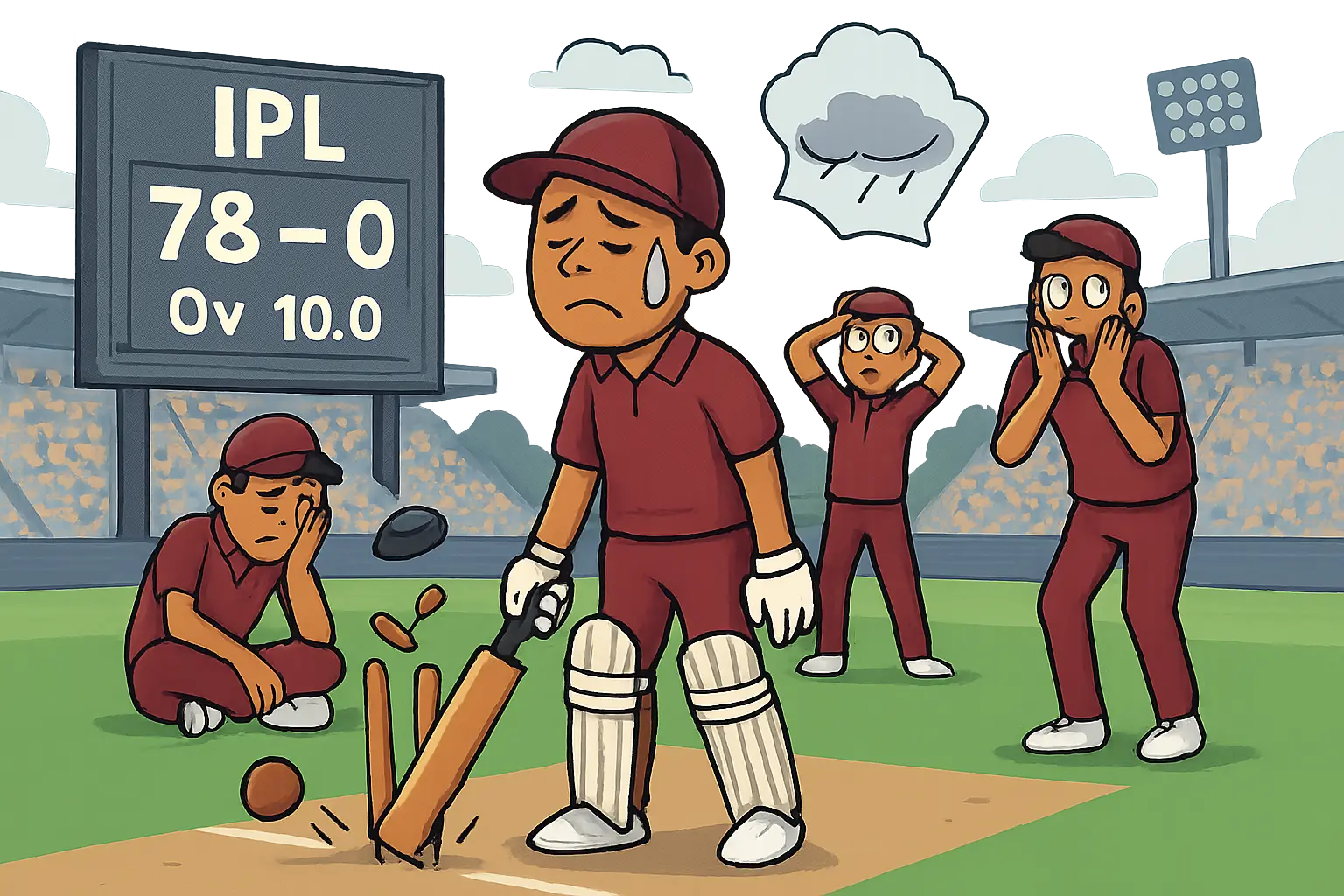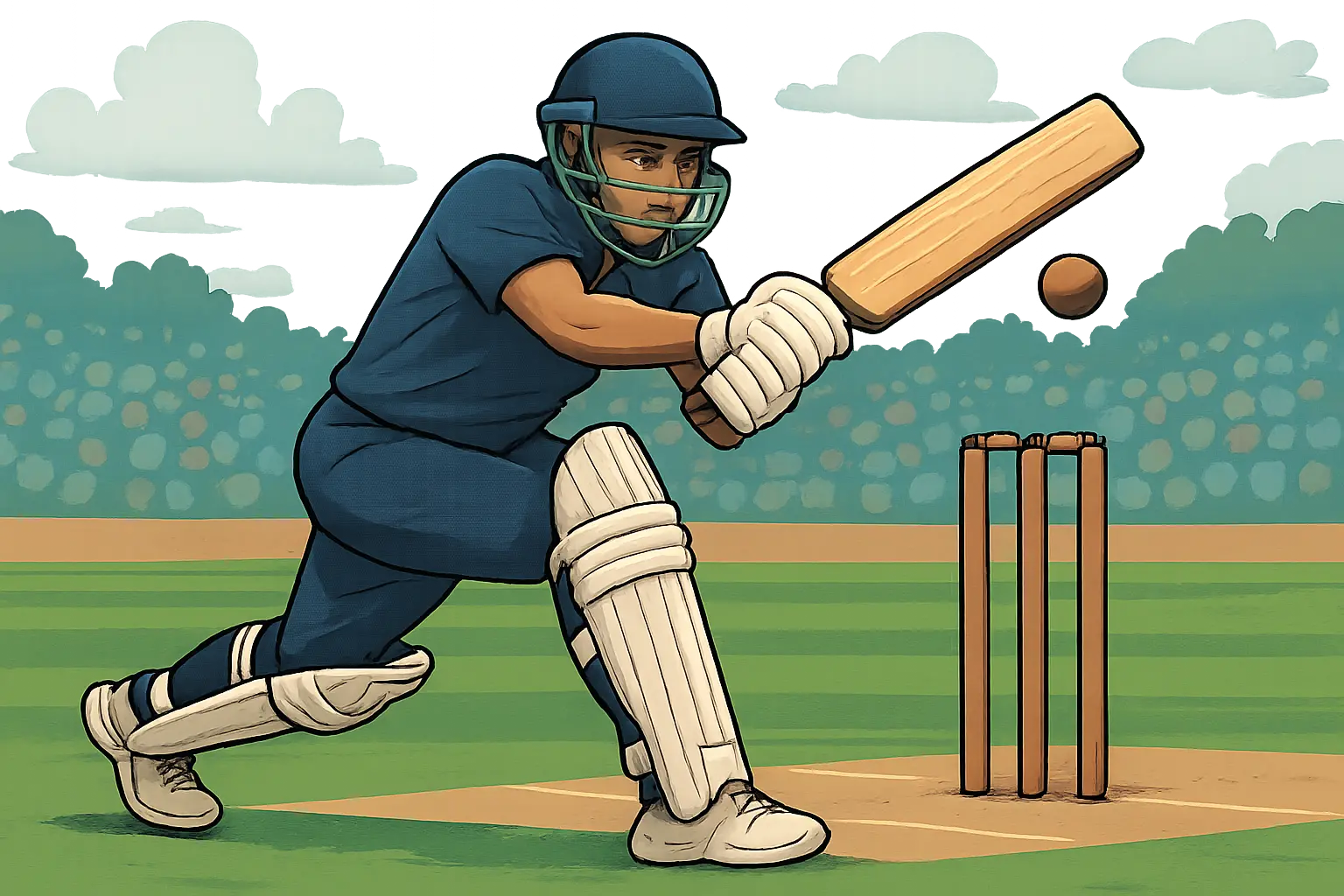

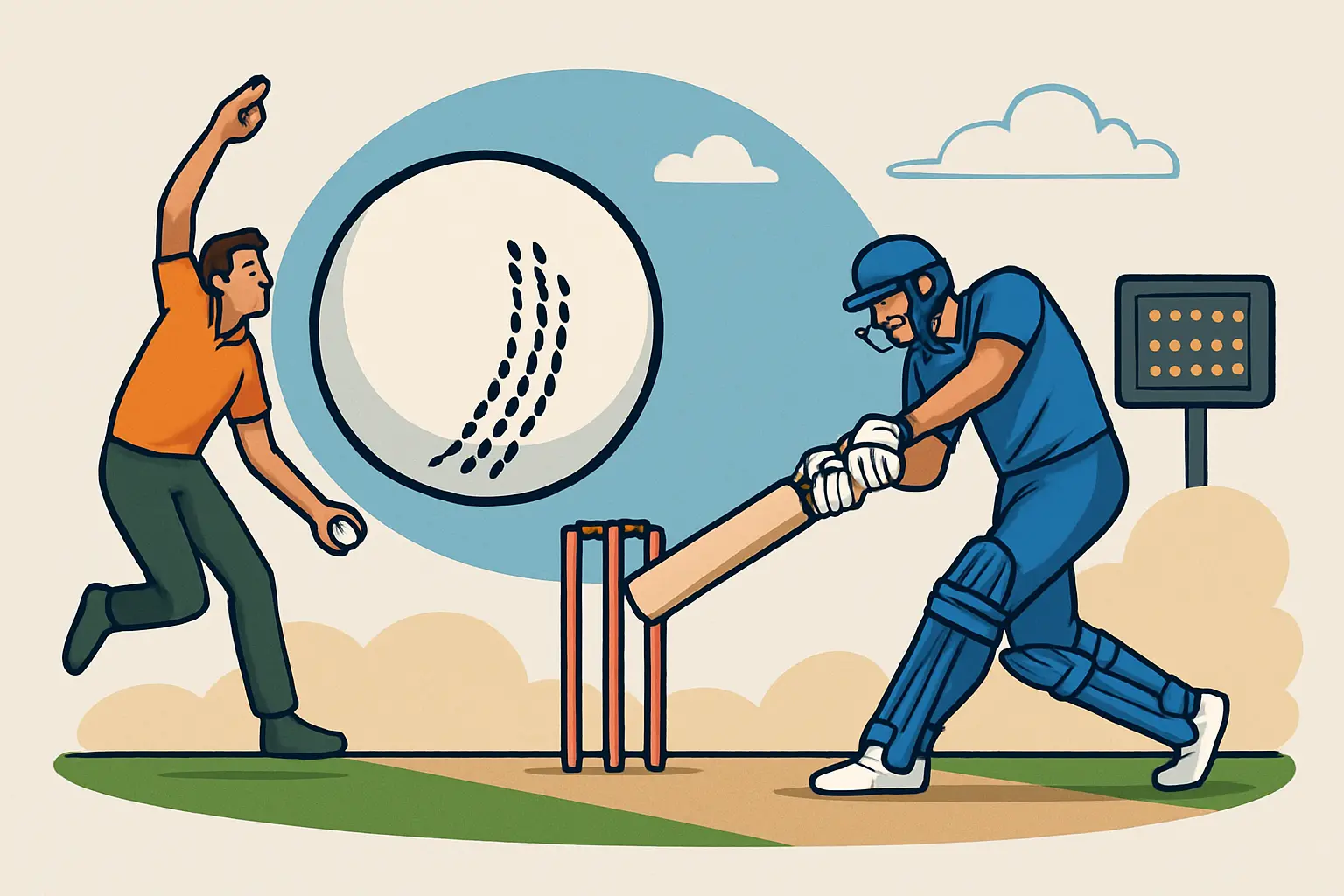
There’s a particular kind of silence in cricket that bowlers love and batters fear. No cheering, no clatter of boundaries—just boots scraping the pitch, a seam hissing past the edge, and a tiny dot on the scorecard. That dot is not just punctuation. It’s tension. It’s pressure. It’s the building block of white-ball wins and the heartbeat of red-ball control. Understanding dot balls—what they are, when they count, and how to create or avoid them—is one of the fastest ways to decode modern strategy.
This is a definitive, practical, and field-tested guide from the vantage point of dressing rooms, dugouts, and analyst benches. From the exact rules (wides, no-balls, leg byes) to powerplay and death-overs tactics, dot-ball calculators and evergreen records—it’s all here, cleanly explained and battle-ready.
Definition: Dot Ball Meaning (Snippet-Ready)
A dot ball in cricket is a legal delivery on which no run is scored. Scorers mark it with a dot in the scorebook—hence the name.
Dot balls matter across formats because they reduce the batting side’s scoring momentum, spike pressure, and raise the probability of wickets. In T20s, a string of dots can flip an over and decide a chase. In Tests, dots are the oxygen of control and patience.
Dot Ball Rules in Cricket: The Clean, Unambiguous Version
Here’s the rules set the way players and analysts actually use them—no waffle, no contradictions. When does a delivery become a dot ball, and when does it not?
Dot or Not? (Outcome-by-Outcome)
| Legal ball, batter does not score | Dot. Defended, missed, or left alone without runs. |
| Legal ball, wicket falls with no runs | Dot. Bowled, LBW, caught, stumped, hit wicket—all dots when zero runs are tallied. |
| Legal ball, run-out with zero runs completed | Dot. No runs completed = dot; wicket recorded as run-out. |
| Legal ball, byes or leg byes taken | Not a dot. Extras add to the total. |
| Wide ball | Not a dot. Wide adds at least one run and an extra ball. |
| No-ball | Not a dot. No-ball adds a run. Even if a dismissal-like event occurs, it is not a dot. |
| Dead ball | Not a dot. Dead-ball calls void the delivery. |
| Free hit (following a no-ball) | Can be a dot. Free-hit is a legal delivery; if no run is scored, it’s a dot. |
| Run-out at non-striker before delivery | Not a dot. The ball is not delivered and it’s not recorded as a dot. |
Clarifying the Edge Cases
- Wicket as dot? Yes—if the delivery is legal and no runs are scored. If dismissal is on a no-ball, it’s not a dot.
- Wide a dot? No—wide is always an extra and not a dot.
- Leg byes? Not a dot if any leg byes are taken. If leg byes are disallowed and no other runs occur, it can be a dot.
- No-ball? No—by definition a no-ball adds at least one run.
- Dot vs dead ball? Dot counts as a legal delivery with zero runs. Dead ball voids the delivery—no dot, no ball faced.
- Can DRS change a dot? Yes. A review can change an on-field decision and therefore change whether a ball is a dot.
- Does a dot affect strike? Yes. With no run scored, striker remains on strike for the next ball unless the over ends or a dismissal changes strike.
- Wides/no-balls and balls faced: Wides do not count as balls faced; no-balls do count as balls faced for the striker (unless otherwise specified by competition rules).
Why Dot Balls Matter: The Competitive Edge Across Formats
T20: The Pulse of Pressure
In T20, dot balls are currency. They suppress run rate, throttle the boundary count, and build mental heat. A single over with three or more dots often forces a batter to manufacture risk—edge to a packed ring or a toe-end to deep cover.
- Scarcity of balls: Sixty legal deliveries—every dot is one-sixtieth of an innings.
- Run rate compounding: Clusters of dots force high-variance strokes later.
- Phase tracking: Coaches measure dot-ball % by powerplay, middle overs, and death because the context changes the value of a dot.
ODI and Tests
In ODIs, dots define control through the middle overs. In Tests, dot balls are structural—maids, pressure, and attrition. Sustained dots turn ‘good’ balls into wicket-taking opportunities.
How to Bowl Dot Balls (Practical Principles)
- Win the top of off: If the batter can neither drive cleanly nor nudge risk-free, you control—the dots follow.
- Own seam and surface: Seam work, cross-seam and split-finger where appropriate widen margin for error.
- Change pace, not cues: Identical release with different speed late-change breeds dot balls.
- Starve angles: Dot balls thrive when batter can’t access square-of-wicket singles—line and field must marry.
Bowling Lengths by Phase
- Powerplay: Top-of-off length, shape away, slightly back-of-lengths for hip-rise to deny free arms. Short balls sparingly.
- Middle overs: Into-the-wicket cutters, back-of-length cross-seam on slow tracks, ring field to protect square singles.
- Death: Yorker or bouncer—no half measures. Wide yorker to channels and slow bouncers that die on the splice are potent dot weapons.
Field Placements to Create Dot Balls
No magic template, but a few principles:
- Protect the short boundary and the straight boundary—force batters into low-probability angles.
- Tight point and cover deny square singles; inward rings stop midwicket nudges.
- For cutters: 5–4 off-side field with third man and deep cover square to funnel lofted shots into long-off.
Powerplay and Death: Tactical Notes
- Powerplay: Use new-ball swing to attack stumps and deny free singles. Keep point, cover and midwicket tight.
- Death: Disrupt patterns—mix wide yorkers with slow bouncers. One dot at the death can define an over.
Dot-Ball Pressure Tactics
- Tempo control: After a dot, resist immediate hustle. Silence and small time delays grow pressure.
- Field illusion: Show a single then close it late. Movement at the crease can turn soft singles into dots.
- Over goals: Aim for specific dot counts per over (for example: three dots in the first six balls).
How to Reduce Dot Balls as a Batsman
- Rotate strike: Small steps and soft dabs to third man or behind point create steady singles.
- Soft hands: Defending hard is a dot machine—dead-bat blocks into the ground and immediate calls help run singles.
- Use the crease: Move forward or back to convert indeterminate lengths into scoring balls.
- 360-degree tools: Scoops and laps as rotation tools when square is choked.
Batting Drills to Reduce Dot Balls
- Drop-and-run circuit: Dead-bat into a 5–7 m cone then sprint—conditions decision cues.
- Third-man micro-dab: Practice late dabs beneath the seam to the third man area.
- Depth-of-crease ladder: Read length early, decide pre-impact, vary pace and convert dots into singles.
Dot Ball Percentage: Formula and Quick Calculator
Track these simple metrics:
- Bowler DB%: (Dot Balls Bowled ÷ Legal Balls Bowled) × 100
- Batter DBF%: (Dot Balls Faced ÷ Legal Balls Faced) × 100
Notes: Legal balls exclude wides. For bowlers, wides and no-balls are not in the denominator for official over counts. Extras don’t count as dots unless zero runs are scored on the ball.
- Bowler: 24 legal balls, 12 dots → DB% = (12 ÷ 24) × 100 = 50%
- Batter: 30 legal balls faced, 10 dots → DBF% = (10 ÷ 30) × 100 = 33.33%
Dot Ball Rate vs Economy Rate
Dot-ball rate measures how often you deny runs entirely; economy rate measures runs conceded per over. High DB% creates pressure; economy measures damage. The ideal is a high dot rate with boundary suppression.
Impact and Benchmarks in T20
Analysts show consistent patterns:
- After two consecutive dots, next-ball boundary attempts spike.
- Wicket probability rises when dot clusters exceed three balls in an over.
- Overs with four or more dots usually concede much fewer runs than the innings average.
How Many Dots Win a T20?
No universal number, but winning attacks often tally roughly half the deliveries as dots across an innings—especially when dots are clustered with boundary denial. For batters, keeping dots under a third of balls faced (top-order anchors) often aligns with winning totals.
Records, Programmatic Targets, and Analytics
Use Statsguru or league APIs to build leaderboards by phase, venue and opposition. Track:
- Most dot balls by league/season
- Highest dot-ball percentage (min overs limit)
- Consecutive dot balls and phase splits
Scoring, Notation and Scorekeeper Notes
A dot is simply recorded as a dot in a scorebook. It’s compact and instantly shows pressure zones. A ‘leave’ is the batter’s action and often results in a dot if no run is given.
Coaching How-Tos: Turning Knowledge into Results
For Bowlers
- Build three-ball sequences that set up a wicket after two dots (e.g., length, shorter, fuller).
- Drill two-seam vs cross-seam alternation to train the same release with different outcomes.
- Death net: alternate wide yorker and slow bouncer; hit four of six in zone before finishing.
For Batters
- Pre-contact decision: own one low-risk scoring area each over when dots creep in.
- Drill: boundary-to-single—after any boundary in nets, the next ball must be a single or it counts as a net dot.
- Running clinic for split-second calls—replace hesitation with habit.
Localization Quick Guide (Short Definitions)
- Hindi: डॉट बॉल का मतलब – एक वैध गेंद जिस पर कोई रन नहीं बनता।
- Urdu: ڈاٹ بال کا مطلب – ایسی قانونی گیند جس پر کوئی رن نہ بنے۔
- Tamil: டாட் பந்தின் அர்த்தம் – ரன் எதுவும் எடுக்காத சட்டப்படி வீசப்பட்ட பந்து.
- Telugu: డాట్ బాల్ అంటే – చట్టబద్ధంగా వేసిన బంతిపై పరుగులు లేనప్పుడు.
- Bengali: ডট বল মানে – বৈধ ডেলিভারি যাতে কোনো রান হয় না।
- Marathi: डॉट बॉल म्हणजे – वैध चेंडू ज्यावर कोणतेही धाव होत नाहीत.
FAQ (Expert-Ready)
- Does a wicket count as a dot ball?
- Yes—if the delivery is legal and no runs are scored. No-balls change this.
- Is a wide a dot ball?
- No—wides add runs and extras; they are never dots.
- Do leg byes count as dots?
- Only if zero leg byes are taken. Any leg bye scored makes it not a dot.
- Does a no-ball count as a dot?
- No—no-balls add at least one run and cannot be dots.
- Can a dot ball be reviewed?
- Yes. DRS can change the on-field decision and therefore change a dot to a scoring ball or vice versa.
- Does a dot ball affect strike?
- Yes. No run scored means striker stays on strike (unless over-end or dismissal changes strike).
- Dot ball vs dead ball?
- Dot: legal delivery with zero runs. Dead ball: delivery voided—no dot, no ball faced.
Practical Targets and Checklists
| Role/Phase | Key Target |
|---|---|
| Powerplay (Bowlers) | Aim ~2 dots per over; deny the early single; target top-of-off. |
| Middle overs (Bowlers) | Ring field; pace-off into pitch; convert dots into wicket pressure. |
| Death (Bowlers) | Pair wide yorker with slow bouncer; one dot can cost the chase. |
Tools and Links (Where to Build Your Data)
- ICC Playing Conditions – definitive rulings.
- ESPNcricinfo Statsguru – filter by phase, over, venue, opposition.
- Cricbuzz league pages – seasonal dot counts and quick tables.
Closing: The Quiet That Wins Matches
The beauty of cricket is that silence can be louder than sound. Dot balls are that silence—immense, heavy, and decisive. Learn the rules without confusion. Build plans that force dots. Train skills that unlock singles. And in that hush between deliveries, listen closely. You might just hear a match turning.
Appendix: Quick-Reference Rule Table
| Legal ball, no run | Dot |
| Legal ball, wicket with no run | Dot |
| Legal ball, byes/leg byes scored | Not a dot |
| Wide / No-ball / Dead ball | Not a dot |
| Free hit with no run | Dot |
| Non-striker run-out before delivery | Not a dot |
Appendix: Mini Calculators
Bowler DB% = (Dots ÷ Legal Balls) × 100 — Example: 15 dots from 30 balls = 50%
Batter DBF% = (Dots Faced ÷ Legal Balls Faced) × 100 — Example: 12 dots from 36 balls = 33.33%
Key Takeaways
- Dot ball = legal delivery with zero runs. Wickets on legal balls with no runs are dots; wides and no-balls never are.
- Dots win T20s by compressing decision time and forcing risky strokes. In ODIs and Tests, dots build control and maidens.
- Bowlers create dots via length mastery, pace disguise, and denying singles with coherent fields. Batters beat dots via soft hands, decisive running and using the crease.
- Track dot-ball percentage alongside economy and boundary rate. Use phase-specific targets and programmatic leaderboards.
- The dot is a tiny mark with giant consequences. Own it.