

Curated, verified, and seasoned with dressing-room insight — a detailed guide across formats, laws, strategy, and lore.
The air changes the moment you step out of the tunnel. The hum of a full house rolls in waves, a seam shines like a secret under floodlights, and the bowler’s last breath before release is a compressed universe of intent. I’ve spent countless days at grounds from Lord’s to Lahore, MCG to Mirpur, and the longer you live with cricket, the more it rewards you with details most casual eyes miss. This is a curator’s tour of the sport’s most interesting cricket facts—updated, verified against official records and seasoned with insights drawn from dressing rooms, analytics briefings, and press-box whispers. It’s not a list to skim. It’s a living map to formats, laws, strategy, and the cult of records that turns an afternoon on grass into mythology.
Foundations: Fast, Fun, And Field-Side Facts
- The pitch is exactly 22 yards long because it corresponds to one “chain,” an old agricultural surveyor’s measure. Cricket grew up on common land and farms; the game never quite lost its rural tape measure.
- A men’s ball weighs between 155.9 and 163 grams; a women’s ball between 140 and 151 grams. That small drop in weight and circumference changes swing profiles and carry in the outfield more than you’d think.
- The Laws of Cricket are authored by the MCC, not the ICC, and they number 42. Everything from “How Out” to “Unfair Play” lives there, with ICC playing conditions layering on top for internationals and tournaments.
- The batter is never “Mankaded” in modern law. It’s “run out at the non-striker’s end.” The spirit of the game is not a loophole in the law.
- A six off a catch that hits the boundary cushion is not a six off good fortune; it’s a reminder that the thick rope defines modern grounds, and fielders must maintain contact outside the rope with the ball not the ground to complete a legal catch.
- The first timed-out dismissal in international cricket happened after a helmet strap malfunction. Law and empathy collided; the appeal stood. The clock—two minutes to be ready—was the final umpire.
Test, ODI, T20: Format-Specific Cricket Facts And Why They Matter
Test Cricket Facts: Patience, Skill, And Tactical Trapdoors
- Follow-on is a weapon, not a rule of honor. Enforcing it depends on forecast, pitch regression, bowling loads, and opposition psyche. Some captains decline with a lead they could sit on, preferring fresh runs and withering pressure on day four twilight rather than a heavy ball on a still-true deck.
- Not all five-day innings behave the same. The second evening session in a day-night pink-ball Test is notorious for exaggerated seam movement. Fielders begin talking in code about “twilight overs,” bowlers hunt edges with fuller lengths, and batters go into trench mode.
- The longest partnership in Tests remains Kumar Sangakkara and Mahela Jayawardene’s 624—an innings-within-an-innings that felt inevitable from the first caress of the off drive. What’s less talked about is how the strike rotation in that stand smothered the spinner’s rhythm.
- Reverse swing is Test cricket’s hidden river. With one side of the ball polished and the other roughed up by legal wear, late movement back into the batter arrives at pace. It needs: dry outfield, consistent shine management, and just enough abrasions to disrupt the seam’s laminar flow. It won’t turn up if everyone overthrows to the rope.
- Nightwatchman isn’t a gimmick. It’s a test of resource allocation: protecting a specialist batter from a perilous last 15 minutes is often worth risking an extra wicket next morning to a fresh ball.
- Short-ball plans aren’t macho theater; they’re chess. Pitch maps show an over of short stuff only works when a full-length surprise arrives at the right moment. Modern Test data backs the notion that one over of sustained bumpering per spell can spike false-shot percentages by double digits, but only when the channel is set up.
ODI Cricket Facts: The Middle-Overs Arts And Endgame Economics
- ODI powerplays create three phases: a launch, a long sculpting middle, and a death overs sprint. In phase one, two fielders outside the ring; then a long period with four out; finally a tight squeeze at the finish with five out. The best teams win by owning the quiet in the middle, not just the fireworks at the death.
- Wrist-spin thrives in ODIs because the format’s field placings protect the boundary while still offering edges to an attacking leggie. An economy rate under five with a googly that the batter can’t pick from the hand will always buy wickets.
- AB de Villiers’ 31-ball hundred stands as the audacious watermark of the format’s tempo shifting. What the scorecard can’t show you is the geometry—lap sweeps to third man, sliced lofts over point, inside-out smashes over extra cover—that redefined modern white-ball risk profiles.
- Wicketkeepers are de facto middle-overs captains. Their field tweaks and lines to bowlers—particularly versus left-right pairs—reduce singles lanes and force risk into the wind.
- The DLS method doesn’t reward the team that hits more boundaries; it estimates resources remaining, overs plus wickets, and then recalibrates targets. It’s probability, not punishment. If two wickets just fell, the algorithm punishes you more than a heavy cloudburst does.
T20 Cricket Facts: Time-Compressed Tactics And Micro Gains
- Powerplay intent must be dynamic. One wicket in hand at the end of the sixth is not as valuable as two set batters at over ten. The best T20 batting sides benchmark powerplay runs against wickets: a 50 for none beats a 65 for three, almost always.
- The knuckleball is a T20-era marvel. Released off the fingertips, seam wobbling, it arrives late and slow without the usual off-cutter cues. You spot it in replay by the absence of finger roll and the batter’s through-swing ending a fraction early.
- Double bluffing in matchups is standard. Off-spinners to right-handers at the death sound mad until the data shows the yorker’s run value rises if missed but the offie faster, full, and wide of off reduces boundary percentage beneath the yorker’s miss penalty.
- Overrate penalties in T20s matter. Fielding captains now juggle bowlers with the clock as aggressively as any matchup, because the last over of a slow innings can be capped in fielders outside the ring, turning a finish into a smorgasbord for set hitters.
- Aaron Finch’s 172 in T20I cricket remains a primal howl of boundary hitting, but the game’s wilder sprint unfolds in franchise leagues where analytics dictate matchups down to individual slots: left-arm orthodox into a leg-side wind, two behind square saving the cut, short fine leg up to bait the paddle.
- The fastest T20I hundred on record belongs to Jan Nicol Loftie-Eaton in 33 balls, a reminder that the associate nations aren’t your soft underbelly anymore; they’re laboratories of innovation.
Tournament And League Cricket Facts: IPL, The Hundred, Big Bash, PSL, And Global Showpieces
IPL Facts: High-Skill Chaos And Microcultures
- Teams live and die by local conditions. Chennai breathes for slow turn and strangles you with spin-to-spin bowling plans; Kolkata in the pre-monsoon can wake up a green seam; Bengaluru’s altitude teases bat speed and carry. Smart franchises bake strategy into auctions: if your home ground grips, your tenth pick is a left-arm spinner with darted pace and an undercutter.
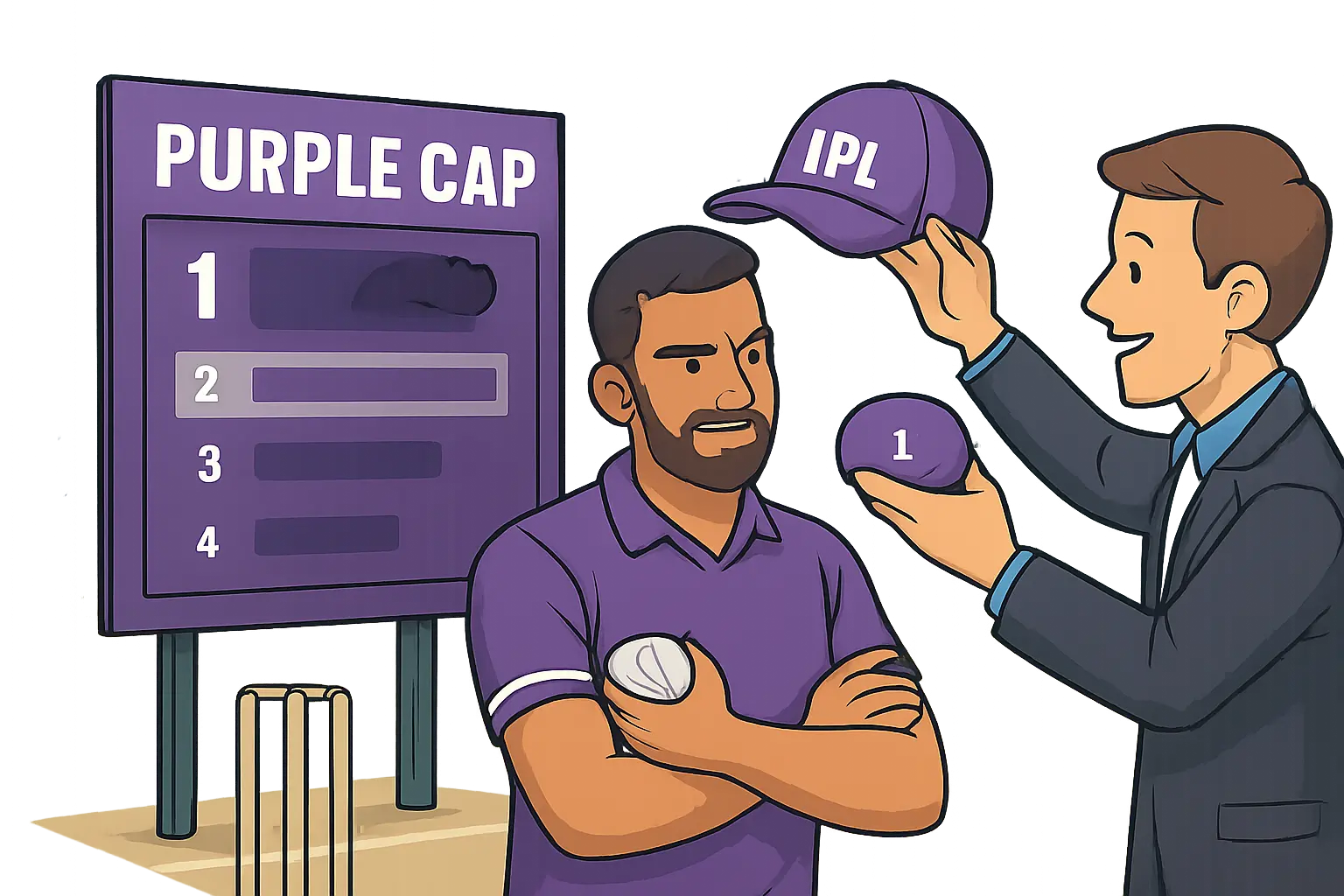
- Virat Kohli sits atop the run-scoring charts in the IPL, a testament to his fitness cycles across long tournaments and his risk calibration in chases. Chris Gayle turned six-hitting into a religion; he also taught a generation when not to swing—waiting for his arc and his matchup.
- MS Dhoni’s glove work at the death looked like a party trick to the untrained eye: standing up to medium pace, taking pace off the ball by his own movement, and baiting batters to step out into stumping traps that start with a nonchalant look.
- Double Super Overs happened. Pressure becomes a living thing by the second shoot-out, and decisions shrink. New batters swing at balls they never thought they’d go after, and fourth-choice bowlers suddenly live in nightmares or folklore.
- Match-ups get granular: left-arm finger spin to a right-hander who hits 65 percent to midwicket gets a ring that dares the inside-out. If a right-arm leggie is bowling, a deepish mid-off becomes an IQ test.
The Hundred Facts: Five-Ball Sets And Pace Of Play
- Ten balls from the same bowler is legal. The calling of overs dies; five-ball “sets” change over rotation, and captains often run a hot bowler for ten straight when an in-form hitter is at one end and the wind is right.
- The powerplay lasts 25 balls with two fielders out, which shifts early-innings intent deeper than a six-over burst in T20. Bowlers learn to “finish the set,” not just the over—an odd psychological anchor that changes how fatigue feels.
- Strategic timeouts exist not just to sell ads but to reset matchups. The destruction of rhythm is tactical currency.
Big Bash Facts: Innovations And Stadium Rules
- Docklands’ closed roof created a domestic curiosity: playing conditions that treat contact with the roof in specific ways. Some seasons awarded a six for a strike to certain roof sections, others a dead ball; in internationals, contact with suspended cables like Spidercam is a dead ball and the delivery is repeated.
- The Bash’s openness to innovation—power surges, X-Factors—served as experiments that international cricket sometimes adopts and sometimes politely declines.
PSL Facts: Swing City And Pace Schools
- Pakistan’s league is a bowling laboratory. Early-evening dew and flat decks later on force new-ball pace and late-over deception. You learn how wrist positions make reverse swing more predictable, and how length at the death is a myth without the yorker landing.
- Rauf, Afridi, Naseem, Haris—those aren’t names; they’re graduate programs in pace bowling. The PSL’s lesson to global cricket is simple: pace is sustainable if rotation and workloads are treated as strategic levers, not acts of bravery.
World Cups, Ashes, Asia Cup, Champions Trophy: Pillars And Lore
- ODI World Cups pivot on the third seamer and the wrist-spinner who can bowl to a short boundary without panic. Champions ride a bowling unit that defends par under lights or chases with three anchors who can flip to hitters on demand.
- T20 World Cups are won at the toss proportionally less than fans imagine; the skill gap appears in boundary denial in overs 7–15, not in the last three overs where noise lives.
- The Ashes are not a vibe; they’re chemistry. A Kookaburra in Australia flattens and rewards pace up at the hip with hard length; a Dukes in England begs for late nibble and fourth-stump romance. Strategies that work in Brisbane die in Leeds.
- Asia Cup finals compress pressure better than almost any event. Spinners come to collect reputations; middle-order batters learn the weight of a single.
Laws Of Cricket Facts: Clear Rules, Obscure Edges, And Essential Explainers
LBW Facts: It’s Geometry, Not Guesswork
- Leg Before Wicket is an appeal decided by a set of simple tests: the ball must pitch in line with the wickets or outside off; it cannot pitch outside leg; it must strike the batter in line with the stumps (except when no shot is offered, where off-stump impact outside still applies); and it must be going on to hit the stumps. DRS adds predictive ball-tracking, but “umpire’s call” respects the original on-field decision for marginal cases.
- A batter can be out LBW offering no shot even if impact is outside the off stump, provided other conditions meet. Intent matters only in that window.
DLS Method Facts: Weather, Resources, And Fairness
- Duckworth-Lewis-Stern turns overs and wickets into a “resources” percentage. Lose overs, lose resources; lose wickets, lose resources. The method recalculates a fair target for the chasing side based on how much batting ammunition and time both teams had or have. It is a neutral bookkeeper that doesn’t care about “momentum.”
- A side two wickets down has more run potential than a side five down with the same overs left. That’s why a sudden collapse can brutally inflate a revised target.
Powerplay Rules Facts: Fielding Arcs And Opportunity Windows
- T20 powerplay: six overs, two fielders outside the ring. ODI powerplays: three segments across the innings with graduated allowances, ending with five permitted on the rope. The products of these phases are different: T20 uses it to get ahead of par; ODIs use the early overs to eliminate one opener and make the middle collapse more likely.
Super Over Rules Facts: Shoot-Outs With Grammar
- One over per side decides a tied limited-overs match. If it’s tied again, more Super Overs follow until a winner emerges. The former boundary countback tiebreaker is gone from many elite events. Batters dismissed in the Super Over are finite; wicketkeepers’ tricks, like standing up, become endgame weapons.
Pink Ball Test Facts: Color, Glare, And Shape Retention
- Day-night Tests use a pink ball because red fades under lights and white gets lost against white clothing. The pink ball’s extra lacquer helps it hold color but also changes swing and skid behaviors. The twilit session can be a graveyard for batting; even set players suddenly fall behind the pace of movement.
Rare And Obscure Dismissal Facts
- Timed out gives a new batter two minutes to be ready to face. Fail, and a legal appeal ends the innings’ composure in a heartbeat. It’s happened at international level once in a headline-grabbing incident due to equipment failure.
- Obstructing the field absorbed the old “handled the ball” law. Return the ball to a fielder without permission while it’s still live, or deliberately change your running line to block a throw, and you’re in danger.
- Hit the ball twice is legal if the second strike is to protect the stumps and no run is attempted; turn it into a run, and you’re flirting with a wicket.
- Hit wicket punishes footwork: brush the bails with willow or boot after the ball comes into play, and you’re gone.
- Run out at the non-striker’s end is lawful if the bowler removes the bails before release while the non-striker is out of their ground. Warning is courtesy, not clause.
- Free hit is not an amnesty. The batter can be out run out, obstructing the field, or hit the ball twice. Stumped is also in play because it is a species of run out. Bowled, caught, and LBW are immunities on that one ball.
Ball, Pitch, And Equipment Facts: The Kit Matters
Ball Specifications (MCC Law)
- Men: weight 155.9–163.0 g; circumference 224–229 mm.
- Women: weight 140–151 g; circumference 210–226 mm.
- Juniors: weight 133–144 g; circumference 205–220 mm.
Pitch And Ground
- Stumps stand 28 inches high, with bails that can be dislodged by a kiss of leather or the brush of a pad. Umpires now also judge whether a bail is dislodged by enough contact when wind or a keeper’s glove grazes without intent.
- Boundaries use a thick rope or padding; if the fielder’s shoe touches beyond the rope while in contact with the ball, it’s four or six depending on mode of contact. Fielders learn ballet-like leaps and mid-air offloads to teammates to avoid contact with turf beyond the rope.
Technology And Interference
- Spidercam and its cables are out of play; contact equals dead ball, and the delivery is rebowled. Permanent stadium structures are governed by local playing conditions, ranging from dead ball to six. The principle at elite level aims to avoid advantage to either side from interference.
Records And Trivia: Verified Cricket Facts That Still Drop Jaws
Batting Landmarks
- Highest Test individual: Brian Lara, 400*.
- Highest ODI individual: Rohit Sharma, 264.
- Highest T20I individual: Aaron Finch, 172.
- Fastest century in ODI: AB de Villiers, 31 balls.
- Fastest century in Test: Brendon McCullum, 54 balls.
- Fastest century in T20I: Jan Nicol Loftie-Eaton, 33 balls.
- Highest Test partnership: Kumar Sangakkara and Mahela Jayawardene, 624.
Bowling Landmarks
- Most Test wickets: Muttiah Muralitharan, 800.
- Most ODI wickets: Muttiah Muralitharan, 534.
- Fastest officially recorded delivery: Shoaib Akhtar, 161.3 kph.
- Four in four in ODIs: Lasith Malinga owns the party trick, also reproducing it in T20I. Rhythm, not luck.
Sixes, Chases, And Other Oddities
- Most international sixes across formats: Rohit Sharma sits on that throne. He’s not just range-hitting; he’s a high-elbow purist turned data-age demolition man.
- Longest six is a barstool debate. Claims of monstrous distances exist, but only those tracked with modern tech carry weight. Stadium-to-stadium wind, altitude, and measurement standards vary wildly. Treat archival numbers with skepticism.
- Chasing teams in ODIs win more often than folklore suggests on flat pitches under lights, but the coin swing vanishes when surfaces get tired. The smarter sides read dew like meteorologists.
Women’s Cricket Facts: Achievements, Evolution, And Tactical Shifts
- Amelia Kerr’s 232* in ODIs set the highest individual mark in women’s internationals, eclipsing Belinda Clark’s trailblazing double-hundred. The technique-to-power ratio in that knock pointed to a wider truth: women’s cricket’s scoring tempo is rising with strength and conditioning leaps and better bats.
- Alyssa Healy’s 148* in a T20I final legitimized “hitters first” selection. Big-match temperament is not just a cliche; it’s trainable via role clarity and power-base mechanics.
- Ellyse Perry normalized the all-rounder’s double: pace bowling sustained across formats and run-scoring in the top order. Her GPS data on workloads is textbook reading for high-performance teams.
- Meghann Moira Lanning captained with the serenity of a long-format chess player in a sprint world, valuing strike-rotation and bowling plans that starved boundary hitters of their favorite angles.
- Jhulan Goswami’s high-arm release and back-of-a-length consistency made late movement look simple. Young quicks in academies still trace her wrist position in slow motion.
- Smriti Mandhana’s cover drive isn’t just an aesthetic; it’s a Pythagorean theorem in motion—head still, front shoulder open just enough, bat face chasing the sky.
Associate Nations And Emerging Powerhouses
- Afghanistan’s rise is modern sport’s fable: a leg-spinner’s factory, a rash of quicks with heavy balls, and batting that learned matchups quickly. Rashid Khan’s wrong’un is telegraphed to the world and still not read.
- Ireland’s long game with red ball cricket has been about finding pace that holds at 130–135 kph with movement and batters with first-class hunger. Patience is hard when fixtures are scarce; culture fills gaps.
- The Netherlands thrive in global events through fielding ethic and bowling plans that treat every over as an outcome model. Dot balls are their second religion.
- Nepal’s home crowds turn matches into street festivals. At Tribhuvan University Ground, the atmosphere bends physics; oppositions swear the ball carries further because noise adds muscle.
- Oman, UAE, and Scotland run excellent pace-bowling pathways and talent from expat scenes that keeps depth alive. Development isn’t a press release; it’s 6 a.m. gym sessions and throwdown machines that never die.
Country-Flavored Cricket Facts: Culture Meets Tactics
India
- Batting depth through generations hides bowling revolutions. Jasprit Bumrah’s unique action, release point and late seam make him the rare quick who is elite in both red and white ball. India’s domestic white-ball circuit toughened death-overs skills before the world caught on.
- MS Dhoni changed keepers’ footwork standards; Rishabh Pant bent them. The lineage of aggression and innovation behind the stumps mirrors how India learned to value high-variance, high-reward cricket when the pitch says yes.
Australia
- Hard lengths, bigger grounds, and athletic fielding define the Australian way. Data shows Australian quicks bowl a higher proportion of chest-high balls in Tests at home than any other top side, not as intimidation, but to induce horizontal-bat errors on bouncy tracks.
England
- England’s white-ball reset installed an unapologetic boundary-hunting template. Tests then borrowed that freedom. The same players schooled in strike-rate as a thesis suddenly found fluency in red-ball chases.
Pakistan
- Pace is a birthright and wrist-spin an heirloom. Pakistan’s conveyor belt of quicks owes to street-cricket biomechanics—whippy arms, fierce run-ups—that later get refined by biomechanics labs, not replaced.
New Zealand
- Pragmatism is a tactic. New Zealand cricket has made a virtue of clarity: bowlers with defined plans, batters who know their zones, leaders who say little and mean it. Their fielding save-percentage hovers among the best, season after season.
South Africa
- Lineage of fast bowlers and a fielding standard that can suffocate teams. White-ball batting evolved a power core; Tests remain an exercise in seam bowling artistry.
Sri Lanka
- Mystery spin isn’t a phase; it’s a curriculum. Sri Lanka keep refreshing angles—carrom balls, drifting offspin, leg-break hybrids—and teach bowlers to play the long con.
Bangladesh
- Spin-to-win at home, growing pace abroad. Batting’s next gear comes from eating up middle overs with low-risk boundaries, something they honed in the BPL and carried into internationals.
Afghanistan
- See above, then add the cultural confidence of a team that knows it can out-bowl you with spin at any stage, not just in the middle.
West Indies
- White-ball power lived there before analytics named it. The art of hitting back-of-length balls over midwicket with a straight bat is a Caribbean signature. Red-ball consistency is the next frontier; talent is never the question.
Player-Focused Cricket Facts: Icons In Sharp Focus
Sachin Tendulkar
Most runs in Tests and ODIs. The reason coaches still show juniors Sachin clips is not the runs; it’s the repeatable position at impact. He made good balls look like net drills.
Virat Kohli
The chase belongs to him. He calibrates risk in run-chases like a metronome, ramping up boundary attempts per over in predictable, brutal increments. Fitness is his force multiplier.
MS Dhoni
He turned endgames into case studies: leave the harder matchup bowler for later, target the weaker one early, then trust personal finishing. Behind the stumps, his hands were refusal letters to singles.
AB de Villiers
Batting’s Renaissance man. He built three-dimensional shot maps: behind square either side, over extra-cover, down the ground. His genius lay in switching grips mid-swing.
Chris Gayle
Window-breaker, record-taker. Gayle also left a legacy in dot-ball percentage awareness: space the dots, and power spikes at the right time.
Kane Williamson
Control and decency. Kane’s bat path is a physics lecture; his captaincy, a study in proportion.
Joe Root
Late cut and open bat face mastery; he dismantles pace with deflections that make fielders hate their day.
Ben Stokes
The most combustible competitor of his era. He won matches by owning chaos—batting chases that defied pitch and math, bowling spells that cut through stubborn innings.
Jasprit Bumrah
Seam wizard. His wobble-seam and dual-release angles mean the ball misbehaves late. In T20, his yorker is the difference between par and despair.
Rashid Khan
Wrong’un you can know is coming and still miss. He rushes you with arm speed, not flight. The overs he bowls are schedule markers; batters spend team meetings preparing to survive them.
Women’s Icons
- Ellyse Perry’s two-sport base gave her balance at the crease and rhythm in the run-up that young players replicate.
- Meg Lanning’s field placements in crunch chases are staple breakdowns in coaching clinics.
- Mithali Raj mapped anchor play for an entire generation: absorb, shepherd, and punch.
- Smriti Mandhana turned aesthetics into outcomes; the drive is a scoring option, not a postcard.
- Alyssa Healy and Jhulan Goswami are opposites in method, equals in impact: one attacks with bat speed, the other with disciplined seam.
Rule Nuggets And On-Field Curiosities: The Little Things That Change Matches
- Can a bowler switch arms mid-over? There is no law that bans ambidexterity, but the bowler must notify the umpire and batter of the arm and side of the wicket they will use before the delivery. Fail, and it’s a no-ball and chaos in the press box.
- Can two batters be out on the same ball? Only in limited circumstances where the ball remains live and two separate dismissals occur in sequence before it is called dead—most often stemming from run-outs at opposite ends or a deliberate obstruction after a run-out. Umpires determine the order; once the ball is dead, anything after is theater.
- Can you be out on a free hit? Yes: run out, stumped, obstructing the field, or hit the ball twice. Caught, bowled, LBW are off the table. Creative fielding still has teeth.
- What happens when the ball hits Spidercam or the roof? Spidercam or its cable equals dead ball. Roof rules depend on local conditions: dead ball in internationals; some domestic leagues have designated zones that count as six when struck in flight.
Strategy Corner: The Science Behind The Beauty
Reverse swing explained
With one side buffed and one abraded, air travels faster over the smooth side and separates later, curving the ball toward the rough side late. Conditions needed: rough outfield, dry air, ball past a certain age, consistent shine care, seam at slight angle. The batter reads it off the seam and hand position; the best can’t always pick it.
The doosra and carrom ball
The doosra turns away from the right-hander from an off-spinner’s hand. The carrom ball flicks off the third finger, skidding unpredictably. Both require legality under the elbow-extension limit; bowlers and biomechanics labs now collaborate to keep mystery within law.
Knuckleball
By reducing backspin and stabilizing the seam, it floats slower, dips late, and ruins back-lift timing. The key is deception in grip exposure and a repeatable action; batters look for index finger lift at release as a tell.
Yorker and bouncer symbiosis
A great death bowler alternates the two to stretch a batter’s visual horizon, forcing them to look up and down in consecutive frames. Missed yorkers are punished, but data shows the yorker’s risk outperforms slower balls when the batter sets deep and the bowler executes.
Cricket Rules Facts Table: Quick-Reference Essentials
| Category | Key Facts |
|---|---|
| Pitch length | 22 yards (one chain) |
| Ball weight/circumference (Men) | 155.9–163.0 g; 224–229 mm |
| Ball weight/circumference (Women) | 140–151 g; 210–226 mm |
| Powerplay (T20) | 6 overs, max 2 fielders outside ring |
| Powerplays (ODI) | Three phases; last phase allows 5 outside |
| Free hit | Not out: bowled, caught, LBW; Out: run out, stumped, obstructing, hit ball twice |
| LBW | Cannot pitch outside leg; impact rules depend on shot offered |
| Super Over | Repeated until result; boundary countback widely scrapped |
| Spidercam/roof | Spidercam contact: dead ball; roof varies by playing conditions |
| Laws count | 42, authored by MCC, applied with ICC conditions |
Cricket Trivia You Can Trust: Short, Sharp, And Verified
- The heaviest blows in cricket aren’t all about bat speed; leverage, base, and contact point create repeatable power. Coaching now trains “contact windows” per hitter type.
- Stump microphones changed behavior. Sledging slipped into psychology rather than profanity, and keepers now coach bowlers in real time because the world is listening.
- The “review” is a cultural marker. Some teams treat DRS as a shared asset decided by pre-agreed thresholds; others let a bowler’s conviction run the show. The best balance math and instinct.
- Golden duck means first-ball duck, king pair means first-ball ducks in both innings of a Test, pair means ducks in both innings, despite balls faced. It still crushes the soul the same way.
- Nightwatchmen sometimes outstay kings. Every Test dressing room has a folklore nightwatchman innings; they usually feature edges that die at third slip and nervous giggles at tea.
Kids And New Fans: Gentle On-Ramps To The Game
- Cricket facts for kids work best as action snapshots. A bowler runs in, the ball swings like a banana, the batter hits a six that lands in the crowd, and the umpire raises one finger. Name each thing, then add rules like stickers.
- Junior cricket uses lighter balls and shorter boundaries, and smart coaches swap fielding positions often to keep kids engaged and learning multiple skills.
- Stories beat statutes. A child remembers a wicketkeeper’s flying stumping more than Law 39; once the magic sticks, the laws can build on it.
Explainer Nuggets For People Also Ask Moments—Stated As Facts
- Ten interesting facts about cricket can be condensed to this: 22 yards birthed a universe; reverse swing is legal sorcery; pink balls misbehave at dusk; free hits are not free lives; timed out stings; Super Overs are rerun drama; Spidercam equals dead ball; the doosra survives within law; ODI middle-overs win trophies; and the Ashes are chemistry, not just history.
- Cricket began on common lands in rural England where children played with sticks and stones; its chain-length pitch and village rivalries carried forward into codified laws.
- Test cricket lasts five days by design to let two innings a side breathe, with weather and wear turning the surface into an evolving puzzle.
- The DLS method, explained simply, says this: runs need time and batters; take either away, and the target must change fairly.
- The rarest outs include timed out, obstructing the field, and hit the ball twice; all rely on living details that make cricket’s lawbook a novel.
- A cricket pitch is 22 yards because surveyors’ chains measured land and games borrowed the measure.
- Two batters can be dismissed on one delivery in tight circumstances before the ball is dead; umpires decide the order based on appeals and timing.
- There are 42 Laws of Cricket; the MCC writes them and the ICC layers playing conditions for competitions.
- If the ball hits stadium equipment like Spidercam, it’s a dead ball. If it hits the roof, local rules decide; internationals usually call it dead.
Behind The Numbers: How Teams Actually Use Data
- Pre-series analytics create “bowler intent maps” with zones of attack for each batter. These maps include not just lines and lengths but balls to hold back for pressure moments: the slower bouncer at over 13, the yorker into the wind, the slider after extra bounce is found.
- Batting coaches segment risk by zones rather than bowlers. A player’s best boundary option may be against a bowler type they dislike, but into a wind or to a short side that sweetens the bet.
- Fielding positional data has exploded. Teams now measure “closing speed” and “first step advantage” for inner-ring fielders, altering positions by meters ball to ball.
- Rest and rotation are tactical now, not concessions. Scheduling realities force squads to distribute overs, and sports-science GPS outputs guide who plays when. Tired bowlers leak runs; fresh ones write scorecards.
Ethos, Empathy, And The Spirit That Sits Beside The Laws
- The spirit of cricket is not a cloud. It is a shared understanding that appeals can be withdrawn, warnings can be given, and the letter of the law coexists with respect. But the law remains the law. Spirit cannot become a veto when you are cleanly run out at the non-striker’s end while wandering.
- Umpires are guardians of rhythm. The best manage over rates, player tempers, and light conditions with the same calm cadence. Players read that body language; a raised eyebrow can end an argument.
Simple Record Cards For Quick Memory
| Record | Holder | Note |
|---|---|---|
| Test highest individual | Brian Lara (400*) | Only quadruple hundred in Tests |
| ODI highest individual | Rohit Sharma (264) | Boundary-hitting clinic |
| T20I highest individual | Aaron Finch (172) | Assault from ball one |
| ODI fastest century | AB de Villiers (31 balls) | Unmatched acceleration |
| Test fastest century | Brendon McCullum (54 balls) | Controlled chaos |
| T20I fastest century | Jan Nicol Loftie-Eaton (33 balls) | Associate fire |
| Test most wickets | Muttiah Muralitharan (800) | Wrist and will |
| ODI most wickets | Muttiah Muralitharan (534) | Longevity plus guile |
| Fastest ball | Shoaib Akhtar (161.3 kph) | Speed and snarl |
| Highest Test partnership | Sangakkara & Jayawardene (624) | Technical masterclass |
Umpire Signals And Micro-Moments Fans Often Miss
- Signal for DRS looks like a TV screen shape; but the far better tell is the fielding side’s immediate huddle. If the keeper and slip are aligned, the review is rarely wasted.
- Five penalty runs are awarded for ball hitting fielding side’s helmet on the ground while in play. That gear is placed carefully now; you’ll see keepers shepherd helmets behind square.
- No-ball calls for overstepping are increasingly automated with tech assists, but free-hit designation is still an art in timing; batters and non-strikers must lock in immediately.
Franchise League Micro-Lore: The Edges That Decide Seasons
- Captains in domestic T20 often bank overs of their second spinner for matchups against specific left-handers in overs 7–10, not powerplays. Boundary denial then leads to rash shots at over 12, where the pace bowler with a back-of-the-hand slower finish cleans up.
- Auction analytics value bowlers with reliable “execution rates” at the death more than raw pace. A bowler who lands 60 percent of intended yorkers is worth more in some models than a 150 kph spearhead who misses one in three.
- Boundary dimensions swing selections: a shorter straight boundary invites off-pace hitting; a shorter square invites bumpers into the body with fine-leg and deep square in play.
Culture Notes: Why This Game Grabs You By The Collar
- The tea break in Tests is a love letter to patience. It’s also when captains move slips a yard finer, because stomachs full of cake and sandwiches slow reactions.
- Dressing-room playlists can win you a session. Music sets rhythm; bowlers march out in sync, batters loosen nerves. It’s not pseudoscience when a team analyst correlates performance with pre-session decibel levels.
- Local fan culture changes games. Noise at Eden Gardens, the brass at Galle, the roar at the Wanderers—pressure can be shaped like clay when fifteen thousand hearts squeeze at once.
How To Use This Guide As A Hub For Deeper Learning
- This pillar can be paired with targeted pages on test cricket facts, ODI cricket facts, and T20 cricket facts; event hubs for the World Cups, the Ashes, Asia Cup, and Champions Trophy; and player pages such as Sachin Tendulkar facts, Virat Kohli facts, MS Dhoni facts, AB de Villiers facts, Rashid Khan facts, plus women’s cricket icons.
- A companion explainer on cricket rules facts, DLS method facts, LBW facts, powerplay rules facts, super over rules facts, and pink ball Test facts builds search-friendly depth.
- For lighter audiences, spin off a “fun facts about cricket” or “cricket facts for kids” piece, and a practice section of cricket quiz questions with answers to test recall.
Closing: The Infinite Game Inside The Game
Stand at mid-on and listen to the soundscape. A seam bowler sets his field like a poet choosing verbs. A leg-spinner tests your ego before your edge. The batter at the non-striker’s end hums a tune and steals a yard with every heartbeat. Umpires hold a kind of weather in their hands. This is the real archive of cricket facts—never just numbers, always context; never just laws, always human choice.
You can watch a hundred matches and think you’ve seen it all. Then a pink ball snakes under lights when conditions swore it wouldn’t. Then a timed-out appeal makes a stadium gasp. Then a captain declines the follow-on and wins by a session that should never have existed. Records will keep flipping. Tactics will evolve. The Laws will be tweaked with care. What doesn’t change is the feeling that somewhere on those 22 yards, there’s a new detail waiting to be noticed.
If you’ve come this far, you carry the game’s quiet knowledge in your pocket. Take it back to the ground. Watch the keeper’s feet, the bowler’s wrist, the batter’s head at impact. That’s where the next unforgettable fact will appear—true today, truer still when you tell it to someone else under lights.