
A Test in fading light. A senior fast bowler stands at the top of his mark, eyes fixed, shoulders rolling like an old machine kept alive by memory and grit. Behind him, a wicketkeeper with shot knees crouches one more time. In the slips, a veteran batter, now a specialist catcher in the twilight of his career, watches for a feather. You can feel it: age doesn’t vanish from cricket. It lives in the legs, in the shoulders, in the decisions captains make at selection meetings and in late-night rehab rooms. It also lives in the public debates around a deceptively simple idea: retirement age.
The question keeps surfacing every season, in every country and format. Fans search for a number, a line in a rulebook, a limit written in ink. Here is the cleanest answer a niche expert can give: there is no fixed retirement age in cricket. The ICC does not impose one on players. National boards do not set a universal age limit for player selection. Team sheets are built around performance, fitness, tactics, and succession planning—not a birthday. But that doesn’t mean patterns don’t exist. They do, and they’re stark.
The short answer on cricket retirement age
- There is no universal or ICC-mandated retirement age for cricketers.
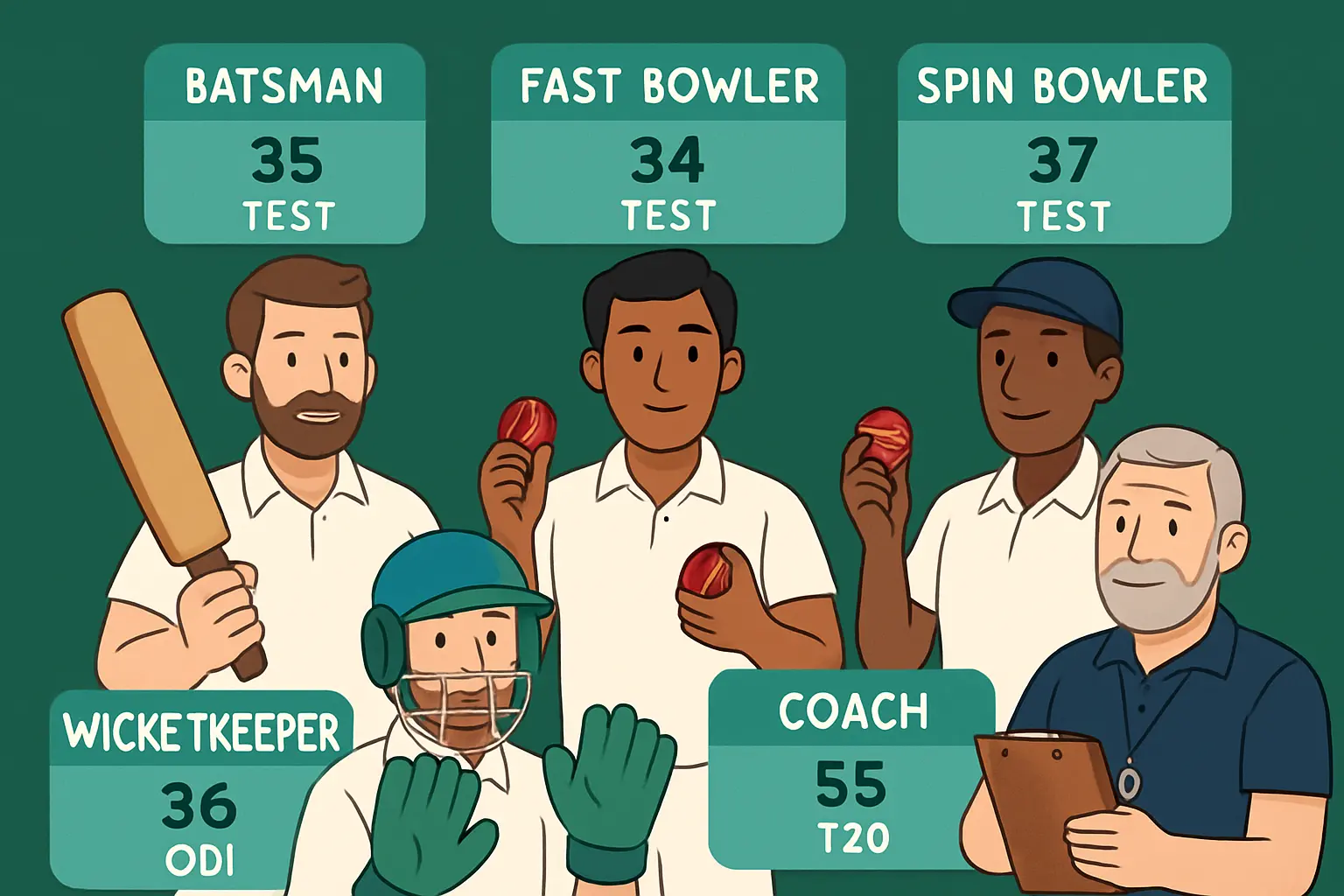
- Most international players step away in their mid-to-late 30s.
- Fast bowlers retire earlier on average than batters and spinners, due to workload and injury risk.
- Spinners and specialist batters often play longer, sometimes touching 40, especially in limited-overs cricket and T20 leagues.
- Wicketkeepers typically finish in their mid-30s, though exceptionally durable athletes or those who phase into part-time keeping can extend their careers.
- There is no age limit for international selection or for leagues such as the IPL, the PSL, the BBL, or the Hundred. Fitness, form, and franchise appetite are the true limits.
- Board policies about “retirement age” usually apply to officials—umpires, selectors, and certain staff roles—not to players. These caps typically sit somewhere around the 60–65 range, varying by board.
From there, the real story begins: how age actually shapes cricket and why different roles, formats, and countries see different retirement patterns.
How age really works in cricket
Cricket doesn’t treat age as football or athletics do. Pace bowling is a brutal sprint repeated hundreds of times across a match or a series, but batting can be an art of accumulated wisdom, tiny adaptations, minuscule shifts in tempo. Even within bowling, a tearaway quick’s biomechanics look nothing like a classical off spinner’s. The wicketkeeper’s nightly ice bucket is a tax on hips and ankles the rest of us can hardly picture.
Four big forces drive retirement decisions:
- Physiological change: Peak power, elasticity of tendons, and neuromuscular speed decline with age. Reaction times slow, peak sprint speed drops, and recovery between efforts lengthens. For fast bowlers, who live at the redline of repetitive high-impact movement, this curve bites hard.
- Skill retention and decision-making: Experience, anticipation, and game reading often improve with age. Batters shorten their backlift, pick lengths earlier, and manipulate fields more efficiently. Spinners become masters of subtle revolutions, drift, and trajectory games. These gains can offset raw physical decline longer than you might expect.
- Schedule and load: Test series, across climates and continents, strain bodies and minds. White-ball leagues can be kinder—shorter bursts, managed travel, specialist roles. Many players “retire” from Tests first, then stretch white-ball careers for a few more seasons.
- Selection economics: International teams plan succession. As a player crosses their mid-30s, every selection choice weighs immediate output versus future-building. In franchise cricket, the market is blunt: if you keep winning match-ups, your age is a footnote; if you don’t, your age becomes the headline.
Average retirement age in cricket by role
Fast bowlers: why they retire earlier
Ask any old quick and you’ll hear the same lived truth: the body keeps score. Fast bowlers tend to retire earlier than other roles, frequently between 32 and 35 at international level. The deliveries per match are high-load; front-foot landings jar the ankles, knees, and hips; backs strain under extension and rotation; shoulders pay for each bouncer. Across a long career, you get a ledger of micro-tears, stress reactions, and scar tissue that never entirely disappears.
Three specific factors pull their timeline forward:
- Speed decay and compensatory habits: Losing two or three clicks of pace can mean losing your attacking zone. Some bowlers compensate with fuller lengths and skill, but this can increase boundary risk. Others reinvent themselves as wobble-seam merchants or shorter-burst impact bowlers in white-ball cricket; that can buy time, but it’s not forever.
- Recovery lag: The time between spells and between matches expands with age. Recovery tools help—ice, compression, mobility work, sleep routines, and smart strength cycles—but you’re still racing a clock.
- Injury recurrence: Hamstrings, calves, obliques, and lumbar issues often turn chronic. In squads with depth, selectors prefer durable throughputs.
Exceptional outliers exist. A handful of swing craftsmen, with rhythmic actions and efficient mechanics, have pushed past 38, even 40, in Tests. In T20 leagues, veteran quicks sometimes carve niche roles—new-ball swing for two overs, death overs with cutters and wide yorkers—well into their late 30s. But they’re exceptions that prove the rule.
Spin bowlers: brilliance with mileage
Spinners commonly retire later, often in the 34–38 range, with a small but romantic club rolling into 40 and beyond. Physiological decline is real here too, but spin bowling rewards accrued knowledge. Flight, dip, drift, seam angles, crease manipulation, field traps—these sharpen with time. A classical finger spinner can reinvent defensive lines with subtle pace variations; a wrist spinner can gain a second wave of efficacy once batters mistake “slower” for “easier” and start miscuing.
Two caveats temper the optimism:
- Wrist spinners demand shoulder resilience and lower-body stability; failing joints can reduce revolutions and control.
- White-ball power-hitting has raised the bar for length and pace accuracy. A small decline in precision gets punished quicker.
Still, among all roles, spinners are the most likely to stretch international relevance into the late 30s, and they are well represented among long-lived T20 specialists.
Batters: mind over matter, most days
Batters typically retire in the 34–37 window. The modern batter faces more formats, more data-driven planning against their strengths, and higher average pace than earlier eras. Yet batting offers tools for longevity: better decision-making, deeper match awareness, and refined scoring options. Experience also hardens the mind. Batters who learn to rotate strike even when not timing the ball, who expand their off-side range to prevent predictable fields, and who maintain strong base fitness can remain valuable long after peak reflexes fade.
The pattern differs by type:
- Openers in Tests absorb new-ball heat and may drop off a shade earlier.
- Middle-order anchors who play late, on the under-side of the ball, and respect their defensive tempo can last longer.
- T20 power-hitters often extend careers if they keep clearing boundary cushions; exit velocity ages better than sprint speed.
Wicketkeepers: attrition under the helmet
Wicketkeepers are the unsung physiologists’ nightmare. Crouch-stand, crouch-stand, dives, blocks, fingertip trauma, groin and hamstring load, back stiffness; then the bat asks for more. Most frontline keepers peak fitness-wise around their late 20s and early 30s, then balance maintenance with selective scheduling. Many keepers retire in the 34–36 zone. Some transition to part-time keeping or relinquish the gloves to play as specialist batters and keep going; a few, blessed with exceptional hip and ankle health, extend beyond that mid-30s line with surprising ease.
By format: Tests, ODIs, T20Is, and leagues
Test cricket
The longest format is the greatest limiter. Travel, time in the field, and tempo fluctuations are punishing. Fast bowlers often exit Tests earlier, while staying available for ODIs or T20s. Batters and spinners who remain bankable in Tests into the late 30s usually possess two traits: meticulous physical discipline and a scoring method less reliant on raw speed and more on timing and placement. Even then, the calendar’s weight adds up.
ODIs
One-day cricket sits between Test attrition and T20 explosiveness. Many specialists play into the mid-to-late 30s, with role-specific sustainability. Openers who score at high strike rates while keeping dismissal risk low age especially well; finishers who rely on muscle can drop off if bat speed wanes. Bowlers who land hard lengths at the top and own a death-overs slow-ball package remain valuable even when they lose a step.
T20 internationals
This format can be the softest landing for older players—if they keep a match-up advantage. Batters get by with smart targeting: pick the short boundary, hammer pace-offs, own the slot. Spinners extend gracefully if they control speeds and locate wide yorkers and dart-pace dots. For fast bowlers, the workload is lighter but the margin for error is microscopic. Many quicks use T20I as an exit runway after stepping back from Tests.
Domestic T20 leagues
Leagues are where age myths go to be rewritten. A spinner in his late 30s, bowling four overs at batters swinging too hard, can be gold. A middle-order batter with elite situational awareness can touch the ball only 12 times in a night and win you matches. Conversely, the league market is also where age becomes a one-line filter: if the metrics turn red, franchise interest turns off fast. Still, compared to international schedules, leagues are kinder to older bodies. It’s common to see veterans active in leagues after retiring from national duty.
Approximate last-appearance ages by role and format
These are realistic, data-informed ranges—guidance, not law:
- Fast bowlers:
- Tests: commonly 32–35; rare outliers later.
- ODIs: often 33–36.
- T20I/leagues: 34–38 for skillful death or new-ball specialists; impact sprinters tend to finish earlier.
- Spinners:
- Tests: frequently 34–38; a few continuing beyond.
- ODIs: 34–38; excellent control extends life.
- T20I/leagues: 35–40+ not unusual for finger spinners; wrist spinners a touch earlier unless exceptionally fit.
- Batters:
- Tests: 34–37; openers a shade earlier, middle-order anchors later.
- ODIs: 34–38.
- T20I/leagues: 35–39+ for role specialists and elite strikers.
- Wicketkeepers:
- Tests: 33–36; later if managing load and injuries.
- ODIs/T20I: 34–37; bat-dominant keepers can outlast glove-dominant ones.
Country and board policies: players versus officials
The headline is simple: player retirement ages are not set by ICC or national boards. Selection is performance-led. Where “retirement age” appears formally is in administrative and officiating roles—umpires, referees, selectors, and sometimes coaches or board employees.
Here’s how the landscape generally looks:
India (BCCI)
- Players: no fixed retirement age. Domestic and international selection is merit-based. The IPL has no age cap; franchises sign players they believe will deliver, whether that’s a raw 18-year-old quick or a 40-something spinner with tricks to spare.
- Umpires and match officials: a commonly cited practice is a retirement threshold around the 60–65 band for domestic umpires and certain officials, with fitness and performance criteria applied during annual reviews.
- Selectors and coaches: often operate with tenure terms and informal or formal age bands that typically align with broader administrative norms around the 60–65 region. Elite pathways staff at the NCA and state units face similar expectations.
- Pension and benefits: BCCI offers pension slabs to retired cricketers based on match tallies and levels, along with medical and benevolent schemes. These benefits incentivize dignified exits and support post-career lives.
England and Wales (ECB)
- Players: no age limits. County cricket routinely fields seasoned professionals; some of the most compelling late-career renaissances have happened on the county circuit.
- Umpires: performance-based continuation is common, with many retiring in the 60–65 zone. Periodic assessments and fitness checks decide extensions.
- Benefits: through the Professional Cricketers’ Association, players access education, transition, and welfare programs. Counties sometimes grant benefit or testimonial seasons to long-serving players entering career twilight.
Australia (Cricket Australia)
- Players: no formal age caps. State and BBL contracts reflect squad needs and tactical fit.
- Umpires: national panels emphasize performance; retirement often lands in the early to mid-60s, subject to reviews.
- Past player programs: medical support and transition services are active, mitigating the anxiety of late-career decisions.
Pakistan (PCB)
- Players: selection remains merit-led, with no age ban. Veteran batters and spinners have staged comebacks and white-ball stints deep into their 30s.
- Officials: retirement bands for domestic umpires and certain administrators are often cited around 60–65. Schemes for former players offer pensions and support.
Sri Lanka (SLC)
- Players: no age limit.
- Officials and selectors: similar to regional norms, with retirement practices commonly around 60–65, adjusted for performance and board policy.
Other boards
South Africa, New Zealand, Bangladesh, West Indies, and associates broadly reflect the same split: no player retirement age, but administrative/umpiring roles often align with civil-service-like norms in the 60–65 band, flexed by performance.
Domestic cricket in India
State teams do not impose a maximum age on players. The Ranji system has historically accommodated veterans who continue to score runs or take wickets. Several domestic stalwarts have produced career-best seasons after stepping out of international contention, carrying squads with savvy more than sprint speed.
IPL age limit for players
There isn’t one. Eligibility revolves around registration, auction rules, fitness, and a franchise’s willingness to invest. The league has seen players in their early 40s, especially spinners and role-specific batters. A fast bowler in his late 30s faces more scrutiny because of fielding and repeat-sprint demands, but if the match-up model says yes, the contract appears.
County cricket retirement policy
No single age threshold dictates county contracts. Counties balance production, mentoring value, salary cap logic, and succession. That’s why you’ll see a veteran seam bowler shepherding a young attack to a title, or a thirtysomething batter reinventing himself for white-ball success rather than filing retirement papers.
Cricket player retirement rules: the law isn’t about age
When fans search “cricket player retirement rules,” they often collide with a different concept in the MCC Laws: not career retirement, but a batter “retiring” during an innings. This is a rules question, not an age one.
Retired hurt versus retired out
- Retired hurt (technically “retired – not out” for injury/illness or other unavoidable cause): A batter who leaves due to injury, illness, or another unavoidable reason is recorded as not out. They can return later in the innings when able, typically at the fall of a wicket or when a partner retires, subject to the umpires’ management of the game.
- Retired out: If a batter leaves for any reason other than injury/illness or unavoidable cause, they are recorded as retired out unless the opposing captain consents to a resumption. “Retired out” is considered a dismissal and the batter cannot return without that consent. It is rare but has been used tactically in T20 to unlock a better match-up from the dugout.
The law exists to protect fairness. If you’re genuinely injured, the game doesn’t punish you. If you’re gaming the system, the fielding captain decides how generous to be. None of this has anything to do with “cricket retirement age.” It is a different use of the word “retire.”
Records, outliers, and context that make sense of age
Oldest players to appear in Tests
The long annals of Test cricket include a handful of astonishingly late careers. The most famous is Wilfred Rhodes, who played Test cricket at 52. Bert Ironmonger turned out at 50. Jack Hobbs made runs at 46. These men came from a very different workload era and a very different training landscape, but they prove a point: skill plus craft can outlast time’s sharper edges.
Oldest players in ODIs
One-day internationals have seen fewer 40-plus players, but notable appearances exist. Nolan Clarke represented the Netherlands at 47. A handful of storied names passed 40, particularly in transitional phases for their countries or in associate cricket where experience underpins qualify-and-compete cycles.
Oldest players in T20Is
Short-form international cricket rewards niche specialists. Several associate players have represented their countries well into their mid-40s. Among full members, fans will remember power hitters and cunning spinners stretching into their early 40s, with white-ball roles tightly managed to maximize strengths and hide sprinting deficits.
Domestic and franchise outliers
- County cricket’s affection for late bloomers is legendary. Steely seamers and wily batters have rolled into their mid-40s, year after year, proving value in dressing rooms and on damp mornings when experience locates edges before raw pace wakes up.
- In the IPL and other T20 leagues, spinners have spun out remarkable second acts into the 40s. Brad Hogg and Pravin Tambe are poster names fans cite when talking about “old legs, young wrists,” even if we phrase their exact ages with a little reverence instead of a number stunt.
Early retirements that changed conversations
At the other end, modern cricket has seen young stars retire early from one format or even entirely, citing workload, bio-bubbles, franchise opportunities, or life priorities. It is common now to see players retire from Tests in their late 20s or early 30s to preserve white-ball performance. Sometimes a player steps back from international cricket entirely while continuing leagues. The economics of the modern game have diversified what “retirement” means.
Why fast bowlers retire earlier: the deeper cut
It bears repeating because it’s the single biggest driver of retirement age variance. The forces through a fast bowler’s body are brutal. Foot strike forces on the front leg can exceed many times body weight, absorbed in milliseconds by ankle, knee, and hip. The lumbar spine extends and rotates under load. Shoulders and elbows transmit high-speed torque. Multiply those mechanics by long spells, then by long seasons, then by long careers, and the ledger becomes unsparing.
Older quicks manage this with:
- Shorter run-ups and straighter alignments to reduce lateral shear.
- More skill-based bowling: seam position, cutters, wobble seam, and sharp yorkers that don’t demand max effort every ball.
- Smarter field placements to protect slightly slower reactions.
- Aggressive recovery: ice, compression, soft tissue work, sleep discipline, hydration, and nutrition timed to inflammation windows.
Even with all that, the ceiling comes sooner than for batters or spinners. It’s not a character flaw. It’s physics.
Do batters retire later than bowlers?
Most do, yes. They control intensity more. A batter can leave balls, change scoring gears, target weaker match-ups, and conserve bursts. A bowler, especially a quick, must deliver his effort on a schedule the match dictates. The batter’s decline presents as a few more late cuts mistimed, a pull that doesn’t clear the rope, or a split-second late reading of length. Bowlers, on the other hand, feel their decline in back-to-back spells and in the assembly of a series.
Peak ages: when cricketers are most themselves
- Fast bowlers often peak physically in the mid-20s, with their best combined package of pace, repeatability, and recovery. Their late-20s to early-30s peak can be even more dangerous if they add skill to pace.
- Spinners tend to peak later, late 20s through mid-30s, when control meets craft.
- Batters peak across a wide band, late 20s to early 30s, balancing reflexes and experience. Those who maintain excellent base fitness and refine options can retain elite output well past the conventional window.
Career length: how long is a cricket career?
It’s surprisingly long compared to many sports, if you’re good enough to be chosen and lucky enough to stay healthy. International careers commonly last a decade or more from debut to final appearance; domestic careers can run much longer, especially in lower-intensity formats. Role and durability dictate variance:
- Fast bowlers might deliver peak-test seasons clustered in a tighter band, with interruptions.
- Spinners can accumulate very high appearance counts across formats.
- Batters chart the widest range; some burn bright for a short spell, others compile over decades.
Can you become a cricketer after 25? Is 30 too old to start?
Late arrivals are rarer but not impossible. A pace bowler discovering top-end speed at 25 faces a steeper skill-acquisition curve under pressure. A spinner who lands balls on a shoebox and learns drift can break through later. Batters with elite discipline and a method tailored to modern strike-rate demands can jump from strong domestic runs into international frames in their late 20s. At 30, the window narrows but doesn’t shut. The real questions become: can you dominate your current level, and do you have a standout tool that scales? If yes, selectors listen.
Playing cricket after 40
For professionals, this typically means white-ball leagues, domestic contracts with carefully managed roles, or mentoring-heavy squad spots. For club cricketers, it means smart load management and joyful defiance. The game loves veterans who move like they’ve seen this film and know the twist.
Recovery and fitness for older cricketers
Longevity is not an accident. The veterans who last:
- Train smarter: shorter, high-quality skill sessions; eccentric strength for hamstrings and calves; shoulder rotator work; deep core for lumbar stability.
- Manage load: track overs, sprints, jumps; adjust practice to live data rather than gut feel.
- Sleep aggressively: prioritizing recovery windows, caffeine timing, and screens-off habits.
- Eat on purpose: protein targets, anti-inflammatory foods, hydration plans tailored to climate and role.
- Accept adaptation: a batter embraces a new scoring zone; a spinner adds a quicker ball; a fast bowler trims run-up steps and leans into craft.
Financial and contract context: the quieter forces
Retirement isn’t purely physical; it’s also financial and emotional. Modern cricket offers:
- Central contracts: national boards tier payments, sometimes with red-ball and white-ball splits. Players nearing retirement may relinquish a format to maximize earning and longevity in the other.
- Pensions and benefits:
- In India, the BCCI runs pension slabs for former cricketers based on match tallies and level, plus medical and benevolent support.
- In England, the PCA provides welfare, education, transition grants, and the Professional Cricketers’ Trust offers health support.
- In Pakistan, the PCB has pension schemes for ex-players and benevolent initiatives.
- Australia and others maintain past player programs that cover insurance, transition pathways, and health.
- Domestic benefit seasons: county cricket’s testimonial or benefit year tradition grants a senior player a season of events and initiatives acknowledging service, often signaling a last chapter.
- Franchise calculus: the auction and draft world rewards specialists who can produce situational wins even as age rises. It also moves on without sentiment when data dips. Many veterans take a final flourish in leagues, then announce retirement with banked dignity.
Is there an age limit for the IPL or international cricket?
No. What exists is a ruthless form-and-fitness limit. Franchises and selectors trust numbers and eyes. If you score at a winning clip or bowl with a positive economy-impact profile, the game keeps its doors open. If not, the conversation moves to coaching, commentary, scouting, or development roles—careers built on the same knowledge that once earned on-field respect.
“Retired out” and “retired hurt”: quick FAQ within the bigger story
- Is there a fixed retirement age in cricket?
No. Most players retire in their mid-to-late 30s. Fast bowlers often earlier; spinners and batters sometimes later. - What is the average retirement age for fast bowlers?
Commonly early-to-mid 30s at international level. Outliers stretch beyond with supreme skill and careful load management. - Do batters retire later than bowlers?
Usually, yes. Batting’s reliance on experience and decision-making supports longer careers. - What is the retirement age for cricket umpires?
Varies by board. Many set retirement bands around the 60–65 range, with annual performance and fitness reviews that allow flexibility. - What is the difference between retired hurt and retired out?
Retired hurt (retired – not out) is for injury/illness or unavoidable cause; the batter may return. Retired out is for other reasons; the batter is recorded out and cannot return without the fielding captain’s consent. - Can a player come back after retiring hurt?
Yes, a batter who retired due to injury or unavoidable cause can resume their innings when able, managed by the umpires within the laws. - What is the oldest age someone has played international cricket?
Test cricket has seen a player appear at 52. ODIs have featured a player at 47. T20Is include multiple mid-40s appearances, particularly among associate nations. - Is there an age limit for the IPL or international cricket?
No age limit. Selection and contracts depend on performance, fitness, role fit, and squad strategy.
Notable late-career case studies and patterns
Endurance quicks and the power of craft
Every era produces one or two fast bowlers who seem to bend time. They replace raw pace with hypnotic control. Seam wobble that dies into the pitch. Nip-backers from a wide crease. With a deep slip cordon and a captain who understands when not to tempt fate with a third spell in the heat, these bowlers post world-class numbers while the passport keeps turning pages. But even for them, retirement usually starts with leaving Tests first and funneling energy into formats where spells are shorter and tactical.
Spin sages and the second prime
Finger spinners who once battled the stereotype of being “containment” find a second prime when their quicker ball gets sharper and their stock delivery alternates between 4-degree and 6-degree drift in invisible increments. Wrist spinners who keep shoulder health high can survive the T20 power surge if they add a back-of-the-hand variation or bury quicker ones into the heel of the bat. Many of these bowlers become player-coaches on the field, reading batters, moving midwicket two steps square, and producing soft dismissals with field psychology.
Middle-order anchors and the art of winning boring
The modern game often celebrates sixes, but squads love veterans who walk in at 20 for 2 and decide, calmly, that 65 off 55 is the winning hand. They pick their battles, refuse the bowlers’ trap lines, and manufacture their boundary early in the over. In ODI chases, they are human metronomes. These are the batters who report excellent last-phase careers: not flashy, but indispensable.
Keepers who play the long game
Longevity behind the stumps demands ruthless maintenance: shin splits addressed before they scream, groin protocols, ankle mobility daily, glute activation before toss, fingertip care after. The ones who last shift from raw athleticism to economy—less flinging, more reading of clues. They cut singles at cover between overs to keep hips loose. They tell captains the truth: “I can do three formats this month or last all season, pick one.” Teams listen.
Why some retire early—and why it’s okay
The calendar, the bubbles, the constant movement: modern cricket is tough on the soul as much as the body. Some players retire early from Tests because they feel they can’t give everything to that grind while also serving T20 leagues and white-ball contracts. Others retire from international cricket altogether but continue in leagues closer to home, where family life and mental health can be held closer. It’s not a betrayal of tradition; it’s a rational human choice in a crowded professional era.
How boards and coaches help veterans age well
The best environments do five things:
- Individualize training: veterans don’t copy-paste the youth schedule. They get their own gym blocks, skill workloads, and off-feet recovery.
- Communicate roles: tell a 36-year-old exactly what you want—ten overs across two spells with the old ball; or 14 balls to close every second game; or 30 off 20 without panic. Clarity lowers anxiety.
- Schedule sanity: planned rest games, travel buffers where possible, and a bias toward quality over quantity in practice.
- Data with empathy: use analytics to inform—not to attack. Show a veteran the matchup map that proves their ongoing edge.
- Honest exits: help players script dignified farewells, connect them to coaching badges, mentoring opportunities, or media training.
Frequently searched myths, corrected
- “Cricket retirement age in India is fixed.” It isn’t—for players. Age bands apply to officials and some administrative roles, not to the men and women on the team sheet.
- “There’s an age limit for the IPL.” No. Performance is the only limit that matters.
- “Do T20 players retire later?” Many do, especially batters and spinners. T20’s short bursts offer a kinder environment for older athletes with preserved skill.
- “Why do fast bowlers retire earlier?” Because load and injury risk are higher. Even with best-practice management, the body eventually demands terms.
What about women’s cricket?
Patterns rhyme, though the sample sizes and historical baselines differ. Many top batters and spinners extend effectiveness into their mid-to-late 30s across formats. Training sophistication and injury prevention protocols are improving career length. As domestic leagues grow and scheduling matures, we’ll likely see even more late-career excellence from women, just as we’ve seen on the men’s side.
What selectors quietly weigh near a player’s twilight
Selection meetings are not sentimental rooms. They ask:
- Can this player still win us key moments against elite opponents?
- Is their fielding a net positive or are we covering ground with others?
- Do they mentor the next generation or block it?
- If we choose experience today, do we lose development time for a future tournament cycle?
That’s how a player can still be the best in their role yet find themselves nudged toward retirement. It isn’t always fair. It’s almost always strategic.
Cricket retirement policy documents and the rulebook
Boards occasionally publish or update documents that people nickname “retirement policy” files. These typically address administrative roles, pensions, or testimonial norms rather than setting a hard age line for players. The only rulebook passage that mentions “retire” in relation to on-field action is the MCC Law about a batter leaving the innings—retired hurt versus retired out—which, as clarified above, is a tactical/health provision, not a career edict.
A pragmatic cheat sheet for the curious
- Is there a retirement age in cricket? No, not for players.
- Average retirement age in cricket? Mid-to-late 30s, role-dependent.
- Fast bowler retirement age? Often early-to-mid 30s.
- Spin bowler retirement age? Often mid-to-late 30s, sometimes 40+.
- Batsman retirement age? Commonly mid-to-late 30s; anchors and elite strikers sometimes later.
- Wicketkeeper retirement age? Typically mid-30s; outliers later if injuries are managed.
- Average retirement age by format? Tests slightly earlier, ODIs similar or a touch later, T20 the latest for batters and spinners.
- Board retirement ages? Mostly apply to umpires/selectors/staff, often around 60–65, with performance-based flexibility.
- “Retired out” meaning? A batter leaves for a non-injury reason; counted out unless the opposing captain allows a return.
- IPL or international age limit? None.
The hidden grace in an age-less sport
Cricket allows its elders to write strangely beautiful codas. A journeyman seamer figures out a cutter on a tired surface and takes a trophy-winning 4-for at 37. A batter strings together low-glamour 50s that pull a team through stormy chases. A spinner bowls one over that doesn’t go for a boundary when everything else is carnage, and that’s the match. A wicketkeeper’s last series is a seminar in soft hands and soft knees, and a youngster learns everything just by standing next to him.
Some legends have stepped aside at 39 or 40 with a country in tears. Others have announced their exit in a two-paragraph note and gone back to domestic cricket one last season to say goodbye properly. A few have simply walked out of the dressing room and not turned back, content that the game will go on.
That is the truth behind “cricket retirement age.” No line. No one-size-fits-all. Just a convergence of body, mind, role, family, form, finance, and feeling. The best careers end with enough gas left to smile. The luckiest end holding a medal. Plenty end with a shrug and a handshake and a quiet taxi to the airport. The sport absorbs them all.
Closing perspective: what age really means in cricket
If you love numbers, you can map averages: fast bowlers in the early-to-mid 30s, spinners mid-to-late 30s, batters and keepers around the same band, with T20 work allowing an extra stretch for skillful veterans. If you love stories, you watch a player you’ve followed for decades take guard for the last time and feel your own life measured in overs and seasons. If you’re a coach, you plan for tomorrow while honoring today’s champion. If you’re the player, you listen to your body, look at your numbers, meet your family’s eyes, and decide.
Cricket has never needed a retirement age because the game itself tells you, quietly at first and then loudly, when the moment has arrived. And that, in its way, is kinder than any number ever could be.