
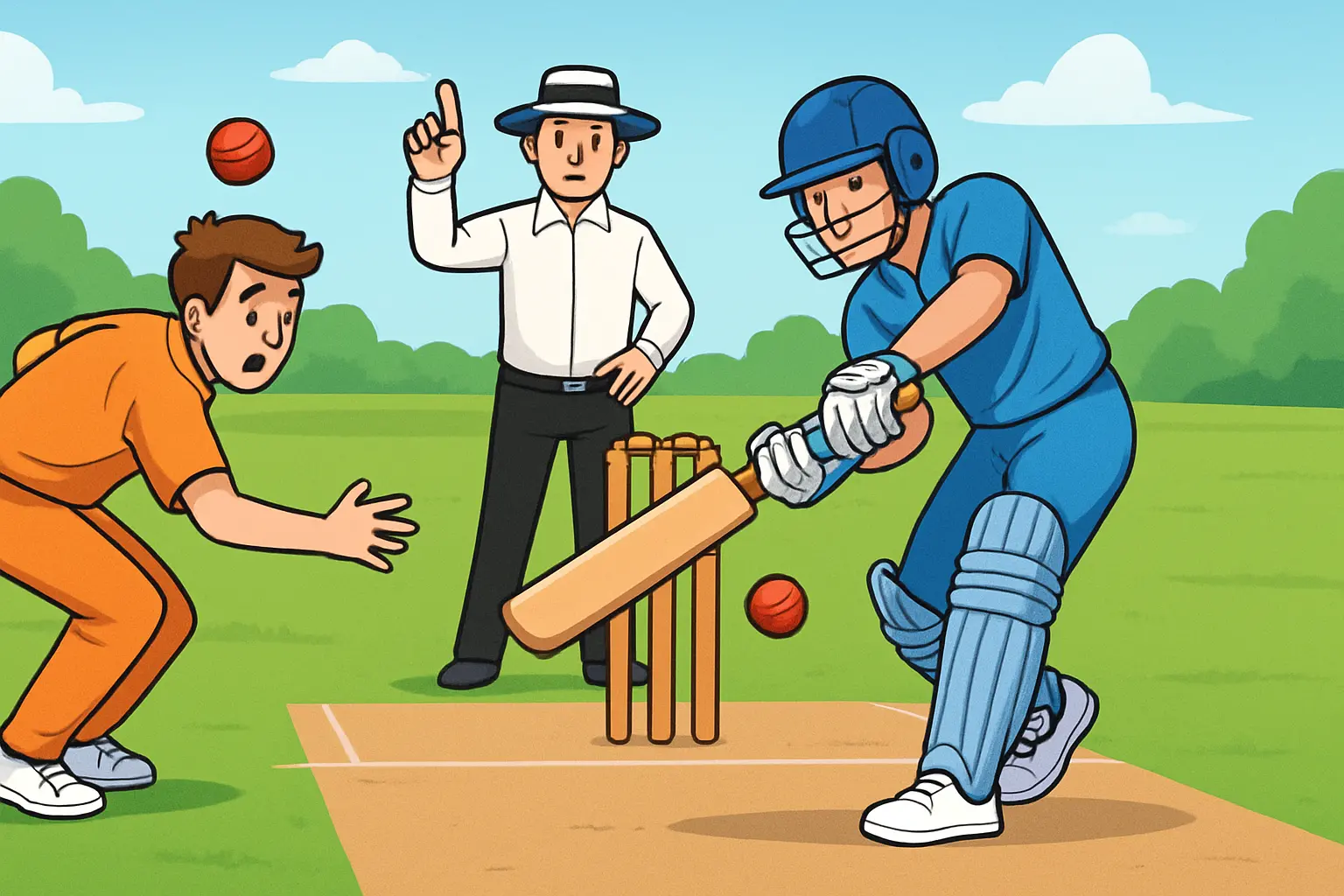
Floodlights buzzing, the stadium at full voice, a front foot inches over the line. The umpire’s arm stretches sideways: no-ball. Then the whirling arm that makes every batter’s eyes light up—the free hit is on. This isn’t just a quirk of the modern game; it’s a tactical stage where nerve, skill, and game awareness collide. Understanding free hit rules is how players and teams squeeze every last advantage from a mistake.
At a glance
- Meaning: A free hit is the next delivery after a no-ball in limited-overs cricket on which the striker cannot be dismissed by the usual modes like bowled, caught, LBW, or stumped.
- Out vs Not Out on a free hit:
- Not out: bowled, caught, LBW, stumped.
- Out: run-out (striker or non-striker), hit wicket, obstructing the field, hit the ball twice (if not solely to protect the wicket).
- Fielding: No change to field placements for the free hit if the same striker remains on strike, with a few specific exceptions.
- Formats: Applies in ODIs, T20Is, and virtually all T20/OD leagues (including IPL, BBL, PSL, The Hundred). Not in Test cricket.
Free hit meaning in cricket
A free hit in cricket is the delivery that immediately follows a no-ball in limited-overs formats. On this ball, the striker is protected from most forms of dismissal—most notably bowled, caught, LBW, and stumped. The free hit rule exists to penalize illegal deliveries and to encourage positive play. It changes the risk calculus for everyone: the batter often swings with intent, the bowler must minimize damage with precision, and the fielding captain plays a game of margins.
What is a free hit and when is it awarded
The free hit is awarded straight after any no-ball in ODIs and T20s, and in professional franchise leagues that adopt ICC/board playing conditions.
Common types of no-ball that give a free hit
- Front-foot no-ball: Bowler’s front foot lands beyond the popping crease.
- Back-foot no-ball: Back foot touching or landing outside the return crease (over/round the wicket infringement).
- Waist-high no-ball (high full toss): A fast full toss above waist height of the striker at the popping crease; height judged in the normal batting stance. Non-fast high full tosses are also no-balls if above waist height; repeated dangerous beamers can bring warnings or removal of the bowler.
- Ball bouncing more than once or rolling before reaching the popping crease.
- Ball pitching off the strip or otherwise illegal delivery (e.g., delivered underarm without prior agreement).
- Fielding restrictions breach: Too many fielders outside the circle in powerplay or illegal positioning (as per ODI/T20 field-limit rules) is a no-ball.
- Wicket-keeper encroachment: Keeper in front of the stumps at the moment of delivery can result in a no-ball.
- Illegal fielding (e.g., a fielder using a cap or clothing to field the ball) can also be penalized and may coexist with no-ball status depending on the infringement.
The umpire signal for a free hit
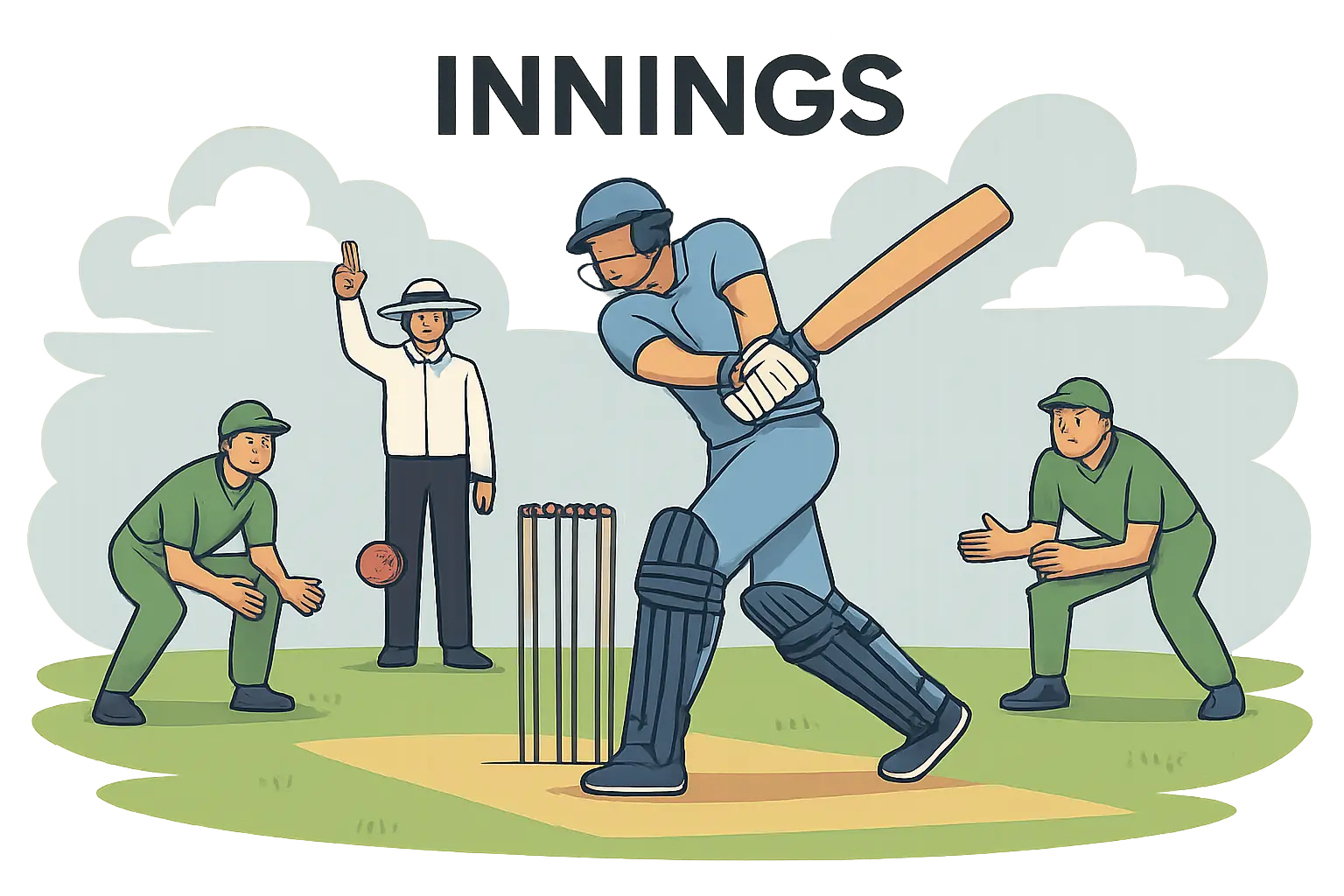
- No-ball: Front arm stretched horizontally.
- Free hit: The umpire then rotates a raised arm in a circular motion to indicate the next ball is a free hit.
- When a wide or another no-ball occurs on the free hit, the umpire repeats the free hit signal for the following delivery.
Free hit rules: out vs not out, explained like a decision tree
The free hit confuses beginners because it inverts cricket’s normal logic. Use this as your quick reference.
You cannot be out on a free hit by
- Bowled: Ball hits stumps and dislodges bails. Not out; ball remains live.
- Caught: Any catch is not out off a free hit, including caught behind or in the deep.
- LBW: Even if the ball would have hit the stumps, LBW is not possible.
- Stumped: The wicket-keeper whipping off the bails with the batter out of the crease is not a dismissal on a free hit.
You can still be out on a free hit by
- Run-out: At either end, striker or non-striker. If the keeper removes the bails while the striker is out of his ground and attempting a run, that’s a run-out (not stumped).
- Hit wicket: Striker dislodges the bails with bat or body while playing the ball.
- Obstructing the field: Willful obstruction of a legitimate attempt to field or effect a run-out.
- Hit the ball twice: If a batter intentionally strikes the ball twice other than to protect the wicket, they are out.
Table: Dismissals on a free hit
| Dismissal Type | Outcome on Free Hit |
|---|---|
| Bowled | Not out. Ball remains live; runs possible if the ball ricochets. |
| Caught | Not out. Ball remains live; runs can be taken. |
| LBW | Not out. Continue play. |
| Stumped | Not out. But can be run-out if a run is attempted. |
| Run-out (striker or non-striker) | Out, as usual. |
| Hit wicket | Out, as usual. |
| Obstructing the field | Out, as per the Laws. |
| Hit the ball twice | Out (unless the second hit is solely to protect the wicket without attempting to score). |
Important nuance
- A “bowled” on a free hit is still a live ball. If the ball deflects off the stumps into the outfield, the batters may run. If it hasn’t hit the bat or body, those are byes; if it struck the body, leg byes can apply under standard leg-bye conditions (attempted a genuine shot or evasive action).
- Likewise, any catch taken on a free hit is not a dismissal. The ball remains in play, and runs may be completed.
When is a free hit given in ODIs vs T20s—and is there free hit in Test cricket
- Free hit in ODIs: Awarded after any no-ball, with identical out/not-out protections.
- Free hit in T20s: Same as ODIs; the rule is embedded in T20 cricket’s DNA.
- Free hit in Test cricket: There is no free hit in Tests. A no-ball remains a no-ball (free run, extra ball, and a safe list of dismissals on the no-ball itself), but the next delivery is not a free hit.
IPL free hit rules—and how teams exploit them
IPL free hit rules mirror ICC limited-overs conditions:
- Any no-ball grants a free hit on the next ball.
- The striker cannot be out bowled, caught, LBW, or stumped on the free hit.
- Fielders generally cannot move for the free hit if the same striker remains on strike, except for explicit exceptions (detailed below).
- If the free hit delivery is called wide or no-ball, the free hit carries forward to the next delivery.
What separates IPL usage is the collective IQ. The league is a laboratory of repeatable patterns:
- Captains typically plug the obvious big-hit channels: deep mid-wicket, long-on, long-off, and deep square are almost non-negotiables. Point and third can be adjusted based on the bowler’s preferred line.
- Bowlers default to the wide yorker or the heavy, shoulder-high slower ball into the pitch—anything to take the arc away. The mistake is the half-length full toss: it vanishes into the stands, and on a free hit, confidence swells for the batter for the rest of the over.
- Smart batters pre-position a fraction deeper in the crease to convert a would-be yorker into a half-volley. You’ll also see a spike in audacious options: switch hits, reverse scoops, and lap shots—because there’s cover against dismissal.
Field changes on a free hit: what’s allowed, what isn’t
General rule: If the same striker remains on strike, the fielding side may not change field placements for the free hit.
Permitted exceptions
- Striker swap: If the batters ran off the no-ball and the other batter is now on strike, the field can be changed.
- Bowler switches arm or goes over/round the wicket: The field can be adjusted accordingly (and the umpire must be informed).
- To correct an illegal fielding position: If the no-ball resulted from illegal fielding or an infringement, positions must be adjusted to become legal.
- Wicket-keeper movement: The keeper may move up or back to the stumps as safety and fairness require (subject to Laws).
- Safety or surface considerations: Umpires can allow repositioning for safety (e.g., slippery areas).
Remember: Even on a free hit, fielding restrictions (powerplay rules, maximum outfielders) still apply.
Wide ball on a free hit—and what happens next
- If the free hit delivery is adjudged a wide, the batting team gets a run (plus any run completed) and the free hit continues to the next delivery. A wide does not “consume” the free hit.
- If the free hit delivery is also a no-ball, the next ball remains a free hit, with the new no-ball penalty added.
Free hit after no-ball: all the quirky scenarios you actually see
What happens if the ball hits the stumps on a free hit
Not out, ball is live. If the ball clatters off the stump and deflects away, the batters can run byes/leg byes, and they can still be run out attempting those runs. This catches new fans off-guard because on a normal ball, “bowled” makes the ball dead.
Can you be bowled on a free hit
The striker cannot be out bowled on a free hit. The stumps can be shattered; the batter survives.
Can you be caught on a free hit
No. Any catch on a free hit is not out, and the ball remains live. Many a deep fielder has instinctively celebrated a catch on a free hit—only to sheepishly relay the ball back as the batters stroll two.
Can you be LBW on a free hit
No. Umpires shouldn’t give LBW on a free hit. If they do by mistake, DRS (where available) would correct the decision.
Stumping on a free hit
Pure stumping is not possible on a free hit. However, if the striker attempts a run and the keeper breaks the stumps, it’s a run-out opportunity.
Run-out on a free hit: striker and non-striker
Both can be run out as usual. The striker can be out run-out at the striker’s end or at the non-striker’s end if a run is attempted. The non-striker remains at normal risk throughout.
Hit wicket on a free hit
Yes, the striker can be out hit wicket on a free hit. The classic case: a full-blooded swing, back foot clips the stumps, bails off—out.
Can you score byes and leg byes on a free hit
Yes, normal scoring applies. If the ball misses the bat and body, byes can be taken; if it hits the body (and there was an attempt to play the ball or evade), leg byes apply. If the ball has deflected off the stumps on a free hit, runs are still live.
Obstructing the field on a free hit
Still out if the striker or non-striker deliberately obstructs the fielding side’s fair attempt to effect a dismissal.
Hit the ball twice on a free hit
Out, unless the second hit is solely to protect the wicket and no run is attempted. If you use the bat a second time to score, you’re gone.
Penalty runs on a free hit
All standard penalty-run laws apply: illegal fielding, unfair movement by the wicket-keeper or fielder, deliberate distraction, etc.
Free hit continues after wide? Clarification
Yes. A wide ball on a free hit means the next delivery is again a free hit. The same applies if the free hit delivery is a no-ball.
Can the bowler change arm or go over/round the wicket on a free hit
Yes. They must inform the umpire, and the field can be adjusted for that change (an allowed exception to the no-field-change rule).
Super Over free hit rule
Super Overs follow white‑ball playing conditions. A no-ball in a Super Over still earns a free hit on the next ball.
DLS and free hit scenarios
Interruptions don’t cancel a pending free hit. If a no-ball occurs and play stops before the next ball is bowled, the first ball after resumption remains a free hit.
The free hit in different competitions
ODIs and T20Is
- All no-balls earn a free hit.
- Out vs not out protections are uniform.
IPL free hit rule explained
- Mirrors ICC conditions.
- Strategy often clusters around the wide-yorker plan and packed leg-side boundary riders. Batters premeditate options like the switch hit or the lap over short fine.
PSL free hit rule
- Same framework as ICC. Tactical patterns are similar—Pakistan’s white-ball quicks tend to trust the yorker, while batters in PSL often favor deep mid-wicket and long-on channels.
BBL free hit rule
- Australian leagues follow the limited-overs template. The wide-yorker is a staple; Melbourne and Sydney venues with true pitches reward batters who can access extra-cover on a free hit.
The Hundred: free hit nuance
- No-balls incur two runs in The Hundred, and the next ball is a free hit. Sets of five deliveries are used, but a no-ball still produces a free hit on the immediate next delivery in that set (or next set if the set ends).
County cricket, T20 Blast, global leagues
Broadly consistent with ICC. Domestic boards may publish slight wording differences, but out/not-out logic and the “field cannot be changed” core remain intact.
Free hit vs no-ball: know the difference
- No-ball: The ball itself is illegal. On that ball, the striker is protected against being out in certain ways (e.g., not out caught or LBW). One run penalty and an extra ball apply.
- Free hit: Is the very next delivery after a no-ball. The striker enjoys extended protection from dismissal on that next ball.
Free hit vs penalty ball
A no-ball penalty is part of the Laws; a “penalty ball” is not an official term in the ICC Laws. Some casual conversations mislabel the free hit as a penalty ball, but in cricket’s lawbook, it’s a free hit following a no-ball.
How many runs on a free hit maximum
There’s no special cap. You can score any number of runs on a free hit, just as on any delivery: boundaries, overthrows, runs completed—everything counts. If it’s also a no-ball, you add the no-ball penalty to the runs scored. Tallying 7 off a single stroke (no-ball + six) is common; larger sums are possible with overthrows.
Famous free-hit rhythms and match‑turning moments
Ask bowlers who have worked the death overs in white‑ball cricket and they’ll tell you: a free hit changes the dynamics of the entire over. The best nail the yorker so deep it breaks toes; the lesser ones drift into a slot and watch the ball come back with lipstick.
- The wide yorker clinic: Jasprit Bumrah-esque plans that start wide of off and stay there, daring a batter to reach. The field: backward point and deep third aligned for mis-hits; cover and extra-cover guarding twos.
- The slower ball into the hip: Deceptive pace change, climbing into the batter’s ribs. If it climbs too high and is a beamer, it backfires badly—no-ball plus another free hit.
- The lap and the switch: AB de Villiers and Glenn Maxwell popularized the idea that a free hit is license for invention. Reverse sweeps to balls outside off, lap pulls over short fine: ways to score even when the yorker is good.
- Running as a weapon: Even a well-bowled free hit can yield 2s if the batter hits into pockets. Good teams are greedy here—they turn safe ones into twos, trusting the protection from the big dismissals.
You also spot the small tells. A batter lingered deeper in crease by a shoe length; a keeper migrated back rather than staying up because stumping is moot; a fine leg crept five yards squarer anticipating the lap. These details decide whether the over bleeds eight or explodes to twenty.
Umpire craft and the psychology of the call
A free hit depends on accurate no-ball recognition, which is a dance of geometry and timing. Front-foot margins are microscopic. Standing umpires and TV umpires share the responsibility in elite matches; domestically, the on-field umpire’s eye must be razor-sharp. The instant the arm stretches for a no-ball, everyone recalibrates. The bowler will sometimes prefer a deliberate wide yorker on the free hit to bleed one rather than feed a slot ball. The batter, hearing that arm swirl, is already setting up two shots ahead.
Waist-high no-ball free hit rule: the real-life grey zones
- Fast high full tosses above waist height are dangerous and automatically no-balls; persistent offenses can escalate to warnings or removal of the bowler from the attack.
- Slower high full tosses are no-balls if above waist height at the popping crease, even if not dangerous.
- Batters advancing: If a batter charges several steps, the “waist height” is judged at the popping crease in the normal batting stance. This prevents a batter from gaming the height call by running forward.
All of these no-balls still deliver a free hit next ball.
Can the non-striker be run out on a free hit
Absolutely. The non-striker’s world is unchanged. If the striker crunches a free hit into mid-wicket and the non-striker fails to make their ground, they’re out as usual. Also, a pre-delivery run-out of the non-striker (if they leave early) is possible on any delivery; if it happens before the free hit is delivered, the free hit still applies to the next ball.
Can the keeper stand in front on a free hit
No. The keeper cannot be in front of the stumps at the instant of delivery. If they are, it’s a no-ball—ironically leading to another free hit. On free hits, keepers usually stand back to minimize byes and focus on run-out chances rather than stumping attempts, which are moot.
Does a wide consume the free hit
No. Wides and no-balls on a free hit lead to another free hit on the next ball.
If the free hit is a no-ball again, is the next ball a free hit
Yes. Chains of free hits are rare but they happen—especially when a bowler is hunting the wide yorker and oversteps while straining for angle.
Does free hit apply for back-foot no-ball
Yes. Any no-ball type triggers the free hit: front foot, back foot, illegal fielding, keeper encroachment, waist-high full toss—if it’s a no-ball, the next ball is a free hit.
Can the field be changed if the batter changes on a free hit
Yes. If the batters ran on the no-ball, meaning the other batter is on strike for the free hit, the fielding side may reset positions to suit the new striker.
The striker’s plan: how to exploit a free hit without throwing your wicket away later
- Decide early: Pick the zone—leg-side arc, extra-cover, or fine-third channel—and commit. Free hits punish half-decisions more than normal balls because bowlers hedge to extremes (the very wide or the very full).
- Manage the yorker: If the bowler nails it, don’t be greedy. A hard run for two into the long-on gap is worth more over the over’s life than a desperate slog at a toe-crusher.
- Expect the slower ball: Watch the palm and release. Many bowlers choose a pace-off ball on free hits to disrupt swing geometry.
- Run hard: Fielders are often a step deeper; even a thick inside edge into square leg can be milked for two. Protect the back end of the over by keeping momentum.
The bowler’s plan: minimizing free-hit damage
- Trust the wide yorker: Move the batter’s hitting arc away from their power zones. Miss small, not big.
- Use the bouncer sparingly: A well-directed short ball can be effective, but misjudged height risks a dangerous beamer and another free hit.
- Set a defending field, not a miracle-catching field: Catches don’t count. Prioritize boundary riders and cut off the twos.
- Vary angles: Over to round, change of arm if available, to disrupt sight-lines and hitting shapes—legitimate reasons to tweak the field on a free hit.
Real match scenarios every coach drills
- Free hit at 18.3 overs, new batter in: The bowling captain can go ultra-defensive—deep cover, deep point, third, fine leg, long-on, long-off—with infielders protecting the hard-two angles. The bowler targets fourth-stump wide yorkers. The batter’s best shot: Get deep and access extra-cover, or lap a pace-off ball.
- Free hit early in powerplay to a left-hander: The field often shapes with deep square and long-on; bowler attacks wide outside off from over the wicket, forcing a drag across the line. The batter’s plan: reverse-ramp or step across and carve square of the wicket.
- Free hit after a high full toss no-ball: Bowlers tend to overcorrect. Expect the pace-off wide, watch for the one dragged too straight—your slog-sweep window.
Misunderstandings that trip up players and fans
- “A stumping is possible if the batter steps out.” Not on a free hit. It can be a run-out only if a run is attempted.
- “Once the stumps are hit, play is dead.” Not on a free hit. The ball remains live and runs are on, so be alive to byes/leg byes.
- “You can change the field to anything on a free hit.” Not if the same striker remains on strike; only specific exceptions apply.
- “Free hit is only for front-foot no-balls.” Not anymore in modern white-ball rules; any no-ball triggers it.
A concise rules checklist for players
- Confirm: Next ball is a free hit. Umpire’s circular arm signal seals it.
- Field: Quick scan—positions should be largely unchanged if the same striker remains.
- Plan: Expect the wide yorker or pace-off bouncer; commit early to your scoring zones.
- Run: Even mishits can yield doubles; think in twos, not just sixes.
- Awareness: If you “get bowled,” don’t freeze. Ball is live; run hard.
Free hit language mini‑guides (high‑intent explainers)
- Free hit meaning in Hindi (Free hit ka matlab): No‑ball ke baad agla ball jisme striker bowled, caught, LBW, stumped se out nahi ho sakta—ise free hit kehte hain.
- Free hit kya hota hai: No‑ball ke turant baad wala ball free hit hota hai; ispe striker zyada tar tarah se out nahi hota.
- Free hit meaning in Urdu: No‑ball ke baad agla ball free hit hota hai; is par striker bowled, caught, LBW, stumped se out nahi hota.
- Free hit meaning in Tamil: No‑ball kku pinna varum ball “free hit.” Idhil striker bowled, caught, LBW, stumped aaga maattar.
- Free hit meaning in Telugu: No‑ball taruvāta vastundē ball free hit. Dīnilo striker bowled, caught, LBW, stumped tō out kāḍu.
- Free hit meaning in Bengali: No‑ball er porer boli free hit. Ete striker bowled, caught, LBW, stumped out hoben na.
- Free hit meaning in Marathi: No‑ball nantar cha pudhcha bola free hit asto; yavar striker bowled, caught, LBW, stumped ne out hot nahi.
FAQ: crisp answers to the questions fans actually ask
- What is a free hit and when is it awarded?
A free hit is the delivery after any no-ball in limited-overs cricket. It protects the striker from most dismissals. - Can a batter be bowled or LBW on a free hit?
No. Bowled and LBW are not possible on a free hit. - Can you be out hit wicket on a free hit?
Yes. Hit wicket still applies. - Is stumping possible on a free hit?
No. Stumping is not a dismissal on a free hit. If a run is attempted, a run-out can occur. - Can the non-striker be run out on a free hit?
Yes. The non-striker is at normal risk of run-out. - Does a wide ball consume the free hit?
No. A wide on a free hit means the next ball remains a free hit. - If the free hit is also a no-ball, is the next ball a free hit?
Yes. The free hit rolls over to the next delivery. - Are fielding positions allowed to change for a free hit?
Generally no if the same striker is on strike, except when the bowler changes arm/side, the striker changes, or to correct an infringement/safety issue. - Is there a free hit in Test cricket?
No. Tests do not have free hits. - What is the umpire signal for a free hit?
The umpire rotates a raised arm in a circular motion to signal a free hit for the next ball.
Scorebook and stats footnotes that matter
- The no-ball itself adds one run to the batting side (or two in The Hundred) and does not count as a legal ball in the over tally.
- The free hit ball is a legal delivery unless it’s a wide or no-ball itself.
- If the batter is “bowled” on a free hit, the ball remains live and runs can still be taken; scoring as byes/leg byes or off the bat follows normal rules.
The origins and the point of it all
The free hit arrived to heavily penalize illegal bowling and nudge white-ball cricket toward attacking play. It has become one of the format’s crown jewels because it forces bowlers and captains to execute under pressure while giving batters a rare insurance policy. The spectacle is undeniable. But beneath the fireworks lives a tidy rule that, once understood, makes the endgame of limited-overs cricket far easier to read.
Decision-making blueprint: out vs not out on a free hit
- Did the ball result in a catch? Not out. Ball live. Run.
- Did the ball hit the stumps? Not out. Ball live. Run.
- Did it hit pad in front? Not out LBW. Ball live. Play on.
- Did the keeper break the stumps with the striker out of his crease? Not out stumped. If a run was attempted and the striker was short, that’s run-out.
- Did the striker or non-striker get their bat/foot grounded behind the line? Safe, as usual.
- Did the striker knock the bails off with bat or body? Hit wicket—out.
Practical examples: how an over can unravel or be rescued
- Example 1: Death over, front-foot no-ball, six
- Ball 1: No-ball overstep; batter launches it for six. Score impact: 7 and ball not counted as legal.
- Next ball: Free hit. Bowler tries the wide yorker; misses into slot—four more. Field hands-on-knees, captain gesturing to go wider, deeper.
- Bowler regroups to slow, wide cutters; keeps the next two to singles. Damage is limited, but the free hit has turned the over on its head.
- Example 2: Free hit that “bowls” the batter
- No-ball for waist-high full toss; next is a free hit. Bowler nails a yorker; the batter swings over it, and the stumps explode. Not out; the ball ricochets to third man and the batters sprint two byes. Over ends with four fewer runs than it felt like, and the bowling side escapes.
- Example 3: Stumping confusion
- Free hit in the powerplay. Batter charges, swings and misses, with both feet out of the crease. Keeper collects and whips the bails off. Not out stumped. Batter isn’t attempting a run, so no run-out either. The awareness gap is huge—teams shout reminders to avoid burning DRS or celebrating the wrong thing.
The culture of the free hit: why it thrills
A free hit is pure theater. It’s also justice. A bowler who illegally oversteps or fires a beamer cedes a significant edge to the batter. The crowd leans in because they know both sides have to make a perfect decision quickly. Batters must choose a zone and trust it. Bowlers must trust their hardest, most practiced skill. Captains must stack probabilities, not hope. That tension—seasoned by consequence—is why free hits have decided titles, secured famous chases, and broken stubborn innings wide open.
Common league nuances without the complexity
- IPL free hit rules: Same as ICC; strategic depth is the differentiator.
- PSL free hit rule: Same as ICC; expect fast bowling plans that emphasize yorkers and hard lengths.
- BBL free hit rule: Same as ICC; Australian tracks and biggish squares invite strong square hitting.
- The Hundred free hit: No-balls are two runs plus a free hit; delivered in sets of five, but the next ball is the free hit regardless of set boundary.
The final word: play the ball, not the myth
For all its explosive potential, the free hit is not wild anarchy. It’s governed by clear conditions:
- It exists only because a no-ball was bowled.
- It makes several dismissals impossible—but not all.
- It preserves fairness: illegal deliveries are punished, but bowlers who execute can still win the moment.
Bowlers who hit their marks will grumble less at the rulebook. Batters who plan before the arm whirls will cash in more often. And spectators who know exactly why a catch doesn’t count on a free hit can savor the nuance as much as the noise.
Free hit rules in T20 and ODI cricket are crisp, defensible, and—when understood—utterly compelling. The next time you see that umpire’s arm draw a circle in the night air, you’ll know precisely what’s coming and exactly how the smartest players will try to own it.