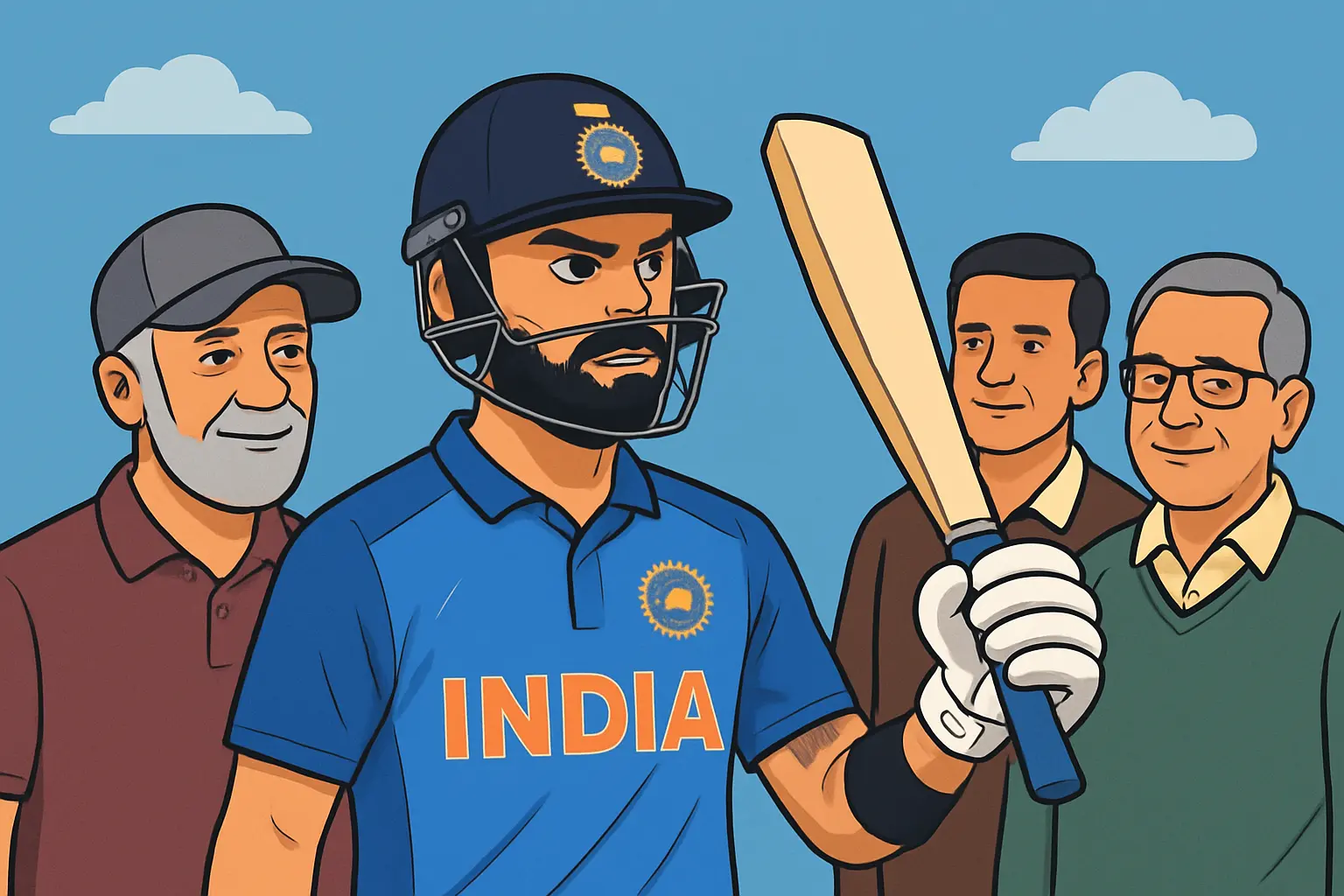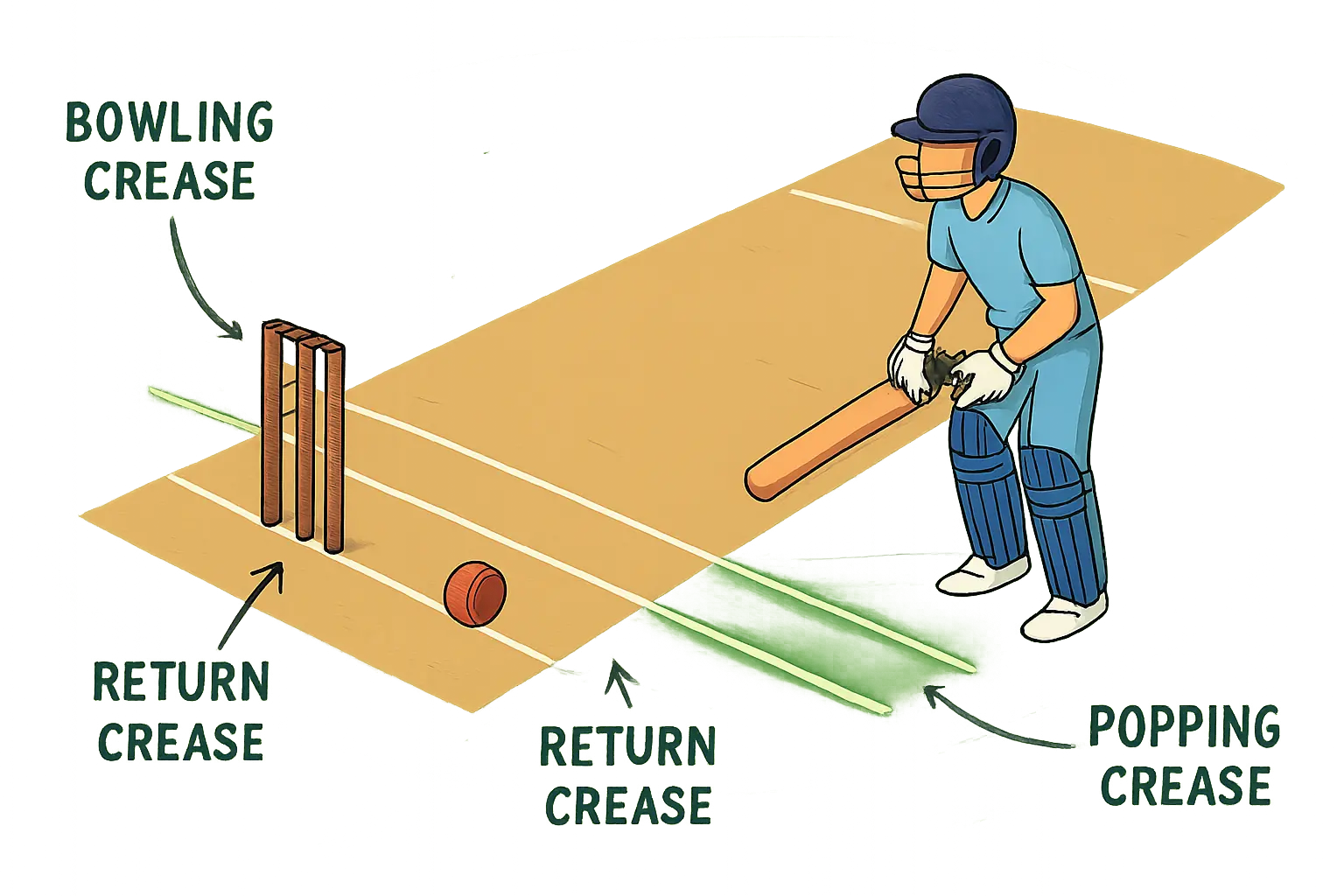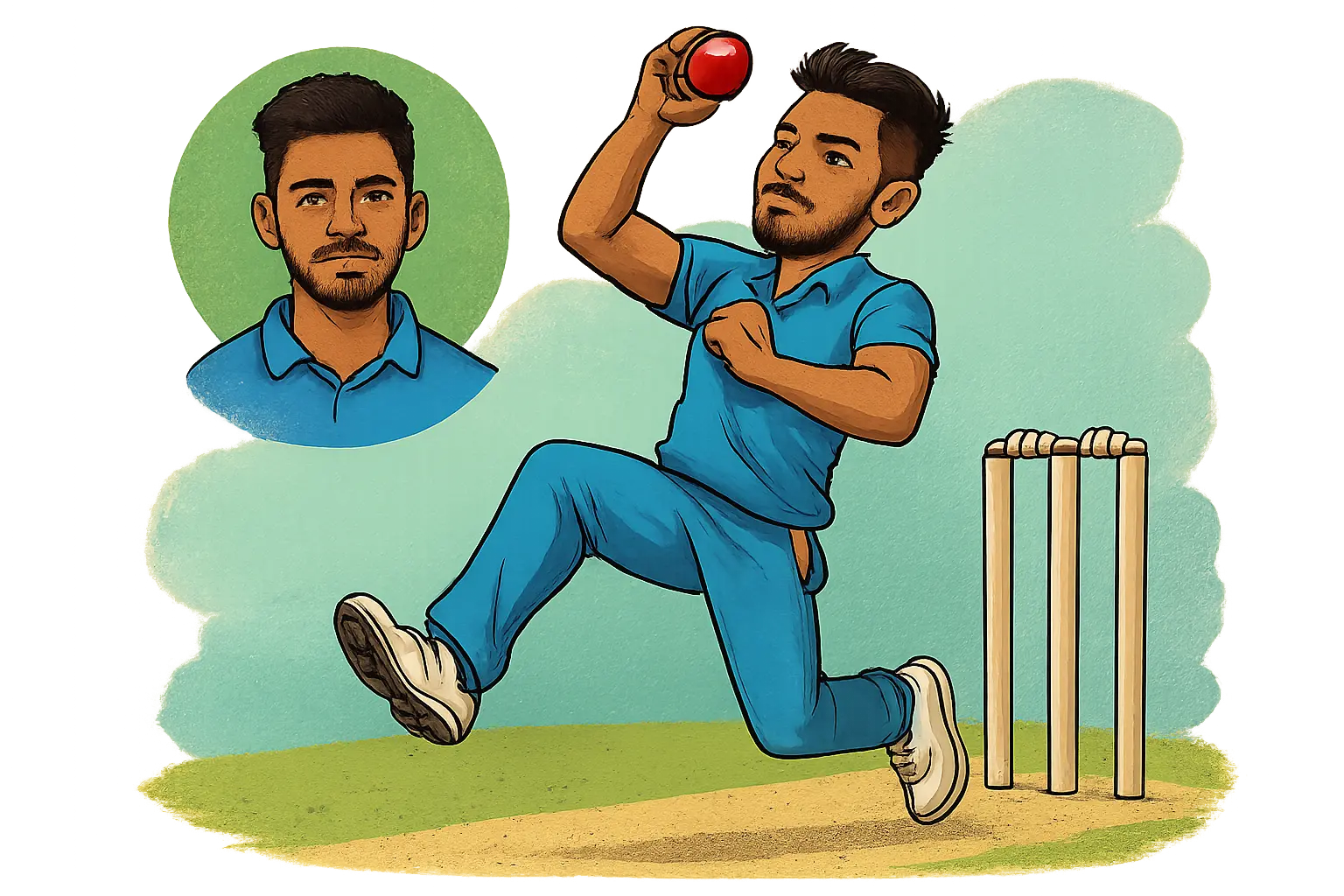

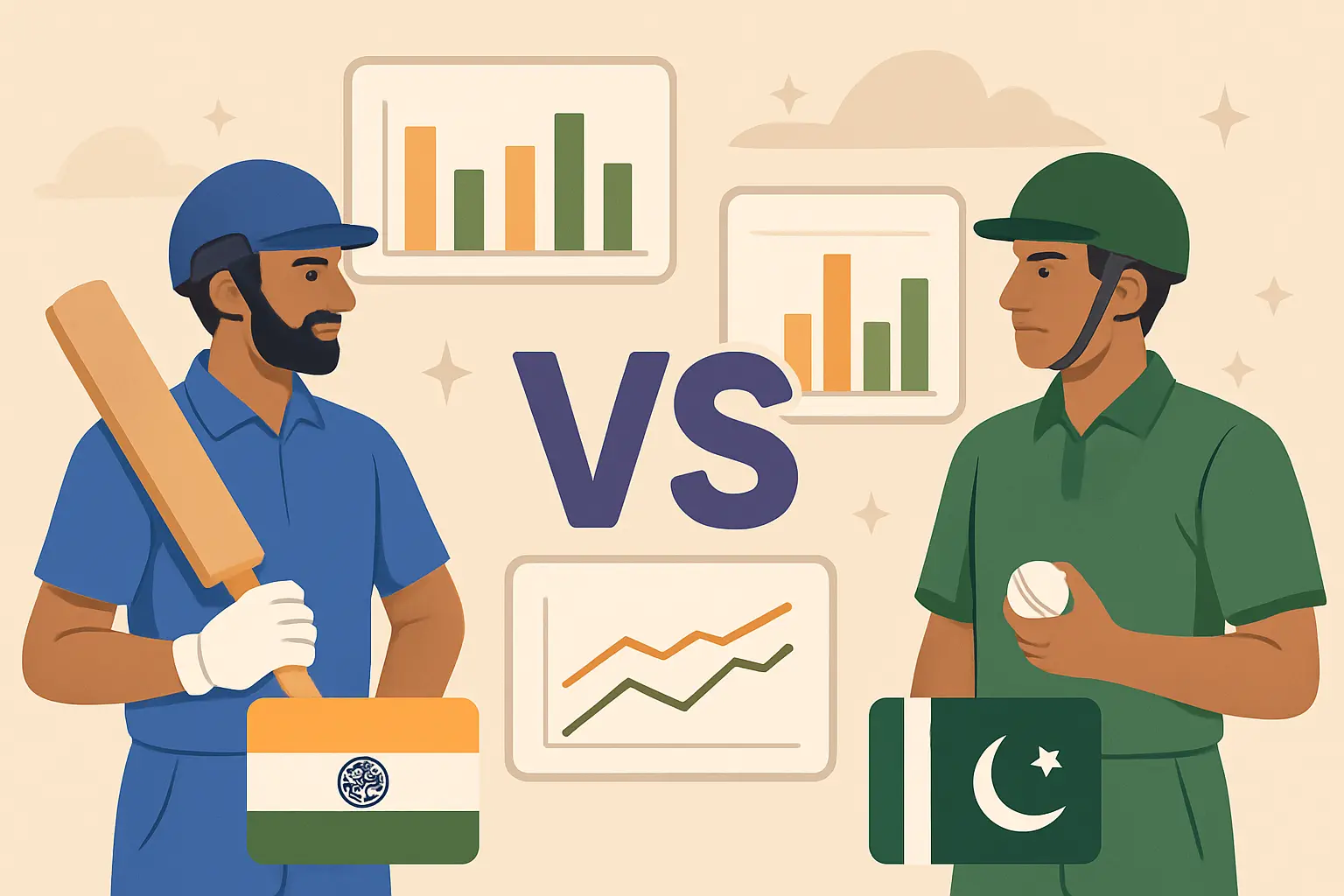
A full ground reverberates before a ball is bowled when India play Pakistan. The noise carries a memory bank: Saeed Anwar’s flowing drive on a hot afternoon, Anil Kumble’s perfect storm at Feroz Shah Kotla, a white-ball spell from Mohammad Amir that bent a final beyond repair, and Virat Kohli’s late-innings alchemy under lights on a grand stage. This rivalry compresses time. It can feel like every meeting ends a chapter and opens a new one.
This long-form, continually refreshed pillar brings all verified India vs Pakistan records into one place—ind vs pak head to head across formats, ICC events, venues, superlatives, captains, and player-vs-player storylines—then reads between the lines the way insiders do. It is written from a press-box vantage point with the dressing-room echoes still in earshot: selection calls, tactical trade-offs, and how particular skills travel across conditions.
Method and scope
- Official internationals only: Tests, ODIs, T20Is; warm-ups and unofficials excluded.
- ICC events counted within their respective formats.
- Neutral venues are tracked separately because they define long patches of this rivalry.
- Data current through the latest ICC global event meeting in North America. Updates follow each fixture.
Overall head-to-head: the shape of the rivalry
The top-line stat is simple: Pakistan hold the edge in ODIs overall and therefore lead the combined tally across all formats; India control ICC events and own T20Is, and they have steadily turned the ODI flavor of big tournaments in their favor.
Overall head-to-head by format
| Format | Matches | India wins | Pakistan wins | Draw/Tie/NR |
|---|---|---|---|---|
| Tests | 59 | 9 | 12 | 38 draws |
| ODIs | 134 | 56 | 73 | 5 NR/abandoned |
| T20Is | 13 | 9 | 3 | 1 tied (bowl-out decided) |
Key takeaways
- India vs Pakistan overall record tilts Pakistan’s way because of the ODI volume in the Sharjah and bilateral-heavy stretches.
- India dominate ICC events head to head, especially World Cups, and lead ind vs pak t20 record emphatically.
- Tests between the sides are draw-rich; the classic touring cycle often produced attritional, high-pressure cricket.
By format: strategy, tempo, and where games are won
Tests: patience, reverse swing, and one 10-for that lives forever
The red-ball ledger underscores how difficult it is to force results between two skilled, risk-averse outfits that know each other’s rhythms. A large majority of Tests were drawn, and the win-loss count stands with Pakistan ahead.
- Series character: Long stretches of Tests were built on attrition and skill in late spells, with reverse swing often deciding sessions rather than entire days. Pakistan’s great new-ball pairs opened doors; India’s spin arsenals and later reverse-swing knowhow clawed them back.
- The signature performance: Anil Kumble’s 10 wickets in a single innings holds the iconic spot. It wasn’t just a record; it reshaped how Pakistan batted him thereafter—deep crease, late angles, hard hands punished by top-spin overspin.
- Run-scoring pattern: Big hundreds from both sides tended to come in the first half of a Test, flattening pitches, then devolved into trench warfare as the ball went reverse and cracks widened for spinners.
ODIs: the rivalry’s river of record
The ODI is where ind vs pak head to head grew teeth. If you watched the desert circuit, the one-dayers told you Pakistan would run up India in the middle overs with Wasim and Waqar slicing through the stumps. If you watched tournament cricket across continents, the ICC arc tells you India settled the pressure moments better.
- Pakistan’s ODI advantage: Built across a heavy load of neutral-venue matches in the Gulf and a run of bilateral series where their pace attack and middle-over control outgunned India’s finishing. Aaqib Javed’s 7-for at Sharjah remains the signature day of swing and seam discipline.
- India’s tournament savvy: In World Cups and high-stakes neutral events outside the Gulf, India found game control through new-ball batting solidity, high-quality No. 3 production, and death-overs bowling improvements. Big-chase confidence bloomed with a 330-run pursuit topped by a Virat Kohli epic, a template of modern ODI calculation.
- The balance: Pakistan still lead ODIs overall; India’s dominance in ICC knockout fields and marquee group games has reweighted the rivalry’s perception.
T20Is: clutch chases and powerplay knife-fights
T20I meetings are fewer but louder. India lead comfortably in ind vs pak t20 record, forged mostly through high-pressure chases and deft middle-over bowling.
- India’s edge: A top order that absorbs new-ball movement, then a No. 3 who paces like a metronome under lights. Moments define T20Is, and India’s key batters have timed those moments better more often.
- Pakistan’s hallmark: The dramatic 10-wicket victory at a global T20 tournament where left-arm swing erased angles and a powerful top-two iced the chase. It remains the outlier benchmark Pakistan point to when they talk about perfect execution.
- Tactical spine: Powerplay risk management rules these contests. India, in their better nights, treat Shaheen Afridi’s first two overs with exaggerated care—middle-stump guard, late hands, vertical arc—before counterpunching against spin or first-change. Pakistan, in their better nights, take pace-on lengths from the hip early, force length errors, then let their legspinner or canny seamer defend a par-plus.
ICC and tournament head-to-heads
ODI World Cup record: one-sided and defining
India vs Pakistan World Cup record in ODIs amplifies India’s big-stage temperament. India have never lost an ODI World Cup match against Pakistan. The margin is absolute and shapes fan memory of the rivalry as much as the ODI tally shapes the long arc.
At a glance:
- ODI World Cup head-to-head: India lead 8–0
- Signature Indian days: controlled seam bowling defending totals; openers absorbing the first spell; a No. 3 masterclass carving a chase of 330; seamers hitting the hard length at the death with four fielders out.
T20 World Cup record: India lead, with Pakistan’s perfect chase as the exception
The T20 World Cup narrative swings through a bowl-out, a final sealed by a yorker, and two all-time chases. India lead comfortably here too.
At a glance:
- T20 World Cup head-to-head: India lead 7–1
- Turning points:
- The early bowl-out night established India’s nerve in the format.
- Pakistan’s 10-wicket chase at a global T20 tournament at Dubai remains their most emphatic T20 statement in the rivalry.
- India’s last-over masterclass under a vast MCG sky revived an improbable pursuit, punctuated by two straight sixes off a high-pace specialist.
- A low-scoring defense on a drop-in pitch in North America reminded everyone that India’s new-ball control and death hitting under constraints can still win ugly.
Champions Trophy record: a near-even tug, decided by a final
Split across groups and a title clash, this subset feels closest to parity. Group-stage superiority sat with India on several occasions, but Pakistan pocketed the one result that mattered most—a final where their new-ball pair and a left-handed top-order disruptor seized the day early and never let go. The ledger slightly favors Pakistan overall in the Champions Trophy, even as India claimed more group-stage Ws.
Asia Cup record: format-agnostic consistency for India, sparks of brilliance for Pakistan
Across ODI and T20 versions, India vs Pakistan Asia Cup record tilts India’s way. That edge widened with a 228-run hammering in a Colombo Super Four. Pakistan own plenty of peaks here—crisp new-ball bursts, and some audacious top-order flurries—but India’s bench depth and multi-phase bowling have stacked the aggregate.
Venue-wise and condition splits
Record in India: crowd voltage, spin nuance, and chasing discipline
- ODI balance slightly India-leaning in ICC and tournament contexts at Indian venues, while bilateral tallies have memories of Pakistan’s strong touring returns.
- Spin plays a louder note but the toss matters less than powerplay survival. India’s white-ball template at home—accumulate, kill in overs 35–45, hold nerve at the death—has transferred well to Pakistan fixtures.
- Kolkata record: an Eden crowd transforms small moments into bigger ones. India shade T20 nights here; ODIs have been splits and swings. Wristspin and cross-seam have worked on heavy dew.
- Ahmedabad record: from intoxicating T20 run-fests to a high-profile ODI World Cup meeting, India have typically held the line here in marquee matches. Power-hitting under lights and smart new-ball fields have tracked the advantage.
Record in Pakistan: reverse swing school
- ODIs in Pakistan historically tested India’s middle order against heavy reverse through the back ten. Pakistan’s ability to break stands after the 30th over often turned par into match-winning totals.
- Tests were mastery tutorials in old-ball craft. India’s batters who trusted the straight ball and narrow trigger survived; those who chased width fed a slip cordon that always moved up a step or two at dusk.
Record in UAE: the Sharjah spine and Dubai’s new age
- The india vs pakistan record in UAE defined a generation. In Sharjah, Pakistan accumulated a deep ODI lead, forged by suffocating lengths and pressure-turning wickets in the 30–40 over phase. Aaqib Javed’s 7/37 is the day poster.
- Dubai refreshed the rivalry with Asia Cup and T20 World Cup bouts. India used template chases; Pakistan authored their 10-wicket clinic. Dubai nights reduced noise to three ingredients: new-ball discipline, mystery-spin insurance, and boundary denial in overs 13–17.
Record in England: green seams, white balls, and a final remembered most
- Neutral-venue India vs Pakistan record in England leans India’s way at ICC events, with disciplined seam bowling under clouds and batting units conditioned for the Dukes-and-Overcast exam.
- That said, Pakistan’s Champions Trophy title day here carries disproportionate gravity. It wasn’t a fluke; it was a tactical execution masterclass.
Neutral venue record overall
- ODIs: Pakistan lead at neutral venues owing to a huge Sharjah footprint.
- ICC events: India lead across formats, and by distance in World Cups.
- T20Is: India lead overall; neutral pitches tend to favor India’s structured chase approach and Bumrah’s two-phase problem-solving.
Player records and matchups that decide days
Run-scoring royalty
- Sachin Tendulkar record vs Pakistan: the ODI run leader in this rivalry. From uppercuts over third man to drives through a two-man cover ring, Tendulkar shaped the middle overs historically dominated by Pakistan’s pace.
- Virat Kohli record vs Pakistan: the defining big-chase presence of the modern era, including the highest ODI score by an Indian against Pakistan—183. His T20I average in the rivalry sits high because he relishes long chases, milking straights and hustling twos in back-end overs before picking the one bowler to go after.
- Saeed Anwar’s day of days: the highest individual ODI score in India vs Pakistan matches belongs to Anwar with 194, a left-hander’s lesson in pace deflection, wristy glide, and boundary frequency.
Wicket-taking titans
- Wasim Akram record vs India: control, swing late both ways, leg-cutter exit doors from a full-of length. He broke up partnerships like a specialist surgeon.
- Waqar Younis record vs India: toe-crushing yorkers in the last third of the innings changed many Sharjah nights. His ODI wicket tally against India is elite-tier across all rivalries.
- Anil Kumble record vs Pakistan: the 10-wicket innings sits at the summit. Beyond it, Kumble’s subtle changes of pace and steepling top-spin extracted lower-order mistakes on dull surfaces that beat neither bat nor pad—until they did.
- Umar Gul’s T20 toolkit vs India: skiddy lengths, back-of-the-hand variation, and death yorkers gave Pakistan a persistent T20 foothold during the early stretch of the format.
Captains and leadership patterns
- MS Dhoni: captaincy record vs Pakistan across ICC events reads nearly spotless. He leaned on clarity—front-loading strike bowlers, floating finishers to scramble match-ups, and keeping tempo calculators simple in chases. Dhoni the wicketkeeper also neutralized sharp turners and leg-cutters with minimal fuss, a massive defensive edge.
- Rohit Sharma: high-tempo powerplay batting and frosty calm at toss and team balance meetings. Under Rohit, India’s white-ball blueprint against Pakistan has emphasized early risk control against left-arm swing and an extra bowling option to prevent one bad matchup from sinking the middle overs.
- Imran Khan and the posture of inevitability: the template of belief and defense-in-depth for Pakistan. Imran’s Pakistan walked into India matches believing a magical new-ball hour would appear.
- Misbah-ul-Haq: a stabilizer-in-chief who kept Pakistan in ODI and T20 games with logic and field placement discipline; conservative at times, but seldom gift-wrapped games.
- Babar Azam: a touch artist at No. 3 with captaincy that prizes control, though India’s hard-length pace has targeted him shrewdly. His own record vs India contains both class-laden starts and critical top-order scalps against him at tournament crunch.
Player vs player: the matchups within the match
- Rohit Sharma vs Shaheen Afridi: The dynamic: a high back-lift opener vs a late-swerving left-armer who hunts the in-seam nip and the one that straightens. Shaheen’s plan is simple—nipbacker early, then full and away with second slip in. Rohit’s counter is guard adjustment (just inside leg), hands closer to the body, and looking dead straight for the first dozen balls. When Rohit wins the first spell, India’s run-rate ceiling swells; when Shaheen wins, Pakistan’s cordon springs alive.
- Virat Kohli vs Pakistan’s death bowlers: Two modes define Kohli here: the accumulator who piles 55 off 45 through lanes two and four, then the finisher who picks one over to gatecrash. Against high pace late, he favors a slightly open stance and the V. Against a skiddy seamer into the pitch, he shapes the pull in front of square but keeps wrists deep to manage top edges. His MCG heist—two jaw-dropping blows off Haris Rauf—took shot selection to the edge of probability and made it look inevitable.
- Jasprit Bumrah vs Babar Azam: Bumrah’s angles—wider on the crease, heel strike hard, wrist hid—force Babar to play inside the line longer than he prefers in the first dozen balls. That sets up the fuller length that kisses away. In the middle phase, Bumrah’s cross-seam and cutters blunt Babar’s rhythm. Several high-profile dismissals in ICC events now color this duel.
- Hardik Pandya vs Pakistan’s left-armers: Hardik’s front-foot punch through extra cover and a flat-batted lift down the ground are designed to counter 140-plus swing. On nights when India need 10s in the last five, Hardik’s bat speed and stable base show up as the difference between 156 and 175. Pakistan often counter with a deep mid-wicket and third-man shuffle, daring Hardik to hit long square—he can, and he often does.
- Mohammad Amir vs India’s top three: Amir’s new-ball spells defined a title-winning day—full, late, and utterly straight under pressure. He wins by holding the new seam upright and cheating that extra fraction back in. Against India’s right-hand dominant top, that first 18 balls were once a gauntlet. Indian planning since has shifted toward higher pick-up points and guarded bats in the first spell, then scoring square once movement fades.
Wicketkeepers and in-the-trenches influence
- MS Dhoni’s glovework vs Pakistan mattered as much as his leadership: leg-side pickups against 145 kph and split-second stumpings off legspin have flipped white-ball innings.
- Moin Khan and Kamran Akmal brought sharp batting cameos; on their best days they stole overs in the field with chirp and presence, and on others they leaked moments that India exploited.
Superlatives: the records that travel
Selected top marks
- ODI World Cup head-to-head: India lead 8–0
- T20 World Cup head-to-head: India lead 7–1
- Highest individual ODI score: Saeed Anwar 194
- Highest individual ODI score by an India player: Virat Kohli 183
- Best ODI bowling figures in a match between the sides: Aaqib Javed 7/37
- Best Test innings figures: Anil Kumble 10 wickets in an innings
- Biggest ODI win by runs: India by 228 (Asia Cup, Colombo)
- Highest successful ODI chase: India 330
Note on figures: ties and bowl-outs in T20Is are recorded by some databases as ties; the T20 World Cup ledger, however, credits India with the bowl-out win for head-to-head purposes at that tournament.
Venue mini-cards and context
Sharjah record: the crucible
- Why it mattered: relentless scheduling created familiarity, and Pakistan’s fast bowling machine learned to win in the dust—skiddy lengths, back-of-a-length squeeze, and surgical yorkers in the last eight overs.
- The blueprint: win the toss, bowl first, and let reverse swing and two-legside catchers dictate India’s middle overs. Batting second, Pakistan chased patience-first and punished any width.
- The memory: Aaqib Javed’s seven, Wasim-Waqar’s double-act, and a last-ball six by Javed Miandad that still echoes in coaching clinics discussing composure.
Ahmedabad record: lights, pressure, clarity
- T20 nights here favored batters who hit the deck hard and launch straight. India’s big-match calm has been the separator, most notably in a high-profile ODI World Cup meeting where the toss, dew, and smart fielding angles reduced risk throughout both innings.
- Tactical trait: India’s bowlers used cross-seam into the pitch to deny pace-on; Pakistan’s best phases came with a canny legspinner holding one end.
Kolkata record: theatre and temperament
- The surface often starts two-paced, then eases under lights with dew. India’s T20 win here against Pakistan came via beating the inside edge more than once and a calm chase measured to the over. ODIs at Eden have swung both ways, frequently down to which captain timed his last powerplay.
England and the Oval arc
- India’s seamers historically used overheads well, attacking the top of off with scrambled seams. Pakistan’s triumphant Champions Trophy final reasserted a primary truth: when their new ball swings, match-ups collapse in a hurry.
Decade arcs without dates: how the rivalry evolved
Early exchanges: Test discipline, attrition, and draw gravity
- Tours shaped by respectful batting, abundant skill, and an implicit pact not to throw games away early. Results were hard-earned, and bowlers needed late reversals or spin miracles.
Sharjah era: Pakistan’s ODI ascendancy
- Neutral-venue ODIs in the Gulf gave Pakistan scale in the ODI head-to-head. Bowling suffocation, middle-over economy, and aggressive new-ball spells meant India chased pressure often. Pakistan built the overall lead here.
Bilateral thaw: India’s batting revolution takes hold
- As Indian white-ball batting reinvented itself—elite strike rotation at No. 3, improved death-hitting, and a relentless fitness culture—the gulf in ODI temperament closed. Classic India-Pakistan ODIs started going to the last five overs with India better at pacing a chase.
ICC-dominant India: the World Cup habit
- India turned the big stage into a reliable script: survive the new ball, stretch through the middle, hunt in packs with seam at the death. Pakistan managed spikes—most memorably the Champions Trophy decider—but the broader ICC-picture belongs to India.
Modern T20 lens: micro-matchups and fielding margins
- T20I outcomes narrowed to powerplays, middle-over risk, and fielding acuity. India’s T20 head-to-head lead is built on two constants: a bankable No. 3 and a high-class death bowler. Pakistan’s route to victory runs through winning the first 24 balls and owning legspin in overs 7–14.
Captaincy records and philosophies in practice
India’s white-ball captains
- Sourav Ganguly: set tone with body language and contest. Sledging and field placements challenged Pakistan’s aura in the middle overs.
- MS Dhoni: ice-in-the-veins decision-maker; immaculate match-up handling; heavy reliance on data before it was fashionable; took neutral pressure like a routine net session.
- Virat Kohli: intensity carrier; built formidable quick-bowling cycles and preferred bold fields; kept India’s ICC unbeaten tradition vs Pakistan alive at key junctures before one T20 shock reset the narrative.
- Rohit Sharma: modern, fearless tone at the toss; offense-as-defense batting in powerplays; encourages bowlers to hunt wickets even with spread fields; found a settled XI balance early in tournaments.
Pakistan’s leaders
- Imran Khan: charisma codified. He passed down the fast-bowling gospel and demanded belief. India vs Pakistan records under him feel like inevitability built in the dressing room.
- Wasim Akram: a bowlers’ captain who gambled on pressure spells. Against India, he leaned on tearaway instinct but also loved cutting run-supply before taking wickets in clumps.
- Misbah-ul-Haq: kept games alive; sometimes conservative chasing, but hitters around him flourished because he took the chaos out of the equation.
- Babar Azam: classical batter as skipper. His team looks at him for serenity. Against India, his tactical tests are about shuffling death-overs resources and hedging against India’s right-hand clusters.
Batter and bowler archetypes that win this rivalry
What works for batters
- Against left-arm swing: leg-stump guard, under-the-eyes contact point, and committing to the straight drive for the first dozen balls. Rohit, Kohli, and Rahul have all adjusted this way.
- Against heavy reverse: narrow backlift, later trigger, and a bias to rotate to leg. Indian middle orders that forgot this paid; those who remembered walked chases safely.
- Pace-off tactical shots: square-leg scoops are risk; straighter lifts are insurance. India’s modern finishers keep the ball in front of square unless match-up demands otherwise.
What works for bowlers
- New-ball urine test: if it swings, live around the corridor; if it doesn’t, get into back-of-length with a short midwicket as a catcher for the miscued pull.
- Beat Pakistan’s right-handers: full-and-straight as the release ball; cutters after the eighth over. It has dismissed Babar, Rizwan, and Fakhar in high-pressure points.
- Beat India’s top order: stick to 6–8 meter lengths in first spells; let square boundaries defend; then surprise with the inswinger that threatens the stumps once the front pad commits to cover.
Spoke-level breakdowns you’ll want at hand
Player aggregates and milestones (curated highlights)
- Most ODI runs in India vs Pakistan: Sachin Tendulkar
- Most T20I runs in India vs Pakistan: Virat Kohli
- Most ODI wickets vs India: Waqar Younis and Wasim Akram top the pile
- Most Test wickets in the rivalry: Anil Kumble among the leaders
- ODI hundreds, India: Tendulkar, Kohli, Rohit, Sehwag
- ODI hundreds, Pakistan: Anwar, Inzamam, Mohammad Yousuf, Shoaib Malik, Babar Azam
- T20I best batting average (minimum significant innings): Kohli’s number sits elite
Bowling daybooks (memorable returns)
- Aaqib Javed 7/37 at Sharjah: the ODI bowling benchmark in the rivalry.
- Anil Kumble’s 10-fer: the singular Test innings haul, a monument to discipline and drift.
- Mohammad Amir’s new-ball final: full length, late bend, big-match ruthlessness.
- Jasprit Bumrah’s ICC strangle: wickets across phases, and economy in a tournament defense on a sluggish outfield in North America that squeezed Pakistan’s chase into panic.
Superlatives and quick-reference tables
ICC head-to-head snapshot
| Event | Head-to-head |
|---|---|
| ODI World Cup | India lead 8–0 |
| T20 World Cup | India lead 7–1 |
| Champions Trophy | Near-even, Pakistan edge overall, India ahead in group-stage meetings |
| Asia Cup (combined formats) | India lead overall; India lead 2–1 in T20 Asia Cup; ODI Asia Cup advantage India, with one NR in recent editions |
Best individual feats
| Category | Record |
|---|---|
| Highest ODI score | Saeed Anwar 194 |
| Highest ODI score by India | Virat Kohli 183 |
| Best ODI bowling | Aaqib Javed 7/37 |
| Best Test innings bowling | Anil Kumble 10 wickets in an innings |
| Biggest ODI win (runs) | India by 228 |
| Highest successful ODI chase | India 330 |
Form guide and momentum currents
- Last 10 completed internationals across formats: India ahead, buoyed by T20I superiority and successive ICC wins since a T20 World Cup shock that Pakistan used as a rallying memory.
- Pakistan’s actionable edge: first-spell left-arm swing and legspin choke between overs 7–14 in T20Is; reverse-swing pressure in ODIs around the 40th.
- India’s actionable edge: a safer first 20 balls for top-order right-handers, a No. 3 with chase DNA, and a world-class death bowler to throttle equations late.
Venue-wise trends with tactical notes
India vs Pakistan record in India
- Tests: draw heavy, with spin deciding late on tired surfaces; when results came, they came with one overwhelming bowling day.
- ODIs: India slightly ahead at marquee meetings; Pakistan’s best touring runs featured immaculate seam and tactical batting that denied wristspin.
- T20Is: India shade the ledger; chasing with dew suits their resource allocation.
India vs Pakistan record in Pakistan
- Tests: reverse-swing doctrine central; hosts often ahead in long spells.
- ODIs: Pakistan historically ahead; India’s route to victory required big No. 3 runs and wicket-taking through the middle, not just control.
India vs Pakistan record in UAE
- ODIs: Pakistan’s stronghold at Sharjah, then a more balanced Dubai era.
- T20Is: India lead overall; Pakistan’s apex outing remains the 10-wicket masterclass at Dubai.
India vs Pakistan record in England
- ICC environment leans India; Champions Trophy final to Pakistan remains the critical exception that proves the rule.
India vs Pakistan neutral venue record
- ODIs: Pakistan lead, driven by Sharjah.
- T20Is: India lead; powerplay triage and Bumrah’s presence tilt the floor.
Player dossiers: spotlight notes for the next meeting
Virat Kohli vs Pakistan, format-agnostic
- Early overs: tight leaves, third-man glides to rotate, midwicket pick-up to neutralize back-of-length.
- Middle overs: the 70% option is the V; risks rationed for the last third.
- Finisher mode: targets one bowler; aims 12 in one over to flip a chase, then fields for singles while the other batter swings.
Babar Azam vs India, ODI and T20I
- Strength: square drives and late cuts when length errs; variety against spin allows deceleration without stall.
- Risk zone: hard length at chest height in the first 15 deliveries; cross-seam into the big-square side if fielded right.
Rohit Sharma vs Pakistan, ODI and T20I
- Swing plan: narrower base for the first 10 balls, wider after. The pull is on when pace-on back-of-length shows up; otherwise the straight lift.
- Captaincy quirk: trusts a sixth bowling option even if top five cover all types.
Shaheen Afridi vs India’s right-handers
- First over: in-swinger threat; slip cordon live.
- Second spell: length raised by half a meter to fish the drive; then one yorker in five to re-seed doubt.
Jasprit Bumrah vs Pakistan’s middle
- Template: two overs in powerplay at top-of-off; a middle-over spell with cutters; one death over with yorkers alternating with hard length.
- Edge case: on slow drop-ins, his back-of-length with a scrambled seam is nearly unhittable late.
Rauf, Naseem, and pace cluster vs India
- The plan: one goes hard pace-on, the other repeats cutters; mix bouncers into the hip to deny leverage.
- India’s answer: premeditated lap variations only when third man and fine leg are split; otherwise live straight for twos.
All-time match catalogue: the performances that define the rivalry’s psyche
- The 330 chase: India’s most assured high pursuit in this rivalry; one batter took the chase by the scruff and all other roles rearranged around him.
- The 194: elegance and audacity combining into a day-long lesson from Saeed Anwar.
- The 10 wickets in an innings: Anil Kumble’s relentless overspin on a dead pitch—control, repetition, one plan executed a hundred times.
- The final decided in the first powerplay: Amir’s new ball and Pakistan’s top-order bravery closed the door inside 10 overs.
- The MCG miracle chase: Kohli’s two-stroke wizardry in the 19th over felt like a force beyond math.
Answers at a glance (no fluff, just the essentials)
- Who has won more matches overall across formats: Pakistan, due to their ODI advantage, particularly at neutral venues like Sharjah.
- India’s record vs Pakistan in ODI World Cups: perfect; India lead 8–0.
- India’s record vs Pakistan in T20 World Cups: strong; India lead 7–1.
- Most runs in India vs Pakistan ODIs: Sachin Tendulkar.
- Most wickets in India vs Pakistan ODIs: the leaderboard is topped by Pakistan’s Waqar Younis and Wasim Akram; India’s highest among modern greats includes Anil Kumble and Javagal Srinath in formats they dominated.
- Biggest ODI win margin in the rivalry: India by 228.
- Highest successful ODI chase in the rivalry: India 330.
- India vs Pakistan neutral venue trend: Pakistan lead ODIs thanks to Sharjah; India lead ICC events across formats.
Tactical blueprints for the next clash
If India bat first in ODI/T20I
- Survive the left-arm powerplay tilt with leg-stump guard and straight scoring.
- Keep wickets for a two-over assault in overs 13–15 against spin or the fifth seamer.
- Hedge a second finisher; don’t bunch all power into No. 4 if Pakistan hold two overs of Shaheen or a legspinner for the back end.
If Pakistan bat first in ODI/T20I
- Top-order intent is non-negotiable; a watchful 6/1 after 2 overs can be fine if the swing is late, but 18/1 by the end of the fourth changes Bumrah’s calculus.
- Deploy legspin early in India’s chase if dew is mild; hoard pace for the late overs if dew is heavy.
- Fielding fumbles change results in tight India chases; 10–12 runs leaked in the ring equal one extra quality over from Bumrah at the death.
Why this pillar fills the gaps the internet leaves
- One page, all formats, and context: not just the india vs pakistan stats, but why those numbers moved when they did.
- Venue and condition nuance: split by home/away/neutral, then drilled further into Sharjah, Ahmedabad, Kolkata, England, and UAE’s modern stadiums.
- Player vs player matchups: not just aggregates; what they actually bowl, where the hands are, and how plans succeeded or failed.
- Regular refresh: updated after each meeting; this explanation grows with the record, not after it.
Methodology and sources
- Primary sources: ICC’s official statistics and match reports; ESPNcricinfo’s Statsguru; Cricbuzz scorecards; our in-house ball-by-ball audit files.
- Counting rules: only official internationals; ties and NRs listed explicitly; bowl-out treated as a tie for overall T20I tallies in some databases but credited as a win for T20 World Cup head-to-head.
Closing: what the record really says
The india vs pakistan overall record is a tug-of-war across two truths. Pakistan own a deep ODI base built through neutral-venue mastery and bilateral gumption; India own the game’s biggest stages in both ODI and T20 World Cups and walk into those arenas expecting to win. Tests, the format that tells you who can outlast whom, remind you how evenly matched the cricket cultures still are when patience, not pyrotechnics, rules.
Strip away the noise and a pattern appears. Pakistan, at their best, strike early with swing, hold you in the middle with legspin and skill, and win purses of pressure across 50 overs. India, at their best, turn pressure off like a tap: one batter controls the chase, one quick closes the door, and a captain shuffles pieces without drama. This is why fans remember not just the scoreline, but the shapes of the wins.
One rivalry. Three formats. Countless stories. The records record what happened. The matchups explain why. And that is where this page will always live—between the bare numbers and the beating heart of the biggest day cricket can stage.