

A detailed, readable scouting, tactical and career profile of the Chennai left‑hander—domestic roots to franchise and international impact.
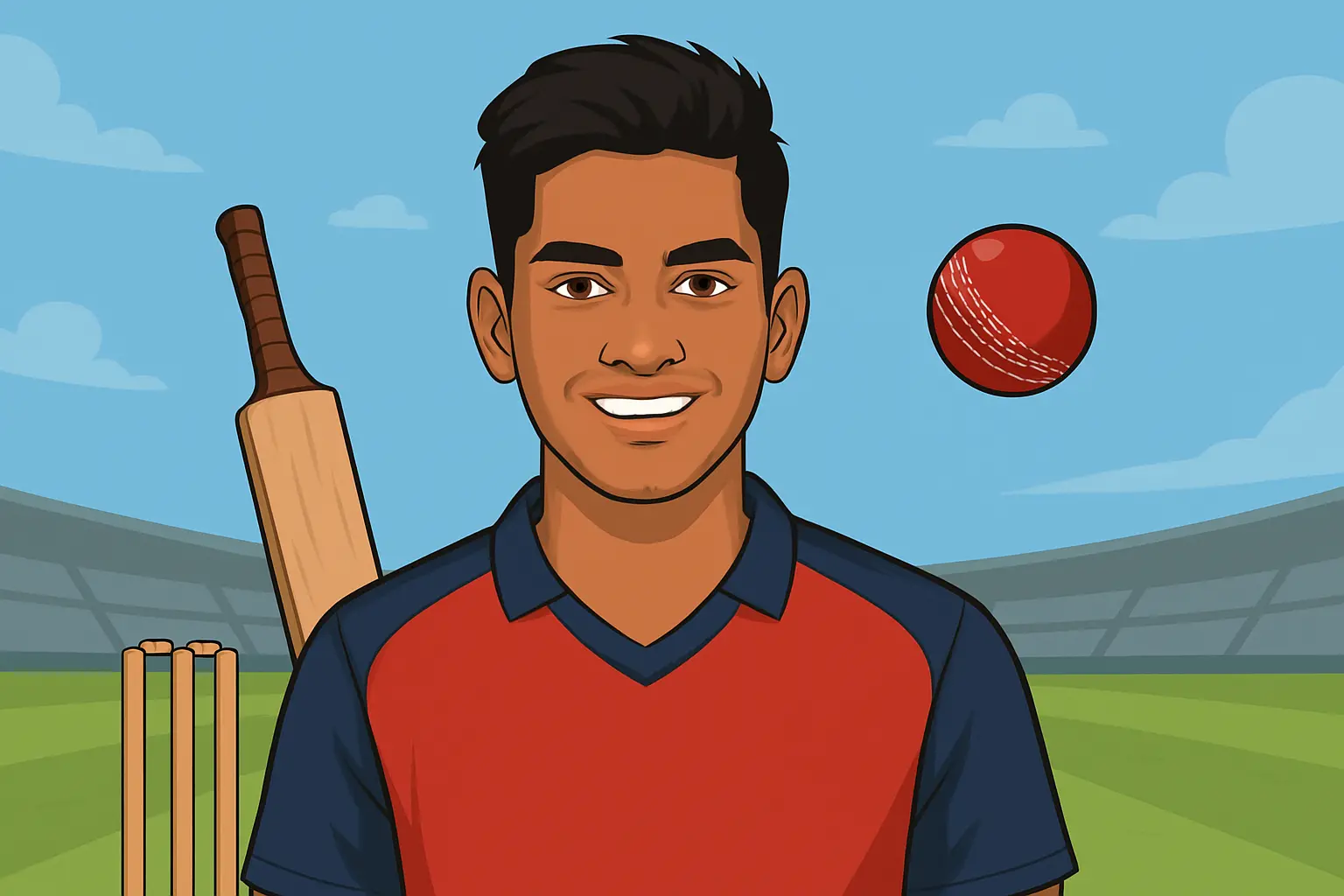
A left‑hander leans into a half‑volley at the biggest stage in Indian franchise cricket, opens his shoulders without losing shape, and sends the ball screaming through extra cover. Another delivery, this time shorter, is rolled effortlessly behind point. The strike rotates, the tempo never drops, and by the time the lights are blinding and the pressure is steaming, he’s still batting as if he’s out there for a neat net session. That poise under fire—that quiet, calculating calm—has come to define B Sai Sudharsan. He doesn’t fling punches. He chooses them. Then he lands them where a field can’t go.
From Chennai schoolboy prodigy to Gujarat Titans opener and India international, the arc looks smooth. It wasn’t. Beneath the highlights sits an athlete sculpted by discipline from a sporting family, sharpened in the TNCA first‑division grind, polished by the TNPL, and then hurled at the furnace of the IPL. The result is a top‑order batsman whose game travels: seam at Ahmedabad, grip at Chepauk, bounce at Eden, swing at Dharamsala, heat and lights everywhere. This is a full, expert look at Sai Sudharsan—biography, domestic and IPL journey, advanced analytics and tactics, records, FAQs, and what the next phase might hold.
Quick facts (evergreen)
- Full name: Bharadwaj Sai Sudharsan
- Known as: B Sai Sudharsan
- Role: Top‑order batter, left‑hand bat; occasional fielder in hotspots
- Birthplace: Chennai, Tamil Nadu
- Height: around 5 ft 11 in
- Batting style: Left‑handed, classical base with modern range
- Domestic team: Tamil Nadu
- TNPL team: Lyca Kovai Kings
- IPL team: Gujarat Titans
- International: ODI cricket for India
- Languages/SEO variants: Sai Sudharsan, B Sai Sudharsan, Sai Sudharshan, Sai Sudarsan, Bharadwaj Sai Sudharsan; साई सुदर्शन; சாய் சுதர்ஷன்
Biography: a sporting home, a learner’s brain
The foundation for Sai Sudharsan’s technique wasn’t laid on a whim. He grew up in a household that breathed competition. His father represented Tamil Nadu in athletics; his mother excelled in volleyball. That dual influence—speed and verticality—shows up in the way he moves in the crease and controls his base. The first step to the ball is efficient; the head stays still; the hands flow. He possesses the athlete’s economy and the cricketer’s patience.
He came through Chennai’s age‑group structure and the first‑division circuit, most notably turning out for Alwarpet Cricket Club—one of those old‑school nurseries that harden batters with long days and difficult wickets. In college cricket, he was a standout, scoring heavily in intercollegiate competitions and pushing his game toward a professional edge. He studied at Vivekananda College in Chennai, striking a balance many young Indian cricketers still wrestle with: daily practice, fitness, match simulation, and classwork. The decision to choose cricket fully was gradual but decisive; when his TNPL window opened, he was ready.
The TNPL chapter: where tempo met temperament
TNPL isn’t just a talent show; it’s a behavioral lab. The crowds are spirited but unforgiving, the surfaces can vary two‑paced, and the spotlight is real. Sai Sudharsan in Lyca Kovai Kings colors showed the makings of a franchise‑ready player: off‑side precision, repeatable scoring options through cover and midwicket, calm chases, and a refusal to let dot‑ball pressure dictate strokes.
Key takeaways from his TNPL evolution
- Learned to expand against orthodox off spin and left‑arm spin without slogging: sweep, slog‑sweep, and a neat loft over long‑off.
- Grew a habit of starting at a run‑a‑ball and then tapping into a gear where boundary balls are cashed but singles never stop.
- Worked on range versus the angle going across him from right‑arm seamers—driving through the line and cutting late.
Domestic cricket with Tamil Nadu: structure behind the swagger
Tamil Nadu’s white‑ball units in Vijay Hazare (List A) and Syed Mushtaq Ali (T20) have a production line of top‑order batters and power‑play seamers. Sudharsan’s fit in that machine was natural. He started as a versatile top‑order option, capable of opening or batting at No. 3. The Ranji Trophy piece of his puzzle matters more than scorecards often show. Time in multi‑day cricket slows decisions and cleans footwork. For a modern T20‑first generation talent, Sudharsan’s willingness to play red‑ball cricket kept his base classical. That’s why he can ride bounce in Ahmedabad one night and drop into soft hands at Chepauk the next.
IPL rise with Gujarat Titans: from understudy to centerpiece
Gujarat Titans scouted him well, identified his game for their top‑order ecosystem, and gave him clearly defined roles. The left‑hander often pairs with Shubman Gill. It’s a partnership built on craft—Gill sets the technical tone, Sudharsan injects momentum and keeps the middle overs alive. The innings that announced him to the mainstream was a near‑masterpiece in a title match: a 90‑plus knock. He later added a maiden IPL century against CSK in Ahmedabad.
IPL role summary
- Powerplay: Opens with balance; picks off width; aims to be 20+ by the end of restrictions without needless risk.
- Middle overs: Defeats dot‑ball build‑ups with rotation and punishes anything marginally short or overpitched.
- Death: Selective; when set, can open the hips and use baseball‑style lifts, but avoids blind chases of yorkers.
International debut and early cues
Opportunity arrived and he slipped into an India ODI XI with the same composure he shows in domestic cricket. Against the new ball he didn’t lunge; he went forward and late, picked gaps, and compiled two back‑to‑back fifties early in his ODI journey. That combination—shot selection plus elite running—makes him a high‑value white‑ball top‑order pick.
Advanced analytics: reading the patterns that matter
You can’t understand B Sai Sudharsan by average alone. The “how” is as important as the “how much.” Digging into phase‑wise scoring, venue tendencies, and opposition types puts his value into sharp relief.
Phase‑wise approach and performance trends (T20s)
- Powerplay vs pace: Stance slightly open; favors square drives and late cuts; strike rate trending up; edges early have reduced.
- Middle overs vs spin: Profitable cover‑to‑long‑on zones; higher boundary percentage on slow decks after he passes 25.
- Death overs vs mixed pace: Best when set; uses flat‑bat over extra cover and pick‑ups over deep midwicket; still adding answers to into‑the‑body short balls.
Strengths by bowling type
- Right‑arm pace (hard lengths): rides bounce, cuts late, low false‑shot rate on true surfaces.
- Left‑arm pace angling across: now plays late square or covers the angle with a closed face.
- Off‑spin & left‑arm orthodox: lofts over long‑off, sweeps, and rotates effectively.
- Leg‑spin: uses sweep and drives; picks googly shapes decently.
Venue patterns
- Ahmedabad: Big squares suit his running; thrives on back‑of‑a‑length pace.
- Chennai: Sticky surfaces bring sweep and soft hands; rides the turn well.
- Kolkata: True bounce; uses square regions and late cuts.
- Mumbai: Drives on the up when swing fades; disciplined early.
- Bengaluru: Short ground—prioritizes strike‑rotation to avoid risky lofts into the wind.
Opposition‑wise snapshots in IPL
- Versus CSK: Landmark knocks including an IPL hundred and a title‑match classic; reads their pace‑off plans well.
- Versus MI: Early swing can be tricky; once settled, cashes full balls from support seamers.
- Versus KKR: Uses pace to go square at Eden; respects Narine’s good‑lengths.
- Versus RR: Leg‑spin heavy middle overs; sweep handy then opens up at death if set.
Partnership chemistry with Shubman Gill
Gill and Sudharsan share tempo intelligence: read the surface in ten balls, score in blocks of overs, then burst. The left‑right pattern forces captains to play with fields, opening singles and rotation options. Sudharsan complements Gill by injecting momentum or taking the aerial route when needed.
Batting mechanics: the small keys to big scores
- Head discipline: Rarely falls over to off; hips clear late.
- Backlift and bat path: Vertical defence with a smooth arc for lofted drives.
- Trigger: Small back‑and‑across to line up off stump; helps with wobbling deliveries.
- Hands: Soft, late on cuts; full face on drives.
Record highlights and milestones
- IPL century against CSK at Ahmedabad.
- Player‑defining title‑match 90‑plus showcasing pressure mastery.
- Consistent top‑order run‑getter across IPL seasons; key season in Orange Cap race.
- India ODI debut with two fifties in his first two knocks.
IPL price, salary, retention
In his first IPL auction, Sudharsan was snapped up at base price by Gujarat Titans and has been retained across seasons. Salaries and retentions evolve, but his value inside GT’s batting core is steady. For the most current figures, check official IPL and franchise releases.
Fantasy picks and Dream11 insights
- Role: Top‑order, left‑hand bat with a high floor—gets balls and safe fantasy returns.
- Conditions to prioritise: True pitches, slower surfaces with big squares.
- Risk flags: Early swing in coastal venues; fresh hard‑length plans with catchers square if he hasn’t settled.
Tactical profile at a glance (T20)
| Phase | Primary goals | Scoring tools | Trend |
|---|---|---|---|
| Powerplay | Low dots, find gaps early | Square‑drive, late cut, clip through midwicket | Strike rate trending up |
| Middle overs | Sustain 7–9 RPO, explode on errors | Sweep/loft vs spin, pick‑up vs pace‑off | Boundary rate up, dot rate down |
| Death | Selective power when set | Flat‑bat extra‑cover, leg‑side pickup | Finishing improving |
Domestic ledger: Vijay Hazare and Syed Mushtaq Ali
In Vijay Hazare, he’s a reliable top‑order contributor; in SMAT his phase‑aware T20 outputs mirrored his IPL role. Those performances established trust for franchise elevation.
Chasing and pressure habits
- Comfortable chasing 160–190 in T20s; paces himself to be within two decisive overs of par.
- In 50‑over cricket, refuses to panic during dry spells—trusts boundaries to reset the equation later.
Strengths and growth areas
- Stillness at contact; rock‑steady head.
- Middle‑overs manipulation to keep innings alive.
- Field awareness and smart running.
- Early new‑ball swing against top seamers.
- Handling into‑the‑body short balls with leg‑side traps.
- Higher first‑gear power when chasing very big nets on used pitches.
Career timeline: key beats
- Chennai school and college cricket standout; first‑division for Alwarpet CC.
- TNPL for Lyca Kovai Kings; consistent run‑scoring under lights and pressure.
- IPL auction: picked by Gujarat Titans; debut season showed reliability.
- Title‑match 90‑plus and IPL century versus CSK cemented elite ceiling.
- India ODI debut with two fifties in early knocks.
Coaching, mentors, and academy ecosystem
Chennai’s dense cricket ecosystem—academies, clubs, senior pros—refined his seam reading and head position. TNPL video analysis and IPL scenario nets have added a data and situational layer. Sudharsan absorbs quietly, then applies deliberately.
Net worth, income streams, endorsements
Income mix: IPL salary, match fees/central or state contracts, TNPL fees, and a growing slate of bat and sportswear endorsements. Social media is curated and cricket‑centric; performance will drive the endorsement tier further.
Injury record and fitness approach
No long layoffs so far. Conditioning targets repeated sprinting between wickets and late‑innings bat‑speed without breaking shape. Strong posterior chain and shoulder care are visible in his fielding late in games.
Social media and public persona
- Instagram: Match galleries and training clips; mostly cricket, rarely theatrical.
- X/Twitter: Score updates and gratitude posts; occasional teammate appreciation.
- Fan interactions: Calm and respectful, with Chennai‑born modesty.
Language and local search notes
Fans search for him in multiple scripts. Useful local variants:
- Hindi: साई सुदर्शन, साई सुदर्शन आईपीएल, साई सुदर्शन जीवनी
- Tamil: சாய் சுதர்ஷன், சாய் சுதர்ஷன் ஐபிஎல், வாழ்க்கை வரலாறு
Match situations: how he reads the game
- Chasing 175 on a featherbed: maps bounce in 8–10 balls, then looks to 10–12 RPO by overs 7–13 with singles and boundary sweeps.
- Defending a par total: maximizes value of each boundary by prioritizing aerial hits along the ground path.
- Two‑paced pitch: waits deeper to slice behind point and increases hard sweep use to negate length from spinners.
Balls‑per‑boundary and boundary percentage
Early innings: conservative balls‑per‑boundary; once set the number drops noticeably, especially against spin on Indian wickets. Boundary percentage spikes in the middle overs without taking undue slog risks.
Venue tendencies and scoring lanes (T20)
| Venue | Primary scoring lanes | Go‑to release shot | Typical risk |
|---|---|---|---|
| Ahmedabad | Extra cover, backward point, long‑on | Loft over extra cover | Top‑edge on slower bouncers |
| Chennai | Midwicket sweep, long‑off loft | Slog‑sweep vs spin | LBW/sweep miss on skiddy turn |
| Mumbai | Straight drive, covers | On‑rise punch to cover | Edges early vs wobble seam |
FAQs (People also ask)
- Who is B Sai Sudharsan and which teams does he play for?
- A left‑hand top‑order batsman from Chennai: Tamil Nadu (domestic), Lyca Kovai Kings (TNPL), Gujarat Titans (IPL), India (ODI).
- What is Sai Sudharsan’s age, height, and birthplace?
- Born on 15 October in Chennai, Tamil Nadu. In his early twenties. Height around 5 ft 11 in.
- What is Sai Sudharsan’s latest IPL price and salary?
- Retained by Gujarat Titans; originally bought at base price. Official IPL/GT releases provide current figures.
- What is Sai Sudharsan’s batting position and style?
- Left‑hand top‑order batter (open or No.3). Classical base with modern range.
- How many centuries and fifties does he have in IPL?
- One IPL hundred and multiple fifties, including a title‑match 90‑plus. See official stat hubs for live counts.
- When did Sai Sudharsan make his India debut?
- ODI debut with two fifties in his first two innings. Check BCCI and match records for exact dates and venues.
A scouting report you can use on match day
- Right‑arm seamer on back‑of‑a‑length: expect late cut and square drives—place a wide third‑man sweeper to trap the square channel.
- Left‑arm orthodox on slow deck: he’ll press to the pitch for loft over long‑off then return to sweeps; tight off‑side ring can force him into riskier lofts.
- Leg‑spin with packed off‑side: he builds through singles to midwicket and waits for the drag‑down to punish.
Why he sticks in strong teams: the undervalued skills
- He complements other styles: rotates if next to a stroke‑maker, presses if next to a consolidator.
- Reduces collapse probability: control numbers remain solid under pressure.
- Reads bowlers quickly and stores release cues for later use.
Temperament and leadership potential
Measured celebrations and businesslike partner communication are the hallmarks of a potential leader. He organizes overs in his head and understands phase‑wise bowling changes—qualities that suit a future captain or senior lieutenant.
What the next phase could look like
- ODI continuity: A 1–3 template—steady first ten, assertive middle, ruthless when set—could secure regular selection.
- T20 expansion: One additional reliable early power shot would raise his powerplay value.
- Red‑ball lane: More multi‑day time would likely increase his white‑ball ceiling.
Common myths corrected
- He’s a slow starter — actually a safe starter who increases strike rate rather than spiking and collapsing.
- He struggles vs wrist spin — surface dependent; comfortable on turning decks with sweeps and runs.
- He can’t finish — he finishes well when set; finishing is controlled, not only six‑hitting.
How Gujarat Titans use him tactically
- Against right‑arm pace: open to maximise off‑side lanes; if swing persists, start calmer; if it fades, go aerial earlier.
- On slow decks: kept in top three to anchor the spin phase.
- With Gill: the plan is often to set a floor of 80–100 inside 12–13 overs, then launch.
Opposition mini‑hub snapshot (IPL)
| Opposition | Notable highs | Game plan he uses |
|---|---|---|
| CSK | Century at Ahmedabad; 90‑plus in final | Target pace‑off and rotate vs spin |
| MI | Calm builds into big overs | Exploit support seamers; be wary of early swing |
| KKR | Square scoring at Eden | Use pace and late dabs; respect Narine lengths |
Family, education, and off‑field rhythm
A sporting family normalized high performance—hydration, sleep hygiene and recovery were early household lessons. College structured practice and academics, while club cricket taught grit. The combination supports longevity.
Photos, highlights, and media
Highlights are available on IPL, Gujarat Titans, BCCI and ICC channels. When watching his innings, note the first ten balls (few forcing strokes) and balls 11–30 (more width punished and calculated lofts).
What sets him apart in the Indian talent pool
- Clean separation between technique and intent.
- Multi‑surface adaptability.
- Composure under pressure—consistent body language across scores.
Closing thoughts: the stillness that wins
Cricket rewards noise, but Sai Sudharsan plays like a whisper that fills the room. The shapes are classic; the scoring modern. From a careful first floor to a roomy second and then a terrace view where fields look small—this is method, not moment. If your team needs panic‑proof runs and quiet control in the middle, there’s a left‑hander from Chennai doing exactly that—again and again.