
Walk down any Indian lane at dusk and you’ll hear it: the fizz of a tennis ball, the snap of a catch in a crowded galli, a scuffed bat finding gaps a professional would envy. The Indian Street Premier League taps directly into that electric nerve. It isn’t a copy of elite franchise cricket with a different logo; it’s a codified, broadcast-ready showcase of the talent that grew up dodging scooters and balcony railings. And at the heart of it all are the ISPL teams—city-franchises built from the fever of community trials, the craft of street-born coaching, the nerve of T10, and the thrill of seeing a neighborhood shot become a stadium roar.
This guide goes deep on ISPL teams: how many there are, how they’re structured, what their city identities feel like, how owners and captains shape the squads, and what tactical DNA separates each franchise. You’ll also find a clean ISPL team list, the logic behind squads and draft picks, plus a fan primer on tickets, jerseys, and where to watch. If you came looking for surface-level snippets, you’re in the wrong galli. If you want to understand how this league actually works, you’re home.
How many teams in ISPL? The official ISPL team list
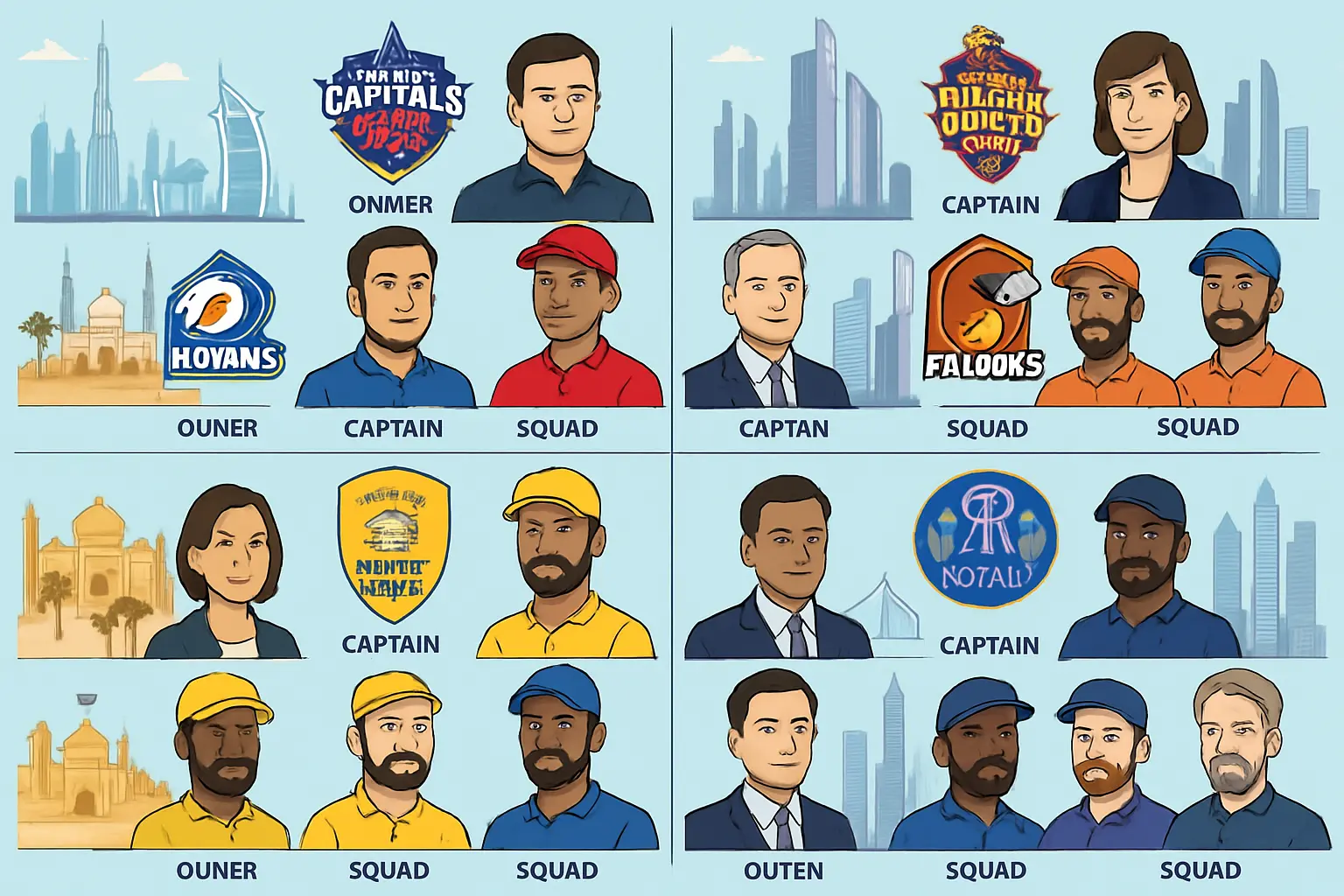
The league launched with six franchise teams tied to major Indian cities, each backed by a high-profile ownership group and built through a mix of open trials, targeted scouting, and centralized draft mechanisms. The inaugural lineup has centered around these hubs:
- Mumbai franchise
- Bengaluru franchise
- Chennai franchise
- Kolkata franchise
- Hyderabad franchise
- Srinagar franchise
That city-first organization is a smart move for a tennis-ball property. Street cricket identities are hyper-local—by mohalla, by park, by alley—and city franchises allow that mosaic to both scale and stay personal. You’ll hear fans say “ISPL ki teams” with a notice-me pride that comes only when a league mirrors the country’s pulse.
ISPL teams at a glance
Below is a snapshot of the six Indian Street Premier League teams as competitive entities. Team names and branding evolve quickly in franchise sport; what matters for understanding on-field reality are the identity markers—the tactical lean, the captain’s signature, the coach’s way with bowlers and batters, the ownership’s philosophy.
| Team/City | Owner profile | Captain archetype | Coach archetype | Signature tactics |
|---|---|---|---|---|
| Mumbai | Celebrity-led consortium with cricket advisors | Finisher who bats late, power-hitting in arcs behind square | Community mentor with tournament pedigree | Pace-off variations, deep boundary riders, flexible batting order |
| Bengaluru | Entertainment-led group with analytics support | Front-foot dasher who likes to chase | Technical coach who optimizes bat speed and loft | Fast starts in powerplay, 45-degree hitting zones, leg-side traps |
| Chennai | South film and business consortium with spin heritage | Calm accumulator, strong on strike rotation | Spin-first tactician, fielding obsessive | Spin choke in middle overs, sweeps and scoops to disturb lines |
| Kolkata | Legacy investor group with grassroots links | Street-smart tactician, good at micro match-ups | Bowling whisperer, seam and swing maximizer | Skiddy seamers, off-pace yorkers, funky catching positions |
| Hyderabad | Regional celebrity group with wrist-spin tradition | Wristy stroke-maker, plays late on the ball | Holistic mentor balancing flair and structure | Wrist-spin stings, inside-out lofts, delay-the-stroke batting |
| Srinagar | Consortium with outdoor and adventure-sport DNA | Tenacious leader, athletic all-rounder | Fielding-first coach, high-altitude fitness tilt | Athletic outfield, hard lengths, surprise pinch-hitters |
The rest of this piece unpacks those identities, while grounding you in how ISPL teams are actually built and run.
Inside each Indian Street Premier League team
No two ISPL teams look the same over a full season. They’ll flex around injury, player form, weather, and simple gut feel. But city teams carry cultural signatures that keep showing up under pressure, patterns that are traceable back to the streets and schools that feed them.
Mumbai franchise: pressure-tested and unafraid of chaos
Mumbai’s tennis-ball scene is dense, competitive, and brutal in the best sense. The city throws up cricketing tightrope walkers, players who learn to build risk into their muscle memory. That fearlessness shows in the franchise’s batting: finishers who can pull flat over midwicket and then open the face late to run the ball behind point; middle-order players who don’t panic when the asking rate jumps; openers who understand when to defer to conditions.
- ISPL Mumbai team owner and management: celebrity-led, yes, but supported by cricket people who know where the city’s talent hides—night tournaments in cramped maidans, corporate leagues that double as scouting hubs, and inter-colony knockouts that produce cult heroes. That mix matters. Glamour may attract eyes; the grinders find closers.
- ISPL Mumbai team captain: often a late-overs specialist who thrives at 8 an over with two left. It’s not unusual for them to hold themselves back to No. 4 or 5, reading the script before stepping on stage.
- ISPL Mumbai team coach: typically someone who has run a champion amateur side across monsoon seasons, who knows how to teach cutters that land like seamers and to set deep fields that invite the mishit.
- Batting approach: deep. Don’t be surprised to see a No. 7 who can take a game away, which allows early hitters to swing with a clearer conscience.
- Bowling approach: disguise over pace. Expect knuckleballs, split-finger splits, and leg-cutter angles that take pace off into the pitch. Mumbai’s quicks have a knack for reading batswing and taking the ball away from it.
- Fielding notes: boundary protection is sophisticated; you’ll often see three sweepers alternated ball by ball depending on the batter’s swing arc.
Bengaluru franchise: rocket starts and design thinking
If you had to pick a soundtrack for Bengaluru in ISPL, you’d pick something that starts fast. The franchise tends to throw a haymaker in the powerplay, making peace with the risk. They love a template where the openers go 360 early while an anchor waits in the wings.
- ISPL Bengaluru team owner group and backroom: enthusiasts of data sprinting hand-in-hand with instinct. Training sessions carry timing gates for speed between wickets, and bat path sensors can show up alongside chai and Thatte idlis.
- ISPL Bengaluru team captain: buys big-picture plans. They’ll tolerate a powerplay collapse if the promised upside is scoreboard pressure across the chase.
- ISPL Bengaluru team coach: coaches loft, not just slog. Hit angles are drilled—the 45 behind square, the inside-out with a straight shoulder, the glide that turns a good wide yorker into two.
- Batting approach: intent-first. Expect tall par-scorers and the green light to target third man and fine leg off pace-on bowling.
- Bowling approach: smarter than they look. In between the boundary chases, the attack likes to trap: two leg-side riders and a baited short square for the miscued pull, a straightish mid-on set back for a mistimed loft.
- Fielding notes: quick relay throws and an appetite for the run-out hurt from midwicket. Bengaluru invests in throwing arms.
Chennai franchise: field craft and spin grammar
Chennai’s franchise feels like an ode to classical tennis-ball spin married to ruthless fielding. It’s a patient team that happily suffocates a chase, turns fours into ones, and forces batters to earn every lofted release.
- ISPL Chennai team owner and management: anchored by stakeholders proud of southern cricket discipline. The scouting net here runs wild through college festivals and shrimp-truck floodlit cups on the outskirts.
- ISPL Chennai team captain: the person you want when you need eight singles in an over on a gripping strip. Their calm sets the tone.
- ISPL Chennai team coach: a field-setting maestro who sees catchers in unorthodox places: a straight short mid-on for the stab drive, a short square catching the top-edge sweep, a leaping point. You’ll hear them say “one more dot, pressure plays the next shot.”
- Batting approach: they rotate the blade. Which isn’t to say they can’t clear; they just value the single into the pocket so much that bowlers are dragged into error.
- Bowling approach: off-spin with overspin and undercut, leggies who don’t mind being swept—because they set for it. Expect the classic Chennai squeeze in overs 4 to 8.
- Fielding notes: elite catching and minimum fumbles. They win quiet wars.
Kolkata franchise: seam kiss and street tactics
Kolkata’s tennis-ball cricket loves the light-footed seamer who makes a low-bouncing ball talk. This franchise revels in angles, especially deliveries that skid under the bat or climb off a length into the ribcage.
- ISPL Kolkata team owner group: plugged into local organizers who know where the next seam whisperer lives. Decision-makers respect bowling craft.
- ISPL Kolkata team captain: part-psychologist. They play match-ups—lefty-on-lefty, off-spinner into the wind, a specific fielder brought up as bait. When a batter is reaching, they’ll widen their reach further.
- ISPL Kolkata team coach: technical on seam grips, heavy on catching drills with tennis balls treated for realistic skid. Sessions include practice on damp patches, learning to ride the bounce or work under it.
- Batting approach: opportunistic. They steal soft overs and go harder at one identified bowler; the rest is survival and smartness.
- Bowling approach: subtle variations of the same ball rather than dramatic turn. Seams used as knives, not hammers.
- Fielding notes: inventiveness: you’ll see short midwicket for mis-hits, a very straight fine leg to take top edges, sometimes an inverted ring for specific hitters.
Hyderabad franchise: timing wizards and wrist-spin barbs
Hyderabad cricketers have wrists that reframe geometry. The franchise is full of late hitters who let the ball come, and bowlers who make the ball dip, stall, and kick with the same arm speed.
- ISPL Hyderabad team ownership and backroom: proud of wristy batting heritage, balanced by sports scientists eager to tune power without losing touch.
- ISPL Hyderabad team captain: soft-spoken assassins. They’ll caress a chase to life, then cash in on one over with injurious timing.
- ISPL Hyderabad team coach: values deception with repeatable mechanics; you’ll see bowling rehearsals that train dots into habits.
- Batting approach: inside-out lofts over cover, last-moment deflections, wrists that power the ball between fielders who thought they were in the game.
- Bowling approach: leg-spin forms a center; offies come in to enforce match-ups. The plan embraces risk with an eye on the payoff ball.
- Fielding notes: smooth, economical movement. They pride themselves on cutting the angle early.
Srinagar franchise: athleticism, nerve, and altitude bite
The Srinagar franchise has an outdoorsy athletic thread. Expect bullet throws from the deep, agile catching, and bowlers with the lungs to pound length after length. Their players adapt quickly to conditions and aren’t afraid to trust steep bounce when available.
- ISPL Srinagar team owners and management: adventurous, with a fitness lens. Training camps feature cardio in fresh air, fast-twitch sessions, and slip-catch marathons.
- ISPL Srinagar team captain: gritty all-rounders who lead in the field. When the heat rises, they seem to cool down.
- ISPL Srinagar team coach: drills repetition under fatigue; you’ll see scenario training that mimics endgame chaos.
- Batting approach: direct and brave. They are just as happy with straight hits that thud into the sight screen as with dabs behind point.
- Bowling approach: hard length until a batter shows the release shot; then cutters and seamers drive the mis-hit.
- Fielding notes: they chase everything and throw to the right end. Simple sentence, complex reality.
How ISPL T10 teams are built: trials, scouting and the draft room
A franchise is a living thing: it breathes the city’s rhythm and inhales its street talent. ISPL team-building usually combines three funnels:
- Public trials and city camps
- Targeted scouting at marquee tennis-ball tournaments
- Centralized draft or auction to allocate top-rated players fairly
Public trials and city camps
The big idea of ISPL is merit: if your skill survives under a naked sky in front of neighbors and curious aunties, it deserves a stage. Trials are typically organized across multiple city zones. Expect basic fitness screens, arm-speed measurements for potential bowlers, and batting tests under simulated pressure: powerplay chases, hitting the long boundary with a wind factor, a 12-ball audition that blends placement and muscle.
At a good trial, the selectors aren’t just counting clean hits. They look for rhythm—and crisis composure. If your first three balls are dots, what’s your fourth? If a coach moves a boundary rider exactly onto your release shot, do you still back it? The ones who get picked show a second gear in thought.
Targeted scouting
Every city has a constellation of tennis-ball tournaments that, in local circles, matter as much as a Ranji quarterfinal. ISPL scouts frequent these stops. They’re watching underlights in crowded colonies, industrial estate cups, suburban riverside events where the wind turns every loft into an examination. Street tournaments produce niche specialists—short third catchers who read the top edge like a novel, bowlers whose knuckleballs don’t float but drop like a pocketed stone, batters who only need one over to max out a chase.
You’ll see scouts talk to umpires and groundsmen more than you might expect. People who’ve watched hundreds of local overs know who shows up when it gets hot.
Draft or auction
Once the database is thick with graded talent, ISPL teams enter a structured player allocation. The format may vary by season, but the guiding principle is competitive balance. A tier-based system helps: marquee players in one band, key specialists in another, upcoming prospects in a development band. Retention rules allow teams to keep a core, while still cycling in new faces every season.
Salary bands are similarly organized by bands rather than a pure open market. The point is to ensure that every city can build a complete T10 team: two high-impact hitters, two bankable bowlers, one utility all-rounder, one powerplay specialist, one finisher, a set of fielding freaks, and backups who can own an assignment on short notice.
Captains and coaches: the on-field brain of an ISPL team
Just as cricket education varies by city, captaincy in tennis-ball T10 has its own grammar.
What a good ISPL captain looks like
- Tempo reader: T10 is time-poor. The best captains understand the phase of the game instinctively. They sense when a chasing side is falling behind the clock, or when a stagnant batting inning needs a pre-planned risk.
- Ego manager: Street heroes are proud and rightly so. A captain can’t kill that pride; they channel it. “You take the 7th over; that’s yours,” said with conviction, can make a bowler bigger than the moment.
- Crafty shuffler: Good captains don’t burn through options. They hold one bowler for the match-up overs. They know which boundary to leave long. They pull a catcher from midwicket to short cover precisely when the batter has to drive a dipping knuckle.
- Ice-veined batter or all-rounder: Many ISPL captains like to bat later because T10 compresses finishing responsibility. Others open to set the pulse. The constant across teams is endgame clarity.
Coaches and their fingerprints
- System-builders: A street coach doesn’t impose a textbook; they add chapters to what already works. They’ll teach a quick a slower ball that still looks fast, or show a batter a back-foot punch that needs barely any arc to clear the circle.
- Fitness thinkers: Tennis-ball cricket looks easier on joints than leather-ball cricket, but repeated explosive movements punish the body. Good coaches schedule micro-rests, structured fielding circuits, and warm-ups that prime wrists and forearms.
- Fielding disciplinarians: The best coaches won’t forgive sloppy relay throws or lazy backing up. In ISPL, one extra run is four percent of an over. That math turns coaches into realists.
- Analyst-whisperers: Data doesn’t lead in ISPL; it serves. Coaches know which numbers matter—hit zones, strike rate splits under specific line lengths, dismissal modes under cutters—and which are noise.
Format and rules that shape ISPL team strategy
Tennis-ball T10 compresses cricket into a short film. You don’t get time to “play yourself in” unless your role is explicitly to stitch an end-to-end chase. The format’s core elements typically include:
- Ten overs per side, one innings each.
- Powerplay overs at the start with fielding restrictions.
- Bowlers capped at a short quota—often two overs—to prevent one star from bowling out a game.
- Free-hits or specific penalty constructs for no-balls and wides, tuned for entertainment and pace.
- Standard T10 dismissal, over, and fielding rules adapted to tennis-ball dynamics.
Those rules create three core implications for ISPL teams:
- Multi-skill rosters: With a small number of overs to spread, one-dimensional cricketers struggle to justify a spot. Teams prefer batters who can bowl cutters or offies for one over, and bowlers who hit a long ball at No. 7.
- Aggression economy: Boundaries are king, but dot-ball pressure matters more than TV highlights suggest. A side that stacks six singles without risk often wins the over. Winning the over, repeatedly, wins the game.
- Phase specialization: Teams design their bowling around three blocks—overs 1–3 (attack and explore), overs 4–7 (squeeze and pry), overs 8–10 (close and finish). Batting roles mirror this: launchers, weavers, closers.
The sabermetrics of street cricket: what ISPL teams measure
For a property born of gut and grit, the Indian Street Premier League is surprisingly data-literate. Teams don’t drown in spreadsheets, but they track:
- Hit zones by batter vs. pace-on and pace-off
- Boundary percentage under each field arrangement
- Dot percentage conceded by each bowler type (seam-up, cutter, knuckle, off-spin, leg-spin)
- Mistake density in the outfield (misfields per game per player)
- Throw speed and accuracy from deep square regions
- Reaction time in close-in catching drills
- Under-pressure execution: batting SR when target is more than 10 an over, bowling ER when defending less than 9 an over
A truth that keeps surfacing in these numbers: you don’t need the perfect ball to win ISPL overs; you need the predictable mistake. Teams build bowling plans that sell the batter their favorite shot, then shift one variable—the length by half a shoe, the angle by a foot. When fielders know where the error is likely to pop, catches look magical. They’re scripted.
ISPL squads, draft picks and retained players: what to watch
Across seasons, you’ll see a rhythm to squad construction:
- Core retainers: three to five players who define the franchise’s temperament. A death bowler, a first-change spinner, a late hitter, a fielding general, a tempo-setting opener.
- Specialist slots: one or two roles that change the match equation—left-arm angle, mystery spin, a sweeper who makes deep midwicket a vault.
- Development picks: prospects with rocket arms, unusual bat-swings, or weirdly effective bowling actions. ISPL keeps the door open for tomorrow’s cult favorite.
- Overseas or out-of-zone adds: even in a city-first league, cross-pollination sharpens edges. Some franchises like one or two out-of-zone players who bring different street habits.
Drafts reveal coaching preferences like a diary. Watch who a team fights for. If Chennai outbids two others for a young leggie, you can bet they’re pivoting a new middle-overs squeeze. If Mumbai grabs a cutter-specialist and a lefty finisher, they’re building a chase-killer. If Bengaluru stockpiles three powerplay hitters, expect 70 in six on a good day and live with the variance.
ISPL team strategies that win T10 with a tennis ball
The best teams master three contradictory truths at once:
- Hitting big is essential, but small-ball matters. Working the inside-out single or the dab to third can tilt a chase that looked dead.
- Bowling at the stumps is high-value, except when it’s a trap. Some batters feast on straight balls; good plans deny their arc, not the woodwork.
- Field placings are fixed until they shouldn’t be. One ball early or late on a field change ruins the magic. Teams with telepathic captains and hungry movers nail the timing.
Practical tactics you’ll see from ISPL teams:
- Powerplay chess: Spinners used early if the ball grips, seamers held for shine if it skids. Catchers in the ring with watchers on the rope; no freebies square.
- Short, wicked straight: The ball that feels hittable but isn’t—the cross-seam into the knee-roll length that makes decent batters shrimp or sky.
- Off-pace theater: Cutters bowled with fast arm speed, released late, on nearly the same line. Fielders square-leg back, midwicket inside, deep straight set—then a knuckle floats to invite the miscued scoop.
- Death coverage: Long-off slightly squarer than you expect, third man finer than you think. A trap for the outside-edge loft.
- Batting patterns: pre-called overs to target. A side might mark the fifth over from the weaker bowler as the cash register: two reverse laps, a slog-sweep, then a straight loft to break their length discipline.
Expansion, new ISPL teams and the cities on deck
A six-team footprint can grow. The emotional map of Indian tennis-ball cricket spans far wider than the current grid. Potential future hubs feel inevitable:
- Delhi NCR: enormous street cricket culture, floodlit turf rectangles on rooftops, and talent that sprints between batting roles with swagger.
- Pune: refined club scene merging with lively capsule tournaments, a pipeline of swingers and straight hitters.
- Ahmedabad: muscle-and-mettle night-tournament scene with loyal fans who turn even practice into a local event.
- Jaipur: power players and boundary riders, and a stadium culture that loves compact forms.
- Kochi/Thiruvananthapuram: ball-revving allrounders with nimble feet, a coastal knack for chasing with intelligence.
- Lucknow/Kanpur: cradle of gritty batters and skiddy bowlers, perfect for T10 grind.
Expansion isn’t just about geography. It’s about safeguarding the open door. Every new team should keep trials truly public and keep development picks sacred. That’s how street glory stays legit when the lights go big.
ISPL vs IPL teams: what really differs
It’s tempting to compare ISPL teams to IPL powerhouses, but the differences cut deeper than ball type.
- The ball: Tennis-ball dynamics put a premium on late change of pace and bat-face control. Sides value bowlers who can deaden the ball on delivery and batters who can accelerate wrist-only.
- Field size and boundary behavior: Smaller grounds and the livelier ball mean boundary density is higher, but so is the top-edge peril. Fielders guard angles more than pure distance.
- Overs economy: In T10, a single over can swing a match beyond recovery. ISPL squads build around owning that one over when it appears.
- Scouting: IPL sees academy systems and leather-ball trajectories; ISPL scours industrial estates and beach tournaments at midnight. Rawness is not a bug; it’s the selling point.
- Leadership: IPL captains often optimize over thirty-two to forty overs of control; ISPL captains must solve a match inside a blink.
For fans: tickets, where to watch, jerseys and chants
ISPL teams have cracked a rare code: they feel intimate on-screen and loud in person. If you’re chasing tickets, start early. City games sell out fast because the fanbase is hyper-local—friends and families of trials hopefuls turn up with posters for that one player from their colony who made it.
- ISPL tickets: prices vary by city and venue, with family zones filling first. Online windows open well ahead of matchday; a small walk-in quota shows up late, but don’t bet on it.
- ISPL where to watch: official OTT partners stream every game with commentary tuned for the casual and the connoisseur. If you’ve grown up with Hindi or regional lingo at gully matches, you’ll feel seen here.
- ISPL jerseys: team stores and pop-ups in each city offer official kits. Merchandise is more playful than high-gloss; expect tee designs that nod to local idioms.
- Fan rituals: bring the neighborhood soundtrack. Drums, chants, and hand-lettered banners with inside jokes land well. Teams thrive on that love.
Regional language and cultural flavor
At grounds and on streams you’ll hear everything from “ISPL ki teams kaun si hain?” to Marathi, Tamil, Telugu and Bengali nicknames yelled with pride. Teams increasingly reflect that multilingual reality in social posts and in-stadium cues. Don’t be surprised if the Srinagar franchise drops a Kashmiri tagline on a key wicket or the Chennai camp celebrates a win with a chorus that started in a two-street tournament years ago. The vibe is inclusive; the script is local.
What owners actually do, beyond the photo ops
Celebrity ownership brings eyeballs, but sustainable franchises are built in the shadows: training infrastructure, physiotherapy setups, nutrition, video rooms, and stipend support that allows part-time professionals to go full-tilt without worry. The better ownership groups in ISPL invest in:
- Trials done right: unbiased panels, clear grading rubrics, real feedback for those who miss the cut.
- Coach pipelines: assistant coaches drawn from neighborhood mentors; certification support so street wisdom isn’t sidelined.
- Player care: contracts with clarity, injury rehab plans, and off-season stipends for prospects who need time to bloom.
- Community days: open nets in public parks, clinics in schools, match screenings at mohalla centers.
The payoff isn’t just wins. It’s longevity—players staying fresh through a condensed calendar, and a city’s faith in its franchise deepening by the month.
Rivalries you can feel in the stands
It doesn’t take decades for rivalries to harden. In ISPL, friction arrives the instant two teams see the same corner of the street in themselves.
- Mumbai vs Chennai: flair against field craft. Mumbai’s chase swagger trying to break Chennai’s squeeze has produced knife-edge finishes.
- Bengaluru vs Kolkata: innovation versus manipulation. When Bengaluru races early and Kolkata hangs in with sharp seam, something always gives in the last dozen balls.
- Hyderabad vs anyone: batters who caress pace-off bowling into despair and leggies who chirp are a handful for every side.
You’ll hear fans talk about these games long before the toss, because they know the plan-versus-plan theater at stake.
How an ISPL match day feels inside a team
Hours before the toss, squads spread out. Some players sleep with headphones on; others pace with coffee and a mini-ball. Coaches pull two aside for a chat about the wind. The captain does a lap with the fielding coach, dropping cones in odd places and then moving them six inches. The analytics person, a notebook magician, slips in one chart about a batter’s first-ball aggression.
The huddle before warm-ups is quiet. Later, it’s loud. Catching drills start stiff and become games, points for crazy takes, punishments for fumbles. A specialist throws loopy corners to the keeper under a mask to catch with limited vision. In the batting corner, the finisher rehearses the swat over midwicket with a pre-decided backswing; the opener calibrates the ramp. Bowlers talk grips in autopilot.
And then a whistle; TV asks for faces; a coin flips. Within two overs, the script you rehearsed for hours is either on track or breaking apart. The best ISPL teams live with both possibilities without blinking.
Recruitment myths that don’t survive contact
- Myth: It’s all about hitting sixes. Reality: Singles and doubles destabilize bowlers; well-run twos in ISPL are like silent boundaries.
- Myth: Bowlers are cannon fodder. Reality: A spell of two overs is a miniature exam; dot pressure and one mini-mistake from the batter can be worth a wicket.
- Myth: Fielding just happens. Reality: Teams carve out a third of practice time for fielding patterns because every stop is a T10 event.
- Myth: Street heroes don’t need structure. Reality: The right scaffolding lets flair expand. Video clips and cues help instincts travel under stress.
Understanding team balance
If you’re evaluating an ISPL team sheet on match day, look for:
- Two boundary-hitters with different arcs (one leg-side heavy, one off-side happy).
- One manipulator who can turn six balls into eight without risk.
- One left-right pairing for middle phases.
- Two pace-off bowlers with different grips and release points.
- One spinner who will attack, not just survive.
- A designated field leader—often a fielder at long-off or deep square who calls throws and moves riders half-steps.
- A bench batter with a first-ball six in them for last-ditch swaps.
When that puzzle’s right, the team plays to a plan even as they improvise.
Frequently asked questions on ISPL teams
- How many teams are there in ISPL? Six franchise teams compete, aligned with Mumbai, Bengaluru, Chennai, Kolkata, Hyderabad, and Srinagar.
- Which cities have ISPL teams? The current map covers Mumbai, Bengaluru, Chennai, Kolkata, Hyderabad, and Srinagar, with expansion doors open to other cricket-mad centers.
- Who owns the ISPL teams? Each franchise is backed by a well-known consortium—often anchored by entertainment figures or regional business leaders—supported by seasoned cricket advisors. Ownership mixes star power with sporting brains.
- Who are the captains of ISPL teams? Captains are usually frontline players with proven street pedigree—finishers, steady accumulators, or all-rounders who stay ice-cold in T10’s crunch phases. Teams may rotate leadership if match-ups demand.
- What do ISPL squads look like? Balanced by design: two impact hitters, one manipulator, two or three bowling specialists including spin and pace-off, multi-skill all-rounders, and fielders who save runs for a living. Benches matter because form flips fast in T10.
- How are players picked—trials or draft? Both. Open city trials and targeted scouting feed a centralized allocation system (draft or auction style) with retention rules to keep successful cores intact.
- Where can I watch ISPL matches? Official broadcast partners carry the games on television and OTT. City-based screenings and public fests for big fixtures are common.
- What are the ISPL team logos and jerseys? Branding evolves with each franchise’s identity. Expect bold city symbols, colors that pop on broadcast, and jerseys you’ll spot on backstreets as often as in stands.
- How do ISPL teams differ from IPL teams? Shorter format, tennis-ball dynamics, smaller grounds, multi-skill bias, and hyper-local scouting. ISPL leans into the street grammar of cricket; IPL sits atop the leather-ball pro pyramid.
- Which is the best team in ISPL? On a given day, any of them. A single over decides too many matches to crown one forever. Consistency comes from captains who read tempo and squads that field like their lives depend on it.
- How to register for ISPL player trials? Keep an eye on the league’s official channels and the franchises’ socials for registration windows. Trials take place across city zones with published eligibility rules.
- Where can I buy ISPL tickets? Authorized ticketing platforms list fixtures well ahead of time. Popular matchups sell out quickly; neighborhood rivalries are especially hot.
- What does “ISPL t10 teams” mean in practice? It’s shorthand for the league format—ten-over sides, built to attack early, squeeze in the middle, and finish with precision. Every player has a compact assignment; the best teams execute with clarity.
- Does ISPL publish a points table and fixtures? Yes. The league maintains official fixtures, points tables, and live scores on its platforms, along with team-run updates for hardcore followers.
Storylines to track across the season
- Role definition drift: A slogger who started as a finisher might open one day and never go back. Coaches keep an open mind because T10 rewards rapid metamorphosis.
- Spin ascendancy versus pace-off mastery: Some venues play into sharp spin; others reward cutters that don’t grip. Watch how teams swap bowling priorities between cities.
- Fielding clinics: The best content in ISPL sometimes isn’t the six; it’s the save on the rope. Track which teams go a whole game without a misfield.
- The surprise over: One over every match flips the board. If your team identifies it first and plunders or defends it, you likely win.
City DNA and how it shapes recruitment
- Mumbai’s obsession with finishers comes from late-night corporate and taped-ball tournaments where the last over is a daily exam. Recruiters look for hitters who can adapt to skiddy tennis balls under humidity.
- Bengaluru’s data-tinged batting comes from tech campus cups and floodlit city leagues where swing paths are studied as much as results. Recruiters here prize batters who can loft with intent, not hope.
- Chennai’s spin-first choices ride on a coastal tradition where holding length and beating the bat in the air is currency. Recruiters cherish players who don’t mind fielding thirty dot balls a game if the squeeze sets up wickets.
- Kolkata’s seamers are born from parks with greedy grass and low bounce. Recruiters adore bowlers who can skid and change seam orientation mid-run-up.
- Hyderabad’s wrists are legend. Recruiters scan for batters who can turn a thigh-high length into a backward-flicked two and leggies who vary release points without betraying arm speed.
- Srinagar’s team leans into altitude training and outdoor grit. Recruiters rank fielding and repeatable intensity very high.
Coaching micro-skills that shine in ISPL
- Knuckleball without telegraph: Fingers splayed yet hidden, release point steady. Coaches film wrists at 240 fps so bowlers can see what the batter sees.
- Outfield first step: Fielders work on a cheating first move that still keeps balance—half-open hips, reading bat face, attacking or retreating without wasted steps.
- Ramp timing: Batters rehearse the ramp against different lines and arm speeds, treating it not as a trick but a bankable option.
- Catching with street physics: Drills with slickened balls to mimic dew, and catches taken an inch lower to respect tennis-ball recoil.
- Underhand flick economy: Singles and twos live or die on a clean gather and a safe underhand feed; teams that practice it under fatigue win tight chases.
Why ISPL teams resonate so hard
This league doesn’t ask fans to adopt a distant star. It invites them to claim a neighbor who made it. When a Mumbai finisher points to the sky with the same flourish he once used under yellow lane lights, it means something. When a Chennai spinner who learned in a parking lot pulls off a subtle change of pace that unravels a chase, an entire street nods. When a Srinagar fielder flies exactly like he did off a schoolyard bump, your throat finds a new volume.
ISPL teams are both brand and biography. Their badges might glow on TV, but their stories remain handwritten. Owners know it. Coaches protect it. Captains live it. And the squad list, neat as a press release, is really just a roll call for the subcontinent’s oldest habit: turn any open space into a test, then let the world watch.
Conclusion: the city is the playbook
Six franchises, a web of trials, a format that forgives nothing, and a continent of fans who recognize themselves in a backfoot punch or a slung-knuckleball. That’s the Indian Street Premier League’s team ecosystem. Each city brings its grammar, and every season edits the dictionary. Some years Mumbai swagger will outrun Chennai squeeze; on other nights, Bengaluru’s tempo will smash into Kolkata’s cunning and leave the scoreboard gasping. Hyderabad will make timing look like sorcery. Srinagar will chase down miracles as if they were a morning run.
Here’s the real takeaway for anyone tracking ISPL teams—from owners and analysts to first-time viewers: don’t just learn names; learn habits. Watch where a captain sets their last fielder. Track which batter’s wrists twitch in the backswing. Notice which coach reaches for the towel when dew falls and which team still nails their catches. That’s where results hide.
And if you’re reading this in a lane between houses, bat in hand, floodlight jury-rigged to a terrace plug point, keep at it. The next ISPL team sheet is already missing your name.