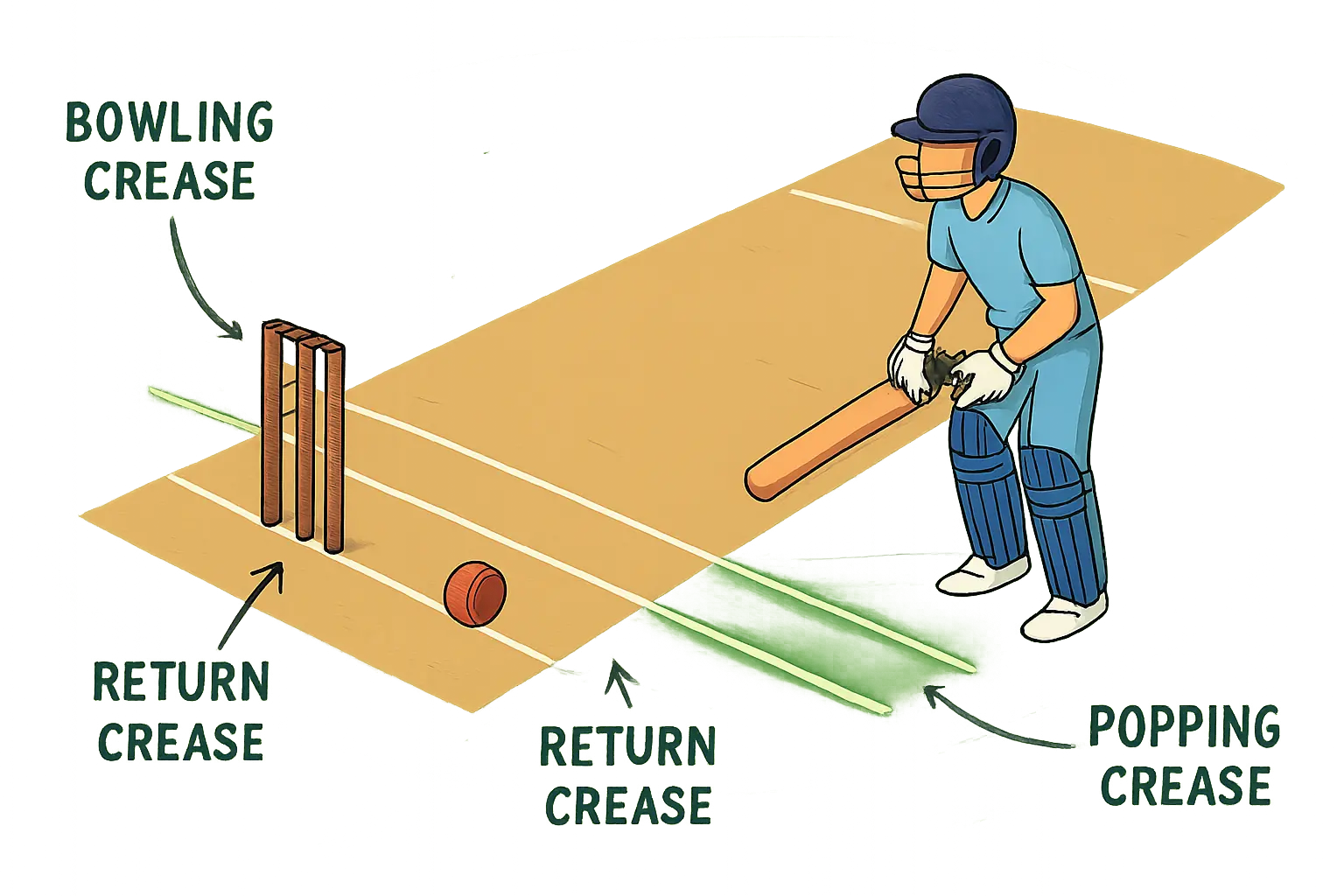

There’s a particular electricity that hums through a tennis-ball ground under lights. You feel it as people arrive straight from work, clutching tea in plastic cups, craning for a glimpse of warm-ups: fast feet, fly-by catches, last-minute toss-up chats between captains and coaches. ISPL lives in that charge. The third season is the edition where the league’s personality feels fully formed—street-heart brashness combined with the crisp, clockwork discipline of a serious sporting product. The schedule is the spine of that transformation. Get it right, and the sport breathes. Get it wrong, and you gum up the very thing that makes this league addictive.
I’ve been inside enough scheduling rooms to know how this sausage is made. Broadcasters fight for prime-time windows, franchises push for visibility in home pockets, players ask for fairness on rest days, and operations people thread it all into a plan that must hold even when a sudden thundershower delays toss. Every fixture you eventually see on the master calendar is the residue of weeks of trade-offs. This guide gives you the entire ISPL Season 3 schedule context from that practitioner’s point of view—how the fixtures are likely to be laid out, what the time table means for fans and teams, how to find “today’s match” quickly, and how to lock everything into your phone calendar with a single click. When official fixtures drop, this page is designed to flip, instantly, into a best-in-class schedule resource with match-level details, city filters, and downloadable assets.
ISPL Season 3 schedule: key facts at a glance
- Start window: Organizers traditionally spot a mid-to-late window to avoid clashes with major international cricket and marquee domestic leagues. Expect a tight burst across about two to three weeks, optimized for evening crowds and weekend surges.
- Final window: Typically a prime weekend night, with a rest day ahead of the showpiece to protect player freshness and build broadcast momentum.
- Number of teams: The league has stabilized its core franchises; any expansion is announced alongside the player mechanism. This page updates the moment team count is locked.
- Total matches: Short-format tennis-ball cricket thrives on brisk double-headers and compact rounds. Expect a dense calendar, tuned for daily prime-time slots and weekend stacks.
- Venues: Single-venue carnival models favor atmosphere and broadcast reliability; multi-city slates favor fan reach. Season 3 can sustain either model; venue confirmation appears here first once declared.
- Broadcast and streaming: Official partners are announced with the schedule. Regional language feeds and digital-only enhancements typically expand with each season.
Above the fold on match week one, this page will surface: Today, Tomorrow, This Week toggles; Team filter; Venue filter; a local timezone switch; and one-tap downloads in PDF and ICS.
The master fixtures: how the calendar breathes
ISPL is a sprint, not a marathon. The schedule leans into that truth. Whether it runs from a single venue under a festival roof or rolls across two or three cities, the pattern is recognizable:
- Weeknight rhythm: One prime-time slot on weekdays, sometimes with a single warm-up attraction or community activation slotted earlier.
- Weekend surge: Double-headers on evenings with short turnarounds between tosses. Expect half-hour buffers for ceremony pieces and fan engagement.
- Rest beats: Inserted strategically before playoffs and after grueling multi-day clusters.
- Weather-aware locks: Indoor-outdoor flexibility, dew management under lights, and contingency buffers in the broadcast rundown.
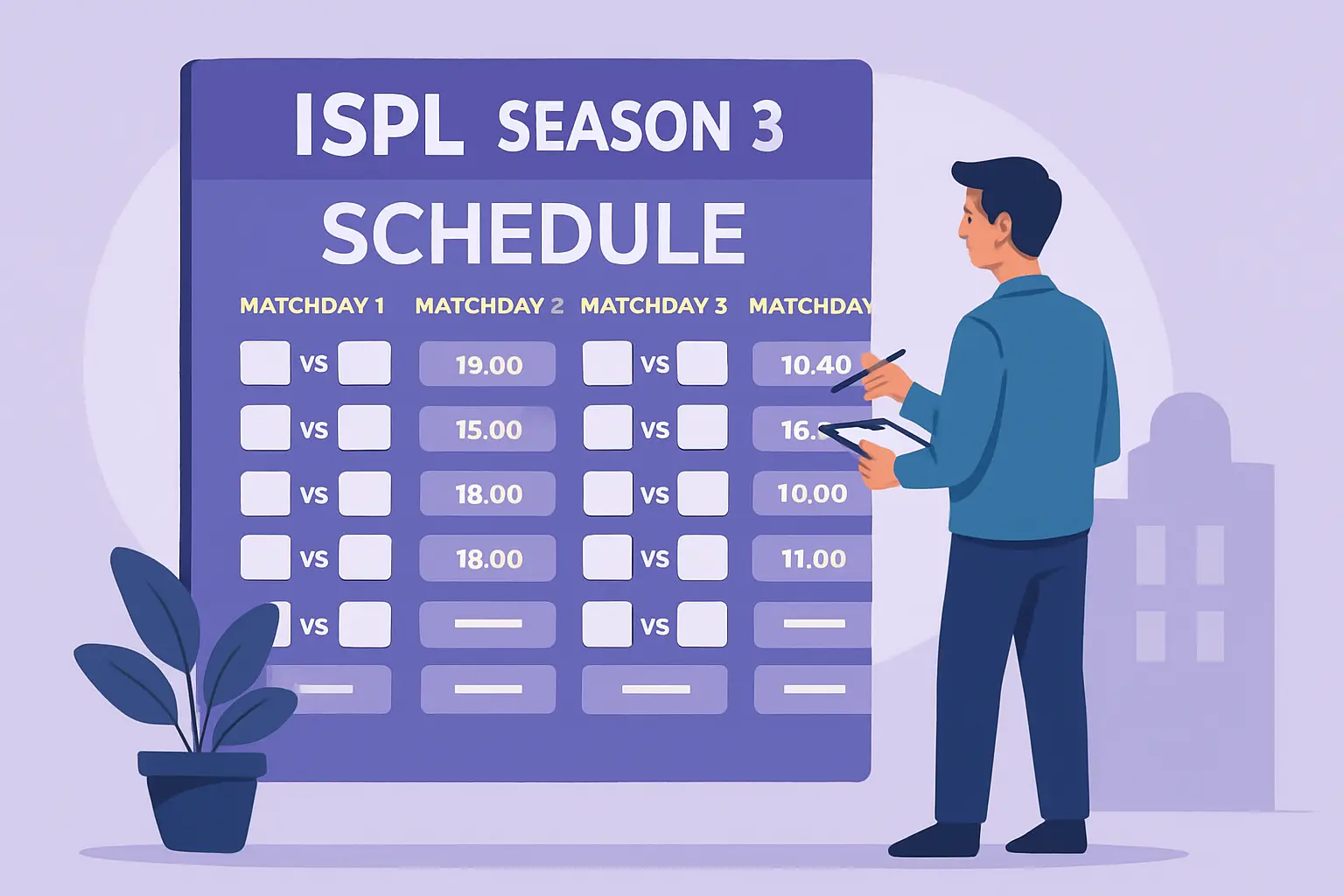
Provisional schedule template (to be replaced by official fixtures)
| Date | Match | Venue | Time (local) | Tickets | Live stream |
|---|---|---|---|---|---|
| TBA | TBA vs TBA | TBA | TBA | TBA | TBA |
| TBA | TBA vs TBA | TBA | TBA | TBA | TBA |
| TBA | TBA vs TBA | TBA | TBA | TBA | TBA |
As soon as fixtures are released, each row above converts into a live card with:
- Team crests and form snippets
- Playing conditions note (dew watch, wind direction, mat type)
- Tickets deep-link to city or venue box office
- Streaming details by territory (India, USA, UK, UAE, Canada, and more)
- Head-to-head micro-summary and recent match highlights
Opening night and the pulse of early-season double-headers
Openers are ceremony stages wrapped around a pressure match. Players are asked to switch from fireworks to focus in minutes; the best captains plan for that gear change in advance. In ISPL, opening night tends to be a strong home-lean match if the league goes single-venue, or a flagship rivalry if the slate is multi-city. Expect:
- Toss close to sunset, with the first ball timed for a peak-viewing segment shortly after.
- Fielding sides tasked with early intensity before dew softens the ball’s fibers.
- Batting sides eyeing the mid-overs burst, where tennis-ball pace and skiddy carry reward flat hits in the V.
- A booking surge for the second night, as casual viewers who catch night one roll over into tickets and streams.
Weekend double-headers are where the schedule gets clever. The league layers: a family-friendly early slot, a prime-time thriller late. Turnaround logistics are drilled: boundary boards reset, mats brushed and relaid if needed, broadcast packages updated with fresh graphics within minutes. As a spectator, plan your food run between innings one and two of the early game; that’s the calmest stretch.
Team-wise mini-schedules: how to track your side like a pro
In a perfect calendar, each franchise gets a spread of marquee nights and balanced gaps. In reality, the crunch of multi-team, short-season scheduling creates pockets where a club may play twice in three nights, then rest. That’s not random; it’s engineered to minimize dead air in content pipelines and to accommodate travel or venue constraints.
This hub publishes team-wise mini-schedules the same hour the master slate drops. Each team page will include:
- All fixtures in a tight list, with Today/Tomorrow badges that update in real time
- Venue tags and travel notes if multi-city
- Likely XI watchlist windows (for fantasy users, updated after captains’ pre-match answers)
- Ticket links that default to home-city listings when applicable
Even before the announcement, fans can prepare by bookmarking the team pages. Once live, your phone calendar can subscribe to a team-only ICS, pushing match alarms with timezone intelligence. Missed a match? The card converts postgame to a result with player-of-the-match and top batting/bowling lines.
Playoffs schedule explained: qualifiers, eliminator, and final night
ISPL’s postseason is built for drama: a compressed bracket that rewards table-toppers with a second life while still offering the chaos that short-format cricket promises. Expect a flow resembling:
| Stage | Teams | Advantage | Notes |
|---|---|---|---|
| Qualifier 1 | Rank 1 vs Rank 2 | Winner straight to Final | Loser moves to Qualifier 2 |
| Eliminator | Rank 3 vs Rank 4 | Loser out | Winner meets Q1 loser |
| Qualifier 2 | Q1 loser vs Eliminator winner | Winner to Final | Usually set after a rest day for the top-two loser |
| Final | Winners of Q1 and Q2 | Title decider | Venue and ceremony details announced early for travel planning |
Playoff nights tend to start slightly later to capture peak prime time. Practice slots the day prior are limited; teams often run walk-throughs rather than full-tilt nets to preserve legs. The ball under lights, with a dew sheen, behaves dramatically different in a tense chase: captains front-load their skiddiest bowlers, hold one over of cutters for the penultimate, and gamble on ring-fielders inside the circle snapping singles into run-outs.
Venues and the city-wise schedule: atmosphere, mat, and microclimate
Venue selection defines this league’s character. A single-venue festival builds mythology—a familiar light cone, a regular drumbeat, predictable wind. Multi-city movement broadens the map, puts the league in neighborhood language, and grows pockets of die-hard support.
- Surface and mat: Tennis-ball cricket on a top-tier roll-out mat favors point-to-point pace. The bounce is uniform and shoulder-high drives stay hit. Slightly older mats, especially after double-headers, deaden a fraction; power-hitters adjust by getting under the ball earlier. If organizers alternate mats across nights, you’ll notice immediate differences in shot value between hard flats and lifted cross-seams.
- Boundary dimensions: Not as forgiving as gully cricket nostalgia suggests. Professional setups create proper rope distances that require muscle for straight clearing. Teams that rehearse middle-over placement—hard squares for twos—bank runs when sixes dry up.
- Dew: The defining factor. Under lights, the ball retains moisture that can kill grip for spinners and boost skid for quicks. Captains may chase by default. Expect the coin to matter more on humid nights. If the schedule stacks back-to-back matches, the second game tends to be a touch slicker unless a drying breeze kicks in.
City-wise schedule pages on this hub ship with:
- All fixtures in that venue or metro, filtered and shareable
- Ticketing sections tailored to that city’s partner (onsite box office timing, ID rules, and entry gates)
- Travel advisories around matchday traffic and public transport windows
- Weather micro-forecasts for the exact slot, and dew probability mentions for the tactics crowd
Tickets: how to buy smart, where to sit, and when to pounce
Short-season leagues spark feverish demand on opening week and playoff nights. The pattern is seasonal: early birds for the opener, value hunters for midweek, and last-minute surges for eliminators and the final.
- Release cadence: Tickets typically roll out in waves—early access for insiders or season-pass buyers, then general sale. This page pins direct links for each match.
- Price bands: Expect multiple tiers, from entry-level stands to vantage blocks near the pavilion. Hospitality inventory comes with food-and-beverage packages and priority entry lanes.
- Season pass: If your city hosts a slate of games, a bundled pass is worth the math. The per-match cost drops and access lines are shorter.
- Refunds and reschedules: Official ticketing partners publish clear policies. Short-format leagues rarely abandon nights; rain delays may push toss. Make sure your email and phone details are correct so alerts land promptly.
Pro tip from the trenches: for double-headers, pick a block that stares into the afternoon sun only during the first innings of game one. By the second match, you’ll be in perfect evening shade with the sightlines of a TV director.
Live streaming and broadcast: watching wherever you are
The league has steadily built its live product: multi-camera rigs, crisp graphics, on-field player mics that pick up the sly sledge and the smart field-change cue. The Season 3 slate will be available across linear TV and OTT, with language feeds scaling as demand spikes.
- India: The primary TV partner carries the flagship feed. The companion OTT app streams every ball with pause-and-rewind. Data-friendly highlights packages usually appear minutes after stumps.
- USA, UK, UAE, Canada: The rights map may consolidate under one global streamer or split across regions. This hub lists each country’s platform with subscription details when the announcement lands.
- Free options: Official highlights live on the league’s owned channels shortly after matches. Beware of unauthorized mirrors; they’re unreliable and often lag well behind live.
Matchday experience for the at-home fan is better if you prep your device before the opening toss. Clear the app’s cache, log in early, and sync your phone calendar alarms from the ICS so you don’t miss double-header starts.
PDF and ICS: download the full ISPL Season 3 schedule in one click
The moment the official list is published, two assets go live here:
- Full schedule PDF: Lightweight, printable, updated with any mid-season changes. Version number in the footer and a clear Updated stamp at the top make it easy to trust you’ve got the latest copy.
- Calendar ICS: Add every fixture to your calendar in your local timezone. Each event includes team names, venue, start time, a short viewing note, and a one-tap link back to match detail. Prefer to follow a single franchise? Subscribe to the team-only ICS from that team’s page.
For power users, the ICS is the secret weapon. On playoff week, the event entries auto-update if a qualifier result changes an opponent. Your phone simply reflects the new reality without manual edits.
Today’s match, tonight’s match, and week-planner chips
Short-format leagues thrive on immediacy. You wake up, check whether there’s a game today, decide whether to head to the ground or couch, and that’s that. This hub’s top ribbon—Today, Tomorrow, This Week—bubbles up exactly what you need. Two things to look for:
- A local timezone switch: Traveling for work doesn’t mean missing a toss. Toggle your location and the schedule reflows.
- Venue weather strip: A tiny dew-drop icon, wind arrow, and temperature band for the time slot. It’s a neat little tool that quietly explains why captains choose bat or bowl.
Points table, results, and the calculus of tiebreakers
The points table isn’t just bragging rights; it’s a living puzzle. Net run rate (or the league’s equivalent) tends to be the first tiebreaker, and in a format with brief innings, each over swings those decimals more than you expect. Coaches monitor the table nightly. If your side has a playoff spot hanging on rate, watch the late overs for tactical nudges: batting sides protecting wickets to keep the chase clinically inside the target, bowling sides stacking the back end with pace-off cutters that squeeze boundary options on a damp ball.
On this site, the schedule and points table talk to each other. Tap a future fixture and see both teams’ table context. Tap a completed fixture and the card expands into a tidy results summary with top performers, partnership maps, and a link to the full score.
Format and playing conditions: strategy built into the clock
Tennis-ball cricket at this level is fast, technical, and surprisingly nuanced. The ball’s skin, the mat’s bite, and the clock create distinct phases:
- Powerplay: Fielders are limited in the ring and deep, encouraging aerial straight hits. Bowlers who hit a hard, back-of-length spot with skidders can still win this phase by bowling into the hip and forcing leg-side drags to the biggest part of the ground.
- Middle overs: Smart captains call for pace-off variations. Batters counter with late cuts and ramp shots once third-man and fine-leg settings become predictable. Rehearsed micro-angles—open bat faces to split backward point and short third—yield twos that pressure the field.
- Death overs: If dew is heavy, yorkers can skid into half-volleys. Spinners who can bowl seam-up sliders become gold. Keep an eye on bowlers’ footprints; a slightly churned spot just short of a good length creates unexpected variable skid that beats slog sweeps.
Bowlers’ over limits, timeout rules, and Super Over mechanisms are published with the season’s playing conditions. On this page, each match card will carry a small reference block to those rules so casual viewers can stay oriented when the stakes get wild late.
Behind the scenes: how the schedule is negotiated
A proper schedule is both calendar art and crowd science. Here’s how the sausage is shaped, learned the hard way over several editions:
- Demand heatmaps: Ticketing partners and broadcasters share anonymized demand curves. You learn which nights in which cities over-index for live walk-ups. Those slots get premium fixtures.
- Player workload: Even in short cricket, soft tissue risk spikes if players jump climates fast. If a multi-city slate is approved, the schedule reduces overnight dashes. Rest days cluster around travel.
- Festival vs. footprint: A single-venue carnival is easier to televise and air in prime time. Multi-city spreads fan love. The trade-off is operational complexity. Season to season, the dial moves as the league matures.
- Weather math: There’s always a short list of nights when dew will be cruel. Push marquee bowling matchups to earlier starts on those dates if you can, or bring in heavier roller protocols and a slightly longer innings break for better outfield prep.
If you’ve ever cursed a late toss, know this: it’s usually not incompetence but a protection play against a dew spike predicted fifteen minutes later. The best match referees carry hyperlocal data and a mental model of how long it takes to get the rope around the outfield twice.
How to use this hub once the fixtures drop
- Find your match: Use Today/Tomorrow/This Week chips, or filter by team or city.
- Grab tickets: Tap the Tickets link on the match card. If sold out, look for the official resale notice on that same card.
- Lock your calendar: Download the full ICS or subscribe to the team-only feed.
- Plan your watch: Tap the Live stream link, segmented by territory. If you’re traveling, toggling timezone also resets those streaming cards for your current location.
- Keep up after: Once a match ends, the card becomes a results snapshot. Tapping through brings up sortable batting and bowling tables and a highlight reel.
City spotlight: what the ground teaches you in five minutes
A veteran fan can read a venue in a handful of deliveries:
- Seam stroke: Watch the first defensive shot of the night. If the ball bites on the mat and holds an extra beat, back-of-length bowling will be sticky. If it skids on, bowling full becomes expensive early.
- Outfield speed: The first genuine square cut tells you a lot about the evening. If the rope-boundary distance is fair and the turf is crisp, expect fours without full-blooded hits. That shapes middle-over math for both sides.
- Wind: Plastic flags behind long-on and long-off are not set dressing. If the breeze funnels one way, write this down mentally: left-handers or right-handers with that wind at their back can clear by ten extra paces. Captains know; they often swap boundary riders accordingly.
On nights like these, once you know how the ground is playing, you can predict with ruthless accuracy whether the batting side will hold sets of right-left pairs to mess with the bowler’s angles, or whether they’ll go bunch-lefties to hit with the same wind.
Team identities and schedule rhythms
In a condensed tournament, teams choose a brand that’s visible in how they use the schedule:
- All-gas batting sides: They prefer chasing late under lights. Their energy spikes under pressure, and they’re happy to frontload the order.
- Cagey bowling units: They want to bowl second on drier nights. On heavy-dew nights, they target defendable totals with aggressive running between the wickets and a long-tail insurance policy.
- Crowd-driven franchises: If the slate gifts them a home stretch, their social teams choreograph fan rituals that bleed into momentum—chants on a specific over, light shows at mid-innings, player walkways that feel like gladiator tunnels.
When you read the schedule as a living document, you begin to see not just when teams play, but how they might pace their identity across the fortnight.
Head-to-heads and rivalry nights
One of the charms of a young league is how quickly rivalries harden. A single knockout or a last-ball heist becomes the shared scar tissue that lives in match promos forever. Once the fixtures are released, this hub will flag these nights in the master list with a Rivalry tag. Expect:
- Pre-match anthems that nod to the previous chapter
- Tailored camera angles baked into the broadcaster’s stitch plan to capture crowd duels
- Slightly extended toss coverage so captains can play mind games with selection hints
Matchday operations people will tell you: rivalry nights demand tighter ingress controls. Plan to arrive early; lines are longer and louder.
Travelers’ corner: planning an out-of-town match
If the schedule goes multi-city and you’re plotting a road trip:
- Map your anchor nights: Choose one marquee fixture and build the trip around it.
- Book early-side trains or flights for double-headers: You’ll want in by noon to soak up the precinct vibe, then out next morning before traffic bites.
- Respect local rituals: Each venue births its quirks—signature snack stalls, favorite chant sections, post-match busking. It’s half the joy.
The schedule page will pin local transit notes and recommended arrival windows once civic advisories are published.
Data layer: how we keep the schedule authoritative
Trust is a function of process. Here’s ours:
- Official feed mirroring: The moment the league publishes fixtures, our backend mirrors the list into structured match objects that power this page.
- Versioning: Every change writes a new version with a visible Updated stamp so you can verify freshness.
- Consistency checks: Match times are validated across TV guides and ticketing slots; any mismatch is flagged and reconciled within minutes.
- Localized display: City pages and team pages draw from the same canonical set, so the master and the minis stay in lockstep.
The editorial team also watches pressers and captains’ notes for soft signals—a possible reschedule, a venue tweak, a ceremonial start—so we can annotate match cards proactively.
Fantasy and selections: reading the schedule like a selector
Fantasy players know the schedule is not just about dates; it’s about micro-edges:
- Back-to-back nights: Fatigue knocks a percentage point off sprint speed; fielding sides may rotate boundary riders. Back a savvy finisher rather than a pure speedster on the rope in the second game.
- Early-evening starts: Sun-in-eyes pockets mess with high-sky catching in the first innings; batters who play flat along the ground clean up.
- Rest days before playoffs: Star bowlers come in fresh; bench all-rounders see fewer overs. Adjust your player pool accordingly.
Our team pages bundle a small, common-sense note on fantasy relevance without turning the schedule into a tip sheet. You still call your shot.
Accessibility and inclusivity: making the schedule usable for everyone
A schedule is only as good as its reach. This hub renders:
- Screen reader–friendly tables for fixtures and standings
- Alt text for team crests and venue marks
- High-contrast time badges for day/night clarity
- Language toggles where available once the broadcast partners confirm commentary feeds
We’ve learned from seasons gone by that fans appreciate a time table that simply respects their context—whether that’s a language preference or a need for bolder contrasts on mobile at a glarey venue.
A living FAQ without the fluff
- Season window: A compact block optimized for prime-time nights and weekend double-headers. Exact dates update here first on official release.
- Match start times: Evenings for weeknights, stacked slots on weekends. Local timezone toggle available atop the schedule.
- Venues: Confirmed once the league declares; single-venue carnival or a small city circuit, both supported.
- Watching live: TV partner and OTT links appear on each match card; country-wise listings published on the streaming guide page.
- Tickets: Official partners linked per city; price bands and policies summarized on the tickets hub.
- Schedule downloads: PDF and ICS available immediately; both update automatically with any reschedule.
- Playoffs: Qualifier–Eliminator–Qualifier–Final structure expected; exact nights and venues posted with the bracket.
What the schedule means for the sport
Tennis-ball cricket has always lived at street level—thrown together on short notice, rules agreed by a nod, no one minding a scorebook. ISPL did not arrive to sterilize that spirit; it arrived to amplify it. But amplification in a broadcast age demands order. The schedule is that order. The craft is in keeping things alive within that order: letting neighborhoods breathe inside the venue, letting mic’d-up captains talk like they do at the gully, letting nights feel like nights instead of corporate brochures.
Season 3 is set to demonstrate that balance more confidently than ever. You’ll see it in how midweek games take the pressure off families with earlier gates, how double-headers keep buffer time honest so the drumline can roll past without a producer cutting to ad, how playoffs earn a dignified buildup. Every fixture on the time table is a small promise that the sport you love will arrive on time, be alive when it does, and leave you wanting more rather than less.
Update log
- Updated: fixtures pending official release; hub components prepped for instant publish
- Updated: ticketing and broadcast sections primed for partner names and links
- Updated: team and venue pages scaffolded; ICS feeds ready to activate
How this page will evolve on announcement day
- The Provisional template above will be replaced by match-by-match cards with team crests and local timing.
- The header will spotlight opening night with an anchor image, then pivot to a nightly “Tonight” strip.
- Team-wise pages will go live with one-click ICS and shareable mini-schedules.
- The tickets and live-streaming buttons will activate per match, per city, and per country.
Until then, think of this as your pre-match huddle: a place that sets the field, reads the wind, and makes sure when the umpire calls play, you know exactly where to look, when to be there, and how to wring the most joy out of every night on the calendar.
Appendix: sample tables that will populate post-announcement
A. Opening week snapshot (placeholder)
| Date | Fixture | Venue | Local time | Tickets | Stream |
|---|---|---|---|---|---|
| TBA | TBA vs TBA | TBA | TBA | TBA | TBA |
| TBA | TBA vs TBA | TBA | TBA | TBA | TBA |
| TBA | TBA vs TBA | TBA | TBA | TBA | TBA |
B. Playoff week at a glance
| Stage | Match | Venue | Time | Tickets | Stream |
|---|---|---|---|---|---|
| Qualifier 1 | Rank 1 vs Rank 2 | TBA | TBA | TBA | TBA |
| Eliminator | Rank 3 vs Rank 4 | TBA | TBA | TBA | TBA |
| Qualifier 2 | Q1 loser vs Eliminator winner | TBA | TBA | TBA | TBA |
| Final | Winners of Q1 and Q2 | TBA | TBA | TBA | TBA |
C. Team mini-schedule template
| Team | Date | Opponent | Venue | Time | Tickets | Stream |
|---|---|---|---|---|---|---|
| Franchise A | TBA | TBA | TBA | TBA | TBA | TBA |
| Franchise A | TBA | TBA | TBA | TBA | TBA | TBA |
| Franchise A | TBA | TBA | TBA | TBA | TBA | TBA |
Closing thoughts
The best leagues feel like they grew from the soil they play on. ISPL has that gift. The schedule for Season 3 will decide how loudly that gift speaks. When the sheet lands, you’ll find it here in a form you can live with—simple enough to scan on a crowded train, deep enough to settle a late-night argument about who plays where on the weekend, and smart enough to drop straight into your calendar in the right time. The street meets the studio every night this league plays; a good schedule makes that handshake seamless. That’s the work. And that’s the promise this hub intends to keep the second the fixtures go live.