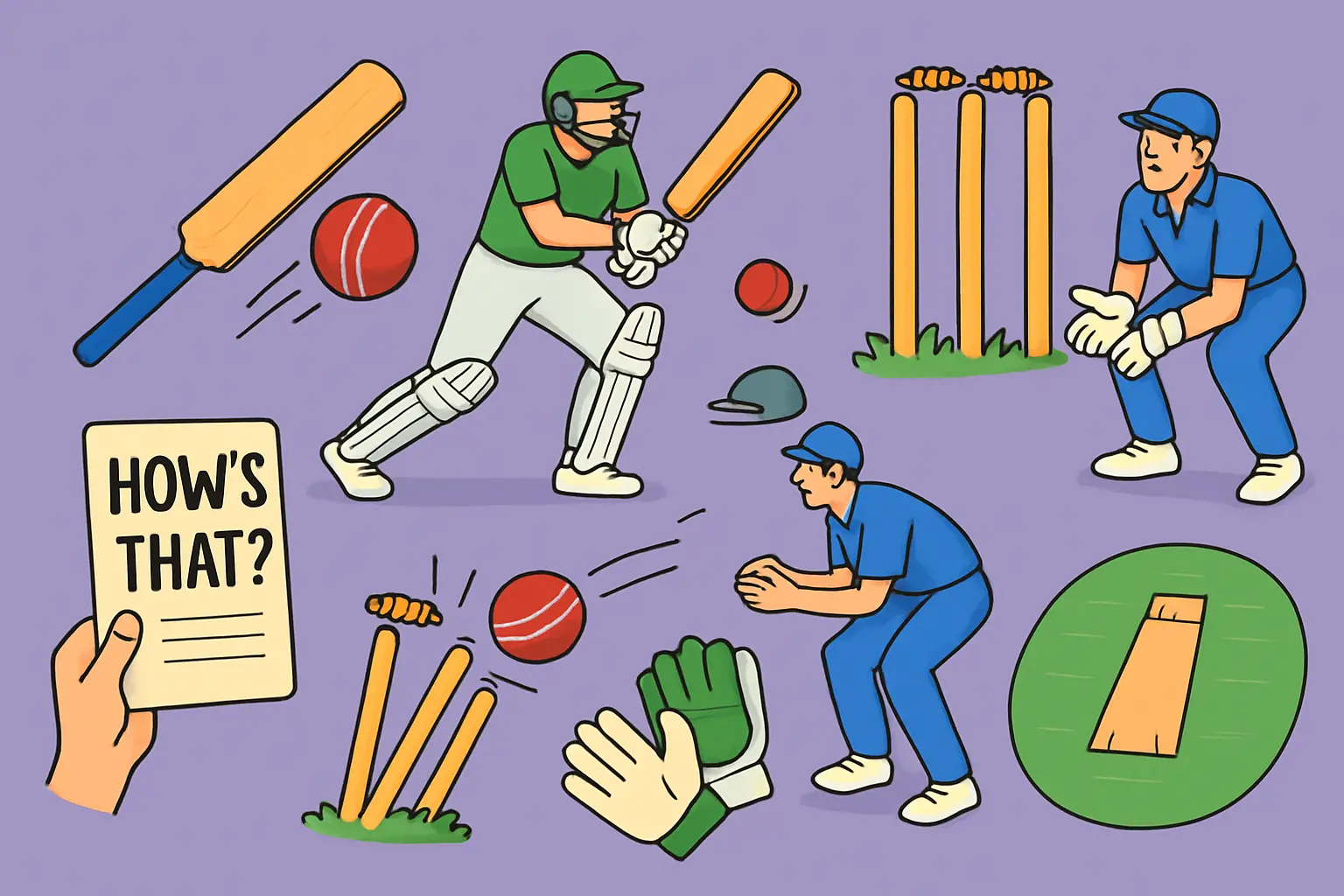

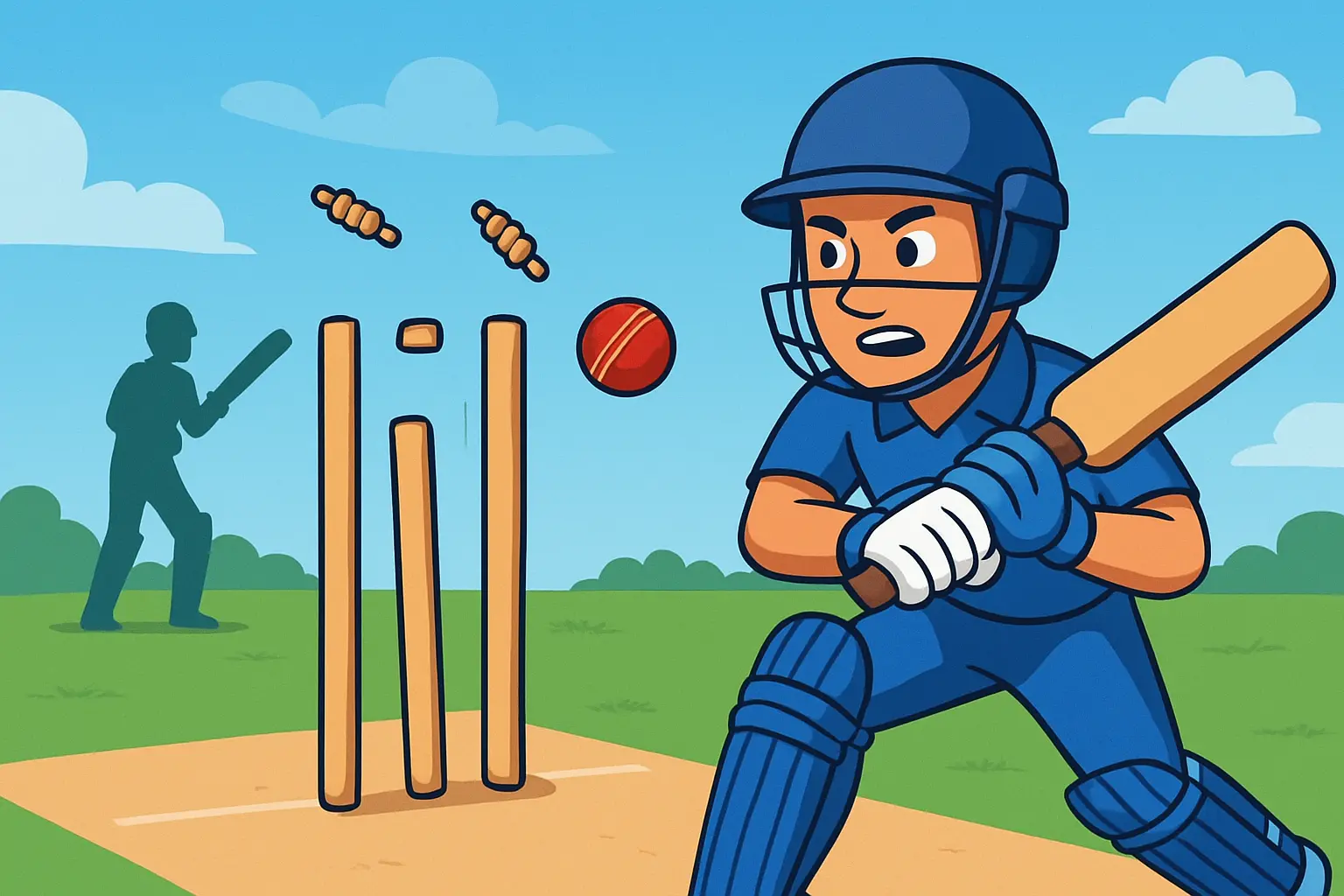
Short answer you can borrow for any scoreboard graphic: In cricket, outs are called wickets. A batting side can lose up to 10 wickets in an innings. When 10 batters are out, the innings ends.
Got 30 seconds?
- Outs in cricket are “wickets.”
- An innings ends when 10 batters are out (all out), when a captain declares (in Tests), when overs run out (limited-overs), or when the chasing team reaches the target.
- The 10-wicket rule is the same in T20, ODI, and Test cricket.
- The last batter can’t bat alone; once 10 are dismissed, play stops for that innings.
- The most common ways to get out: caught, bowled, LBW, run out, and stumped.
What Is an “Out” Called in Cricket? Wickets vs Outs
If you come from baseball, think of “out” as the act of dismissing a hitter. Cricket’s version is a wicket. That single word confuses beginners because it means two different things depending on context:
- A wicket is a dismissal: “That’s the fifth wicket.”
- A wicket is also the physical target: three vertical stumps with two bails on top.
On TV commentary you’ll hear, “He’s taken a wicket” (the bowler has dismissed a batter), and “He hit the wicket” (the stumps were broken). Same word, two uses. Like baseball’s “plate” (home plate and the plate appearance), context matters.
A wicket (dismissal) can be achieved in several ways, governed by the MCC Laws of Cricket. The broad principle is simple: the batting side sends out two players at a time; when 10 of the 11 are out, no one is left to partner the remaining batter. That’s the cap on dismissals per innings.
How Many Wickets End an Innings?
Ten. Exactly 10 wickets can fall in an innings, because a batting team fields 11 players and you need two at the crease to continue. Once 10 are out, the last player has no partner—the innings is over and the team is said to be all out.
It doesn’t matter which white-ball or red-ball format you’re watching. T20, ODI, and Test cricket all use the 10-wicket per innings rule. What changes between formats is not the number of wickets, but the amount of time (or overs) available and whether captains can choose to end an innings early.
Format-by-format reality check
- T20 cricket: Each side gets a single innings of up to 20 overs. The innings ends when either 20 overs are completed, the batting team is all out (10 wickets), or the chasing side reaches the target. On a quick night at a packed ground, you’ll often see teams bowled out inside the 20 overs because they attack relentlessly.
- One Day International (ODI) cricket: Each side gets up to 50 overs, but the same 10-wicket cap applies. Batting teams can be dismissed before using all 50 overs; alternatively, they can bat the full quota and finish, even if they’ve lost only 5 or 6 wickets.
- Test cricket: Each side can have two innings, with no over limit. An innings ends at 10 wickets, by a captain’s declaration, or when the chasing team surpasses the target in the fourth innings. Here, wicket management is a marathon—build a platform early, protect the tail, choose when to declare, and juggle energy across multiple days.
What “all out” truly means
A scorebook sometimes shows a team “all out” without exactly 10 dismissals if players cannot bat due to injury or absence. In the rare scenario where two players are incapacitated or “absent,” the innings can be closed with fewer than 10 formal dismissals. It’s still recorded as all out because no further batter can legally come to the crease.
When Do Teams Switch in Cricket?
Teams switch when an innings ends, and there are only a few lawful ways for that to happen:
- All out: 10 wickets have fallen, or the batting side cannot field another batter (through injury or absence).
- Overs completed: In limited-overs cricket, the batting innings ends when the allocated overs are used up.
- Target reached: In a chase, once the batting team passes the target, the innings ends immediately.
- Declaration or forfeiture: In Test cricket, the batting captain can declare the innings closed at any time, even with wickets in hand, or forfeit an innings entirely.
That last one—declaration—couples long-form tactics with a weather eye. I’ve sat in dressing rooms where the head coach and captain stood on the balcony, counting clouds and overs left in the day, waiting for that perfect moment. Declare too early and a counterpunching top order can neutralize your bowlers. Declare too late and you don’t get enough time to take 10 wickets in the final innings. The fielders feel this too; it changes every angle, every field placement. A deep point becomes a catching gully. A bowler who was bowling back of a length switches to fuller searching lines because the team needs wickets, not dot balls.
Ways a Batter Can Be Out: The Dismissal Modes
Cricket has a richer dismissal palette than baseball. That’s not a value judgment—just an invitation to enjoy its variety. The MCC Laws group these as different modes of dismissal. Here are the common ones you’ll meet on a typical afternoon and a few rare birds that keep scorers honest.
– Bowled
A wicket in its purest form. The ball delivered by the bowler hits the stumps and removes at least one bail. It can go straight in or deflect off the bat or body; if the ball ultimately puts the wicket down, the striker is out bowled. It’s the heartbeat-reverser for a bowler: the sound is as much a thrill as the sight—the pitch of the rattle tells you if one bail fell or both. Tailenders dread it; top-order players get embarrassed by it. Either way, no appeals are really needed—everyone knows.
– Caught
If the batter hits the ball with the bat or glove holding the bat and a fielder catches it before it touches the ground, the striker is out caught. This is the most common dismissal across formats. A dozen variations exist—caught behind by the wicket-keeper, caught at slip from a thick edge, or a skier in the deep during a slog. Field setting becomes chess: a bowler might tempt the drive with a fuller length and place two catchers in the covers. And yes, on a no-ball you cannot be out caught; the illegal delivery protects you from that mode.
– LBW (Leg Before Wicket)
The trickiest law for newcomers. If the ball would have hit the stumps but was intercepted by the batter’s body (usually the front leg), and the ball didn’t pitch outside leg stump, LBW is possible. The umpire considers line, impact, and height. At elite level, ball-tracking helps adjudicate. You’ll hear commentators talk about “umpire’s call,” but in a park match, it’s just force of habit: the bowler pleads; the batter looks innocent; the umpire splits the difference with the wisdom of a village elder.
– Run out
A batter is out run out if, at any point while the ball is live, a fielder breaks the wicket with the ball while that batter is out of his or her ground, typically during a run. If both batters are stranded mid-pitch in a moment of shared horror, the fielding side can, in theory, dismiss both on the same ball—first at one end, and then at the other—if neither has made ground. That’s cricket’s closest echo of a double play. It’s chaos when it happens: two appeals, two finger raises, and two heads shaking at the center of the pitch.
– Stumped
Distinct from run out, stumped occurs when the wicket-keeper removes the bails while the striker is out of their crease having missed the ball, and they’re not attempting a run. You see it most often against spinners, especially with a batter charging down the track. The best keepers move like coiled springs and make it look inevitable; even seasoned pros get drawn out by a dipper and hear the bails flick off behind them.
– Hit wicket
The batter dislodges the stumps with the bat, body, or equipment in the act of playing the ball or immediately after a shot. Back-foot slips, flailing backswings, or a heel catching the leg stump—it’s never pretty. When it happens, there’s that instant of silence before the giggles. Even the bowler tries to stay serious.
– Obstructing the field (includes handling the ball)
If a batter willfully obstructs or distracts the fielding side—say, changing running direction to block a throw or swatting a live ball away with the hand not holding the bat—they can be given out. What used to be a separate “handled the ball” offense now sits under this law. It’s one of those rare dismissals that sparks debate long after stumps. Spirit-of-cricket lines get drawn in chalk by rival fans.
– Hit the ball twice
Legal if the second hit is to protect the wicket, not to score. Illegal if the batter deliberately hits the ball a second time to gain runs. Scorers love how often players almost forget this—batters will instinctively swat a trickler away from the stumps, which is fine if they don’t try to run.
– Timed out
If the next batter doesn’t arrive at the crease in time after a wicket falls, the fielding captain may appeal for timed out. It’s theater when called, sometimes borne of frayed relations between teams. Practically, squads move briskly; no one wants to gift a wicket for poor logistics.
– Retired out (not to be confused with retired hurt)
A batter who leaves the field without the umpire’s permission and doesn’t return may be recorded as retired out. This is different from retired hurt, which allows a player to return later if fit. Retired out is rare and tactical only in unusual circumstances—think about accelerating a declaration or giving someone practice; it still costs the team a wicket in the book.
Cricket’s laws are exacting about what counts as a wicket on illegal deliveries. On a no-ball, the striker cannot be out caught, LBW, bowled, or stumped. Dismissals still possible include run out, hit wicket, obstructing the field, and hit the ball twice. In limited-overs matches the ball after a no-ball is a free hit, which further restricts dismissal options for the striker to run out (and the same obstructing/hit twice offenses). That’s why you see fielders scattered like confetti on a free hit: the only way to stop runs is at the boundary rope or with a lightning run-out.
Cricket vs Baseball: Outs Per Inning, Side Switches, and Flow
If baseball is your reference point, lock these contrasts in. They’ll make the scoreline and rhythm of a cricket match snap into focus quickly.
Simple comparison
| Cricket | Baseball | |
|---|---|---|
| Basic unit of dismissal | Wicket (out) | Out |
| How many “outs” end an innings/half-inning | 10 wickets end a team’s innings | 3 outs end a half-inning |
| Players batting at once | 2 batters on field together | 1 hitter at a time |
| When teams switch | When 10 wickets fall, overs run out (limited-overs), captain declares (Tests), or target is reached | After 3 outs in a half-inning |
| Innings structure | One or two long innings per team depending on format | Nine innings, each with a top and bottom |
| Scoring window | Batters can face many deliveries; one dismissal per batter per innings | Each plate appearance is self-contained; a hitter can bat multiple times in a game |
The impact on tactics is profound. Because a cricket batter has only one life per innings, risk management matters. Where a baseball hitter can strike out and get another go later, a cricket opener may bat for hours, pacing an innings through different bowlers, fields, and conditions. The fielding captain isn’t trading outs for chances; they’re chasing 10 wickets with a finite number of balls and conditions that change by the session. That tension is what keeps Test cricket alive in the mind: will 10 wickets come with the light fading?
When Does an Innings End in Limited-Overs Cricket?
In T20 and ODI cricket, the innings structure adds a clock to the wicket count.
– Overs used up
If the batting side uses all 20 overs (T20) or 50 overs (ODI) without losing 10 wickets, the innings still ends. That can be a mark of control: six or seven wickets in hand suggests resource left unused—or in slogfests, that the bowling side missed chances.
– All out
A team can be dismissed inside the over limit. White-ball cricket is littered with collapses. You’ll sometimes see a side go from cruising at two wickets down to all out in a handful of overs. It’s a reminder that in cricket, a cluster of wickets shapes everything—scoreboard pressure, field placements, even the way the ball is released.
– Target reached
In the second innings (the chase), as soon as the batting team passes the target score, play stops. There’s no replaying the rest of the overs to hunt net run rate unless a tournament rule demands something unusual; the game situation controls the curtain.
– Strike rate calculus
Coaches talk about “resources”: wickets in hand and balls remaining. In T20, a general rule is to preserve wickets through the powerplay without going passive, then cash them in at the death. Lose three in the powerplay and everyone in the dugout recalibrates: the acceptable par drops; the captain protects boundaries not singles. On television it sounds like clichés; in the middle it’s a heartbeat adjustment for every player.
When Does an Innings End in Test Cricket?
Two extra tools appear in the red-ball format: the declaration and the follow-on.
– Declaration
A captain may close the innings at any score, any time. It’s an act of faith in the bowlers and a read on the pitch and weather. In the dressing room, you listen for quiet confidence: a senior pro peering at footmarks developing outside the right-hander’s off stump, or a left-arm spinner flexing fingers with intent. That’s when you hear the skipper: “One more partnership, then we pull the pin.”
– Follow-on
If Team A leads by a lot after the first innings of both teams, they can enforce the follow-on, making Team B bat again immediately. It’s a double-edged sword: if your bowlers are fresh and the pitch is wearing, go for it; if they’re gassed, take your own second innings, reset, and give them a second wind. The follow-on doesn’t change the 10-wicket rule; it just compresses innings order and time pressure.
– Retired hurt and absent
If a batter is injured and retires hurt, the innings doesn’t lose a wicket and the player can return later if fit. But if someone is absent through illness or another reason and cannot come in at all, the innings can still be closed as all out short of 10 formal dismissals. This is rare but matters tactically; a smart fielding captain will pressure new batters knowing they have a shallower bench.
Run Out vs Stumped: The Dismissal Twins You Need to Tell Apart
To American eyes, both look like pickoffs. The wicket-keeper takes a throw and flicks the bails off. But the laws are fussy in a way that’s actually elegant once you feel the rhythm.
- Stumped happens only to the striker, not attempting a run, after missing the ball. Think: batter charges down the pitch to a spinner, leaves their ground, misses, and the keeper whips the bails off before the back foot returns.
- Run out can happen to either batter, anytime the ball is live, while a run is being attempted (or if a batter is out of ground for any reason). If both are marooned mid-pitch, a fielder can dismiss one at one end and, if the ball remains live and neither batter makes ground, dismiss the other at the far end on the same delivery.
Every keeper has a favorite stumping. Mine came against a leg-spinner who bowled two googlies to set it up. The batter read the wrong one, overbalanced, and by the time he realized, my hands had already done the work. He walked back with the expression of a commuter who just missed a closing train door.
Free Hit, No-Balls, and What You Can Be Out For
White-ball matches add theatre around illegality. Overstepping the front line or bowling a high full toss is a no-ball. The batter gets a free hit next delivery, and for the striker that means you cannot be dismissed in the usual ways on that one ball: no bowled, no LBW, no caught, no stumped. You can still be run out or fall to the rare obstructing-the-field or hit-the-ball-twice dismissals.
On the no-ball itself, the striker also enjoys protection from caught, LBW, bowled, and stumped, but can still be run out, hit wicket, obstruct, or hit the ball twice. Practically, what you see on TV is this: deep fielders pushed to the rope, everyone ready to save two, and a batter lining up like a slugger on a 3-0 count.
Powerplays influence the pressure valve. Only a limited number of fielders can stand outside the inner circle, so a captain will weigh risk—do I keep the extra catcher under the lid hoping for a miscue, or push someone back to stop a flat-batted rocket? On a free hit, it’s almost always the latter.
What Happens After 10 Wickets Fall?
The innings ends. The team’s score freezes. Any not-out batter remains not out in the book. The sides switch roles: the fielders become batters and vice versa, unless it’s the end of the match (say, the chasing side has just been dismissed and the target was not reached).
Two views from the middle:
- For bowlers, that tenth wicket feels like a signature: the handshake that acknowledges a plan well executed. It might have taken a bouncer barrage, a subtlely placed fielder at short midwicket, or a long bait to the drive. Taking 10 wickets is the currency that buys you wins.
- For batters, the last wicket partnership is a little laboratory. Coaches will give tailenders two clear cues: play straight, and back your partner’s call. The set batter shoulders the workload, farms the strike, and tries to squeeze every run possible. There’s no lonelier job in cricket than shepherding a number eleven against the new ball.
Outs Per Inning vs Baseball: A Closer Tactical Lens
It’s tempting to think 10 wickets is just 3 outs multiplied by a number. It isn’t. The heartbeat of each sport is different.
- Outs are a clock in baseball. Every half-inning, the fielding side needs only 3 outs; their field can be conservative, then expand to choke a rally. Pitchers trade strikeouts for grounders depending on count and matchup. The hitter’s job is episodic; they will likely bat again no matter what happens this time.
- Wickets are finite resources in cricket. Batters measure tempo against risk, knowing one mistake ends their innings entirely. Captains bend fields aggressively to take wickets or retreat to save runs depending on format, pitch, and weather. Bowlers bowl spells, not at-bats, probing for weaknesses while protecting their stamina. Every wicket that falls changes expected runs from the remainder of the innings. If a side is 50 for none, a captain thinks, “Contain and frustrate.” If it’s 50 for five, the field snaps into catch mode and the bowlers sniff blood.
The most successful cricket captains don’t simply set fields; they narrate the innings. They move catchers a yard finer, tell a seamer to bowl cross-seam into the pitch, then unleash a leg-spinner to explore rough patches outside off stump. Every move is about those 10 wickets.
Special Cases That Confuse New Fans (And Sometimes Old Ones)
- Retired hurt vs retired out
Retired hurt is not out; the batter can return later. Retired out counts as a dismissal and closes the innings further. Teams rarely use retired out except for very particular reasons, and it’s controversial in traditional circles. - Absent batter and “all out”
If a batter cannot appear at all, the innings can be recorded as all out short of 10 dismissals. Scorecards will note “absent” or similar. This can force strategic conservatism higher up the order, especially if an all-rounder is carrying an injury. - Double play myth
Cricket can see two batters dismissed on the same ball—typically both run out—if neither is in their ground when the wickets are put down at opposite ends. It’s not common, but it’s perfectly legal. Fielders need ice in their veins to execute it: gather cleanly, choose the correct end, break the stumps, and then stay alert for the chance at the other end. - The non-striker run-out (backing up)
If the non-striker leaves the crease early before the ball is delivered, the bowler can run them out. It sits under the run-out law. This dismissal stirs debate about etiquette, but the law is clear. Coaches now teach non-strikers to keep their bat grounded until the front foot lands. - DRS and umpire’s call
At elite level, teams may review LBW and caught-behind decisions with technology. “Umpire’s call” reflects a zone of deference to on-field decisions when ball-tracking is marginal. It doesn’t change the wicket count; it just polishes the truth we all know from backyard cricket: some decisions are tight and the game lives with them. - Can the wicket-keeper dismiss batters on a no-ball?
On a no-ball, the keeper cannot complete a stumping dismissal of the striker. However, run-outs remain valid. A keeper can absolutely run out either batter if they’re out of their ground and the ball is live. - Can a batter bat twice in an innings?
No. One batter, one life per innings. In multi-innings formats like Tests, each batter can bat again in the team’s second innings, but that’s a new innings.
Strategy: Outs as Currency
The interplay between wickets lost and balls remaining is the grammar of modern batting strategy.
– In T20
You’ll often see sides aim for a platform in the powerplay (overs with field restrictions), then accelerate through the middle and death overs. Losing early wickets compresses options; a side at two down can continue to target boundaries, but at four down most teams pivot to a safer tempo for a few overs before attacking late.
– In ODIs
The middle overs are about accumulation and minimizing dot-ball pressure. If wickets fall in clusters, the bowling side crowds the bat with catchers in the ring and bowlers return to their best attacking lengths—full and at the stumps for seamers, into the pads with close catchers for spinners.
– In Tests
Wickets are an amalgam of patience and craft. Bowlers work spells across sessions. Slip cordons breathe as one; every thud into the keeper’s gloves after a perfect length is a brick in a wall the batter must climb. Captains debate new-ball timings, bowlers explore reverse swing, and spinners mine footmarks as the surface ages. Outs here are not only events; they are stories—of pressure, angles, and beliefs tested.
Historical Shapes Without the Timestamps
Just as baseball lore treasures perfect games and walk-off homers, cricket savors days when bowlers took all ten wickets in an innings or when a last-wicket stand overturned logic. Names echo: a tall off-spinner who once took all ten and a leggie who matched the feat for his city of dreams; a modern quick who ran through a lineup with the new ball singing; a wiry wicket-keeper who turned the tide with two stumpings in as many overs. Those memories are fuel; they teach young players that in cricket, the wicket—this sport’s out—is sacred and everything is possible until it isn’t.
A Plain-English Glossary for Outs in Cricket
- Wicket
- Two meanings. The stumps and bails at each end of the pitch, and a dismissal (“an out”). Context will tell you which.
- Innings
- A team’s turn to bat. In T20 and ODI, each side bats once. In Tests, each side can bat twice. An innings ends at 10 wickets down, when overs run out (limited-overs), when a captain declares (Tests), or when the target is reached.
- Over
- A set of six legal balls bowled by one bowler from one end. After each over, a new bowler must bowl from the other end. Limited-overs formats restrict the total number of overs per innings.
- Strike and non-strike
- The striker faces the ball; the non-striker stands at the bowler’s end. They switch ends when the batters complete a run, or at the end of an odd number of runs, or if the ball is a wide/no-ball with a run taken. On each new over, the striker and non-striker swap ends.
- All out
- An innings status meaning no more batters can come in. Usually after 10 dismissals, but can also occur with fewer dismissals if players are absent.
- Declaration
- In Tests, the batting captain ends the innings voluntarily, trusting bowlers to dismiss the opposition within the time left.
- Follow-on
- In Tests, the team with a large first-innings lead can force the opposition to bat again immediately. It’s a strategic lever, not a change to the 10-wicket rule.
- Powerplay
- In limited-overs cricket, a set of early overs with fielding restrictions that open scoring but also tempt aggressive shots—and with them, wickets.
- Free hit
- The ball after a no-ball in limited-overs formats. The striker cannot be out by most modes; run-out remains in play.
Beginner Scenarios That Cement the 10-Wicket Reality
- The last batter cannot bat alone
Picture this: your team is nine down. Your number eleven walks out under a sky the color of old pewter. The set batter at the other end glances a single to third man. Should the tailender attempt the run? Usually, no. Protect the number eleven; farm the strike. But once the tenth wicket falls—whether it’s the set batter or the tailender—that’s the end. No one else can walk out. There is no cricketing ghost runner. - Does a team need 11 outs to end the innings?
No. Ten wickets end an innings because two batters are always required. One player will be left not out if the team is all out the conventional way. - Can the same batter get out more than once?
Not in the same innings. One dismissal per batter per innings. In formats with two innings per team, a batter can bat—and be dismissed—again in the second innings. - What happens if the batting side runs out of overs with only five wickets down?
The innings ends with five wickets lost. They haven’t used up their potential dismissals, but the clock has struck. The bowling side didn’t need to take 10 wickets to finish the innings. - Can you take a wicket on a wide?
Yes, but not by caught or LBW. A batter can be stumped or run out off a wide delivery because the ball is live. It still counts as a ball in the over with an extra run awarded for the wide.
Field Settings and Outs: How Captains Hunt Wickets
Watching fielders shuffle ten yards left won’t sell many snacks, yet that’s where cricket’s intellect lives. When you need wickets, you station catchers where the edge will fly. Against a right-handed batter, an outswinging seamer entices the drive; a captain posts two or three slips and a gully. Against a batter sweeping a lot, a leg slip appears as a silent threat. If a team is nine down and the set batter is farming the strike, you’ll often see ring fielders spread to the rope to cut boundaries and force risky singles at the over’s end. Outs are pursued by making the best shot feel like a trap.
Bowling Plans That Manufacture Wickets
- The wobble seam
Modern quicks use a scrambled seam to generate late deviation off the pitch. It’s not swing; it’s seam movement. Against a batter defending on the angle, that can sneak through the gate. The payoff is bowled or LBW—burning two of cricket’s cleanest dismissal modes. - The leg-side trap
Against an aggressive puller, bowl short of a length with two on the hook shot. Get the pace and height right, and a top edge finds the man at deep square. It’s the white-ball version of a chess gambit—bait the hit, then claim the piece. - Slow it up
Spinners rely on drop and drift. A ball that appears to be in the slot dips late; the batter misjudges, overreaches, and the keeper’s hands flash. Stumping is a work of poetry: footwork, disguise, and speed, then the delicate silver sound of bails popping.
Why the 10-Wicket Rule Makes Cricket Feel Different
- Personal jeopardy
One mistake, and you’re walking. That dialed-up jeopardy is why even a regulation single can feel like a win for a frazzled batter on a green pitch. - Narrative arcs
Because batters can bat for a long time, individual battles blossom. A swing bowler sets a batter up with outswingers before sneaking the inswinger that nails LBW. A leg-spinner gets slog-swept early, then slows his pace and drifts one wider to tease a stumping. Outs here are the end beats of mini-stories. - Collective defense
Batters protect the tail. Bowlers hunt in pairs. The wicket-keeper and slip cordon are a chorus. Those 10 wickets are a team’s to win or lose together.
Quick FAQ
- How many outs are there per innings in cricket?
- Ten wickets. Once 10 batters are out, the innings ends.
- Does cricket have 3 outs like baseball?
- No. Cricket uses 10 wickets to end an innings. There’s no automatic switch after 3 outs.
- How many outs in T20, ODI, and Test cricket?
- All formats use 10 wickets per innings. T20 and ODI limit overs; Tests allow declarations and potentially a follow-on.
- What is a wicket in cricket?
- A wicket is both the method of dismissal—an “out”—and the physical stumps and bails at each end of the pitch. Context clarifies which meaning is intended.
- When does a cricket innings end?
- When 10 wickets fall, when the allotted overs are completed (limited-overs), when the chasing team passes the target, or when a captain declares (Tests).
- Does “all out” always mean exactly 10 players dismissed?
- Usually yes. But if one or more batters cannot appear, an innings can be recorded all out with fewer than 10 formal dismissals.
- Can a wicket-keeper stump a batter on a no-ball?
- No. On a no-ball, the striker cannot be out stumped. Run-outs remain possible.
- Can a batter be out on a no-ball?
- Yes, but not by caught, LBW, bowled, or stumped. Run out, hit wicket, obstructing the field, and hit the ball twice remain possible. The ball after a no-ball (the free hit) restricts dismissals even further for the striker—typically only run-out applies, plus the rare obstructing/hit twice modes.
- Can both batters be out on the same delivery?
- Yes, usually via run-outs at opposite ends if neither makes ground and the fielding side breaks both wickets while the ball is live.
- Can the last batter continue alone if the partner is out?
- No. Cricket requires two batters. After the tenth wicket, the innings ends immediately.
The Final Word: Outs in Cricket Are Wickets, and Wickets Shape Everything
Say it once more to make it stick: cricket’s outs are wickets, and a team can lose up to 10 wickets per innings. That single rule is the compass by which all cricket strategy is navigated. It’s why captains squeeze when they sense a collapse; it’s why batters work singles when conditions bite; it’s why the crowd holds its breath when a fast bowler charges in with a slip cordon waiting like a net.
From club greens to packed stadiums under lights, the same chase unfolds: take 10 wickets before the other side scores more. Everything else—free hits, powerplays, declarations, follow-ons, and fielding maps that look like constellations—is just the architecture built around that pursuit. Learn the language of wickets, and cricket opens like a book you’ll never want to finish.