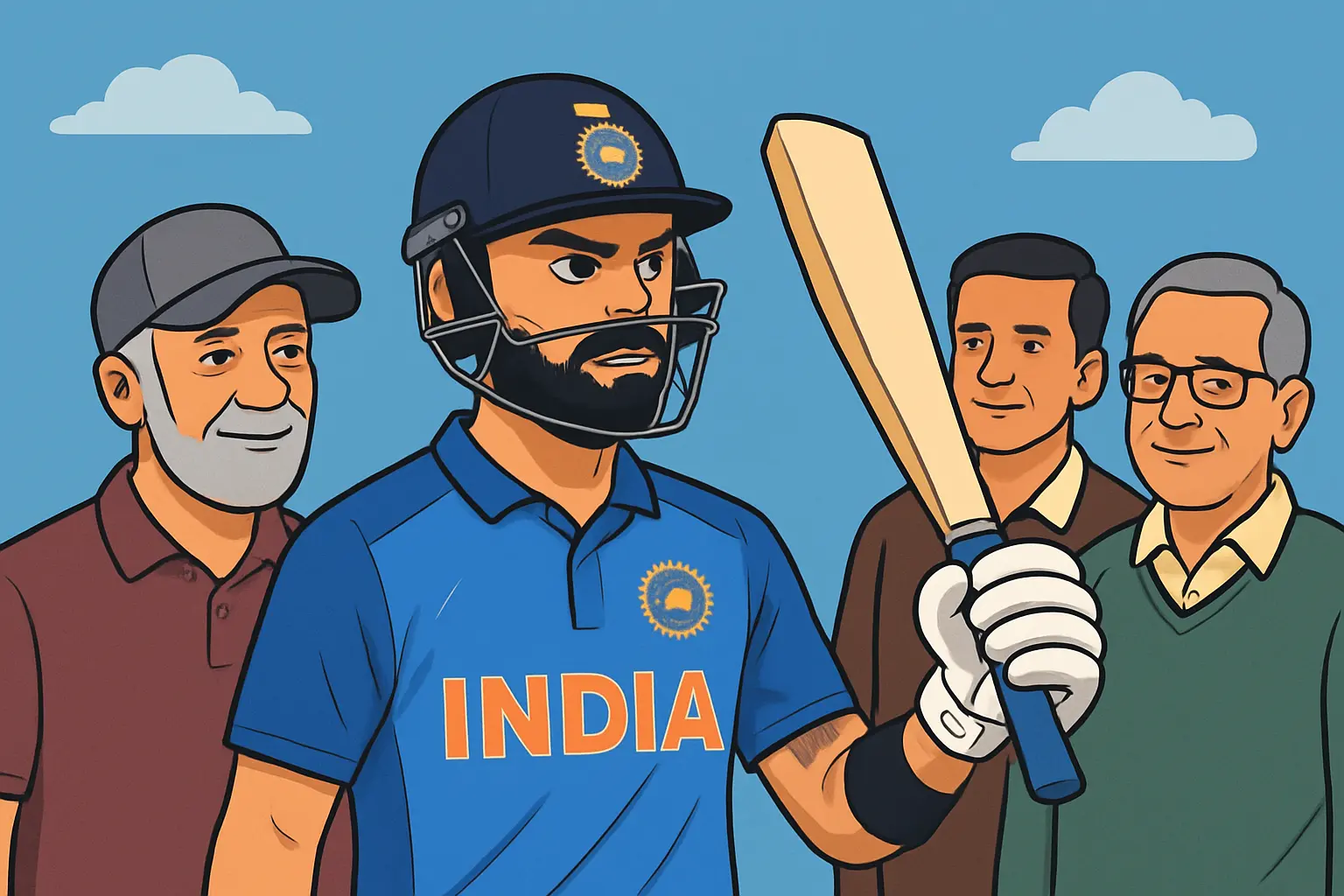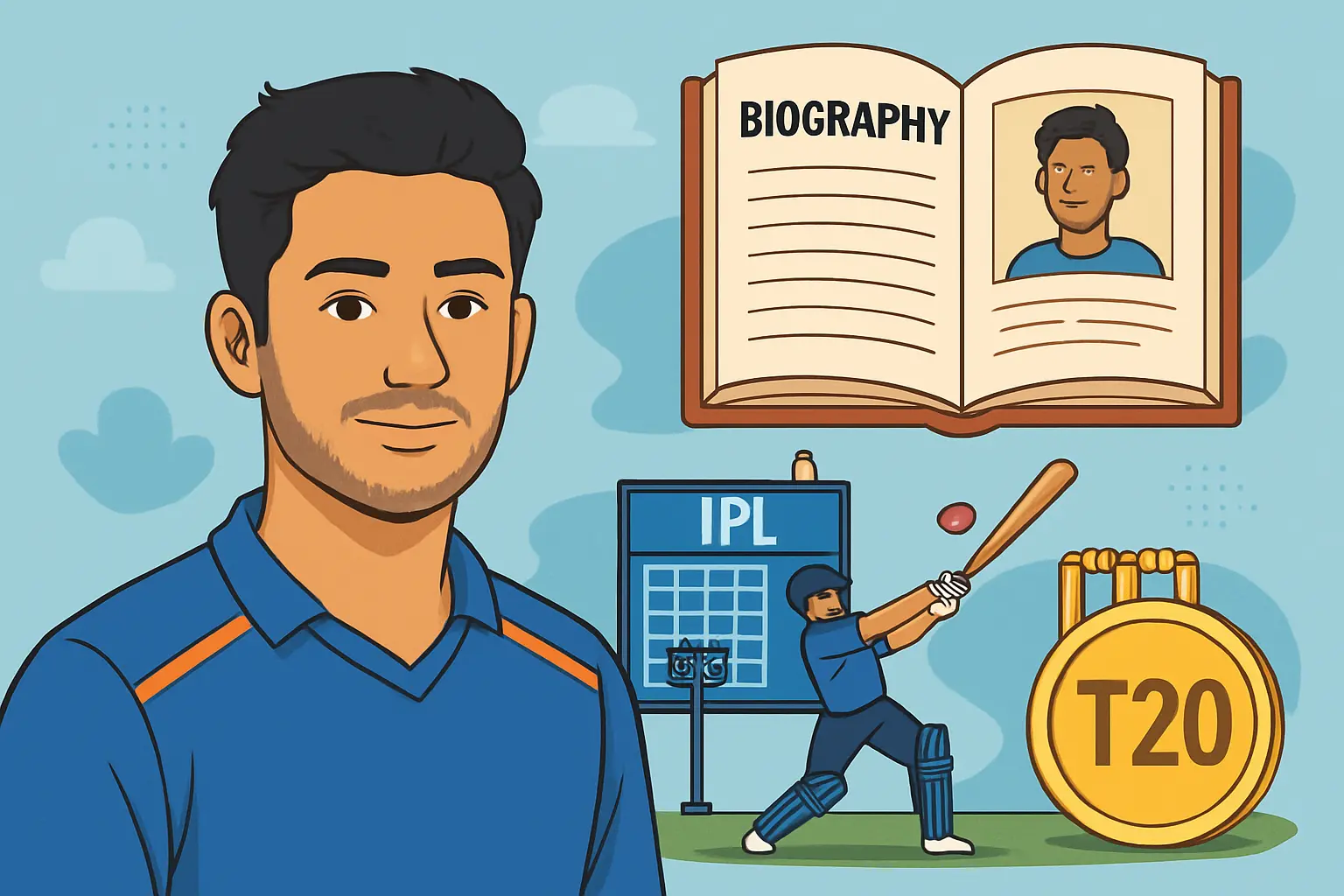

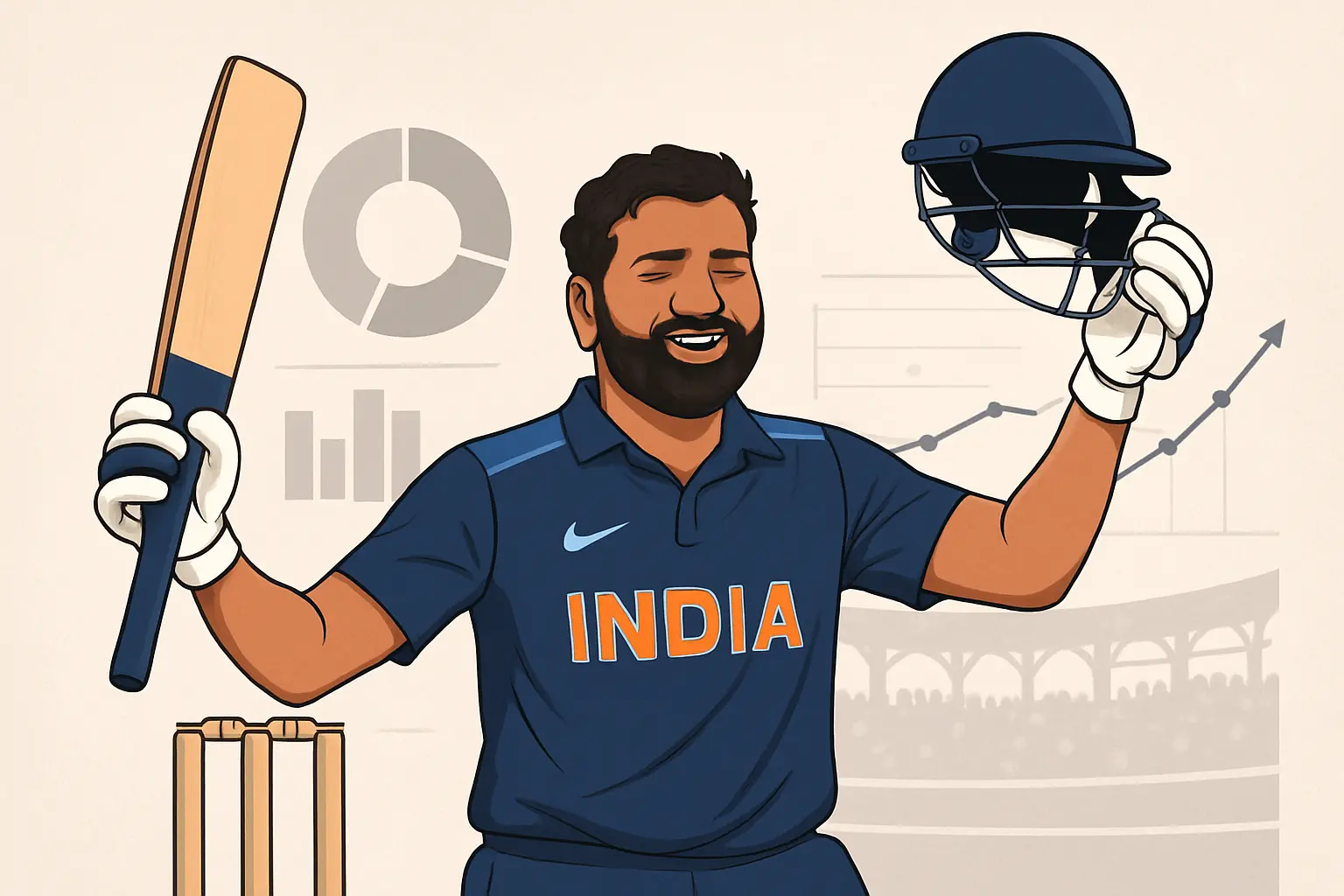
There’s a certain hush that travels across a stadium when Rohit Sharma moves from 90 to 100. This guide brings stats and the soul together — ODI hundreds, Test hundreds, T20I marks, IPL context, World Cup dominance, the 264, and the tactical DNA behind every ton.
Rohit Sharma centuries at a glance (formats, peaks, patterns)
Anchored by ODI hundreds, backed by Tests, punctuated by T20I marks.
ODI31 ODI centuries
Test12 Test centuries
T20I5 T20I centuries
IPL1 IPL century
WC7 World Cup centuries (all‑time record)
Double3 ODI double centuries (including 264)
Century blueprint: the build-up, the breakout, the brutality
Stage 1: Range‑finding through the powerplay
Early focus on lengths and angles: pick‑ups through midwicket, lofted extra‑cover when the seam falters, late cuts to third man. Against swing he leans and plays late, making movement look tame.
Stage 2: Screen, study, and surge in middle overs
Low‑risk middle phase: singles through midwicket off spin, short sweeps as field‑manipulation, head‑still lofts. Control of launch angles is the tell.
Stage 3: The press button for attack
One over often frees him — the fifth bowler or a tired left‑arm spinner. He forces captains into choices and raids the vacated boundary.
Reading variations and the wrist battle
Knuckleballs picked from splice and release; wristspin answered by early taps and rolled wrists against wrong’uns. Even violent hundreds rarely feel frantic — they’re accumulators’ work.
Rohit Sharma ODI centuries: the engine room of his legend
ODIs are Rohit’s richest terrain: denial early, domination late, conversions that turn good knocks into great innings. He inflates the innings until the hundred casually arrives.
- Powerplay patience: dot balls accepted to judge movement.
- Middle overs mastery: risk‑free scoring — back‑cuts, roll‑pulls, rotation into wide long‑off.
- Death overs brutality: bottom‑hand release, small shuffles to convert yorkers into half‑volleys.
Tests, T20Is, IPL and the World Cup spine
Test centuries
Measured, economical, with decisive footwork at spin. First thirty balls are judgmental; once set he opens the hands through cover selectively.
T20I centuries
Five T20I hundreds show speed without hurry: classical fifty then an eight‑ball stretch of carnage. Early reads of slower balls and wrist‑powered elevation are common.
IPL century
One IPL hundred is an outlier that highlights role constraints in franchise cricket — impact and titles over a volume of centuries.
World Cup hundreds
Seven ODI World Cup centuries — the all‑time record. Often scoreboard stewardship in chases and controlled violence when batting first.
Double centuries and the 264
Three ODI double centuries, including the 264 at Eden. That innings featured a cautious start followed by a sustained demolition: mid‑air pulls, reimagined gaps, and clinical execution against errant bowling.
Opponent signatures: how Rohit shapes knocks vs key sides
| Opposition | Signature / Moment |
|---|---|
| Pakistan | Asia Cup calm and World Cup command: lofted straight vs spin and decisive pull shots. |
| Australia | High gears — the 209 in ODIs shows measured to monstrous transformation; in Tests, grit once the ball softens. |
| England | T20I manifests range: inside‑out lofts, back‑cut mastery, seamers pushed wider. |
| South Africa | T20I reads and range; early knuckleball recognition and square/straight angles. |
| Sri Lanka | Venue of 264 and other 200+ knocks — reads spin early then punishes pace errors. |
| New Zealand | Straight hitting once set; pressure on back‑of‑length, pick‑apart square leg with roll‑pulls. |
| Bangladesh | Tournament stability: controlled chases and well‑weighted lofts. |
| West Indies | Range hitting with minimal effort in both ODI and T20I contexts. |
| Afghanistan | 63‑ball World Cup hundred — planning and power combined. |
Match contexts: chase vs batting first
In chases: maturity, rotation, refusal of early haste; uses one takedown over per twenty balls to make math friendly.
Batting first: hundreds often carry a second act — a late‑overs rampage that breaks the contest psychologically.
Latest hundred and the ‘today’ experience
When Rohit reaches fifty live, channels split feeds and the ritual begins. Typical arc: defensive ease early, a middle spell of 3 overs at 8–10 each, and a final seal via long‑off or deep midwicket.
Tables and tactical taxonomies
| Format | Centuries | Highest score / Notes |
|---|---|---|
| ODI | 31 | 264 — three double centuries; seven World Cup centuries |
| Test | 12 | 212+ — opening hundreds across varied conditions |
| T20I | 5 | 121* — format‑defining range |
| IPL | 1 | 109* — role‑driven approach |
Tactical taxonomy (summary)
| Type | Trigger | Signature shots |
|---|---|---|
| Anchor‑to‑Accelerator | Reading swing early | Late cut, straight loft |
| Spin‑Squeeze | Advance to length | Lofted straight, open‑face drives |
| Powerplay‑Pounce | Bowlers miss full or short | Pick‑up flick, pull |
| Chase‑Manager | Scoreboard control | Rotation, late onslaught |
How bowlers try — and often fail — to stop Rohit
- Wobble‑seam early: he leaves and waits; honest pitches only delay him.
- Tight off‑stump lines: he walks across and opens the off side or lofts straight.
- Packed leg side: he hits straight with open‑face lofts; mistakes go aerial but safe.
- Bouncer barrage: he rolls, rides and plays roll‑pulls; missed short balls clear fences.
Fitness, workload and peaking
Bat speed comes from a repeatable trigger and core balance. Recovery blocks precede purple patches; fresh returns show up early in the first ten overs of an innings.
Mini‑glossary and FAQ essentials
Glossary: pick‑up, inside‑out, roll‑pull, open‑face loft — key shot definitions that explain his scoring grammar.
FAQ essentials (facts)
- Total international centuries: 48 (ODI 31, Test 12, T20I 5).
- World Cup centuries: 7 — the tournament record.
- Highest ODI score: 264 (Eden Gardens).
- ODI double centuries: 3 (209, 264, 208*).
- Fastest World Cup hundred (for India): 63 balls.
How to read a Rohit century like a pro
- Start with boundary clusters — which overs and which bowlers.
- Track dot‑ball percentage in the first 30 balls — a guide to when the assault began.
- Pull vs drive ratio — clues about short vs full length bowling and how he punished it.
Editorial architecture & data sources
Suggested hub structure: pillar page with filtered clusters (format, opposition, venue, match situation). Primary data sources include ICC, BCCI, and verified ball‑by‑ball repositories; highlight video from official broadcasters.