
A practical guide that separates “smallest” by playing-area boundaries and by seating capacity, with takeaways for IPL/WPL, ODI/Test differences, and match-day tactics.
Introduction: Smallest means two very different things in cricket
Fans use “smallest cricket stadium in India” to mean either the ground with the shortest boundaries (where six-hitting thrives) or the venue with the fewest seats. Both are valid, both change over time, and both matter for tactics, selection, and broadcast narratives. This guide sorts those definitions cleanly and explains the caveats professionals live by.
It draws on match documentation, curator practice, and broadcast measurables to present ranges you can trust rather than single, brittle numbers.
Quick answer: smallest by boundary and by capacity in India
- Smallest by boundary (practical T20): Holkar Stadium, Indore and M. Chinnaswamy Stadium, Bengaluru most consistently produce the shortest effective boundaries in India. Wankhede (Mumbai) and SCA Stadium (Rajkot) often follow closely.
- Smallest by capacity (active international venues): HPCA Stadium, Dharamsala has the fewest seats among regular India internationals, followed by ACA–VDCA (Visakhapatnam) and SCA Stadium (Rajkot). Indore and Jaipur are also compact for seating.
Clarity: “By boundary” refers to rope distance from the pitch center; “by capacity” refers to spectator seats. Boundaries move with rope placement and pitch selection—think ranges, not absolutes.
Rulebook that controls “smallest”
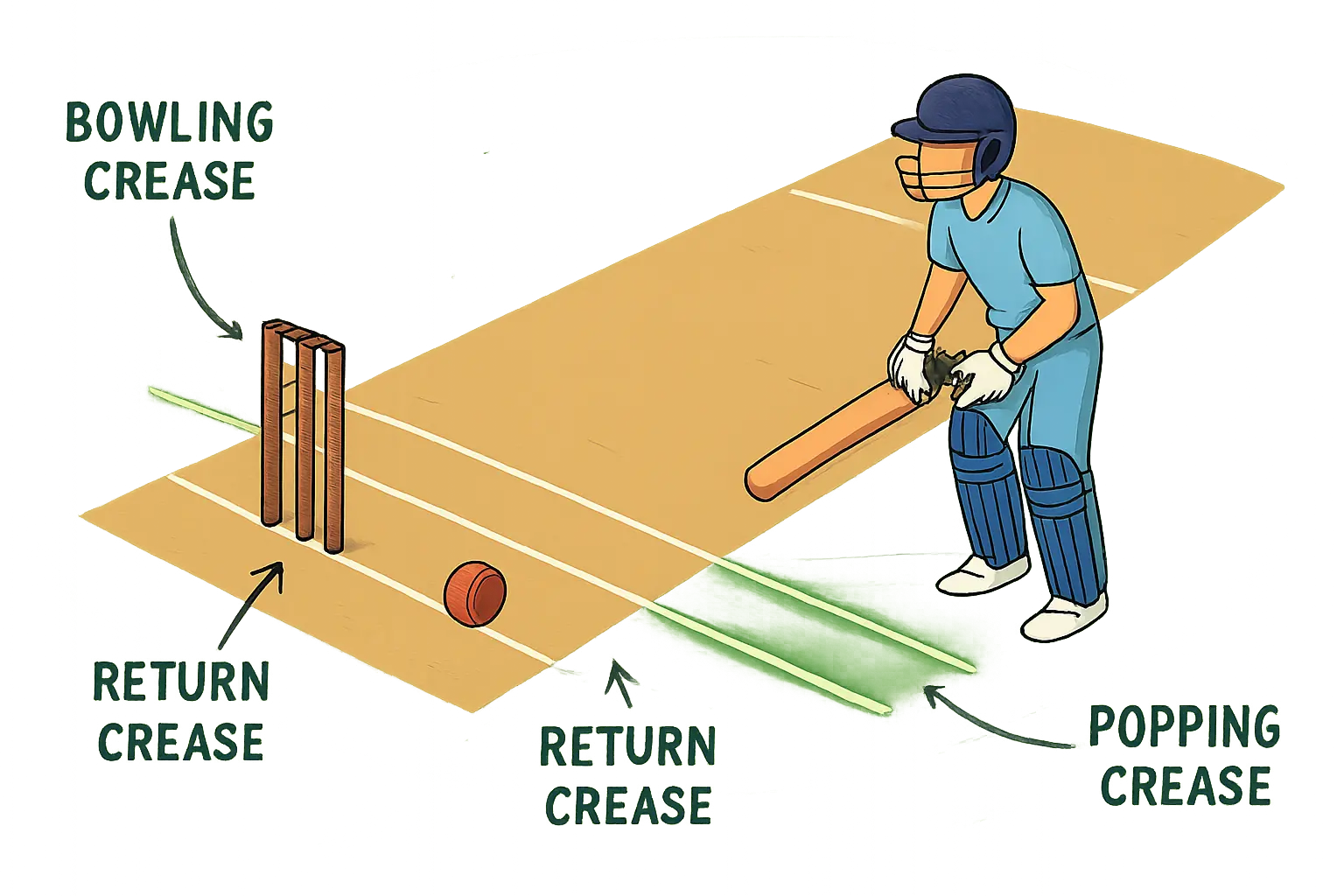
- ICC Playing Conditions set a minimum boundary of 59.43 m (65 yd) from pitch centre; maximum guidance is typically around 82.29 m (90 yd).
- Leagues (IPL/WPL) operate within those bounds; organizers may request adjustments for safety or infrastructure but the minimum still applies.
- Pitch position within the square matters: switching strips can shrink one square side and lengthen the other.
Why players and analysts separate “straight” and “square”
Boundaries form a rough ellipse. Teams model different arcs because one measurement does not tell the whole story:
- Straight: long-on to long-off (often 5–10 m longer than square).
- Square: cover/midwicket arcs—usually the shortest and the most influential for T20 hitting patterns.
- Fine-leg: can be extremely short if the pitch is placed toward one side.
Smallest cricket stadiums in India by boundary (typical T20/white-ball setups)
Holkar Stadium, Indore
Straight: 66–69 m (72–75 yd) • Square: 56–60 m (61–66 yd)
Why it plays small: shallow square pockets, fast outfield, batting-friendly pitches—one of India’s great six-fests.
M. Chinnaswamy Stadium, Bengaluru
Straight: 65–68 m (71–74 yd) • Square: 60–65 m (66–71 yd)
Why it plays small: altitude, flat T20 pitches, tight square angles—ideal for highlight-reel hitting.
Wankhede Stadium, Mumbai
Straight: 64–67 m (70–73 yd) • Square: 60–64 m (66–70 yd)
Why it plays small: compact bays, skiddy pace, sea breeze for extra carry—mishits still find the rope.
Other frequently compact venues
SCA Stadium, Rajkot — Straight: 66–69 m; Square: 60–64 m. Dry surface, inviting square pockets.
Barsapara, Guwahati — Straight: 66–70 m; Square: 60–64 m. White-ball prep and shorter square arcs make it high-scoring when scheduled.
Arun Jaitley, Delhi — Straight: 64–68 m; Square: 60–65 m. Rope placement varies; T20 setups can get cozy.
Sawai Mansingh, Jaipur / Chepauk, Chennai / ACA–VDCA, Visakhapatnam / MCA, Pune / Eden Gardens, Kolkata — mid-pack ranges with pitch personality driving scoring patterns.
Larger playing surfaces (e.g., Dharamsala, Hyderabad, Lucknow, Mohali) have longer straights and squares; altitude or outfield speed can still make them feel smaller.
Takeaways that help on match day
- Headline short grounds: Holkar (Indore) and Chinnaswamy (Bengaluru), especially square.
- Wankhede and Rajkot follow closely for T20 cycles; Delhi and Guwahati are situationally compact.
- Dharamsala is an outlier: larger numbers on paper, but thin air gives ball extra carry.
Smallest cricket stadiums in India by seating capacity
Practical seating estimates for cricket configurations (subject to renovation and event overlays):
| Stadium | Approx. Capacity | Notes |
|---|---|---|
| HPCA Stadium, Dharamsala | ~21,000 | Intimate mountain amphitheatre; fewest seats among regular internationals. |
| ACA–VDCA, Visakhapatnam | ~27,000 | Compact lower bowls with steep rake; loud atmosphere. |
| PCA IS Bindra, Mohali | ~27,000 | Low-lying oval; historic white-ball nights. |
| SCA Stadium, Rajkot | ~28,000 | Modern bowl, concentrated noise; batting-friendly. |
| Holkar Stadium, Indore | ~30,000 | Short squares and steep stands. |
| Wankhede Stadium, Mumbai | ~33,000 | Tiered acoustics; intense atmospheres on big nights. |
| M. Chinnaswamy, Bengaluru / MA Chidambaram, Chennai | ~38,000 (each) | Not tiny by seats but field-play often feels compact (Bengaluru). |
| Eden Gardens, Kolkata | ~66,000 | Giant by atmosphere; included for contrast. |
| Narendra Modi Stadium, Ahmedabad | Six-figure range | Largest in the world by seats. |
Verdict: smallest by seating among regular internationals — HPCA Stadium, Dharamsala. IPL-capacity smallest venues when scheduled: Dharamsala and Indore, with Vizag and Rajkot close behind.
IPL focus: stadiums with the shortest boundaries in the current cycle
The IPL magnifies stadium geometry. Across recent cycles, the reliable short-boundary venues have been:
- Bengaluru (Chinnaswamy) — square pockets often in the low-60s.
- Indore (Holkar) — square boundaries flirt with the ICC minimum in some setups.
- Mumbai (Wankhede) — shortish squares, evening carry.
- Rajkot (SCA) — dry, flat, square-friendly surfaces.
- Delhi, Guwahati — situationally compact when ropes are pulled in.
Bigger IPL bowls include Ahmedabad, Lucknow, Hyderabad, Mohali, and Thiruvananthapuram.
How boundaries get decided the week of the match
- Pitch strip chosen: which centre or outer pitch is used changes one side of the square.
- Rope line: set to meet ICC minimums while clearing sponsor boards and camera platforms.
- Format and overlay: white-ball nights often bring ropes in; Tests usually use larger arcs.
- Weather and outfield: dampness, grass length and dew forecasts influence rope decisions.
Impact on tactics and selection
- Power-hitting vs touch play: short squares push teams to select hitters who can repeatedly target 60–65 m arcs.
- Bowling plans: at Chinnaswamy/Indore bowlers pivot to cutters, yorkers and tightly disguised slower balls.
- Spin use: in larger venues captains deploy attacking spin more freely, trusting the long fence to contain mishits.
- Fielding lanes: one-short-side setups lead to early placement of deep point or deep square leg.
Why some grounds feel small even when numbers look average
- Altitude: Bengaluru and Dharamsala give extra carry to the ball.
- Microclimate: sea breezes (Wankhede) or dry desert air (Jaipur) assist carry.
- Outfield speed: slick, sand-based outfields turn twos into threes and let ground strokes race to the ropes.
- Ball hardness: fresh white balls on flat decks keep hitting distances high.
Deep-dive spotlights (selected)
Holkar Stadium, Indore
Square boundaries among the shortest used in top-tier Indian cricket. Bowlers vary lines and use angles; batters target slog-sweeps and pickup pulls. The rope is often drawn tight to advertising walls.
M. Chinnaswamy Stadium, Bengaluru
Tight squares and thinner air reward audacious hitting. Bowlers must be consistent with yorkers and wide lines; slow-ball mastery remains valuable.
Wankhede Stadium, Mumbai
Shortish squares and evening carry. Pacers use the new ball; batters hit on the up and capitalize during the late surge.
HPCA Stadium, Dharamsala
One of the larger playing surfaces on paper, but thin mountain air gives the ball unexpected carry—long chases require fielder effort on big boundaries.
Smallest by boundary vs by capacity — clean distinction
Boundary title shifts match to match, but Indore and Bengaluru most often produce the shortest effective T20 boundaries; by capacity, Dharamsala is the smallest regular international venue.
Hindi/Hinglish quick notes
- सबसे छोटी बाउंड्री (टी20 सेटअप): इंदौर (Holkar) और बेंगलुरु (Chinnaswamy) अक्सर सबसे छोटे माने जाते हैं; वानखेड़े और राजकोट भी पास आते हैं।
- क्षमता के हिसाब से सबसे छोटा अंतरराष्ट्रीय स्टेडियम: धर्मशाला (HPCA Stadium)।
- IPL के संदर्भ में सबसे छोटे ग्राउंड: Chinnaswamy और Holkar अक्सर सबसे छोटे दिखते हैं।
What “small” means for ODI and Test matches in India
- Tests usually use more generous ropes; boundaries expand a few meters across formats.
- ODIs are intermediate: sometimes ropes in, sometimes out—expect a balanced configuration.
- The IPL lens (tight ropes) doesn’t always describe ODI/Test setups at the same venue.
Minimum boundary size and why extremes are rare
ICC minimum: 59.43 m (65 yd) from pitch centre to rope. Organizers avoid this absolute minimum for safety, camera lanes, and aesthetic reasons—most T20 ropes live a few meters above minimum.
State-wise notes on small grounds (high level)
Quick regional pointers: Karnataka (Chinnaswamy) and Madhya Pradesh (Holkar) stand out for T20 boundary compactness; Himachal (Dharamsala) is smallest by capacity; Gujarat (Rajkot) often rewards stroke-makers; Maharashtra (Wankhede) and Rajasthan (Jaipur) produce timing-friendly nights.
Stadiums ranked by “shortness” for IPL-style hitting
Compactness ranking (typical T20 cycles):
- Holkar, Indore
- M. Chinnaswamy, Bengaluru
- Wankhede, Mumbai
- SCA, Rajkot
- Then: Arun Jaitley (Delhi), Barsapara (Guwahati), Sawai Mansingh (Jaipur), MA Chidambaram (Chennai).
Women’s cricket and WPL realities
WPL games use the same pitches and near-identical rope settings as men’s T20s. Boundary conversations and tactical implications are effectively the same.
Broadcast-friendly cheat sheet
- ICC minimum: 59.43 m (65 yd)
- India’s shortest practical T20 squares: Holkar ~56–60 m; Chinnaswamy & Wankhede ~60–65 m
- Typical straight at compact venues: 64–69 m
- Factors that shift ropes: pitch strip, sponsor boards, sight screens, safety, weather.
Myth-busting (short)
- Small ground = easy sixes every ball: False. Execution (yorkers, slow-balls, lines) still matters far more than geometry alone.
- Bigger ground = low totals: Not necessarily. Flat surfaces and quick outfields can still produce big scores.
Simple, fan-friendly rankings that hold up
By boundary compactness: 1) Holkar (Indore) 2) Chinnaswamy (Bengaluru) 3) Wankhede (Mumbai) 4) SCA (Rajkot). Larger: Dharamsala, Hyderabad, Mohali, Lucknow, Thiruvananthapuram, Ahmedabad.
By seating capacity (smallest regular internationals): 1) Dharamsala 2) Visakhapatnam 3) Mohali 4) Rajkot 5) Indore.
Final takeaway for fans and analysts
Smallest by boundary: Indore and Bengaluru lead the practical conversation for T20; Mumbai and Rajkot are close and Delhi/Guwahati are situational. Smallest by capacity among regular internationals: Dharamsala. Always confirm the pitch strip and rope line for the match—professionals do that before they set strategy, and so should savvy fans.