
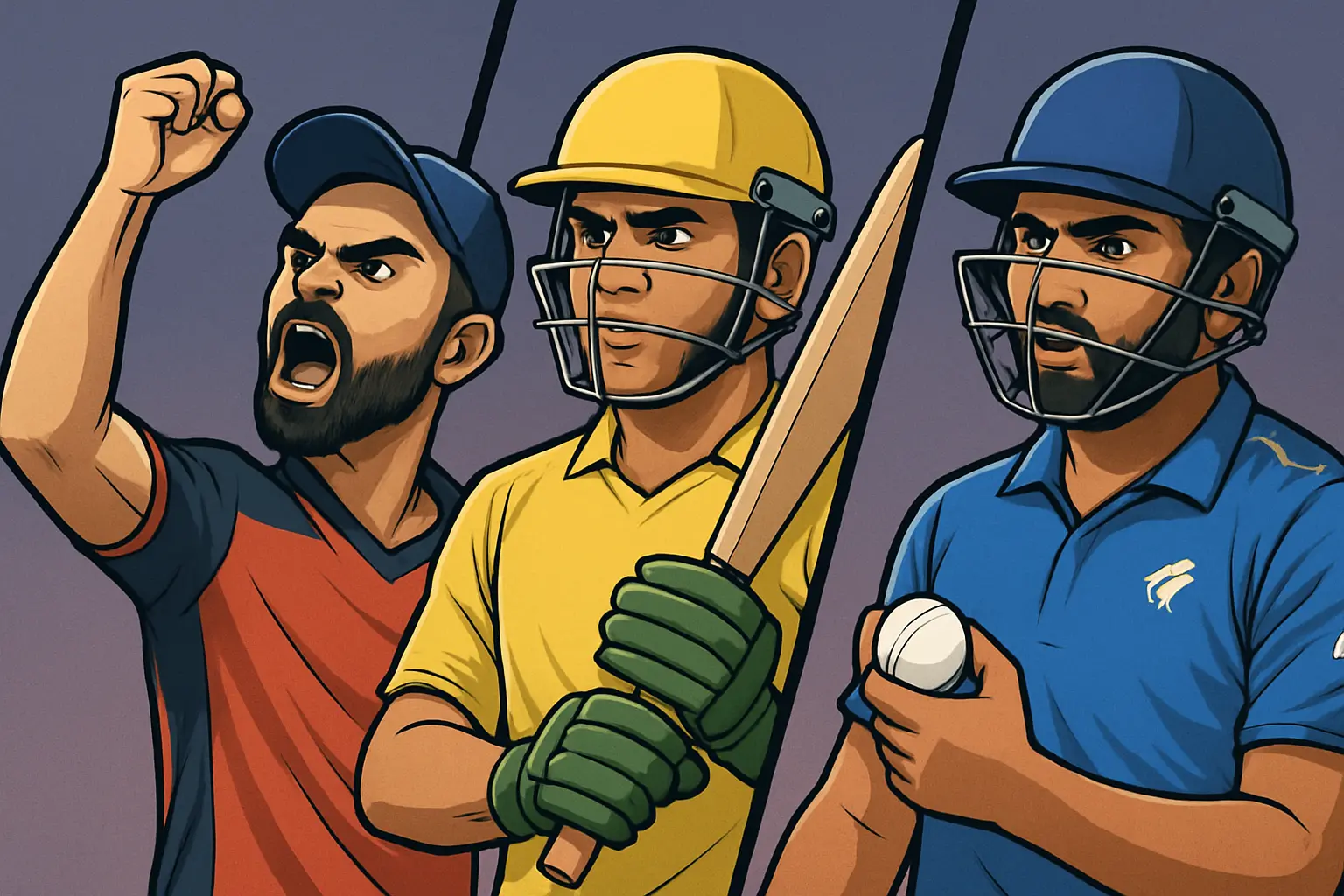
Short answer: there isn’t just one “king of IPL.” By role and by what you value, the crown shifts. Virat Kohli is the king of IPL batting and the all-time runs leader with the most centuries; MS Dhoni is the king of IPL captaincy and the finisher king; Rohit Sharma is the titles king with a dynasty-building resume as captain. Chris Gayle remains the sixes king; AB de Villiers is the clutch, 360-degree batting icon; Andre Russell is the power-hitting destroyer; David Warner is the most relentless opener; Yuzvendra Chahal leads all-time wickets; Jasprit Bumrah is the death-overs and yorker king; Lasith Malinga is the original death-bowling GOAT; Rashid Khan is the spinner king; Suresh Raina is Mr. IPL for consistency, fielding, and middle-overs mastery.
If all you wanted was the fastest, role-based answer to “IPL ka king kaun hai?” that’s it. If you want the why behind those calls—data, context, pressure situations, match-ups, and what separates the great from the immortal—read on.
King of IPL, Defined: Clear Criteria So the Word “King” Means Something
“King” is fan shorthand. But to treat it seriously, we set transparent criteria, using IPLT20.com and ESPNcricinfo as primary data sources and long-form match observations to judge context and pressure.
How we award “king” by role:
- All-time dominance: cumulative runs/wickets, milestones, awards, consistency across seasons and venues.
- Match situation value: impact in chases, powerplay vs death overs, playoffs and finals performance, winning contribution percentage.
- Rate plus volume: not just average or strike rate, but their combination over long sample sizes and against top oppositions and at tough venues.
- Role clarity: we split by batting phases (powerplay, middle, death), captaincy (titles, win rate, playoff conversion), bowling phases (new ball, middle, death), and fielding/wicketkeeping impact.
- Longevity and adaptability: sustained excellence across rule tweaks, pitch cycles, and evolving T20 strategy.
- Big moments: endgame composure, knockout temperament, and the “remember where you were” innings or spells.
King of IPL: At a Glance (By Role)
| Category | King (All-Time Lens) | Notables and Why |
|---|---|---|
| Batting (overall) | Virat Kohli | All-time runs leader, most centuries, freakish consistency, chases and volume across eras |
| Captaincy | MS Dhoni (with Rohit Sharma tied on titles) | Dhoni’s longevity, tactical clarity, and finisher aura; Rohit’s dynasty-building and knockout temperament |
| Titles as captain | MS Dhoni and Rohit Sharma (tied) | Era-defining leadership; elite playoff conversion |
| Sixes | Chris Gayle | Six-hitting mountain; strike rate terror; peak impact unmatched for top-order power |
| Power-hitting finisher | Andre Russell | Highest sustained late-over destruction when fit; bowlers plan weeks for him |
| Clutch batting | AB de Villiers | The 360-degree master; situational genius against pace and spin |
| Orange Cap magnet (opener) | David Warner | Relentless starts, elite SR+avg, repeat high-run seasons |
| Death-overs batting | MS Dhoni (historic), with AB/Russell/Pollard modern heavyweights | Finishing SR, boundary-per-ball, calm with 12+ needed |
| Powerplay batting | David Warner (all-time body of work) | New-ball dominance, field manipulation, keeps RR above par |
| Bowling (wickets all-time) | Yuzvendra Chahal | Longevity, leg-spin threat in every phase, wicket-taking engine |
| Death-overs bowling | Jasprit Bumrah (modern), Lasith Malinga (original) | Yorker accuracy, slower-ball deception, clutch overs in finals |
| Economy (spinner) | Rashid Khan | Pace-on leg-spin, length control, no release ball, elite E/R for huge samples |
| New-ball swing | Bhuvneshwar Kumar | The seam-shaper; PB phase control, knuckle-ball extension |
| Fielding (outfielder) | Suresh Raina | Positions everywhere, safest hands, saved runs worth wickets |
| Wicketkeeping | MS Dhoni | Lightning stumpings, angles with spinners, DRS mind, endgame calm |
All-Time Leaders vs Current-Form Kings
T20 is streaky, IPL doubly so. All-time kings own volume and legacy; current-form kings seize headlines with purple patches. Knowing the difference lets you argue at the pub without losing the plot.
Batting all-time vs current-form
- All-time: Virat Kohli for volume and hundreds; David Warner for opening stacks and Orange Cap consistency; AB de Villiers for clutch finishing and adaptability; Chris Gayle for sixes and fear factor.
- Current-form surges: Suryakumar Yadav’s middle-overs genius and pace hitting; Rinku Singh’s last-over calm; Nicholas Pooran and Tim David for end-overs muscle; left-handed openers who go hard from ball one for Sunrisers have redefined powerplay targets.
Bowling all-time vs current-form
- All-time: Yuzvendra Chahal for wickets; Lasith Malinga for death-overs template; Sunil Narine for an era of mystery spin; Dwayne Bravo for slower-ball mastery and finishing overs.
- Current-form surges: Jasprit Bumrah remains the no-math-needed death king; Rashid Khan continues to suffocate at any stage; Mohammed Shami’s powerplay spells scaled to new heights; left-arm quicks who angle across and hit the hip have become matchup nightmares.
Captaincy
- All-time: MS Dhoni and Rohit Sharma share the title ridge. Dhoni’s continuity, pre-field-setting reads, and long rope to roles make a machine hum. Rohit’s method in chaos—especially in playoffs—built a modern dynasty. Gautam Gambhir’s KKR run and Hardik Pandya’s rapid rise as a tactical leader round out the tier list.
- Current-form: Captains willing to chase matchups every over—floating batting orders, one-over bowling spells, funky fields for one ball—often get ROI. The template Dhoni refined is now league-wide table stakes.
The Case for Virat Kohli: King of IPL Batting
No player has written as many chapters in IPL batting as Virat Kohli. The milestones are public; the method is the secret sauce. He pairs a red-ball technique with white-ball intent: back-and-across trigger from a compact base, a high-elbow punch through the V that turns length balls into scorable singles, and a bat path aligned to midwicket that converts anything too straight into runs. In Bengaluru’s small boundaries and truer pitches, that turns into volume. In slow, tacky surfaces—Chennai, Lucknow, sometimes Delhi—he adapts with twos and inside-out lofts.
What separates him from every other accumulator is how his best peaks match the most fragile phase of a chase. Scoreboard pressure lives in the head; Kohli relocates it onto the bowler. During that famous run-chase phase where RCB needed 10+ per over from early, he did it not by slogging, but by building par-plus overs: boundary, single, single, boundary, single. Four balls, nine runs, and the chase math breathes. It’s pattern-recognition mastery. Fielders drift just a step and he follows the vacuum.
Centuries are the superficial crown. The sturdier one is his bank of 70s and 80s that stabilized an innings bleeding early wickets. He doesn’t need a six to change a match; he needs an angle: third man open with fine up, deep long-on too square, midwicket too deep for the double. He runs them into the ground and then picks his moment. That’s how all-time leaders are built in a tournament that eats you if you try to dominate every ball.
His rivalry with AB de Villiers is an entire T20 course: AB could lap-scoop the yorker and fabricate impossible fields; Kohli could bat as if there are always two gaps per ball. One made you feel cricket had new physics; the other reminded you that old physics, applied flawlessly, never goes out of fashion. In a league built on chaos, Kohli is the long arc bending towards control. That is why, for batting, he is the real king of IPL.
MS Dhoni: Captaincy King and Finisher King
Forget the highlight reels for a second. The Dhoni operation lives elsewhere: in the pre-over huddle, in the angle of a midwicket fielder for two balls only, in a 63-meter boundary targeted not for wickets but to starve a slog-sweeper of his favorite muscle memory. IPL captaincy at its best isn’t about eleven individual matchups; it’s one coherent story that ends with your bowler bowling his best ball to the batter least prepared to attack it. Dhoni does that with a patience borne from a thousand last overs.
Tactical trademarks:
- Squeeze overs: One left-arm orthodox or even a part-timer taking pace off the ball into the wicket, with deep midwicket and long-on set precisely for the mis-hit. Two overs there can cut 15 from a death-overs par.
- Role glue: Numbers don’t show how consistently fringe players deliver for him. A domestic seamer trusted for the 7th over suddenly becomes a PP specialist next game. He buys them belief and gives them spell fragments they can handle.
- Reading batters: He shifts a fielder a step—exactly a step—and a top edge lands there. That “luck” is the product of tape-room discipline and instincts sharpened over endless micro-scenarios.
And then the bat. The finisher king isn’t a strike-rate truck all game; he’s a closers-only specialist. Dhoni’s death-overs book is thumbnails: yorker turned into a length ball by a late step across, shoulder power into midwicket with zero bat flourish, and the most under-discussed shot—deep-late cut to split short third and deep point when pace-on arrives. Required 14 in the last over is not panic; it’s a solvable equation executed with wrists and ice.
Leadership is its own stat. He kept the same core, recycled veterans who still had T20 smarts, and resisted the temptation of trends. That’s why he remains the IPL’s captaincy king, even with Rohit Sharma right beside him on the titles podium.
Rohit Sharma: Titles King and Big-Game Navigator
Some leaders are systems thinkers; some are momentum whisperers. Rohit Sharma is both when the stakes rise. Titles don’t happen by accident. They arrive because of a few structural triumphs:
- Role fidelity: Under Rohit’s watch, MI got brutal about roles. The no. 7 hitter knew he was going to face 8–10 balls at the death; the no. 4 knew he might have to bat two overs against mystery spin every match. Bowlers were slotted by over numbers, not just phases.
- Playoff temperament: In knockout cricket, the first ten balls of a game decide tone. MI under Rohit often owned those ten—careful run-a-ball with a boundary option for the batters, or a surprise swing-over from someone like Boult or a hard-length over from a right-arm quick. It felt scripted because it was.
Rohit’s own batting has arcs—sometimes anchor, sometimes release valve between overs 7–10. But it’s the leadership that put him in the “king” debate. Titles are the language that settles the biggest rooms. On that axis, Rohit is the king of IPL alongside Dhoni.
Chris Gayle: Sixes King, Fear King
The first time you watch a bowler try to go across Gayle from over the wicket, you can feel the resignation. Short? He leans back, the bat arcs like a trebuchet, and third tier takes a souvenir. Full and wide? Those tree-trunk arms get out in front and he carves you back over extra cover anyway. He didn’t just hit more sixes; he unspooled bowling plans before the toss. Captains set deep square and long-on, and then watched the ball clear both. His one-man powerplay wins tilted entire Net Run Rate equations.
A crucial detail often missed: Gayle had gears. Against spin, especially off-spin, he could lower the backlift, play late, and then—when the bowler lost patience—detonate. He wasn’t just brute force; he understood the cost of a dot ball and the value of a single that flips strike on ball six. But when it was time for the king of IPL sixes to crown the night, even fielders stopped calculating angles. The ball left with its own weather.
AB de Villiers: Clutch King and Strike-Rate Genius
AB hit shots that don’t exist. That’s the cliché. The reality is more precise: he relocated bowler control. His method to take a Test-match yorker—a seven-out-of-ten ball in T20—and turn it into a three-out-of-ten ball was audacious leg movement and an ice-cold head. Deep midwicket? He’d scoop. Point open? He’d carve. Third man up? That was a boundary for later. His best IPL knocks weren’t just fast; they were timed to the hidden danger overs.
Every team has a collapse overs band. For some it’s 7–9 when spin enters, for others 13–15 when back-of-length into the pitch takes pace away. AB turned those collapse windows into restart windows. That’s clutch. You felt it most at the Chinnaswamy: bowlers heard the crowd and shortened length by one foot—just enough for him to roll wrists and elevate into the stands. In a tournament built around quicksand, AB brought the trampoline.
Andre Russell: Power-Hitting Warlord
If AB solved you, Russell dared you. Line and length have different meanings when a batter’s bat-speed shreds margin-of-error. Back of length at hip height? That’s his wheelhouse. Full with seam upright? His wrists turn it into flat missile. Captains learned to keep long-on and deep mid as straight as possible and pray for bottom edge. When he’s fit, he shifts par scores by 20. Bowlers bowl to him; teams plan for him.
There’s craft too: Russell often takes five to eight balls to see the deck. If it’s skiddy, he’s all bat. If it’s holding, he lays deeper, reads cutters off the seam, and still finds boundary count. Very few ever had such end-overs gravity. That’s why when fans shout “baap of IPL power-hitting,” his name arrives early.
David Warner: Opening King and Orange Cap Magnet
Warner’s genius starts in the first ten balls. He doesn’t block out positionally; he moves bowlers out of their comfort angles. He wants them to feel like they have to try something else, not because he smashed them, but because he made their best ball look scorable. Drop short: pull. Overpitch: carve or straight drill. He is also top-tier at tick-tock run-rate management—he steals eight-run overs when ten feels mandatory, then explodes when the matchup arrives. Over a long horizon, that yields more Orange Cap conversations than almost anyone.
IPL Bowling Royalty: Death, Powerplay, and the Art of Economy
Jasprit Bumrah: Death-Overs and Yorker King
Bumrah bowls time, not just balls. Batters set early for his pace; he defiantly takes it away with a late dipper. They wait for the slower ball; he hurries them with a hard length that climbs. The magic of his yorker isn’t just accuracy; it’s variability. Front-of-the-crease, angle across, or slightly fuller to take the heel of the bat—it’s all one ball with three worlds. In end overs, the batter must guess. Wrong guess is dots at a time when dots are death. That is why he is the king of IPL death bowling right now.
Lasith Malinga: The Original Death-Bowling GOAT
It’s fair to say the modern death-overs textbook has Malinga on page one. The sling created visual misreads; the seam position screamed yorker; the slower ball disappeared late. He won finals with single overs that felt like a coronation of craft. When captains say “yorker execution,” they still mean “as close to Malinga as possible.”
Yuzvendra Chahal: Wickets King and Middle-Overs Surgeon
Chahal is the only leg-spinner in league history who can oscillate between chip-away control and all-out wicket raids across venues. He doesn’t mind the occasional long ball if he’s setting the batter up for the next. Loop, dip, and just-enough pace on used pitches; quicker trajectories with stumps in play on true surfaces. The stat column says “wickets all-time”; the eye test says “fear of a release shot that never arrives.”
Rashid Khan: Economy King and Every-Phase Weapon
Rashid’s leg-spin plays like a fast bowler’s spell: hurry, seam, and late skid. He removes time. That’s why batters, even the great ones, check-swing into singles. Against him, batting units plan to “escape at 7s” and hope to target someone else. That acceptance—the idea that a 24-ball spell can flip win probabilities even with no wickets—crowns him the economy king.
Bhuvneshwar Kumar: Powerplay Maestro
If you’ve watched enough IPL mornings, you can spot the Bhuvi starter: seam a millimeter to the leg, wrists primed to shape back into the right-hander, and a length that threatens off stump while smelling pad. Openers start outside leg to counter and then get stuck. He expanded with knuckle variations and off-pace cutters later, but the pure new-ball swing is his emblem.
Sunil Narine: Mystery Age and Reinvention
For a long phase, Narine was a run-blockage machine. Even when actions were scrutinized and batters improved, he found defensive matchups and angles. Then came the batting reinvention atop the order. Very few have changed their IPL job profile so dramatically while remaining irreplaceable. He lives in the “all-time impact” conversation in both disciplines.
Fielding and Wicketkeeping: The Unseen Crown
Suresh Raina: Mr. IPL, the Fielding Standard
Raina’s Mr. IPL tag isn’t just for runs. He saved more runs than most bowlers created. Cut off fours at extra cover, sliding one-handed stunners at long-on, and relay catches with footwork that felt choreographed. He redefined what two points on the table can mean from fielding alone.
Ravindra Jadeja: Laser Arm, Impossible Angles
Jadeja closes run-out windows that do not exist for anyone else. His acceleration to the ball turns twos into ones, and ones into embarrassment. In T20, where a par score hinges on five swinging runs either side, Jadeja erases them.
MS Dhoni: Wicketkeeping Mind and Mechanics
Stumpings that look animated are, in truth, patience and hand speed. Dhoni’s most profound keeping skill is pre-knowledge: he calls the line for the leg-spinner a ball before, and adjusts body angle, not feet, so the gather is already squared. “DRS brain” is a meme because it shows up with costless, match-flipping precision.
How We Split “King of IPL” by Batting Phase
- King of IPL Powerplay (batting): David Warner for overall body of work; the template opener who built seasons off rapid, low-risk starts. In the more recent tactical shifts, ultra-attacking left-handed openers for Sunrisers and Royals have bent powerplay definitions and, on current form, sometimes outpaced even Warner’s standards on strike rate.
- King of Middle Overs (batting): AB de Villiers for role versatility and boundary creation without dot-ball taxes. Suryakumar Yadav now brings a similar quality, especially with open bat-face glide to third and deep-mid split.
- King of Death Overs (batting): MS Dhoni for historic finishing sample and success in chases; Andre Russell and Kieron Pollard as the era’s mightiest endgame bulldozers; Nicholas Pooran and Tim David among the newer sledgehammers who routinely turn 12-an-over into a flip.
How We Split “King of IPL” by Bowling Phase
- King of Powerplay (bowling): Bhuvneshwar Kumar for shaping games in the first dozen balls with a swinging ball and discipline. Mohammed Shami surged as a new-ball enforcer, hitting length with seam-shift that defeats drives and prods alike.
- King of Middle Overs (bowling): Yuzvendra Chahal and Rashid Khan headline different philosophies—leggies taking wickets through risk vs leggie-variant strangulation that denies options.
- King of Death Overs (bowling): Jasprit Bumrah and Lasith Malinga for yorker clinics; Dwayne Bravo for a slower-ball kata that baits power-hitters, and, in finals, wins you trophies.
Captaincy: Titles, Win Rates, and the Science of Trust
A captain’s KPIs in the IPL:
- Titles and finals: conversion in knockouts is the gold bar.
- Win rate: consistency across squads, pitch cycles, and auction reshuffles.
- Player development: the number of unearthed or revived players who become match-winners in defined roles.
- Tactical elasticity: quality of over-to-over changes, and how well the team flows into them.
- Calm under NRR stress: late-season clarity when margins are decimal places.
MS Dhoni vs Rohit Sharma
- Titles: tied at the summit; no one else has as many.
- Longevity vs burst: Dhoni oversees an empire across eras; Rohit’s surges coincide with MI dynastic peaks.
- Playoff persona: both are untouchable when momentum is theirs. Dhoni has the deeper continuity blueprint; Rohit has the sharper knockout silhouette.
Verdict: King of IPL captaincy? Dhoni for an all-encompassing body of work; Rohit as the titles king and playoff whisperer. Both wear crowns; they’re just cast differently.
All-Time vs Current-Form Recap: Who’s Wearing the Crown Right Now?
- All-time batting king: Virat Kohli
- All-time sixes king: Chris Gayle
- All-time clutch/360: AB de Villiers
- All-time finisher/captaincy aura: MS Dhoni
- All-time wickets: Yuzvendra Chahal
- All-time spinner economy: Rashid Khan
- All-time death bowler: Lasith Malinga
- Current-form death bowler: Jasprit Bumrah
- Current-form finishers to watch: Nicholas Pooran, Tim David, Rinku Singh
- Powerplay dynamos: David Warner’s evergreen template; a new breed of left-handed openers going berserk with hard hands and no fear
Team-Angled “King of IPL” Calls
- King of IPL CSK: MS Dhoni is both the soul and the strategist. Suresh Raina is Mr. IPL; Ravindra Jadeja the fielding sword; Dwayne Bravo the closing spellbook.
- King of IPL MI: Rohit Sharma as titles king; Jasprit Bumrah as the bowling heartbeat; Lasith Malinga as the original closer; Kieron Pollard for a decade of last-overs mayhem.
- King of IPL RCB: Virat Kohli is the batting monarch; AB de Villiers the clutch legend; Chris Gayle the festival; Yuzvendra Chahal the wicket engine during his stint.
- King of IPL KKR: Gautam Gambhir’s captaincy art; Sunil Narine a two-skill unicorn; Andre Russell the night-shifter; a certain lower-order finisher has turned miracles into a habit.
- King of IPL SRH: David Warner the Orange Cap magnet; Bhuvneshwar Kumar the swing prince; Rashid Khan their once-in-a-generation control unit; a modern middle-order powerhouse has made death overs glow orange again.
- King of IPL DC: Rishabh Pant as audacity incarnate; Shikhar Dhawan’s boundary banks; Amit Mishra’s grizzled leg-spin guile; Prithvi Shaw’s streaky but devastating starts.
- King of IPL RR: Jos Buttler as the hundred machine; Sanju Samson as the wristy anchor-power hybrid; Shane Watson’s foundational-era steel; a young left-hander has accelerated the new RR powerplay identity.
- King of IPL PBKS: KL Rahul’s purple patches as run machine; Shaun Marsh, an early baton bearer; Shikhar Dhawan’s veteran calm; bowlers flashing brilliance without sustained table-topping rhythm.
- King of IPL GT: Hardik Pandya’s fast-tracked leadership aura; Shubman Gill’s elegance and volume; Mohammed Shami’s new-ball teeth; Rashid Khan—wherever he is, he is a crown.
- King of IPL LSG: KL Rahul’s captaincy and opening bank; Marcus Stoinis the middle-overs plus finisher link; Ravi Bishnoi, an elastic wrist-spinner who lives between attack and choke.
Era-Wise Kings: How the Crown Moved Without Needing a Calendar
- The Foundational Era
- Big blades set the tone: Matthew Hayden’s brutal sweeps, Adam Gilchrist’s early takeovers, Shaun Marsh’s control. Malinga and Bravo wrote the closing gospel. Dhoni began crafting a habit out of chases.
- The Consolidation Era
- The middle became a battleground. Raina perfected the no-fuss 40. Gayle detonated. AB made the impossible routine. Narine and Mishra taught batters to fear 7–10. Rohit sculpted a dynasty blueprint while Dhoni kept refining a machine.
- The Tactical Acceleration Era
- Data-driven match-ups everywhere. Kohli reached all-time landmarks. Buttler reimagined the opener as a late-overs finisher too. Shami’s powerplay corridors sharpened. Bumrah became the bowler batters planned for and still failed against. Rashid Khan redefined “no release shot.” Teams experimented with left-handed PP surge merchants, and the par-score graph took the stairs.
The GOAT Conversation: King of IPL vs Mr. IPL vs Baap of IPL
- Mr. IPL: Suresh Raina fits the bill—batting glue, fielding standard, quietly reliable in big games, and the prototype of an IPL professional who doesn’t need the spotlight to move the needle.
- King of IPL: By fan momentum and statistical sovereignty in batting, Virat Kohli wears it. By leadership and finishing aura, MS Dhoni wears it. By titles construction, Rohit Sharma wears it. It’s not a cop-out—it’s a role-based crown.
- Baap of IPL: In common Hinglish chatter, that’s Dhoni—the father figure who built a franchise identity and made chaos look like a solved riddle. Some fans toss this at Rohit for building a modern juggernaut too. Both are fair.
Kohli vs Dhoni vs Rohit: Who’s the Real King?
- If the word “king” means runs, centuries, and sustained peak with the bat: Virat Kohli.
- If the word means captaincy, finishing under lights, and the aura that lifts ten others: MS Dhoni.
- If the word means titles and a dynasty that feasts in playoffs: Rohit Sharma.
My verdict as a niche analyst: there are three separate thrones. King of IPL batting? Virat Kohli. King of IPL captaincy and finishing? MS Dhoni. Titles king and knockout navigator? Rohit Sharma. If forced to pick one single name without qualifiers—an unkind simplification—Dhoni’s net impact on game outcomes and franchise identity across roles nudges him ahead. But the more honest answer is role-based royalty.
Deep Dives: The Edges That Made Them Kings
Kohli’s Chinnaswamy Method
- Line x Length grid: He treats a wide-on-6th stump full ball as a permission slip to thread cover. He treats back-of-length on middle as the two-run mine—tap into midwicket and run, run, run.
- Spin approach: Stays leg-side of the ball, lets it come, inside-out lifts. Doesn’t need slog sweeps unless the match demands acceleration.
- Endgame: Rarely brute-forces death overs; he front-loads the platform, trusts partners, and picks the one over to burst through.
Dhoni’s Finishing Geometry
- Feet quiet, head very still—his setup against pace is a masterclass in stillness under pressure.
- Situational shot map: He doesn’t pre-call a helicopter; he reads seam and field. A full ball at the toes becomes the classic swivel hit, but if the bowler goes back-of-length, he doesn’t chase—he prepares for the next one to be fuller.
- Cold algebra: If he’s at 18 off 12 and the set batter falls, he resets the chase in two balls. It’s not mythical. It’s math plus muscle.
Rohit’s Playoff Steering
- Rotation of bowlers: He’ll store an over from a particular seamer for a particular batter, purely for a one-ball bait shot. One shot, one wicket, match tilts.
- Batting tone: He’s happy being 15 off 15 if the field is set so the no. 3 walks into better conditions. People confuse strike rate with value; Rohit understands leverage.
AB’s 360-Degree Takeover
- Preemptive field read: Sees the third man’s depth, knows whether the scoop is a four or six, and whether it’s worth the risk. Plays for four if the deep fielder is square; plays for six if he’s fine.
- Tempo: Never the same accelerator position twice. He thrives in variable pace. That confuses captains relying on split-pattern data.
Gayle’s Six Physics
- Launch angle discipline: He doesn’t just hit hard; he picks trajectories that beat the deepest men. In small grounds, he hits through; in big grounds, he hits over.
- Spin plan: Doesn’t overcommit the front shoulder early. Weight transfer late, and boom—the sight screen has a bruise.
Bumrah’s Last Over
- Identity theft: He makes your best ball feel wrong. That’s the essence of elite T20 bowling.
- Field mapping: Long-off a step squarer, deep mid a step finer, third finer than normal—each a nudge that cuts a low-% swing.
Rashid’s No-Release Spell
- Grip reveals nothing; wrist speed makes the wrong ball feel like the right one.
- Even when he’s “off,” he’s on: misses by inches, costs you a single, not a four. The scoreboard thanks him quietly.
Pressure and Playoffs: Clutch King of IPL
It’s one thing to rack up stats in April. It’s another to walk into a qualifier with a sludgy pitch, dew flirting with one boundary, and your best hitter cramped. Clutch kings aren’t only the ones who hit the winning six; they are the ones who set the final to be a 160-game, not a 190-trap. Dhoni and Rohit as captains managed these oxygen levels. With the bat, AB and Kohli authored chases that changed team belief systems. With the ball, Malinga and Bumrah shrank overs into two-hit cages. That’s what “clutch king of IPL” should capture: not just the last over, but the ten overs that made the last one inevitable.
Orange Cap and Purple Cap: What They Tell Us, What They Miss
- Orange Cap tells you volume, not necessarily value-per-ball. Kohli and Warner are the rare ones who ace both.
- Purple Cap tells you wickets, not the quality of match situation. Chahal’s sample is so large, it bridges both; Bravo’s wickets lean death-heavy with high leverage; Malinga and Bumrah’s wickets changed finals.
What We Don’t Overrate
Empty-calorie runs at 10-for-2 when the chase is gone; strike-rate chases at 220 that balloon dot-ball pressure against spin; and bowling wickets on the wrong plan that cost 14 and two boundaries the next over. Kings add run probability, not just run counts.
Since-Then vs All-Time: Why Both Matter
The league is cyclical: new-ball shapes come and go; mystery spin waxes and wanes; some years batters feast on two-paced decks, others the white ball skids like a pinball. Anointing a single GOAT without watching these cycles is lazy. That’s why our crowns are role-based and era-aware. Kings aren’t seasonal meteors; they’re constellations—visible from anywhere in the league, through time.
FAQs: PAA-Style, Straight Answers
- Who is the king of IPL?
- By batting: Virat Kohli. By captaincy and finishing: MS Dhoni. By titles: Rohit Sharma. By sixes: Chris Gayle. By wickets: Yuzvendra Chahal. By death bowling: Jasprit Bumrah (modern), Lasith Malinga (original). By spin economy: Rashid Khan.
- Who is the real king of IPL and why?
- If “real” means single-name supremacy across leadership, finishing, and longevity: MS Dhoni has the broadest, deepest impact. If “real” means pure batting greatness and record peaks: Virat Kohli. The idea of “real” changes with what you value.
- Who is the king of IPL batting?
- Virat Kohli: most runs, most centuries, and match-shaping chases over a massive sample.
- Who is the king of IPL captaincy titles?
- MS Dhoni and Rohit Sharma are tied at the top for most titles as captain.
- Who is the finisher king in IPL?
- MS Dhoni historically; elite contemporaries include Andre Russell, Kieron Pollard, and AB de Villiers with different finishing styles. Among active late-overs aggressors, Nicholas Pooran and Tim David are recurrent threats.
- Who is the king of sixes in IPL history?
- Chris Gayle. The six-hitting bar he set remains the summit.
- Who is the yorker king of IPL?
- Lasith Malinga set the standard; Jasprit Bumrah owns it now with modern precision.
- Who is the spinner king of IPL?
- For economy and phase-proof effectiveness: Rashid Khan. For wickets and long-horizon menace: Yuzvendra Chahal.
- Who is the powerplay king of IPL (batting)?
- David Warner’s body of work leads; a new breed of explosive left-handed openers has added hyper-speed PP patterns in recent seasons.
- Who has the most runs in IPL history?
- Virat Kohli leads the all-time run charts.
- Who has the most wickets in IPL history?
- Yuzvendra Chahal tops the all-time wickets list.
- Who is called Mr. IPL and who is the king of IPL?
- Mr. IPL: Suresh Raina for consistency and fielding brilliance. King of IPL: depends on role—Kohli for batting, Dhoni for captaincy and finishing, Rohit for titles.
- IPL ka king kaun hai?
- Batting king: Virat Kohli. Captaincy aur finishing ka asli king: MS Dhoni. Titles king: Rohit Sharma. Sixer king: Chris Gayle.
- IPL ka baap kaun hai?
- In fan slang, MS Dhoni—because of leadership aura, finishing, and franchise identity.
- IPL me yorker king kaun?
- Jasprit Bumrah now, with Lasith Malinga as the blueprint.
- Who is the best death bowler in IPL right now?
- Jasprit Bumrah, with daylight behind him when he’s in rhythm.
Final Take: The Crown Is a Circle, Not a Point
The “king of IPL” conversation is lively because the league isn’t a single theater. It’s a mosaic of roles, eras, and game states. Kohli owns the batting crown through volume and centuries; Dhoni bends captaincy and finishes to his will; Rohit lifts trophies like a habit; Gayle’s sixes still echo; AB’s clutch work made impossible look routine; Russell terrorizes death overs; Warner manufactures Orange Cap seasons from first overs; Chahal and Rashid king the spin economy of wickets and run choke; Bumrah and Malinga turned the last over into art.
Pick your king. Or better, pick your throne. In this league, royalty is plural—just like the ways to win.