Last updated: December
Quick answer first
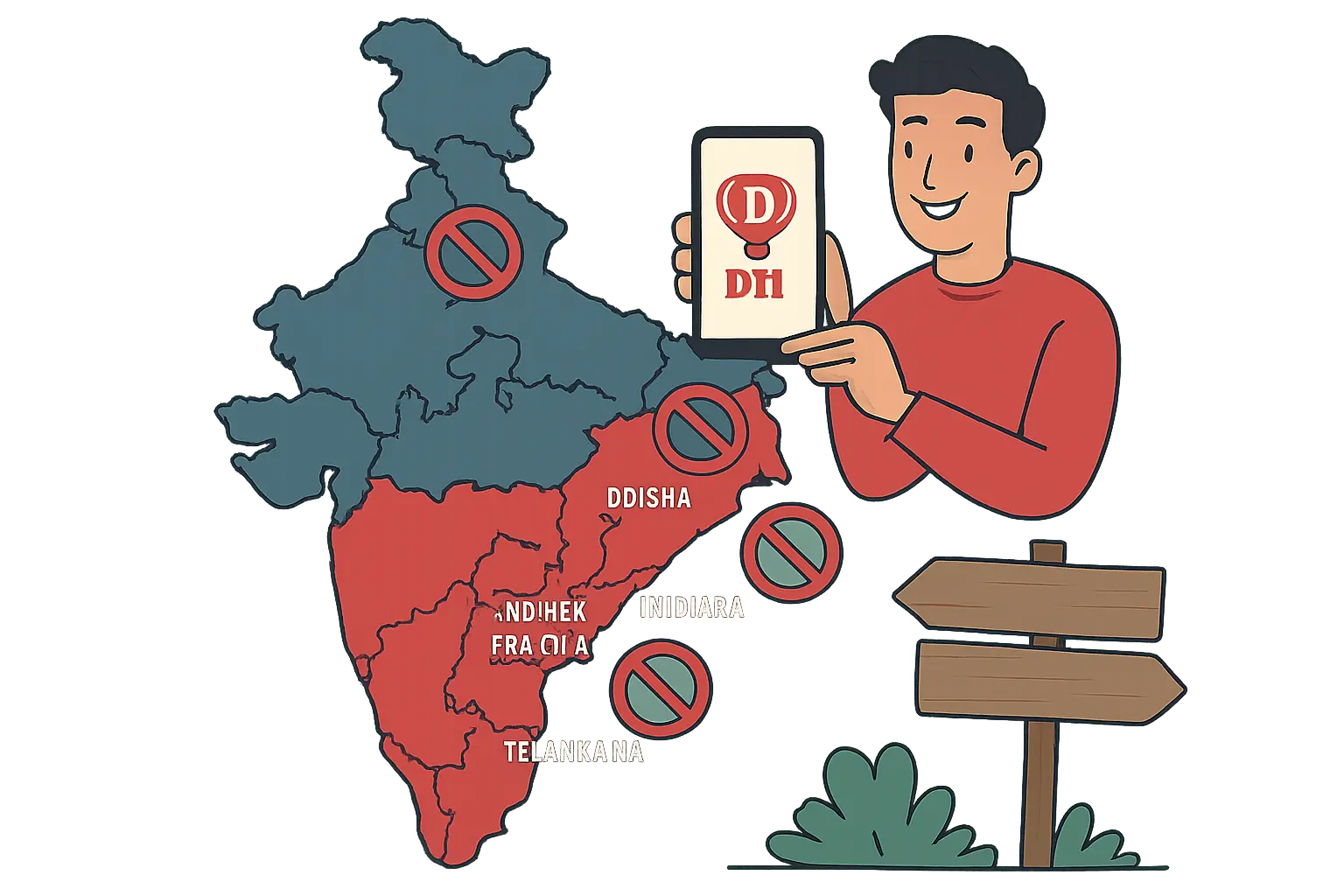
Dream11 paid contests are currently restricted in the following Indian states and regions:
- Assam
- Odisha
- Telangana
- Andhra Pradesh
- Nagaland
- Sikkim has appeared historically in some lists; the status may vary depending on licensing and platform policy
Important: availability can change with state notifications, court orders, or platform policy updates. Always cross-check the official source before you play. Verify the latest list on the Dream11 Help Center: https://help.dream11.com/hc/en-us.
Introduction: clarity for the fan who plays with strategy
Fantasy sports in India runs on nuance. Fans who study pitch maps, death-overs economy, and left-arm orthodox matchups often approach Dream11 as a skill game where research matters more than luck. Yet the legality question keeps surfacing, especially during big tournaments, when someone traveling to Hyderabad suddenly sees “location restricted” or a friend in Bhubaneswar cannot enter a paid contest. This guide delivers a clean, up-to-date view of Dream11 banned states, why those restrictions exist, and what it means when you travel, join a public contest, or try to withdraw. It is written from the perspective of someone who follows both cricket and policy closely—reading court orders in the morning, scouting probable elevens in the evening.
This article is for information only. Always check the Dream11 app/help center and local laws for the latest rules.
Dream11 restricted states: the concise list
Dream11 paid contests are restricted in:
- Assam
- Odisha
- Telangana
- Andhra Pradesh
- Nagaland
- Sikkim may appear in some historical or policy contexts; status can vary
The platform’s free-to-play offerings and other products may be treated differently by Dream11. Availability depends on your location at the time of joining a contest, not just on your registered address.
Why these states are restricted: the skill-versus-chance backdrop
Understanding the restricted list starts with India’s constitutional design. “Betting and gambling” are state subjects. That means even if courts recognize fantasy sports as a game of skill, a state legislature can still draft a law that captures or excludes certain online games, defines “wagering” broadly, or requires licenses. Dream11, in turn, calibrates access to paid contests to remain compliant with each state’s law and enforcement climate.
Courts across multiple jurisdictions have recognized that fantasy sports, when structured like Dream11—where users pick virtual teams within constraints and the outcome turns on skill elements such as player form, selection strategy, and budget trade-offs—qualify as games of skill. Names that matter:
- The Punjab & Haryana High Court in the Varun Gumber case recognized Dream11’s format as predominantly skill-based.
- The Bombay High Court in Gurdeep Singh Sachar’s matter addressed the game-of-skill nature and the tax treatment of platform fees in the context of fantasy contests.
- The Rajasthan High Court and later the Supreme Court, through orders refusing to interfere with the reasoning in these judgments, bolstered the view that fantasy sports of this structure fall under the “skill” side of the line.
Even with this trajectory, states retain the power to restrict online real-money contests that they perceive as falling under their gaming statutes, whether because of how “wagering” is defined, how “prize” is interpreted, or how “online games” are regulated. Each restricted state has its own legislative path to the same practical result: Dream11 chooses not to offer paid contests there.
A state-by-state explanation of restrictions
- Assam: The Assam Game and Betting Act has historically carried a very expansive approach to wagering, creating compliance uncertainty for any real-money game, including skill formats. Dream11 restricts paid contests for users located in Assam.
- Odisha: The Orissa Prevention of Gambling Act uses broad terminology, which has led many fantasy operators to maintain conservative policies, restricting paid contests to avoid exposure.
- Telangana: Amendments to the Telangana Gaming Act introduced tight prohibitions and made online games played for stakes problematic. Dream11 blocks paid contests in Telangana as a matter of compliance.
- Andhra Pradesh: Amendments to the Andhra Pradesh Gaming Act expanded restrictions to online gaming for stakes. Paid contests are not available to users when physically located in Andhra Pradesh.
- Nagaland: Nagaland created a licensing framework for online games of skill, but the practical licensing conditions and applicability to nationwide platforms led several fantasy operators, including Dream11, to restrict paid contests there.
- Sikkim: Sikkim regulates online gaming through a licensing model originally designed for intranet-based offerings within Sikkim. This has produced an evolving compliance interpretation across operators. Dream11 historically has taken a cautious stance, and Sikkim may appear in restricted contexts. Always verify the current status on the official help page.
What about free contests and practice play
Dream11 sometimes offers free contests that don’t involve entry fees or cash prizes. Whether those free contests are accessible in a restricted state depends on platform policy and how a state frames “prize,” “stakes,” or “gaming.” It’s common to see free-to-play content available even where paid formats are restricted, but count on the app to be your source of truth. If the app shows “join” enabled in a restricted state for a free contest, that reflects Dream11’s current policy assessment.
Travel, relocation, and location-restricted messages
Dream11 verifies location at the moment you try to join a paid contest. If you’re in a restricted state—even for a layover—you will see a location restriction and won’t be able to enter paid contests while you remain there. Once you’re back in a permitted state, paid contest access returns. A few practical realities:
- KYC and state verification: Your KYC (PAN/Aadhaar, bank) verifies who you are; location services verify where you are. Passing KYC does not override a location ban.
- Withdrawals: In most cases you can withdraw existing, cleared winnings even if you are presently located in a restricted state. The app will indicate if any additional verification is needed or if there’s a hold under compliance checks. If in doubt, refer to the official help center and your account dashboard.
- Deposits and add cash: Adding money or joining paid contests is typically disabled when you are physically present in a restricted state.
- Travel anomalies: If you cross a state border mid-day during a tournament window, contests you joined earlier from a permitted state will continue. However, new paid entries are blocked until you are back in a permitted state and the app confirms your current location.
State-by-state legal status snapshot
The following snapshot summarizes the common Dream11 stance seen on the app and help center. Enforcement climates and interpretations can shift, so treat this as a guide and verify inside the app before joining paid contests.
- Andhra Pradesh: Restricted for paid contests. Broad online gaming prohibitions trigger the block.
- Arunachal Pradesh: Generally permitted for paid contests. Verify in-app.
- Assam: Restricted for paid contests due to expansive anti-gambling framework.
- Bihar: Generally permitted for paid contests. Verify in-app.
- Chandigarh: Generally permitted for paid contests. Verify in-app.
- Chhattisgarh: Generally permitted for paid contests. Verify in-app.
- Delhi: Generally permitted for paid contests. Verify in-app.
- Goa: Generally permitted for paid contests. Despite a strict gambling statute, fantasy sports operators typically allow access here based on skill jurisprudence; always verify in-app.
- Gujarat: Generally permitted for paid contests. Verify in-app.
- Haryana: Generally permitted for paid contests. Verify in-app.
- Himachal Pradesh: Generally permitted for paid contests. Verify in-app.
- Jammu & Kashmir: Generally permitted for paid contests. Verify in-app.
- Jharkhand: Generally permitted for paid contests. Verify in-app.
- Karnataka: Generally permitted for paid contests. Earlier online gaming restrictions were struck down; Dream11 access is commonly available. Verify in-app.
- Kerala: Generally permitted for paid contests. Prior controversies around online rummy do not typically affect fantasy sports. Verify in-app.
- Ladakh: Generally permitted for paid contests. Verify in-app.
- Madhya Pradesh: Generally permitted for paid contests. Verify in-app.
- Maharashtra: Generally permitted for paid contests. Verify in-app.
- Manipur: Generally permitted for paid contests. Verify in-app.
- Meghalaya: Generally permitted for paid contests. The state’s licensing regime for certain gaming formats does not typically capture skill fantasy contests; verify in-app.
- Mizoram: Generally permitted for paid contests. Verify in-app.
- Nagaland: Restricted for paid contests given the licensing framework and operator policy.
- Odisha: Restricted for paid contests due to statutory breadth.
- Puducherry: Generally permitted for paid contests. Verify in-app.
- Punjab: Generally permitted for paid contests. Verify in-app.
- Rajasthan: Generally permitted for paid contests, consistent with court recognition of fantasy as skill-based; verify in-app.
- Sikkim: Often treated cautiously by operators; status may vary. Verify in-app.
- Tamil Nadu: Generally permitted for paid contests. Fantasy formats categorized as skill are commonly available; verify in-app.
- Telangana: Restricted for paid contests due to stringent amendments.
- Tripura: Generally permitted for paid contests. Verify in-app.
- Uttar Pradesh: Generally permitted for paid contests. Verify in-app.
- Uttarakhand: Generally permitted for paid contests. Verify in-app.
- West Bengal: Generally permitted for paid contests. Verify in-app.
A compact reference table
| State | Paid contests on Dream11 | Rationale/notes |
|---|---|---|
| Assam | Restricted | Broad anti-wagering framework |
| Odisha | Restricted | Wide definition of gaming |
| Telangana | Restricted | Tight prohibitions on online games for stakes |
| Andhra Pradesh | Restricted | Online gaming restrictions extended to stakes |
| Nagaland | Restricted | Licensing framework; operator policy to restrict |
| Sikkim | Variable | Licensing context; verify in-app |
| Most other states/UTs | Generally permitted | Skill-game jurisprudence supports availability; verify in-app |
Skill, not chance: how fantasy team-building works in practice
A typical Dream11 contest asks you to pick a virtual XI within a budget cap, balancing form, role mix, and matchup nuance. The difference between a casual lineup and a studied one sits in:
- Role balance: Two all-rounders versus a fifth bowler depending on venue and death-overs trends.
- Opponent-specific splits: Left-hand batters at Chepauk versus high-quality off-spin, or wrist-spinners neutralizing middle-over accumulation at Ahmedabad.
- Toss and conditions: Late-evening dew changing the value of chasing batters and negating grip for finger spinners.
- Fielding points: High-catch probability positions during powerplays increasing the floor of certain players.
Each of these is a skill decision embedded in pre-match research. That’s why Indian courts have consistently placed formats like Dream11 on the skill side of the line.
Why some states still say no
Legislatures in restricted states have taken a risk-averse approach toward all online games for stakes, often using wide phrases like “gaming,” “wagering,” and “instruments of gaming.” Even if a game is predominantly skill-based, a statute can still capture it by equating any stake-based competition with gambling or by ignoring the skill/chance distinction for online formats. Operators respond by withdrawing paid contests from such states to avoid legal exposure and to respect local policy choices.
What happens to winnings and withdrawals
- Cleared winnings usually remain eligible for withdrawal even if you travel to or live in a restricted state. The app may still allow withdrawals while blocking new paid entries. In rare instances, additional verification or bank checks can delay payout timelines.
- Bonus cash and other promotional balances follow the platform’s standard terms regardless of location.
- If your withdrawal attempt shows an error, it is typically because of incomplete KYC, bank verification mismatches, or system-wide maintenance. The restriction status of your current location is not, by itself, a reason for forfeiting prior winnings.
Location errors and geofencing
The app determines your location using device GPS and network signals. If you are near a state border, in a poor reception zone, or using a device with disabled location services, you might see a location-restricted message even inside a permitted state. Enabling accurate location services and retrying once reception improves generally resolves false flags. The platform does not permit methods intended to disguise location.
Free contests in restricted states
Free or practice contests may be offered at the platform’s discretion in restricted states, especially during major tournaments when engagement peaks. These carry no entry fees and may offer non-cash rewards or leaderboard recognition. The key point is that free access is a policy choice, not a legal green light for paid formats.
Tax and pricing: what the GST change means on the ground
India’s GST Council moved online gaming into a higher tax bracket applied on face value. For a player, the practical effects show up in three ways:
- Entry fee composition: The total you pay may be split between contest prize pool, platform fee, and applicable taxes, with the GST portion baked into or displayed alongside the platform fee in invoices or statements.
- Contest economics: Platforms often adjust rake, minimum entry thresholds, or prize pool distribution to account for the higher tax incidence, keeping contest attractiveness viable while staying compliant.
- Transparency: Invoices, account statements, and TDS certificates display the tax components more explicitly than before. High-volume players should regularly download statements for record-keeping.
Compliance layers beyond state law
Several industry bodies push for responsible and compliant growth:
- Federation of Indian Fantasy Sports (FIFS) publishes a charter of fair play, age restrictions, and grievance procedures for member platforms.
- All India Gaming Federation (AIGF) pushes for self-regulation, independent audits, and uniform standards.
- The central government has introduced due-diligence obligations for online gaming intermediaries under information-technology rules, including grievance officers, user verification, and compliance reporting. These obligations stack on top of state law.
Recent legal and policy milestones that shape access
- High courts recognized fantasy contests like Dream11 as games of skill based on lineup construction, budget constraints, and performance metrics.
- The Supreme Court declined to interfere with judgments upholding the skill-based nature of fantasy sports, effectively letting them stand.
- Certain states enacted or amended gaming laws to capture online gaming for stakes, irrespective of the skill element, prompting platform-level restrictions.
- The GST Council raised the tax incidence on online gaming on a face-value basis, shifting platform economics and fee displays.
- The central government notified online-gaming due diligence rules, creating transparency requirements for grievance redressal, KYC, and compliance audits.
Real-life scenarios from tournament season
- The traveling fan: A Mumbai-based user who enters contests daily travels to Hyderabad for a two-day meeting. On landing, he can still edit lineups for contests he joined earlier, but the “Join” button for new paid contests is now disabled. He can withdraw cleared winnings if needed, but he can’t add cash or join until he returns.
- The border-town glitch: A user living near the Maharashtra–Telangana border finds the app occasionally throws a location-restricted flag during monsoon when GPS signals are weak. Moving into better reception or enabling precise location resolves it; joining from inside Telangana remains blocked.
- The student’s free-play week: A student visiting Bhubaneswar for a cultural festival opens the app and sees free contests for certain matches. He participates for fun, follows live fantasy points, and learns roster balancing—without any paid entries.
State-by-state mini-briefs
-
Assam
The statutory language in Assam treats stake-based games conservatively. Fantasy operators restrict paid contests to remain fully compliant. Sports engagement is vibrant in Assam, but online real-money gaming faces constraints.
-
Odisha
Odisha’s law sweeps broadly and does not distinguish online skill games clearly in the context of stakes. Fantasy platforms typically maintain a blanket restriction on paid contests for users located in the state.
-
Telangana
Subsequent amendments tightened the Telangana Gaming Act and explicitly targeted online gaming for stakes, pushing all major operators to block paid contests. This remains one of the strongest geofences in the country.
-
Andhra Pradesh
Amendments to the AP gaming law created a similar effect to Telangana, making online stake-based formats off-limits. Operators, including Dream11, uniformly restrict paid contests.
-
Nagaland
Although Nagaland pioneered licensing for online games of skill, compliance alignment between nationwide operations and state-level license conditions has been complex. Dream11 restricts paid contests as a conservative policy.
-
Sikkim
Sikkim’s online gaming regulation originally envisaged intranet-style, within-state offerings. National fantasy operators treat Sikkim cautiously. Dream11’s policy toward Sikkim may shift based on licensing and interpretation; always check the app.
-
Karnataka
A statewide restriction on online gaming once created ripples, including temporary disruptions. That law was later struck down by the high court, and fantasy operators resumed normal access. Dream11 paid contests are commonly available when you are in Karnataka.
-
Tamil Nadu
Multiple legal rounds have refined the state’s position on online games. Current practice is that Dream11 paid contests are accessible, grounded in the skill-game jurisprudence. Always verify in-app before joining.
-
Kerala
Controversies around card games and online rummy do not generally apply to fantasy sports. Dream11 paid contests are usually available.
-
West Bengal
Fantasy sports are treated under the skill game umbrella for practical purposes. Dream11 paid contests are typically accessible.
-
Maharashtra
Mumbai’s massive fantasy-sports community runs on open access to paid contests, with Dream11 operating normally subject to standard KYC and age rules.
-
Delhi
Paid contests run as expected, with full KYC and compliance layers in place.
-
Gujarat
Despite stricter legacy gaming laws, fantasy sports are commonly available due to the skill-game classification. Verify in-app.
-
Rajasthan, Punjab, Haryana, Uttar Pradesh, Madhya Pradesh, Bihar, Jharkhand, Chhattisgarh, Uttarakhand, Himachal Pradesh, Goa, Meghalaya, Manipur, Mizoram, Tripura, Arunachal Pradesh, Jammu & Kashmir, Ladakh, Puducherry
Dream11 paid contests are generally available. Local law and platform policy always apply; check availability in-app before entry.
Responsible play, eligibility, and KYC
- Age and eligibility: Entry to paid contests is limited to users above the legal age as defined in platform terms. Always respect the age threshold.
- KYC: PAN and bank verification ensure winnings are paid to the right person and support tax compliance. KYC must be completed before withdrawals.
- Self-controls: Most platforms offer deposit limits, break reminders, and self-exclusion options. Use them. The difference between good strategy and compulsive play is discipline.
- Location compliance: Geofencing is a legal requirement for operators. Attempts to disguise location violate the terms and can lead to account restrictions.
How Dream11 handles contests, entries, and prize pools
- Contest locks: Once a match locks, edits stop. If you created entries from a permitted state, those entries stand even if you later travel to a restricted state.
- Private contests: Creating private pools follows the same geolocation rules as joining public ones. If you’re in a restricted state, creation is blocked.
- Prize distribution: After match completion and score verification, prize pools pay out to winners automatically. Platform fees, TDS on high-value winnings, and GST are handled per the terms and applicable law.
Comparative note: other fantasy and real-money apps
Most large fantasy platforms follow the same state restrictions as Dream11 for paid contests:
- MPL, My11Circle, MyTeam11, and others usually block paid entries in Assam, Odisha, Telangana, Andhra Pradesh, and Nagaland. Sikkim may be treated variably depending on licensing interpretations.
- Rummy and poker platforms have their own legal contexts and should not be conflated with fantasy sports. Laws that target card games sometimes do not apply to fantasy contests—and vice versa.
Glossary for clarity
- Game of skill: A game where success depends mainly on superior knowledge, judgment, or strategy. Courts have treated fantasy sports as skill-dominant.
- Game of chance: A game where luck predominates. Traditional lotteries and certain card games fall here depending on context.
- Stake: Any monetary consideration put at risk for the chance of winning a prize.
- Rake/platform fee: The fee taken by the platform to host contests, cover operations, and comply with taxes.
- TDS: Tax deducted at source on certain winnings thresholds. Visible in your statements when applicable.
- KYC: Know Your Customer verification, generally via PAN, bank account, and sometimes Aadhaar.
- Geofencing: Restricting access to features based on user location.
Local-language cues to help you find the right information
Many users search in local languages. Including these variations helps you verify information quickly:
- Hindi: Dream11 किन राज्यों में बैन है, Dream11 कानूनी है या नहीं, Dream11 प्रतिबंधित राज्य सूची
- Tamil: Dream11 எங்கு தடை, Dream11 தமிழகத்தில் லீகala
- Telugu: Dream11 ఏ రాష్ట్రాల్లో నిషేధం, Dream11 చెల్లింపు కాంటెస్టులు అందుబాటులోనా
- Bengali: Dream11 কোন কোন রাজ্যে নিষিদ্ধ, Dream11 আইনি কি না
A practical, no-drama checklist before a big match
- Open the app at least an hour before toss from your current location. If it’s a restricted state, the “Join” button for paid contests will be disabled.
- Complete KYC early. Don’t wait until a big win to verify your bank.
- Read the contest rules. Some special formats cap entries or alter point multipliers.
- Track dew, pitch, and toss. In T20 night games, death-overs economy and finishers’ roles can reshape your captain choice.
- Play within limits. Skill multiplies with discipline, not with unlimited entries.
Common facts users look for
- Dream11 paid contests are restricted in Assam, Odisha, Telangana, Andhra Pradesh, and Nagaland. Sikkim has a nuanced status; verify in-app.
- Fantasy sports like Dream11 are treated by Indian courts as games of skill, not gambling, when structured around selection strategy and player performance.
- The higher GST rate applies on face value for online gaming and is reflected in how entry fees and platform fees are displayed.
- Withdrawals of cleared winnings are generally available even if you are in a restricted state, subject to KYC and bank verification.
- The restricted list can change with state notifications, new laws, court orders, or platform policies; it is essential to check the official help page.
Editorial stance as a fantasy lifer
When Harbhajan used to choke the middle overs or when a young leggie sneaks in a googly to break a stand, fantasy outcomes tilt because you saw something before the crowd did. That recognition—that good fantasy is about observation, not blind chance—is exactly what Indian courts recognized. But the state list still matters. Laws express a state’s risk appetite; platforms must comply. Respecting those boundaries keeps the ecosystem stable and credible. If you love the game, play within the rules and let your knowledge do the talking.
Sources and verification points
- Dream11 Help Center, including the page that lists states where paid contests are restricted: https://help.dream11.com/hc/en-us
- Federation of Indian Fantasy Sports (FIFS): https://www.fifs.org/
- All India Gaming Federation (AIGF): https://aigf.in/
- High court and Supreme Court orders on fantasy sports classification as skill-based (searchable on official court websites and legal databases)
- Platform terms and conditions, KYC policy, and tax policy available within the Dream11 app