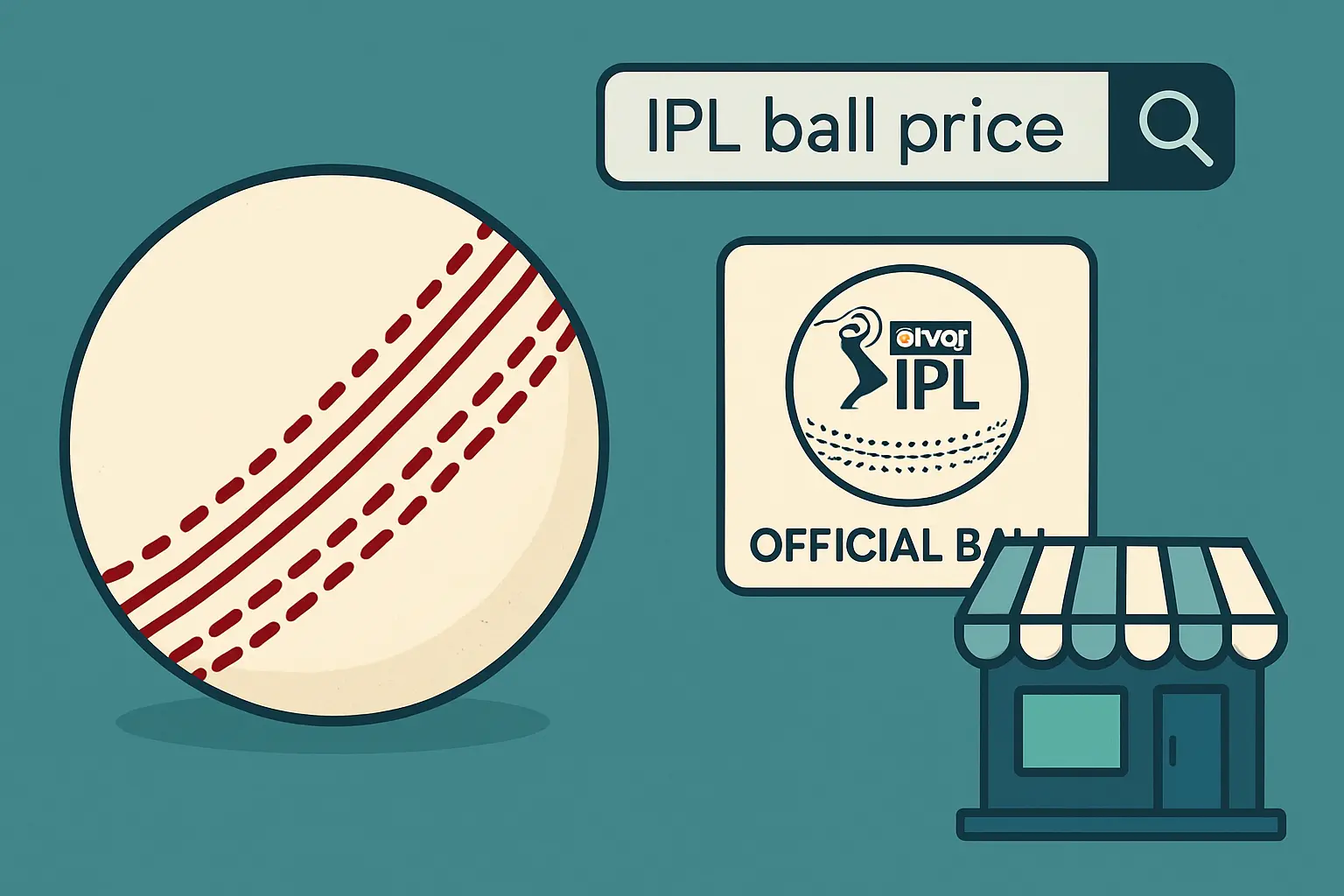
There’s a particular sound when a fresh white ball cuts through the night air under stadium lights—a tight, skimming whistle that tells you the lacquer is intact, the seam is biting, and the leather hasn’t yet soaked up dew. I’ve stood on boundary ropes as kit managers cradle a new batch like treasure, and I’ve sat in pro shops where coaches argue over which lot feels “truer” off the pitch. Behind the romance, there’s a practical question almost every fan and club cricketer asks: what is the IPL ball price, and where can you buy the real thing?
I’ve spent a good part of my professional life sourcing match balls for academies and club sides, testing batches against specific wickets, and cross-checking invoices with authorised retailers. The truth is, there isn’t one single “IPL cricket ball price.” There are tiers—official tournament balls sourced via contracts, retail match-grade equivalents you can buy today, and a sea of replicas and practice balls that range widely in quality. The internet is full of vague numbers and guesses. You deserve better than that.
Below is a practical, no-nonsense breakdown: which ball is used in the IPL, what the official and retail prices look like, how to avoid fakes, and how to look after a white leather ball so it swings, grips, and lasts.
Quick answer: IPL ball price today
- Official IPL match ball price: The exact tournament ball is not sold to the general public. Franchises and the league source match balls via a supplier contract. If you’re estimating the equivalent value, think of it as a premium, match-sorted version of a top-tier white Kookaburra ball. By the time you account for import duties, custom branding, and quality sorting, the implied per-ball value typically sits higher than retail.
- Retail match-grade equivalent (imported, Kookaburra): Generally in the range of INR 5,500–9,500 per ball, depending on the model, exchange rates, and the retailer. This is the closest a consumer can get to the ball used in the IPL.
- Retail match-grade (Indian brands, e.g., SG, SS, SF, DSC): Roughly INR 1,200–2,800 per ball for hand-stitched or high-end machine-stitched white balls suitable for club and league T20s.
- Practice and replica white balls: INR 300–1,500 per ball. These include two-piece practice balls, “season balls,” and souvenir-style replicas. Some look impressive; most won’t perform like a true match ball.
These ranges are based on current listings I’ve verified across authorised cricket retailers in India, prominent pro shops in major cities, and brand-direct online stores. Prices can move with INR fluctuations and stock cycles, especially for imported Kookaburra white balls.
Which ball is used in the IPL?
The IPL uses a white ball with custom tournament branding, supplied by Kookaburra. In practice and performance, it aligns with the Kookaburra Turf White—the ball used in most top-tier limited-overs cricket around the world.
You’ll see the league logo stamped on the panel, the Kookaburra crest, a gleaming white lacquered finish, and a four-piece construction. The feel out of the box: hard, heavily lacquered, with a slightly lower and more uniform seam compared to the hand-stitched red Dukes many Test bowlers love; that’s deliberate for white-ball limited-overs play.
Key characteristics of the IPL match ball
- Construction: Four-piece leather, cork and layered wound core, traditional central seam.
- Leather and finish: Alum-tanned white leather, multiple coats of lacquer for color fastness and early-over swing.
- Stitching approach: Kookaburra’s limited-overs balls use a more uniform, often machine-assisted stitch pattern that’s consistent and less “hand-proud” than a Duke or some top-end SG red balls. The aim is predictable wear over twenty overs and a consistent white-ball character.
- Weight: Targeted men’s ball weight is approximately 156 g (the allowed tolerance under Laws of Cricket is 155.9–163 g).
- Circumference: Approximately 224–229 mm, per men’s ball regulations.
Specs at a glance
- Weight of IPL ball: 156 g nominal (within 155.9–163 g tolerance)
- Size: 224–229 mm circumference
- Material: High-grade white alum-tanned leather, cork and wound core
- Seam: Prominent central seam, controlled height; durable limited-overs stitch profile
- Construction: Four-piece, layered core; balanced hardness for carry and shape retention
- Finish: Multiple coats of white lacquer for swing and visibility under lights
IPL ball vs international T20 ball
Functionally, you are looking at the same breed of ball: a Kookaburra white ball designed for limited-overs cricket. The league ball bears IPL-specific stamping and is batch-selected to stringent match standards. “International T20 ball” and “IPL ball” are often colloquial ways of referring to a Kookaburra Turf White match ball.
IPL ball price: match balls vs retail
Tournament match balls are not available retail; they’re procured via official channels. Consumers should look for the nearest retail equivalent: the Kookaburra Turf White, occasionally listed under “Turf White,” “OD/T20 White,” or “Kookaburra White Match/Turf” in India.
Typical price tiers in India
- Kookaburra Turf White (retail equivalent): INR 5,500–9,500 per ball
- Kookaburra Regulation/Club-level white: INR 3,500–5,000 per ball
- SG match-grade white (hand-stitched or high-end machine-stitched): INR 1,200–2,800 per ball
- Indian-brand league/practice whites (2-piece or mid-grade 4-piece): INR 400–1,400 per ball
- Souvenir/replica “IPL ball” (PU/rubber/decorative): INR 500–1,500 per ball, not for serious match use
A practical price table
| Type / Brand category | Typical price (INR) | Use case | Notes |
|---|---|---|---|
| Official IPL match ball (Kookaburra, custom) | Not sold retail; internal procurement | Franchise/league use | Custom-stamped, batch-selected |
| Kookaburra Turf White (retail equivalent) | 5,500–9,500 | Premier club, state, televised tournaments | Imported; price moves with currency/import duty |
| Kookaburra Regulation/Club white | 3,500–5,000 | Competitive club cricket | Good durability; slightly lower grade vs Turf |
| SG match-grade white | 1,200–2,800 | Club/league T20 and one-day | Hand-stitched options available |
| SS/SF/DSC match/practice white | 800–2,000 | Club practice, school/college matches | Wide quality variation; check stitching/leather |
| Two-piece practice white | 300–900 | Nets, bowling machines | Less predictable seam; good for volume training |
| Replica/souvenir “IPL ball” | 500–1,500 | Souvenir, display | Often PU or rubber; avoid for matches |
Kookaburra vs SG prices and positioning
Kookaburra white balls
- Kookaburra white ball price in India sits at a premium due to import costs and demand. The Turf White line heads the pyramid for retail.
- Kookaburra Turf White: your “closest to IPL” choice. Consistent, hard feel, reliable in early overs.
- Kookaburra Regulation/Club: a tier down, good for club T20s looking for something durable with less spend.
SG white cricket balls
- SG’s white match balls are well-priced for Indian conditions. They tend to be hand-stitched, with a seam that stays proud for longer at the club level.
- Distinct options span from true match balls to practice whites; inspect product labeling carefully (four-piece match vs two-piece training).
- For state-level or high-end club play on Indian pitches, SG match-grade whites can offer excellent value—especially where budgets make Kookaburra Turf pricing tough to sustain across a season.
The official IPL ball price vs “original IPL ball for sale”
Here’s the straightforward truth: you cannot click “Add to cart” on the exact official IPL match ball used in games. What you can do is buy the closest retail equivalent from Kookaburra or select a high-quality Indian alternative from SG or other reputable brands.
When you see listings that say “original IPL ball for sale,” treat them as replicas or souvenirs unless the seller can prove the ball is a used match ball with formal provenance (e.g., an authenticated charity auction item). For playing, go for Kookaburra Turf White or SG match-grade whites depending on budget and league requirements.
Brand-led sections: models and realistic prices
Kookaburra: the premium match-grade choice
- Kookaburra Turf White: The top-line limited-overs retail ball. In Indian retail, expect INR 5,500–9,500 per ball depending on currency and stock. For serious matches under lights, this is the benchmark.
- Kookaburra Regulation/Club White: A step down, good balance of performance and longevity for clubs. INR 3,500–5,000.
- Why it costs more: Import duties, logistics, and the fact that it’s the global standard for white-ball cricket. Also, batch-to-batch consistency and leather selection.
SG: high value for Indian conditions
- SG white match balls (four-piece, often hand-stitched): INR 1,200–2,800. Some models are built for rich seam retention; bowlers at the club level love them on drier Indian pitches.
- SG practice whites: INR 600–1,200. Good for nets and school tournaments where balls take a beating.
Other Indian brands (SS, SF, DSC)
- Match-capable whites range INR 800–2,000. Quality varies; stick with authorised sellers and specify “four-piece match ball” for competitive games.
- Practice/season whites: INR 300–900. Ideal if you need volume for bowling machines and seam drills.
Four-piece leather cricket ball price and hand-stitched options
Four-piece leather construction is essential for proper seam presentation and balance in a match ball. Expect INR 1,200–9,500 depending on brand and grade.
Hand-stitched cricket ball price typically starts higher than basic machine-stitched options from local brands because hand stitching (when properly done) offers a prouder seam and better longevity. For white balls, hand-stitched Indian options are often excellent value.
Factors that affect the IPL ball cost in India
- Leather grade and tanning: White balls use alum-tanned leather, finished with heavy layers of white lacquer. The hide selection, evenness of the grain, and the purity of the finish impact cost significantly.
- Stitching method and seam: Hand-stitched balls usually have a prouder, more durable seam. Kookaburra’s approach balances machine precision with design choices that fit white-ball cricket. Stitch density and thread quality matter in how the seam holds up after 10–15 overs.
- Core construction: The layered cork-and-rubber core is compressed and wound to tight tolerances. Better cores keep shape longer, feel hard off the bat, and hold their line in the air.
- Quality control: Tournament-level sorting rejects many balls the public will never see. Retail match-grade equivalents emulate this sorting at scale; more stringent QC means higher prices.
- Import duties and INR fluctuations: Kookaburra white balls are imported. Prices will swing with currency movement and import costs. In certain cycles, retail jumps are noticeable.
- Batch and availability: High-demand periods, especially during major T20 competitions and peak domestic seasons, can tighten supply and move prices upward temporarily.
- Branding and packaging: Custom stamping for leagues and premium packaging (with barcodes, holograms) adds marginal cost but helps fight counterfeits.
Where to buy original balls and avoid fakes
Authorised channels
- Brand-direct online stores and official marketplaces: Kookaburra-recognised distributors, SG’s official store, and well-known sporting goods platforms with verified seller badges.
- Specialist cricket retailers in major cities: The stores that supply clubs and academies tend to carry match-grade stock, rotate inventory quickly, and will let you check seams and finish before purchase.
- Pro shops attached to stadiums or academies: Often stock fresh batches and can provide purchase evidence.
Checks to avoid counterfeits
- Packaging: Look for clean retail boxes, correct spelling, sharp printing, consistent fonts, and proper barcode/GTIN. If the box is generic or scuffed with inconsistent print, walk away.
- Crest and stamp: The Kookaburra and SG crests should be crisp, with sharp edges and consistent coloration. Blurry gold or muddy stamping is a red flag.
- Seam and stitches: Count the stitching rows, inspect stitch tension. A sloppy seam with uneven spacing is a giveaway. On a match-grade ball, stitches sit tight and symmetrical with no loose ends sticking out.
- Leather feel and smell: Real alum-tanned leather has a distinct, clean smell and a slightly grippy feel under the lacquer. PU or vinyl masquerading as leather feels plasticky and uniform.
- Weight and size: Always weigh and measure if you can. An out-of-range weight is common in fakes. The ball should sit in the hand with a reassuring density, not hollow or rubbery.
- Price that’s “too good”: A Kookaburra Turf White at a fraction of normal retail is rarely real, unless it’s a damaged or second-grade ball that the seller discloses as such.
- Seller history: Reviews, seller tenure, and whether the shop supplies clubs or academies are solid heuristics. If a seller refuses simple authenticity checks, step away.
Buying tips if you’re price-sensitive
- Consider SG match-grade whites for regular league play; they deliver consistent value in Indian conditions and let you buy more balls per season for the same spend.
- Use Kookaburra Turf White selectively: for knockout games, televised matches, or key fixtures where the white ball’s early overs matter.
- For nets and bulk bowling machine work, two-piece whites or “season balls” are your friend. Save the premium balls for match day.
Maintenance and lifespan: white ball care that actually works
Nothing ruins a white ball faster than damp neglect and sunscreen-laden hands. The oils bowlers use on their skin for sun protection can transfer to the leather, collect grime, and make the ball go grey. Here’s the simple, practical routine I recommend to teams.
During play:
- Use a clean microfibre towel to wipe moisture between overs; rotate who keeps it to ensure it stays clean.
- Avoid mixing sunscreen and ball handling; a quick rinse of hands before you take the ball makes a real difference.
- Keep the ball off wet grass at the change of over. Hand it to the umpire or place it on a towel.
After play:
- Light wipe: Use a barely damp microfibre cloth to remove surface grime. Do not soak.
- Dry thoroughly in a cool, ventilated area. Don’t stick it next to a heater or in direct sunlight for hours; slow drying avoids leather stress.
- Conditioning: Very sparingly, a tiny amount of neutral leather balm on scuffed panels can help, but over-conditioning kills the lacquer’s swing potential and yellows the ball. With white balls, less is always more.
Storage:
- Store in its box or a breathable cloth bag, away from humidity.
- Don’t keep balls jammed against each other in a damp kit bag; they’ll press flat spots and pick up colour transfer.
How many overs does an IPL ball last?
In a professional T20 innings, the same white ball is used for twenty overs unless replaced by the umpires for damage or discoloration. The lacquer is at its best for the first few overs—swing enthusiasts love this period—then the surface picks up dirt and the ball softens a touch. The seam will still grip edged or hard-worn pitches, but on flat decks it will feel truer off the bat as the innings progresses.
At club level, a good match-grade white ball can hold structure for multiple matches if cared for, though performance drops: swing tapers, the seam sits down, and the shine is harder to maintain. That’s why teams often rotate older whites into training and save fresh ones for match day.
White vs red cricket ball: what changes the price and the play
- Tanning and finish: White balls are alum-tanned with a heavier, reflective lacquer. That lacquer is costlier to apply well and has a measurable impact on early swing and scuffing. Red balls rely on dyed leather and different finishing polishes.
- Seam and stitching: Limited-overs balls are designed for a controlled seam height that behaves predictably through twenty or fifty overs. In red-ball Test cricket, a prouder seam (e.g., on a Dukes) can be desirable for longer periods.
- Durability: White balls scuff and discolor quickly on abrasive surfaces and pick up grime under lights with dew. The finish is expensive and needs to be robust; that’s part of the premium pricing.
SG vs Kookaburra white ball (comparison for Indian buyers)
| Feature | Kookaburra Turf White | SG Match-Grade White |
|---|---|---|
| Typical price | INR 5,500–9,500 | INR 1,200–2,800 |
| Construction | Four-piece, premium core | Four-piece, hand-stitched options |
| Seam profile | Lower, uniform; consistent carry | Often prouder seam; grips Indian wickets well |
| Early swing | Strong first 3–5 overs | Strong first 3–5 overs (varies by model) |
| Durability | Excellent; lacquer holds | Very good at price point; seam longevity is a plus |
| Best use | High-level matches, under lights | Club league matches, training games, budget-conscious teams |
My field note: On drier pitches in Delhi or Jaipur, SG’s prouder seam can help spinners and cross-seam sewers in the middle overs. On truer surfaces like those you find at big stadiums, Kookaburra’s hardness and lacquered finish produce reliable carry and predictable wear patterns. “Best T20 cricket ball in India” depends not just on brand, but on your wicket, budget, and the format you’re playing.
IPL ball vs club white ball: expectations
- Swing window: Expect the most movement in the first few overs, particularly under lights with a clean lacquer. If you buy a Turf White for your club and compare it to a cheaper two-piece ball, you’ll feel the difference in hardness, seam stability, and how it travels through the air.
- Seam grip: Four-piece, match-grade white balls offer consistent seam grip early, then settle. Two-piece practice balls can be erratic.
- Shine maintenance: With a premium white, minimal sweat and smart wiping keeps one side shiny long enough to make a difference. On cheaper whites, the finish dulls quickly.
Local pricing snapshots (what I hear in shops and see online)
- IPL ball price in India (retail equivalent): Kookaburra Turf White sits in the INR 5,500–9,500 band; SG match-grade white at INR 1,200–2,800; practice options from INR 300.
City variations:
- Delhi and NCR: Deep retail network; competitive prices on SG and Indian brands. Imported Kookaburra pricing tracks importer availability.
- Mumbai: Stadium-proximate pro shops often stock fresh batches pre-tournament; highest demand can nudge prices up temporarily.
- Chennai and Bengaluru: Strong academy ecosystems; decent availability for both SG and imported lines. Expect shipping to influence online orders slightly.
Vernacular quick takes:
- IPL ball price kitna hai? Retail equivalent (Kookaburra Turf White) roughly INR 5,500–9,500; SG white match ball often INR 1,200–2,800.
- IPL ball ka rate / IPL ball ki keemat: Tournament ball itself isn’t sold; buy the Kookaburra Turf White or SG match ball as practical alternatives.
- IPL me kaunsi ball use hoti hai / IPL me ball kis company ki hoti hai? Kookaburra supplies the white match ball with IPL branding.
Buying online vs “cricket ball price near me”
- Online gives broader choice and, for imported balls, sometimes better pricing when a major retailer runs promotions.
- Local pro shops let you inspect the seam, weight, and finish. For SG match-grade whites, I like picking individual balls from a fresh carton and checking seam feel by rolling under the finger.
- If a match is coming up and your team depends on a particular ball, buy early. Stock can run tight around big tournaments.
How the ball actually behaves in the IPL
If you’ve watched enough powerplays, you know the script: new ball, brand-new shine, swing for the first few overs if there’s any humidity. Good white balls hold that tacky lacquer for just long enough for a skilled seamer to land on the seam, use the shine, and make the ball talk. Then the middle overs ask for smarter use—cross-seam, cutters, and bowling into the pitch if the surface is grippy. The ball’s seam settles, the shine goes, and the batters take on the pace. That’s why captains who squeeze wickets upfront protect the premium swing phase; it’s the most valuable currency a white ball offers.
For club cricket, the same arc plays out—just in smaller increments. You get a few overs of magic if your ball is good. And if you’ve bought a cheaper white with a weak seam, you’ll know by over eight when your spinners start begging for grip.
“Original cricket ball price vs replica” — why it matters
- Original match-grade balls use quality leather and cores that hold shape. When you hear that crisp sound off the bat and see a measured seam track in slow-mo, you’re watching craftsmanship and tight specs at work.
- Replicas focus on looks—white paint, a logo—for display or casual play. They aren’t built to stay hard, swing predictably, or grip properly, and they’ll end up costing more long-term because you’ll replace them often.
Tactical value: when to pay for a Turf White
- Under lights with moisture: Pay. The lacquered finish and hardness offer a real edge for swing and carry.
- Knockout games: Pay. Fielding a ball that behaves predictably can be the difference between a 155 chase and a 175 chase.
- Weekend club league on abrasive pitches with no dew: Consider SG match-grade whites. You’ll get more balls in the bag for the same budget.
A note on dew and ball management
Dew is the enemy of white-ball grip and shine. I’ve seen teams carry multiple towels, silica gel in the kit for storing balls overnight, and even hairdryers in some extreme cases. Practical hacks:
- Start with a pristine ball, keep it off the grass between overs.
- Assign one fielder with the driest hands to return the ball to the bowler.
- Communicate with umpires early if the ball becomes waterlogged or discoloured beyond playability.
How to spot fake Kookaburra or SG white balls
- Font check: Compare the Kookaburra or SG crest with an image from the official brand site. Misaligned letters or a different shade of gold are classic tells.
- Seam inspection: A real four-piece match ball shows uniform, tight stitching and a central seam that runs dead straight. Fake balls often have crooked stitch lines or inconsistent spacing.
- Leather grain: Even under lacquer, you can see real leather’s grain. Fakes look plasticky and too smooth.
- Holograms and barcodes: Many genuine boxes include a hologram or a branded quality sticker; scan the barcode—if it resolves to a different product, walk away.
- Weight and bounce: Weigh the ball; hand-bounce it on a hard surface. Hollow or dead bounce is a bad sign.
SG vs Kookaburra white ball: which to buy if you’re a captain on a budget?
- With INR 10,000 for balls per matchday, one Kookaburra Turf White is a luxury. If you need a spare, your budget tightens elsewhere.
- With INR 10,000, you can often field three to six SG match-grade whites, depending on the exact model, giving you a fresh ball and backups without panic.
- Decision rule: If conditions make swing king and you need that early seam discipline, stretch to Kookaburra. If you’re playing a dusty pitch under a dry sun, SG’s proud seam at a lower cost is smart cricket.
Practical procurement advice for academies and clubs
- Build a tiered inventory: a couple of Kookaburra Turf Whites for finals or televised fixtures, SG match-grade whites for regular league games, and a bag of two-piece whites for machines and net grind.
- Track ball behavior by batch: simple notes like “Batch A—kept shine longer,” “Batch B—softened early.” This guides re-orders from the same retailer or brand run.
- Buy pre-season when supply is good: imported stocks can be variable; local brands are more stable but the best runs sell quick.
Common myths about the IPL match ball
- Myth: “The IPL ball is totally different from what you can buy.” Reality: It’s a Kookaburra white ball customized for the league, batch-selected to match standards. The retail Turf White is the closest analog.
- Myth: “All white balls are the same; only price differs.” Reality: Leather grade, stitching, core compression, and finish coatings create real performance differences.
- Myth: “White balls can’t swing in India.” Reality: They do—especially for a handful of overs under lights with proper shine and seam orientation. Watch the early movement when humidity cooperates.
FAQs
- Which ball is used in the IPL?
- A white Kookaburra match ball with league branding, functionally aligned with the Kookaburra Turf White.
- What is the price of the IPL match ball in India?
- The exact match ball isn’t sold to the public. The retail equivalent, Kookaburra Turf White, generally costs INR 5,500–9,500 per ball.
- Is the IPL ball different from international T20 balls?
- It’s the same breed: a Kookaburra white ball. The IPL ball carries custom branding and comes from match-selected batches.
- What is the weight and size of an IPL ball?
- Approximately 156 g (men’s ball), within the allowed tolerance of 155.9–163 g; circumference around 224–229 mm.
- Can fans buy the exact IPL match ball?
- Not new, through standard retail. You can occasionally buy authenticated used match balls at charity or team auctions. For playing, buy the Kookaburra Turf White.
- How to verify an original Kookaburra or SG white ball?
- Check crisp branding and fonts, uniform tight stitching, correct weight, and proper retail packaging with barcodes/holograms. Buy from authorised retailers.
- Why do white balls cost more than red balls?
- The finish is more complex: alum-tanned leather with multiple lacquer layers for brightness and durability. Quality control and visibility requirements under lights also add to cost.
- What’s the difference between match-grade and practice white balls?
- Match-grade: four-piece, premium leather, balanced core, consistent seam and lacquer; built for predictable performance over twenty overs. Practice: often two-piece with lower-grade leather or synthetic covers; cheaper, less consistent.
- How many overs does a white ball last?
- One ball per T20 innings (twenty overs), unless replaced. At club level, balls may be reused, but performance declines after the first match.
- Which is the best T20 cricket ball in India for clubs?
- If budget allows and conditions warrant, Kookaburra Turf White. For value and Indian wickets, SG match-grade whites are excellent, especially where a prouder seam helps.
- White cricket ball price online vs local shops—where should I buy?
- Online for imported models when promotions run; local pro shops for hand inspection and immediate stock. Either way, use authorised sellers.
- What about cricket ball price on marketplaces like Amazon or Flipkart?
- Prices can be competitive, but check seller credentials. On marketplaces, counterfeit risk is higher—scrutinise packaging, stamps, and weight.
- What does “four-piece” mean and why does it matter?
- The leather cover is made from four quarters stitched over the core. It produces a true seam and balanced shape—critical for swing, grip, and durability.
- Does dew change the ball price calculus?
- Indirectly. In heavy dew, the added performance of a premium white ball is harder to preserve. If you expect heavy dew and have a tight budget, an SG match-grade white may be the smarter spend for a given league fixture.
Closing thoughts: buy smart, play smarter
Chasing the perfect “IPL cricket ball price” is really about choosing the right ball for your context. If you’re a captain or coach:
- Use a Kookaburra Turf White when the stage and conditions reward its lacquer and hardness.
- Lean on SG and other reputable Indian brands for week-in, week-out club cricket—hand-stitched seams, sturdy cores, honest prices.
- Keep a clear head about replicas: they look like the IPL ball, but they won’t play like it.
The ball is a small object with outsized influence on a T20 match. Get the choice right, care for it well, and you buy your bowlers a few more balls that talk. And in the white-ball era, a few more talking balls can be the difference between a chase that peters out and one that falls your way at the death.
Appendix: condensed price reference
| Category | Typical price (INR) | Notes |
|---|---|---|
| Kookaburra IPL-equivalent (Turf White) | 5,500–9,500 | Imported, closest retail match for IPL use |
| Kookaburra Club/Regulation White | 3,500–5,000 | Good club-level match ball |
| SG Match-Grade White | 1,200–2,800 | Hand-stitched options; great value |
| Indian-brand practice white (2-piece) | 300–900 | Nets, bowling machines |
| Replica/Souvenir “IPL ball” | 500–1,500 | Not for match play |
If you remember nothing else, remember this: buy a genuine four-piece white ball from an authorised seller for matches, keep it dry and clean, and save the expensive imports for when they buy you the most advantage. That’s how professionals think about the ipl ball price—and that’s how you should, too.